
Caraway cookware is the set you’ve probably seen on a friend’s open shelf: soft colors, pans standing in a cabinet rack, lids tucked into a canvas holder. The real question is whether a $400-plus ceramic set still earns its place once the novelty wears off.
Short answer: Caraway cookware is a good fit if you cook on low to medium heat, want a PFAS-free nonstick surface, and like storage that’s solved for you. It’s a poor fit if you sear hard, rely on the dishwasher, or expect a nonstick coating to last a decade.
This Caraway cookware review pulls together the brand’s own specs and care guidance, independent long-term owner reports, an independent lab-results review, and how ceramic coatings behave in general. Sources are listed at the end so you can check every claim.
Table of Contents
Caraway Cookware Set at a Glance
| Spec | Caraway 12-piece ceramic set |
|---|---|
| Pots and pans | 10.5″ fry pan, 3 qt saucepan, 4.5 qt sauté pan, 6.5 qt Dutch oven |
| Also included | 3 lids, pan organizers, canvas lid holder |
| Coating | Ceramic nonstick; Caraway says it is free of PTFE, PFOA, PFAS, lead and cadmium |
| Oven safe | Up to 550°F |
| Stovetops | Gas, electric and induction |
| Cleaning | Hand washing recommended |
| Warranty | 1-year limited, plus a 30-day trial |
| Typical price | About $395–$450 when on sale |
FREE 2-PAGE CHEAT SHEET
Buy the right pan the first time
- Which material fits how you cook
- The 10-second induction test
- PFAS, PFOA and “non-toxic” labels decoded
- 5 red flags to check before you buy
Caraway Cookware Pros and Cons
Here’s the quick version before we dig in.
Pros
- Excellent food release with very little oil, especially for eggs, fish and pancakes.
- Ceramic coating the brand says is free of PTFE, PFOA, PFAS, lead and cadmium, with third-party lab results published.
- Works on gas, electric and induction stovetops.
- Oven-safe up to 550°F.
- Built-in storage: pan organizers and a canvas lid holder.
- Easy to clean by hand.
Cons
- Best on low to medium heat only, so it isn’t made for hard searing.
- Hand washing recommended rather than the dishwasher.
- Ceramic nonstick tends to lose its slickness faster than PTFE nonstick.
- Short 1-year limited warranty for a premium-priced set.
- “12-piece” includes lids and storage, not 12 pans.
What “12-Piece” Really Means
Here’s the first thing to know: the “12 pieces” aren’t 12 pots and pans. You get four cooking vessels — a 10.5-inch fry pan, a 3-quart saucepan, a 4.5-quart sauté pan and a 6.5-quart Dutch oven — plus three lids and the storage pieces.
That’s not a trick. Four well-chosen pieces cover most everyday cooking, and the storage is genuinely useful. But it does change the math when you compare Caraway cookware against a 10- or 12-piece set where every piece goes on the stove.
Tip: when comparing sets, count only the pieces you’ll cook in. Then compare price per pan, not price per “piece.”
If you want more pieces, Caraway also sells larger bundles and individual items, including a 16-piece Cookware & Minis set, a 12-quart stock pot, an 11.7-inch large fry pan, griddles and a 12-inch stir fry pan.
What Each Pan in the Set Is For
Four pieces sounds small, so here’s how they divide up everyday cooking.
10.5-inch fry pan. Your daily driver for eggs, pancakes, grilled cheese, fish fillets and quick vegetables. This is where ceramic’s easy release matters most.
3-quart saucepan. Rice, oats, grains, sauces, reheating soup and boiling a few eggs. A good size for one to three people.
4.5-quart sauté pan. Tall, straight sides make it the best piece for one-pan dinners, shallow braises, stir-fried vegetables and sauces that need room to reduce.
6.5-quart Dutch oven. Soups, stews, chili, pasta and batch cooking. It also goes in the oven, within the 550°F limit.
Missing from the set: a large stock pot and a small skillet. If you cook big batches of pasta or stock, or fry single eggs often, you may want to add one of those later.
Is Caraway Actually Non-Toxic?
This is the main reason most people buy Caraway, so it deserves a careful answer.
Caraway uses a ceramic nonstick coating instead of the PTFE (Teflon-type) coating found on traditional nonstick pans. The brand states the coating is free of PTFE, PFOA and other PFAS, as well as lead and cadmium. It says the cookware is third-party tested, links to lab results on its product page, and states it complies with California’s AB 1200 cookware disclosure law.
Independent reviewers at LeafScore, who focus on non-toxic home products, reviewed Caraway’s third-party lab results. They reported no detectable PTFE, PFOA or heavy metals, including in California Prop 65 lead and cadmium testing.
The fair caveat: “non-toxic” is a marketing term, not a regulated standard. What you can verify is which chemicals a brand says it leaves out, and whether it publishes testing to back that up. Caraway does both, which is more than many cookware brands offer.
For the bigger picture, see our explainer on what PFAS-free, PFOA-free and PTFE-free actually mean, and our best non-toxic cookware picks.
How It Performs: Easy Release, Gentle Heat
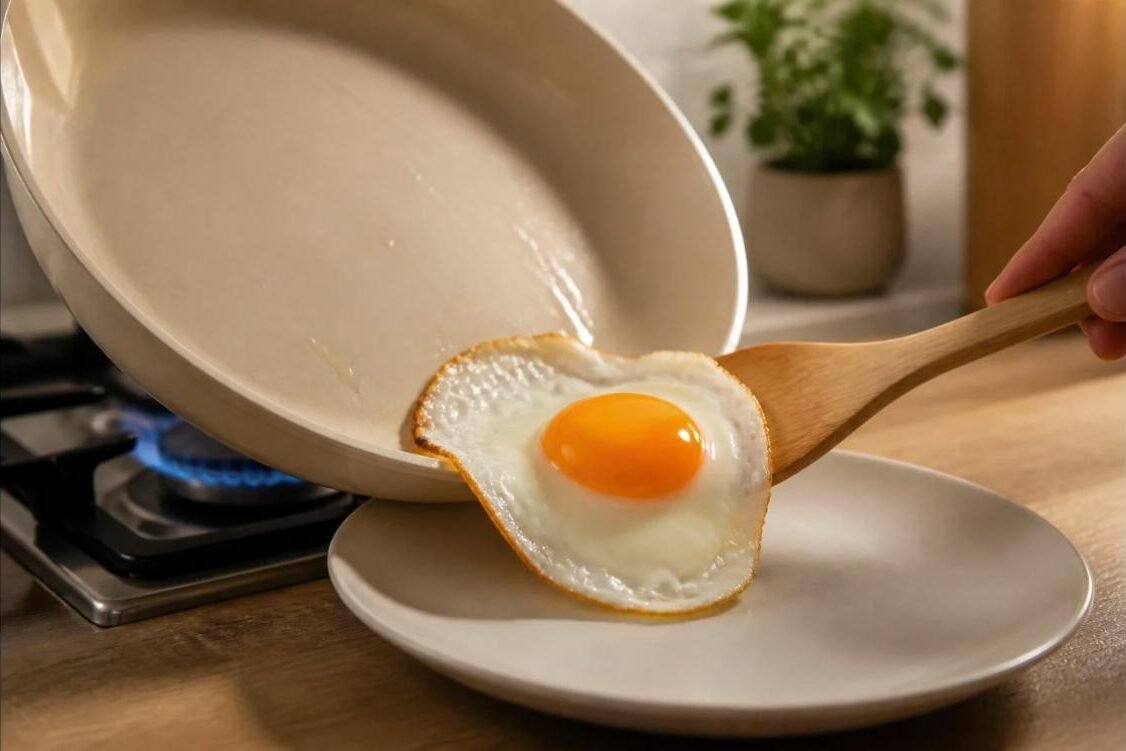
Ceramic nonstick shines with eggs, pancakes, fish and sautéed vegetables. Food slides off with very little oil, and cleanup is quick. Long-term owners consistently praise this part.
The trade-off is heat. Caraway’s own guidance is to keep its pans on low to medium heat, because high heat wears the coating faster without cooking any better. It also advises against preheating an empty pan: add a little oil, butter or food first.
So Caraway isn’t the pan for a hard steak sear or for finishing dishes under the broiler, even though it’s oven-safe to 550°F. If high-heat cooking is a big part of your week, pair it with one stainless steel or cast iron skillet.
Good news for induction owners: Caraway lists the set as compatible with induction, as well as gas and electric. See our best induction cookware guide if that’s your stove.
How to Cook With Caraway Cookware (Step by Step)
Most complaints about ceramic pans come down to how they’re used. Following Caraway’s own care guidance gives the coating the best chance of lasting.
- Add a small amount of oil or butter to the pan before turning on the heat. Don’t heat it empty.
- Set the burner to low or medium. Ceramic heats efficiently, so you rarely need more.
- Skip aerosol cooking sprays. They leave a sticky residue that builds up and hurts food release.
- Use wood, silicone or nylon utensils. Metal spatulas, forks and knives can scratch the coating.
- Wash by hand with warm water, mild soap and a soft sponge, then dry it.
If food does stick or burn, Caraway suggests simmering soapy water in the pan over low heat to loosen it, rather than scrubbing hard.
Ceramic vs Traditional Nonstick: What You Trade
Caraway’s coating is ceramic rather than the PTFE used in traditional nonstick pans. Understanding the difference helps set realistic expectations.
What ceramic does better: it avoids PTFE and PFAS entirely, which is the main draw for health-conscious buyers. It also releases food very well when it’s new.
What PTFE does better: traditional nonstick usually keeps its slick surface longer with everyday use. Its main drawback is heat: PTFE coatings can start to break down when they’re overheated, which is why they’re best kept on moderate heat too.
In practice, both types reward the same habits: moderate heat, a little fat, soft utensils and hand washing. The difference is mostly how long the nonstick feel lasts and what’s in the coating.
For a full side-by-side, see our guide to ceramic vs PTFE nonstick pans.
How Long Does Caraway Cookware Last?
This is where opinions split, and it’s the most important question for a set at this price.
Ceramic coatings generally lose their slickness faster than PTFE nonstick. Reports on Caraway cookware reflect that range. One long-term owner who cooked with the set daily for more than a year, mostly on low and medium heat, said the coating still performed close to new. Aggregated customer reviews tell a more mixed story, with complaints about sticking that develops over time, chips and scratches, and discoloration on the exterior.
The pattern is consistent: how you use it matters more than usual. Gentle heat and soft utensils stretch the coating’s life. High heat, metal tools, cooking sprays and the dishwasher shorten it.
Also note the warranty: one year, limited. That’s short for a premium set, and it means coating wear after the first year is on you.
More on protecting any nonstick surface in our guide to making nonstick pans last longer.
Cleaning and Storage: Caraway’s Quiet Advantage
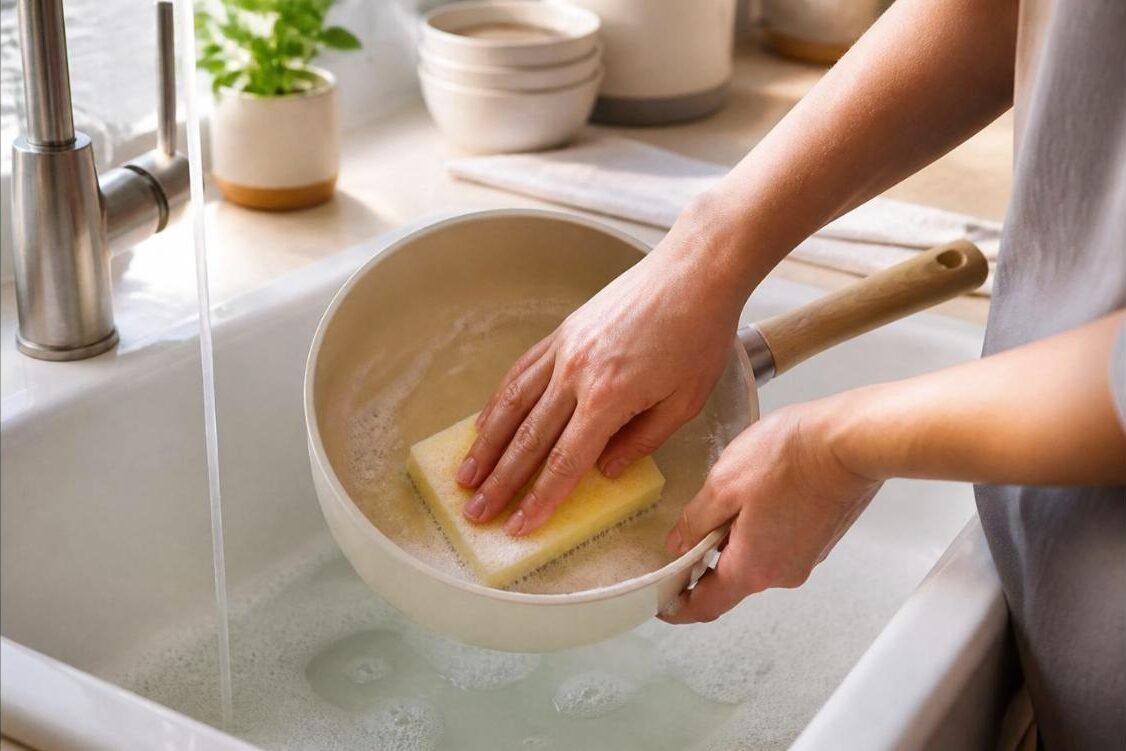
Cleanup is easy by hand: a wipe and rinse handles most meals. Caraway recommends hand washing over the dishwasher to protect the coating, so plan on that from day one.
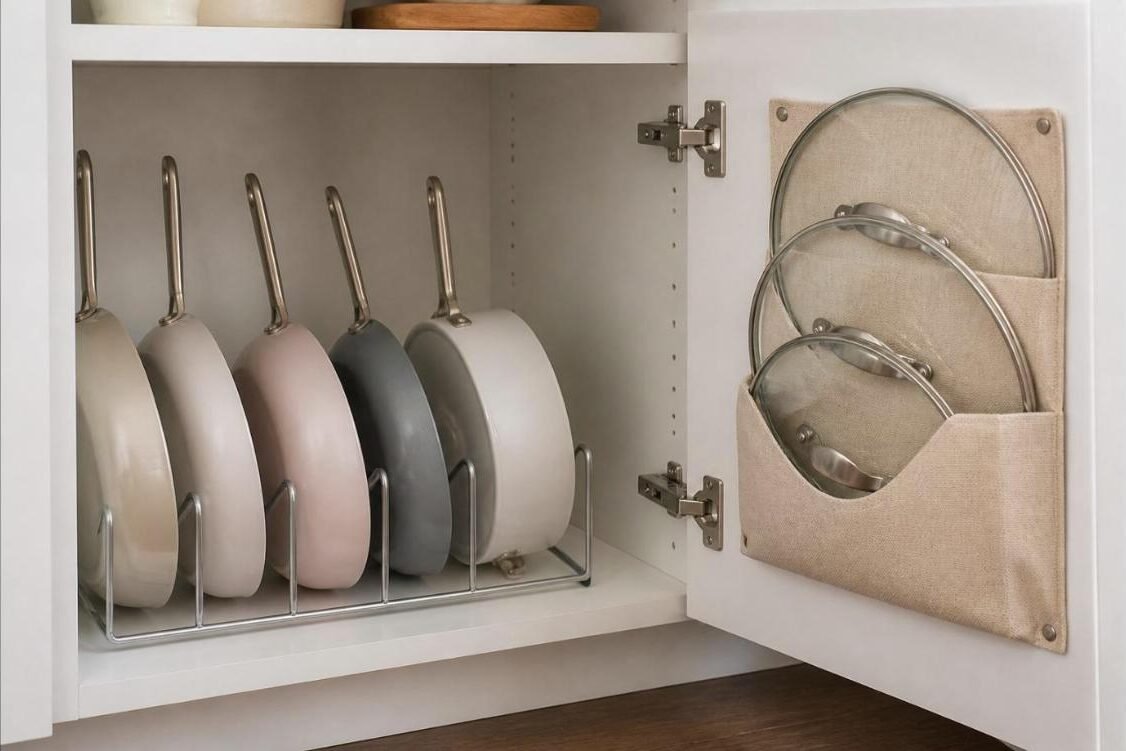
The storage is the part competitors rarely match. The pan organizers keep pans from scraping each other, which also protects the coating. The canvas lid holder mounts to a cabinet door or wall. In a small kitchen, that alone can justify part of the price.
One practical note from owners: the handles get hot in the oven, so keep mitts nearby.
Add-Ons Worth Knowing About
Caraway sells several extras alongside the main set. None are essential, but a few fill real gaps.
- Glass lids. Caraway lists see-through glass lids for the Dutch oven, the fry pan and its 12-quart stock pot, handy if you like to watch food without lifting the lid.
- Steamer inserts. Nonstick steamers for vegetables and dumplings.
- Wooden utensil set. A five-piece set made from FSC-certified birch, which is gentle on the ceramic coating.
If you already own wooden or silicone utensils, skip the utensil set. The glass lid is the most useful add-on for everyday cooking.
Watch: An Independent Caraway Cookware Review
Prefer to see it? In this short video, the team at LeafScore walks through Caraway’s cookware and the third-party lab results behind its non-toxic claims.
Caraway Cookware vs the Alternatives
Caraway isn’t the only ceramic option. Here’s how it compares with the brands shoppers most often weigh it against.
| Brand | What you get | Best for |
|---|---|---|
| Caraway | Ceramic nonstick set with pan organizers and a lid holder | Small kitchens that want storage and published safety testing |
| GreenPan | Thermolon ceramic nonstick, sold in many lines and set sizes | Ceramic nonstick for less money |
| Our Place | The Always Pan, one multi-use ceramic pan | Minimal kitchens that want one do-it-all pan |
| Stainless steel (e.g. tri-ply) | Uncoated, very durable pans | Searing, high heat and decades of use |
For a deeper look, read Caraway vs GreenPan and Caraway vs Our Place. If longevity matters most, browse our best stainless steel cookware.
Is Caraway Cookware Worth the Price?
At roughly $395–$450 on sale, Caraway costs more than most ceramic nonstick sets. You’re paying for three things: the design, the storage system, and a clearer safety-testing paper trail than most brands offer. You’re not paying for a longer-lasting coating.
Caraway cookware is worth it if you:
- Cook mostly eggs, vegetables, fish and one-pan meals on moderate heat.
- Want a PFAS-free nonstick with published testing.
- Have a small kitchen and value built-in storage.
- Are happy to hand wash.
Skip it if you:
- Sear, stir-fry or broil often.
- Want everything dishwasher-friendly.
- Want cookware that lasts decades. Stainless steel or cast iron is the better buy there.
- Are on a tight budget. Cheaper ceramic sets cook much the same way.
Quick recommendations by type of cook:
- Busy households cooking eggs, pancakes and one-pan dinners: a strong fit.
- Health-focused cooks avoiding PTFE and PFAS: a strong fit, with better testing transparency than most brands.
- Apartment and small-kitchen cooks: the storage system is a real plus.
- Steak, stir-fry and high-heat fans: buy it only alongside a stainless steel or cast iron skillet.
- Budget shoppers: compare GreenPan first, since it offers ceramic nonstick for less.
Money tip: Caraway runs sales regularly, and the same set often shows up at different prices across retailers. If you’re not in a hurry, it’s worth waiting for a discount.
Where to Buy Caraway Cookware Safely
Caraway is popular enough that look-alike shops show up in search results. While researching this review, we found several sites with Caraway-style names on unfamiliar web addresses.
To avoid fakes and scams:
- Buy from Caraway’s official website or a well-known retailer.
- Check the web address carefully before paying, especially if the price looks far below normal.
- Be wary of sites that only accept unusual payment methods or show no contact details.
- Keep your order confirmation, since the 1-year warranty and 30-day trial depend on proof of purchase.
Caraway Cookware FAQ
Is Caraway cookware dishwasher safe?
Caraway recommends hand washing to protect the ceramic coating. Dishwasher detergents and high heat wear ceramic surfaces faster.
Does Caraway cookware work on induction?
Yes. Caraway lists its ceramic cookware set as compatible with induction, gas and electric stovetops.
How hot can Caraway cookware go in the oven?
Caraway says the set is oven-safe up to 550°F. On the stovetop, the brand recommends low to medium heat.
Can you use metal utensils on Caraway?
Caraway advises against metal spatulas, forks and knives. Use wood, silicone or nylon to avoid scratching the coating.
Is Caraway cookware really PFAS-free?
Caraway states its ceramic coating is free of PTFE, PFOA and other PFAS, and publishes third-party lab results. An independent review of those results by LeafScore reported no detectable PTFE, PFOA or heavy metals.
Does Caraway cookware need seasoning?
No. Ceramic-coated pans don’t need seasoning the way cast iron or carbon steel does. Caraway does recommend cooking with a small amount of oil or butter to protect the surface.
How long does Caraway’s coating last?
It depends heavily on care. Some owners report strong performance after a year of daily use on gentle heat, while others report sticking or chips sooner. The warranty covers one year.
Is Caraway cookware worth it?
It’s worth it if you value PFAS-free ceramic, easy cleanup and built-in storage, and you cook on moderate heat. If you want maximum durability or high-heat searing, stainless steel or cast iron gives better value.
The Verdict on Caraway Cookware
Caraway is a well-designed, PFAS-free ceramic set with excellent food release and one of the best storage systems in its class. It rewards gentle cooking and careful cleaning, and it punishes high heat and the dishwasher.
Buy it for how it fits your kitchen and how you cook, not for longevity. If that matches you, Caraway cookware is one of the easiest nonstick sets to live with.
Still undecided? Start with how you cook most nights. If it’s eggs, vegetables and simple one-pan meals on moderate heat, Caraway will feel like an upgrade from day one. If it’s seared meat and roaring-hot stir-fries, put your money into a good stainless steel or cast iron pan first, and add a single ceramic skillet for eggs later.
Check current Caraway cookware set prices on Amazon →
As an Amazon Associate, we earn from qualifying purchases.
Sources
- Caraway: Ceramic Cookware Set product page (contents, coating, oven rating, stovetops, warranty)
- Caraway: Ceramic cookware collection (other pieces and bundles)
- Caraway: How to Cook With Ceramic Pans (heat, oils, utensils)
- Caraway: Are Ceramic Pans Dishwasher Safe? (cleaning)
- LeafScore: The Truth About Caraway Cookware (lab results review)
- Nourish Move Love: Caraway Cookware Review (a year-plus of daily use)
FREE 2-PAGE CHEAT SHEET
Buy the right pan the first time
- Which material fits how you cook
- The 10-second induction test
- PFAS, PFOA and “non-toxic” labels decoded
- 5 red flags to check before you buy