Shopping for PFAS-free cookware should be simple. Then you open one cookware set and see “PFOA-free.” Another says “PFAS-free.” A third proudly says “ceramic coating.” Another promises “non-toxic cookware.” At some point, you’re staring at four product pages thinking, Does any of this actually mean the same thing?
This is where replacing your cookware gets unnecessarily complicated. You weren’t planning to study chemistry. You just wanted a PFAS-free cookware set.
The problem is that these terms describe different things. Some refer to specific chemicals or materials. Others describe a coating type or a broad marketing claim. And if you’re comparing complete cookware sets, that difference matters. (If you’re still narrowing down brands, our cookware brands A–Z guide is a good place to start.)
Table of Contents
PFOA-Free vs PFAS-Free Cookware: Why the Labels Aren’t Interchangeable
The words look similar enough to create confusion. But PFOA-free does not automatically mean PFAS-free.
Does PFOA-free mean PFAS-free? No. PFOA-free does not mean PFAS-free. PFOA (perfluorooctanoic acid) is one specific chemical inside the PFAS family, which includes thousands of fluorinated substances. A pan can be PFOA-free and still use PTFE, a fluoropolymer that also falls under the PFAS umbrella. Only a direct “PFAS-free” claim addresses the whole category.
So when a listing says only “PFOA-free,” it has answered a narrower question than you may think. It tells you something about PFOA. It doesn’t necessarily tell you everything you want to know about the broader PFAS question.
That’s why two cookware sets can both advertise themselves as “free from” something while giving you very different information.
And this is exactly where shopping gets frustrating. You aren’t necessarily reading the wrong information. You’re reading different pieces of information and trying to make them answer the same question.
What Does PFOA-Free Cookware Actually Mean?
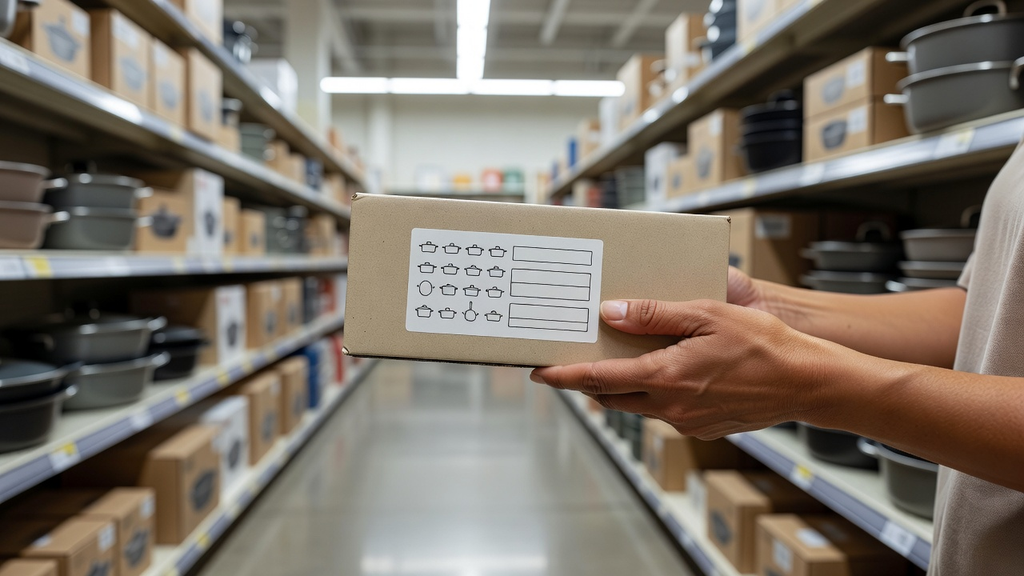
PFOA stands for perfluorooctanoic acid. It’s one specific substance within the larger PFAS family.
That means PFOA-free is a specific claim about PFOA. It’s also a claim that says less than it used to. In 2006, EPA invited eight major companies in the PFAS industry to join a stewardship program that included a commitment to work toward eliminating PFOA from emissions and products by 2015. You can read the details in the EPA’s PFOA Stewardship Program fact sheet. Today, “PFOA-free” often describes the industry baseline rather than a special feature. epa
If your goal is to find cookware that is broadly marketed as PFAS-free, stopping at “PFOA-free” can leave an important question unanswered.
Think of it this way:
“PFOA-free” answers: Is PFOA present?
It doesn’t necessarily answer: “Does this cookware contain any PFAS?”
So don’t trust the biggest words on the product image. A brand can put one reassuring claim up front. The details about materials may sit somewhere else on the page.
This short news segment shows what happens when “free from” claims on popular nonstick pans are put to the test:
Video: Are these popular nonstick pans free from forever chemicals?
What Does PFAS-Free Cookware Mean?
If your specific goal is to avoid PFAS, PFAS-free is the wording you want to pay close attention to.
PFAS isn’t one chemical. It’s a huge group of them. The U.S. EPA’s CompTox chemicals database lists more than 14,000 PFAS structures, and the EPA’s PFAS overview is a good plain-language primer. That’s why the terms get messy so fast. The brand might be talking about one chemical. You’re asking about the whole group. Those are two different questions.
This is also why “PFOA-free” shouldn’t automatically become your shortcut for “PFAS-free.”
Some lawmakers now draw the same line. Cookware is one of the initial 11 products subject to Minnesota’s ban on products containing intentionally added PFAS under Amara’s Law, with that prohibition beginning in January 2025. (Here’s how Minnesota defines the cookware covered.) Their line is the category, and yours should be too. packaginglaw
If you’re replacing a complete cookware set specifically because you want to avoid PFAS, look for a clear statement addressing PFAS itself rather than assuming a narrower claim covers the whole category.
Is PTFE a PFAS? What PTFE-Free Cookware Tells You
PTFE is short for polytetrafluoroethylene. It’s a fluoropolymer commonly associated with traditional nonstick cookware.
For a shopper trying to avoid PFAS, PTFE matters because PTFE sits within the broader PFAS family. Under the OECD’s 2021 PFAS definition, which many regulators now reference, fluoropolymers like PTFE count as PFAS.
So now you can see why this gets confusing. A product might say:
- PFOA-free
- PTFE-free
- PFAS-free
Those aren’t three different ways of saying exactly the same thing.
PFOA is a specific substance.
PTFE is a specific fluoropolymer.
PFAS refers to a much broader group.
The practical lesson is simple: don’t collapse these terms into one giant category called “safe cookware.” PFOA-free, PTFE-free, and PFAS-free cookware claims answer different material questions.
Is Ceramic Cookware PFAS-Free?
This is where many cookware shoppers get stuck.
You see “ceramic cookware” and naturally wonder: So does that mean PFAS-free?
Not necessarily from the word “ceramic” alone.
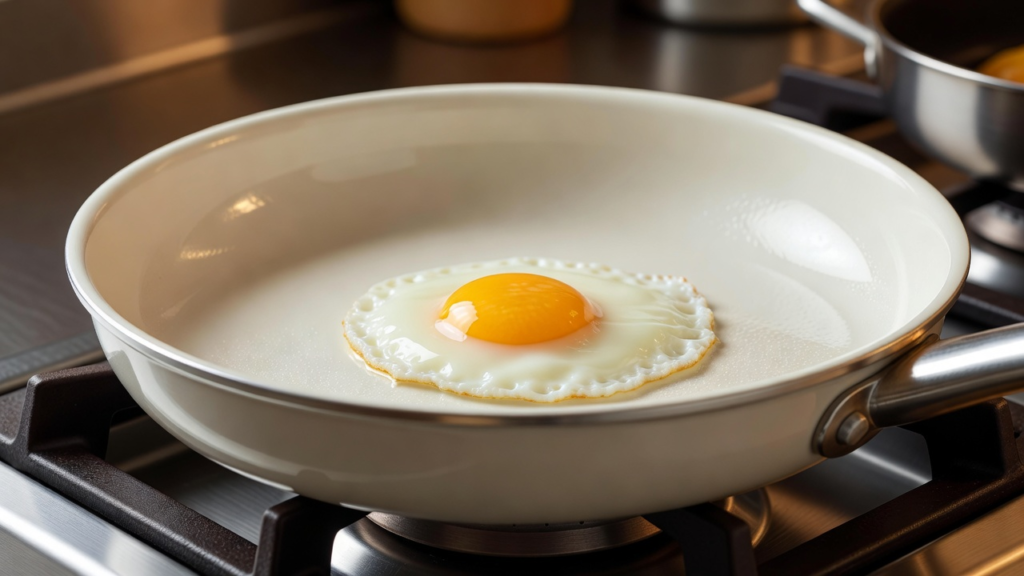
“Ceramic” can describe different cookware constructions, including cookware with a ceramic nonstick coating rather than cookware made entirely from ceramic. And the label can be stretched further than you’d expect. In a Chemical & Engineering News report on nonstick coatings, a materials researcher warned that “ceramic” can be a misleading marketing term, noting he’d seen pans sold as ceramic-coated that actually used PFAS bonded to a ceramic material, and that such products can still be labeled “Teflon-free” or “PFOA-free.” ACS C&EN
That’s why the word itself shouldn’t be your final decision point.
If you’re comparing a ceramic-coated cookware set with another set, you still want to check what the manufacturer actually says about the coating and its materials.
In other words, don’t let “ceramic” do more work than the product documentation supports.
The same principle applies to almost every reassuring-sounding cookware term.
What Does “Non-Toxic Cookware” Really Mean?
This is another phrase that can stop your research because it feels like the answer.
Non-toxic.
Sounds clear.
But as a shopper, you still need to know what the manufacturer means by it. Does the page identify the coating? Does it identify the materials? Does it specifically address PFAS or PTFE? Is the claim explained somewhere in the manufacturer’s documentation?
A broad phrase can make you feel like you’ve received a complete answer when you’ve actually received a very general one.
That’s the trap.
Reassuring words aren’t the point. The point is whether the words tell you enough to make your decision.
Why Cookware Product Pages Don’t Answer Your PFAS Questions
This is probably the most annoying part.
You can spend twenty minutes researching one cookware set and still not know whether it meets your personal buying criteria.
You read the bullet points. Then the FAQ. Then the product description. Then customer reviews. Then the manufacturer’s website. Then you Google the coating.
Suddenly, buying a frying pan feels like investigative journalism.
And there’s a reason this happens. Product pages are built to sell benefits fast. You’re using them to check a material claim. Those are two different jobs.
The manufacturer might highlight: “PFOA-free.”
You’re thinking: “Okay, but what about PFAS?”
The listing says: “Ceramic nonstick.”
You’re thinking: “What exactly is the coating made from?”
The listing says: “Non-toxic.”
You’re thinking: “What does that actually exclude?”
You’re not being difficult. You’re asking a more precise question than the headline was designed to answer.
Don’t Assume a Cookware Label Means PFAS-Free
This is where uncertainty becomes expensive.
You see “PFOA-free.” You mentally upgrade it to “PFAS-free.”
You see “ceramic.” You mentally upgrade it to “PFAS-free.”
You see “non-toxic.” You mentally upgrade it to “everything I want to avoid is absent.”
That’s understandable. But now you’ve made a claim the brand never made. The label was vague. You filled in the rest.
A better habit is to stop interpreting and start verifying.
If your buying requirement is PFAS-free cookware, look for information that directly addresses PFAS. If your concern includes PTFE, look for a clear statement about PTFE. If the product uses a ceramic coating, find out what the manufacturer says about that coating.
And if the information isn’t clear, treat that uncertainty as information too. You don’t have to force a yes-or-no answer from a vague product page.
How to Compare PFAS-Free Cookware Sets: A 5-Point Checklist
Before you start opening twelve browser tabs, create a small checklist. (Our general cookware buying tips cover handles, weight, and stovetop compatibility. This checklist covers the material claims.)

When you’re comparing a complete cookware set, check these areas:
1. Does the Manufacturer Say “PFAS-Free” Explicitly?
Look for a direct statement. Don’t substitute PFOA-free for PFAS-free in your notes.
2. Does the Cookware Set Contain PTFE?
If avoiding PTFE is part of your criteria, look for an explicit statement rather than assuming based on another claim.
3. Is It Ceramic Cookware or a Ceramic Nonstick Coating?
Determine whether you’re looking at ceramic cookware, a ceramic-based coating, or another construction. The word alone isn’t enough.
4. What Does the “Non-Toxic” Claim Refer To?
Look for supporting material information. A broad safety phrase shouldn’t replace specific product details.
5. Is Every Piece in the Cookware Set PFAS-Free?
This one gets overlooked.
You might research the main frying pan and feel confident about it. But you’re buying a set containing several pieces. Check the construction and coating information for the set as a whole, not just the photograph of the skillet featured on the product page.
That small change in behavior can prevent a lot of confusion. For brand-versus-brand detail, see our side-by-side cookware comparisons.
PFAS-Free Cookware Sets Worth Checking on Amazon
These picks either carry an explicit PFAS-free claim from the manufacturer or skip nonstick coatings entirely. Run each one through the checklist above before you buy, since listings and formulations can change.
Disclosure: This article contains affiliate links. If you buy through them, we may earn a small commission at no extra cost to you.
GreenLife Soft Grip 16-Piece Ceramic Nonstick Cookware Set
A budget-friendly ceramic-coated set. GreenLife states its pans are free of PFAS, PFOA, lead, and cadmium, which is exactly the kind of direct claim this guide tells you to look for.
Check price on Amazon GreenLife
GreenPan Valencia Pro Ceramic Nonstick Cookware Set
A step up in build quality from GreenLife’s sister brand, using GreenPan’s Thermolon ceramic coating, which the company markets as PFAS-free.
Check price on Amazon
Caraway Nonstick Ceramic Cookware Set
A popular ceramic-coated set marketed as free of PTFE and PFAS. Check the listing’s material section to confirm the claim covers every piece in the set.
Check price on Amazon
All-Clad D3 Tri-Ply Stainless Steel Cookware Set
No nonstick coating at all, which removes the coating question entirely. It’s a favorite in our roundup of the top stainless steel cookware brands.
Check price on Amazon
Lodge Pre-Seasoned Cast Iron Skillet Set
Seasoned cast iron gets its release from baked-on oil, not a synthetic coating. Heavy, affordable, and nearly indestructible.
Check price on Amazon
A Simple Filter for Reading Cookware Labels
This is the realization that makes the whole process easier.
You don’t need to become an expert on every chemical abbreviation. You need to know which question you’re asking and whether the product information actually answers it.
Here’s the mental filter:
Claim → What does it specifically tell me? → What question does it leave unanswered?
For example:
PFOA-free
Tells you about PFOA. Still leaves the broader PFAS question open.
PTFE-free
Tells you about PTFE. Doesn’t automatically explain every other material used in the cookware.
PFAS-free
Directly addresses the broader PFAS category. You can still investigate other materials if they matter to your purchase.
Ceramic
Describes a material or coating category depending on the product. It doesn’t automatically answer the PFAS question.
Non-toxic
A broad safety description. You need more specific material information to understand what the manufacturer means.
Once you see the terms this way, cookware listings become much easier to read.
You’re no longer asking, Which word sounds safest?
You’re asking, Which claim answers the question I actually care about?
Why More “Non-Toxic” Marketing Claims Don’t Mean Safer Cookware
That’s another subtle trap.
A cookware set covered in phrases like “clean,” “healthy,” “natural,” “non-toxic,” and “PFOA-free” can look more reassuring than a product page with fewer marketing claims.
But more reassuring words don’t necessarily mean more useful information.
Sometimes the boring sentence is the one you want. A clear material specification. A direct statement about the coating. A manufacturer’s FAQ that actually explains what the cookware does and doesn’t contain.
That’s the information that helps you make a deliberate purchase.
Not the number of reassuring adjectives surrounding the product photograph.
When to Stop Researching PFAS-Free Cookware
There’s a point where comparison becomes circular.
You open another review. Then another. One article says ceramic. Another says PFAS-free. A third discusses PFOA. You learn five new terms and somehow become less certain than when you started.
That’s usually a sign that you’re collecting more information without getting more clarity.
Go back to your original requirement.
If your requirement is:
“I want a cookware set with a clear PFAS-free claim.”
Then evaluate products against that requirement. Don’t let every new marketing term create a brand-new research project.
That keeps the decision focused. For more cookware reviews and comparisons, browse the rest of our guides.
PFAS-Free Cookware FAQ
Is PTFE the same as Teflon?
Teflon is a brand name for PTFE. So a pan with a Teflon-style coating uses PTFE, and PTFE falls within the PFAS family. A “PFOA-free” Teflon pan can still contain PTFE.
Is ceramic cookware always PFAS-free?
No. Many ceramic coatings are made without PFAS, but the word “ceramic” by itself doesn’t guarantee it. Some products marketed as ceramic have used fluorinated materials. Look for an explicit PFAS-free statement from the manufacturer.
Is stainless steel or cast iron cookware PFAS-free?
Uncoated stainless steel, cast iron, and carbon steel don’t rely on a nonstick coating, so the PTFE question usually doesn’t apply. Just confirm the pieces you’re buying are truly uncoated, since some stainless and “hybrid” pans add a nonstick layer inside.
What does “no intentionally added PFAS” mean?
It means the manufacturer didn’t deliberately use PFAS in the product. It’s the standard used in laws like Minnesota’s cookware ban. It speaks to what was added on purpose, so if trace-level testing matters to you, look for published third-party test results.
Does “PFOA-free” mean a pan is safe?
It only tells you PFOA isn’t present. It says nothing about PTFE or other PFAS, so it can’t answer the broader PFAS question on its own.
Should I replace my old nonstick pans?
That’s your call, and it depends on your priorities. If your pans are scratched, flaking, or past the manufacturer’s recommended lifespan, that’s a practical reason to replace them. Whatever you cook with now, avoid heating empty nonstick pans on high heat.
Buying PFAS-Free Cookware Without a Chemistry Degree
Brands that are genuinely PFAS-free tend to say so plainly, because it’s a selling point worth stating. When a company buries the answer under “PFOA-free,” “ceramic,” and “non-toxic,” that’s a choice, and you’re allowed to read it as one. You don’t owe any cookware brand the benefit of the doubt with your family’s pans.
Pull up the set you’re closest to buying and find the exact sentence where the manufacturer says “PFAS-free.” If you can’t find it in five minutes, close the tab and buy from a brand that puts it in writing.
Leave a Reply