
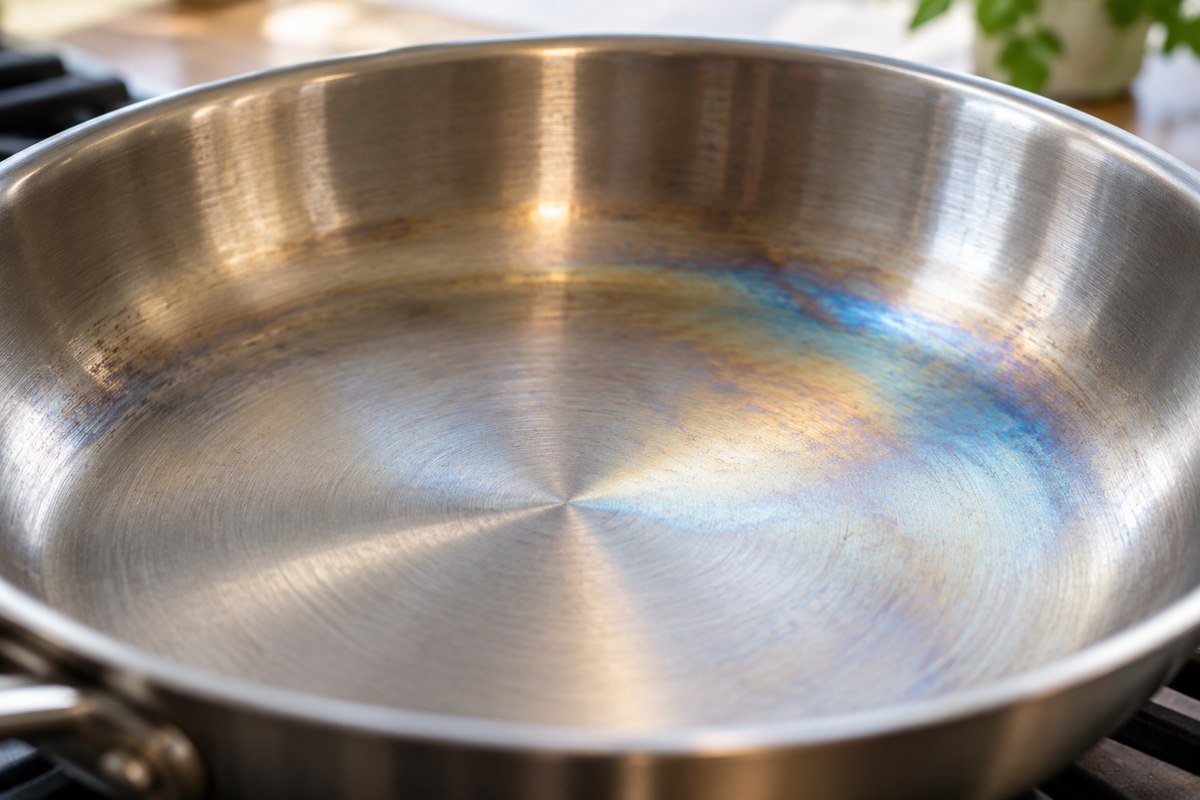
You wash a stainless steel skillet, dry it, and notice blue, purple, or gold across the bottom. Before you replace it, try the simplest explanation: stainless steel pan rainbow stains are usually heat tint, a cosmetic surface change. Once the pan is cool and washed, a gentle wipe with diluted white vinegar often removes the color.
The useful question is what kind of mark you actually have. A smooth rainbow sheen, chalky white deposit, sticky brown film, and tiny pit can look similar under kitchen lighting, but they need different responses. This guide helps you choose a sensible first step without turning ordinary cleaning into an expensive project.
These instructions apply to exposed, uncoated stainless steel cooking surfaces. If your pan has a nonstick coating, colored exterior, decorative finish, or unfamiliar construction, check its specific care guide first.
Table of Contents
What causes stainless steel pan rainbow stains?
Heat can change the thin oxide layer at the surface of stainless steel, producing an iridescent appearance. Made In’s explanation of rainbow heat tint identifies this as an appearance issue rather than a loss of cooking performance.
That distinction applies to ordinary heat tint on an otherwise intact pan. Color alone cannot tell you whether cookware has also warped, suffered a loose handle, or developed another problem. Look at the whole pan before deciding that every mark is harmless.
There is also no reason to assume an expensive pan cannot discolor. If you are learning how construction affects cooking, our stainless steel cookware buying guide provides the broader material background. Cleaning a surface mark and choosing a new pan are separate decisions.
Identify the mark before choosing a cleaner
Start with a cooled, freshly washed pan in good light. Tilt it to see whether the color moves with the reflection. Look for raised residue, a cloudy film, or a depression in the metal. Do not use a knife or sharp tool to investigate.
| Appearance | Possible explanation | First response |
|---|---|---|
| Smooth blue, purple, or gold sheen | Rainbow heat tint | Soft cloth and a manufacturer-approved vinegar wipe |
| Chalky white spots or cloudy film | Mineral deposits | Check the maker’s descaling method |
| Sticky amber or brown layer | Cooked-on oil residue | Wash away loose grease; use a suitable residue-cleaning method |
| Raised dark crust | Burnt food | Loosen deposits before gentle cleaning |
| Persistent tiny depressions | Possible pitting | Ask the manufacturer rather than scrub harder |
This table is a practical sorting tool, not a diagnosis from a photograph. Several kinds of marks can appear together. A pasta pot might have both a colored sheen and white deposits, so removing one layer may reveal something different underneath.
How to remove rainbow stains gently
1. Cool and wash the pan
Take the pan off the heat and allow it to cool naturally. Clean away food and loose grease with dish soap, warm water, and a soft sponge. Rinse it so the next step treats the discoloration rather than yesterday’s dinner.
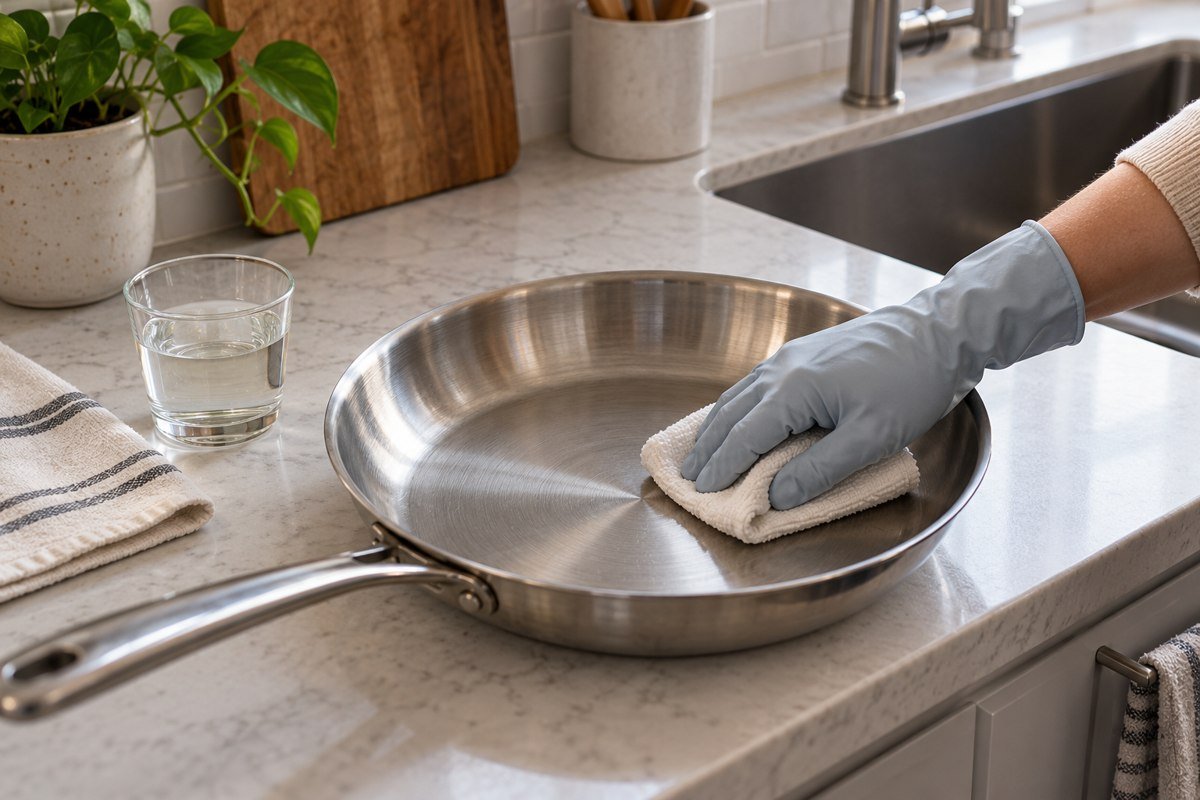
Put the pan on a stable surface where you can see the interior clearly. If you are working beside a stone countertop, keep the cleaning liquid contained in the pan and protect the surrounding surface according to its own care instructions.
2. Try diluted white vinegar
For an ordinary rainbow film, begin with diluted white vinegar and a soft cloth, provided the cookware maker permits this treatment. Apply enough to wet the affected area and wipe gently. A small test area is a sensible starting point if the finish is unfamiliar.
All-Clad’s use and care instructions recommend a white-vinegar wipe for blue or rainbow discoloration. Follow the directions for your particular cookware instead of borrowing instructions intended for a different coating or material.
3. Rinse, wash, and dry
Rinse away the vinegar, wash with dish soap, and rinse again before drying with a clean towel. Examine the pan in the same light you used earlier. If the color remains, reassess the mark before repeating the treatment or choosing a stronger product.
A brief wipe is the appropriate first experiment for a cosmetic sheen. There is no need to begin with a long soak, aggressive polishing, or a collection of different cleaners. Stop if the finish changes unexpectedly.
What if the marks are white or cloudy?
A whitish film may be mineral residue rather than heat tint. Tramontina’s stainless steel cleaning guide distinguishes different cleaning problems and includes vinegar-based treatment for discoloration. Match the method to your pan and the type of deposit.
Try ordinary washing first. If your manufacturer recommends a warmed vinegar-and-water treatment for hard-water deposits, follow that method’s proportions and heating directions. Do not leave a heating pan unattended or allow the liquid to boil dry.
Once the pan is clean, dry it rather than leaving droplets to evaporate. This is a simple habit to try when spots repeatedly appear after washing. If the marks remain as tiny depressions after deposits are gone, further descaling is unlikely to answer the real question; contact the manufacturer.
What if vinegar does not remove brown residue?
A sticky brown layer calls for a different approach from a smooth rainbow sheen. Begin by separating loose food from stubborn residue. A cleaner that improves the color of bare steel may still leave an actual layer of cooked-on material behind.
Our guide to removing sticky cookware residue covers that separate cleaning task. Use only the advice that matches the material you own, and let your cookware manufacturer’s directions take priority.
For dark, raised deposits, see the burnt cookware cleaning guide. The practical goal is to loosen food without attacking the metal underneath. Avoid escalating from a failed vinegar wipe straight to steel wool.
Before using a specialist cleanser, check the label and the cookware instructions together. Test discreetly, use the gentlest suitable tool, and rinse thoroughly. Repeated force is not a substitute for identifying the residue.
Three common situations, three sensible responses
The new skillet with a blue ring: You have washed the pan after its first few meals, and the interior feels smooth. Start with the gentle rainbow-tint method. If the sheen lifts, return to ordinary care and review your preheating routine. Buying a replacement because the steel changed color would be premature.
The pasta pot with a cloudy bottom: A white film appears after boiling and washing. Check the manufacturer’s guidance for mineral deposits, then clean and dry the pot. Compare its appearance before and after treatment. A removable film and a persistent pit should not be treated as the same finding.
The frying pan with a sticky brown edge: The rim or sidewall has a distinct layer that catches a cloth. Photograph it before trying another cleaner, then consult the appropriate residue-removal instructions. You may need to remove actual cooked-on material before you can judge the steel underneath.
In each case, change one thing at a time. If you use several products and tools in succession, it becomes difficult to know which step helped or caused an unwanted change. Keep the first attempt small, gentle, and easy to assess.
When asking customer support for advice, include the product line, whether the surface is coated, what you cooked, and what cleaning products you have already tried. A clear description is more useful than simply saying the pan is stained. Keep purchase information available if the manufacturer needs it.
Two useful cleaning products, if you need them
Affiliate disclosure: This article contains affiliate links. As an Amazon Associate I earn from qualifying purchases. You may already have a suitable cloth, sponge, and vinegar at home; buying additional supplies is optional.
Scotch-Brite Zero Scratch Scrub Sponge, 6 Pack
This is an option for readers who need a fresh kitchen sponge for everyday washing and gentle wiping. The verified Amazon listing identifies the six-pack as Zero Scratch. Start with light pressure and follow your pan’s care instructions.
Buying consideration: A non-scratch product name is not permission to scrub every finish aggressively. Keep abrasive debris out of the sponge and replace it when worn. View Scotch-Brite Zero Scratch sponges on Amazon.
Bar Keepers Friend Cookware Cleanser & Polish, two 12-ounce containers
This product suits readers whose compatible cookware needs more than ordinary washing. The manufacturer’s product directions specify gentle application to a wet surface and thorough rinsing within one minute.
Buying consideration: It is a specialist cleanser, so confirm suitability for the exact surface and follow the label. Do not mix it with other cleaning chemicals. A simple rainbow sheen may need only vinegar. View Bar Keepers Friend Cookware Cleanser on Amazon.
These recommendations are based on verified product identity and published instructions, not hands-on testing for this article. No price, stock, rating, or performance guarantee is implied.
A practical care demonstration
Watch Prudent Reviews demonstrate a diluted-vinegar wipe for rainbow heat tint on stainless steel pans. The short video shows gentle wiping, rinsing, and drying; follow your own cookware maker’s care instructions.
https://www.youtube.com/watch?v=7mUc3I_fLL8
Reduce repeat cleaning without chasing a perfect shine
Pay attention to when the color returns. Does it follow a long empty preheat, a particular meal, or washing and air-drying? A short note after each use can help you distinguish a cooking habit from a water-spot problem.
Use the heat level the food requires and follow the pan maker’s preheating guidance. Avoid leaving an empty skillet heating while you prepare ingredients elsewhere. Keep the work area ready before you turn on the burner.
Wash away food after the pan has cooled, rinse carefully, and dry it before storage. If stacking cookware causes scuffs, our guide to cookware scratches covers the separate issue of surface wear.
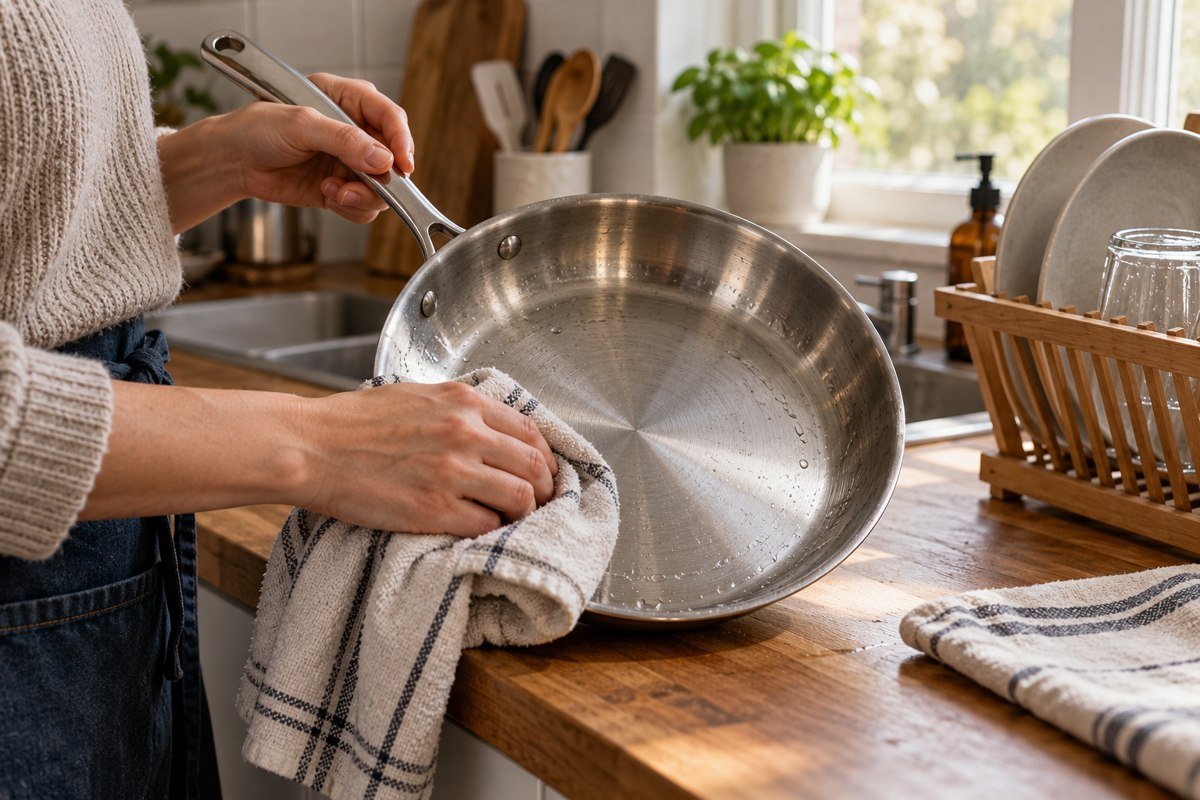
A working pan does not have to look untouched. Decide whether a mark affects the surface or simply its appearance. Cleaning every faint reflection after every meal can add work without improving your cooking.
When to stop cleaning and ask the manufacturer
Pause if you find significant warping, a loose handle, a separating base, exposed inner layers, or a surface that seems to be flaking. Those observations deserve a construction-specific answer rather than another stain-removal attempt.
Lagostina’s guidance on cloudy stainless cookware distinguishes routine appearance issues from damage such as deep pitting or significant warping. Photograph the cleaned, dry pan and provide its model number when requesting advice.
Frequently asked questions
Can I cook in a stainless steel pan with rainbow stains?
Ordinary heat tint on intact bare stainless steel is generally cosmetic. Check separately for warping, loose parts, or a damaged cooking surface before returning the pan to use.
Does rainbow discoloration mean the coating is peeling?
A smooth iridescent sheen on uncoated stainless steel is different from a peeling applied coating. If your pan is coated or you see flakes, stop and check its specific care instructions.
Do I need to boil vinegar to remove rainbow stains?
Usually, start with a gentle wipe on a cooled pan. Some manufacturers recommend heating vinegar and water for mineral deposits, which is a different task.
Why does my pan still look stained after a vinegar wipe?
The mark may be food residue, cooked-on oil, mineral buildup, or surface damage rather than ordinary heat tint. Wash, dry, and inspect it before selecting another treatment.
Should I buy a new pan if the rainbow returns?
Recurring color alone does not justify replacement. Review your heating and cleaning routine, then assess the pan’s structure and cooking surface independently of its shine.
Can stronger scrubbing remove pits?
Cleaning cannot fill missing metal. If marks remain as depressions after gentle cleaning, ask the manufacturer for advice rather than trying to polish them away.
Keep the pan; match the cleaning method to the mark
For a smooth rainbow sheen, start with a cooled pan, ordinary washing, and a permitted vinegar wipe. For white deposits, sticky residue, or actual damage, change the approach. A little inspection before cleaning often saves more effort than a stronger cleaner.
Leave a Reply