
Dinner is ready to start, but the cooktop keeps flashing as if your pan isn’t there. Before replacing cookware or booking a repair, check the bottom of the pan. The advertised diameter across its rim may tell you very little about the magnetic base your induction zone needs.
Induction pan not detected? Start with a cool pan and cooktop. Check the base with a magnet, compare its magnetic footprint with your zone’s minimum size, center it, and try a pan that already works. Those checks help separate a cookware mismatch from a problem that needs the appliance maker’s attention.
A magnet is useful, but it isn’t a universal compatibility certificate. Here’s how to make the next decision without buying an entire set on a guess.
Table of Contents
First, identify what the cooktop is actually doing
A flashing pan indicator is different from an appliance with no power. Note whether the controls respond, whether one zone or every zone is affected, and whether the pan ever heats. Write down the exact symbol or error code before switching anything off.
Use your model’s manual to interpret that display. A symbol that means unsuitable cookware on one brand can mean something else on another. Avoid advice that treats every flashing U, F, or E code as interchangeable.
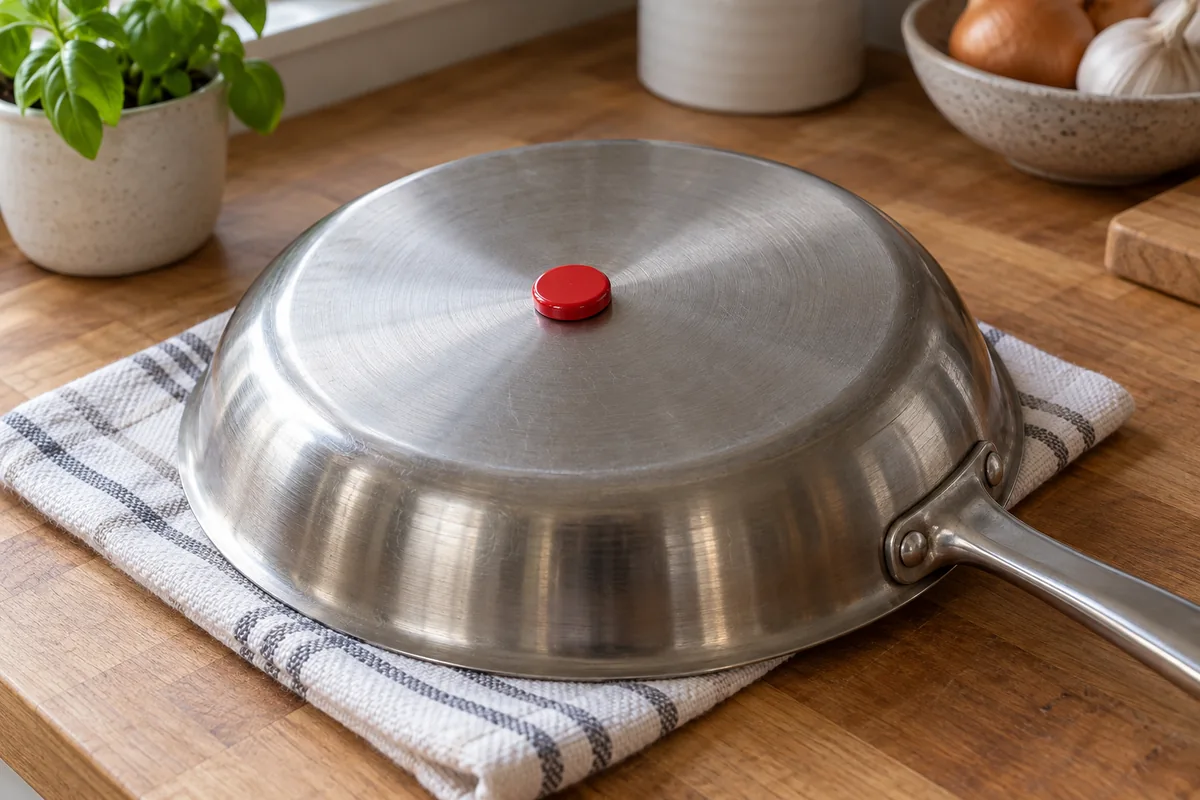
Make your first checks with everything cool. Remove the pan from the glass before turning it over. Put a towel on the counter to protect the cookware and work surface, and keep any magnet away from an operating zone.
Induction pan not detected: a practical checklist
| What you observe | What to check next | Useful next step |
|---|---|---|
| One pan fails; others work | Base material, size and shape | Compare it with a working pan |
| Small pan works on one zone only | Minimum base size for each zone | Use the suitable smaller zone |
| Magnet sticks, but no heating | Magnetic footprint and centering | Measure the underside |
| Several suitable pans fail on one zone | Zone selection and model instructions | Document the pattern for support |
| Pan heats but hums | Normal operating sounds | Compare with manufacturer guidance |
1. Test the base, rather than the sidewall
Hold an ordinary household magnet against the center of the cool underside, then check several points toward the outer edge of the flat base. Remove it before returning the pan to the stove.
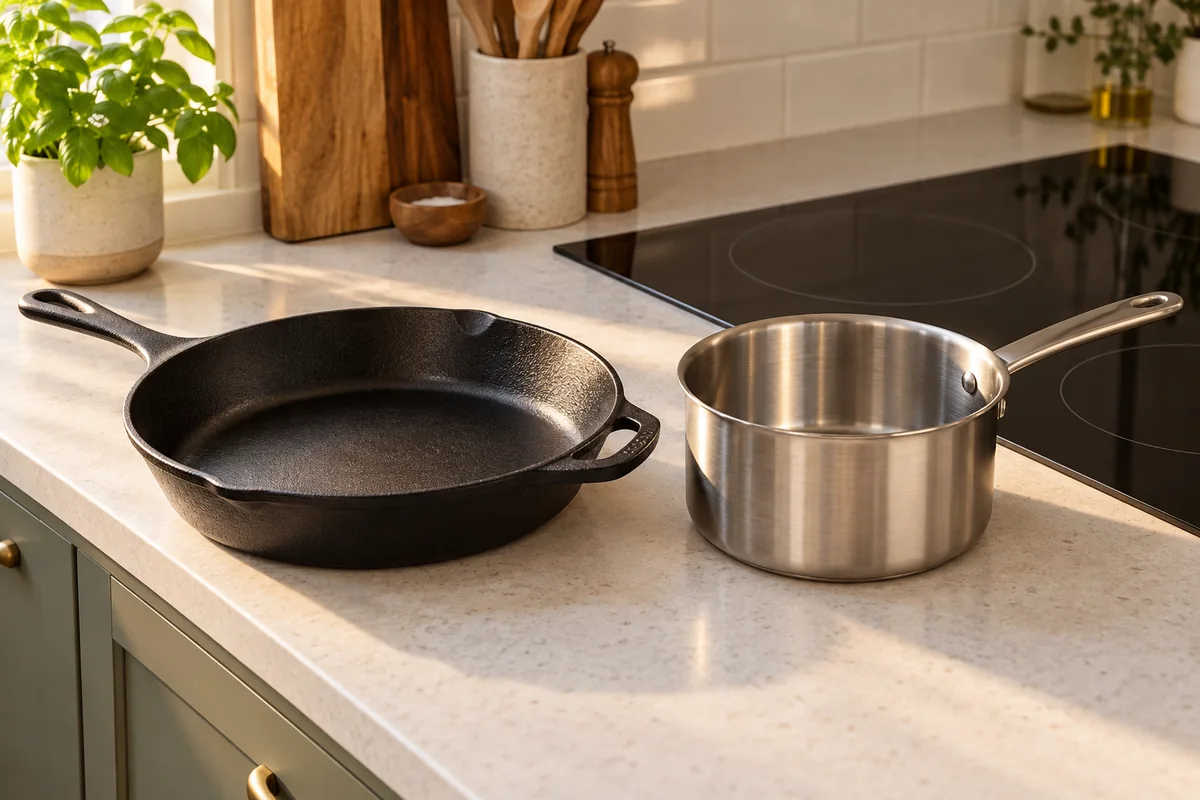
For conventional household induction, cookware needs a suitable magnetic base. Cast iron, enameled steel and stainless steel specifically designed for induction are common options. Plain aluminum, glass and copper need a suitable added base to work on these appliances.
Don’t assume that every stainless pan behaves alike. Its cooking surface and exterior can use different materials. Likewise, a ceramic nonstick coating says nothing about the magnetism underneath it.
Whirlpool’s cookware guidance explains that a partly magnetic bottom can affect performance and, in some cases, prevent recognition. Record whether the magnet grips across the base or only in a small central patch; neither observation replaces the appliance’s size requirements.
2. Measure the magnetic bottom, not the opening
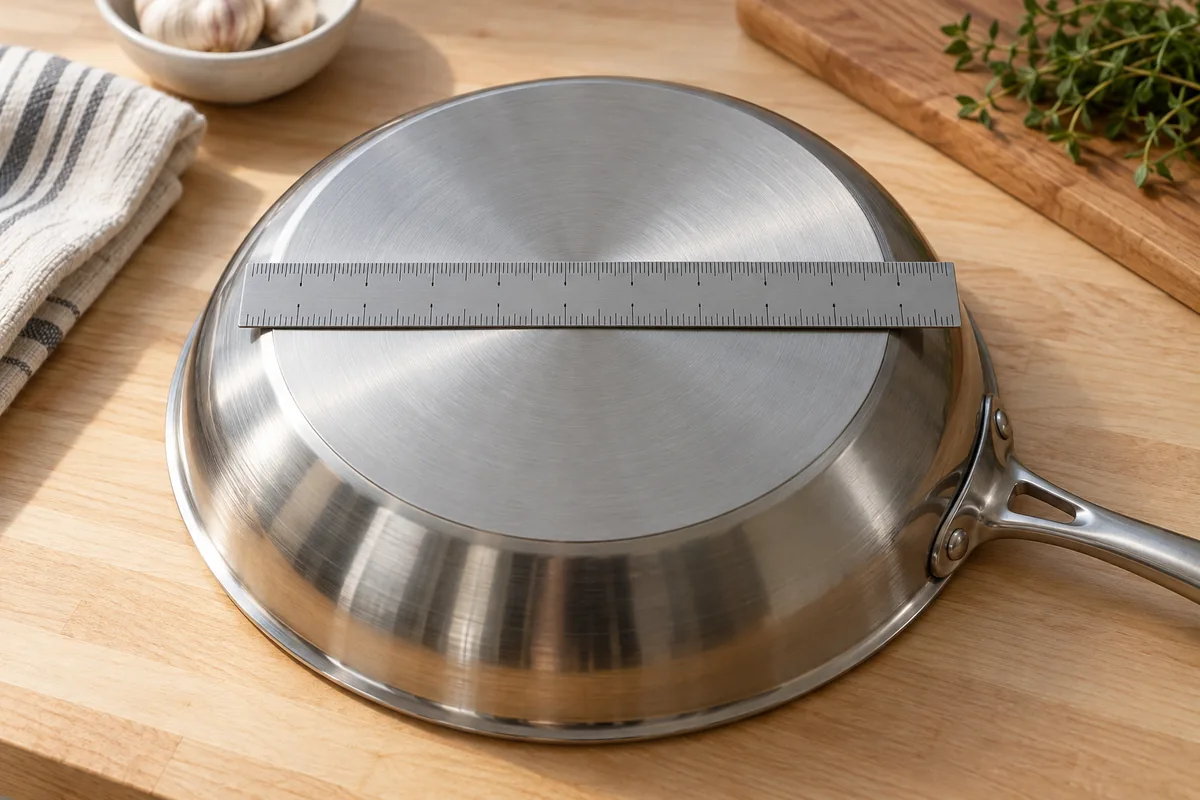
Turn the pan over and measure the flat base across its center. If there is a separate magnetic disc, measure that too. Keep these figures separate from the rim diameter printed on the box.
GE Appliances’ size and shape guide gives an instructive example: an 11-inch frying pan may have a magnetic area only 7.25 inches across. Its wide opening does not guarantee that a large zone will recognize it.
Look up the minimum cookware diameter for the particular zone you selected. There is no single minimum that applies to every induction cooktop. The ring graphic, appliance width and pan’s marketing size cannot substitute for that specification.
For example, imagine a small saucepan that works on the rear zone but fails on the front zone. Before calling it defective, compare its base measurement with both zones’ requirements. That simple comparison gives you a specific explanation to check with the manufacturer.
3. Center the base and select the correct zone
With the appliance off, position the flat bottom in the middle of the zone marking. Judge the base position rather than the handle or broad rim. Then select that zone and a normal cooking setting according to the manual.
For a permitted heating check, use some water in the pan and remain beside it. Don’t use an empty pan on boost to see whether it eventually registers. Stop the test once you’ve established whether heating starts.
If your appliance has a bridge or flexible cooking area, follow its placement diagram. Two printed circles don’t automatically mean any large griddle can span them. Confirm the permitted cookware shape and operating mode first.
4. Inspect stability and clean the contact surfaces
Set the cool pan upright on a known flat counter. Does it rock noticeably, lean toward a heavy handle, or sit on a raised foot? Examine the underside for stuck food and damage. A stable base is the goal; a tiny visible curve alone doesn’t prove a pan has failed.
Clean and dry the glass and pan exterior using their makers’ instructions. Lift cookware to reposition it so trapped grit isn’t dragged across the surface. Remove any accessory mat unless your appliance explicitly permits that accessory.
Induction transfers energy magnetically; the glass isn’t a hotplate that must conduct all the cooking heat into the pan. Even so, appropriate base shape and positioning remain important for dependable operation. Don’t try to flatten cookware with a hammer as a detection fix.
5. Compare with cookware that already works
Choose one known-working pan that meets the suspect zone’s size requirement. Test it on that zone using the same permitted water check. If possible, compare the original pan on another appropriately sized zone.
Change one variable at a time. Switching the pan, zone and cooking mode together makes the result harder to interpret. A quick note is enough: pan A works on rear left; pan B does not; both are centered.
If only one vessel fails, contact its maker with the model, base measurement and appliance details. If several suitable pans fail on the same zone, ask the appliance manufacturer for the next diagnostic step. These comparisons narrow the question without proving which internal component is responsible.
6. Check controls before arranging service
Confirm the selected zone and heat setting, and check the manual for a control lock, pause function or demonstration mode. Use only the reset procedure provided for your model.
GE’s troubleshooting instructions for flashing induction power levels cover pan type, position, size and controls, then recommend service if the problem remains. Follow the equivalent instructions for your own appliance.
For the service request, prepare the model number, exact display message and your pan comparison notes. A short video of the display can help explain an intermittent symptom. Avoid opening the cooktop or making electrical measurements yourself.
Humming doesn’t necessarily mean detection failed
If the water heats while the pan hums, you have a different observation from a pan that never registers. Sound alone doesn’t establish that cookware is faulty or poor quality.
Wolf’s induction noise guidance describes normal operating sounds and ways to reduce pan noise. Compare what you hear with your appliance maker’s examples before shopping for a supposedly silent replacement.
GE Appliances’ short video demonstrates induction sounds and discusses cookware size near the end. It is useful for distinguishing a working but audible setup from an unrecognized pan.
Should you buy an induction adapter plate?
Read the appliance manual before considering one. An adapter is a heated intermediary, so it changes how your existing cookware receives heat. It should not be treated as a universal workaround for a pan that fails detection.
Some manufacturers expressly prohibit adapters. For example, the Miele KMDA 7876 instructions warn against induction adapter plates because they can damage the induction generators. That is a model-specific restriction worth checking before buying an accessory.
Where adapters are prohibited, choose appropriately sized compatible cookware. Don’t improvise with loose metal, stack pans, or leave a magnet attached underneath a vessel to fool detection.
Buy one suitable pan only if you need it
If another pan already works, you may need no purchase at all. If replacement makes sense, our induction cookware buying guide explains the broader material choices. Match the replacement to your cooking task and zone before comparing brand names.
Affiliate disclosure: This article contains affiliate links. As an Amazon Associate I earn from qualifying purchases.
Lodge 10.25-inch seasoned cast iron skillet
The Lodge L8SK3 is a practical option for readers who want a cast iron skillet for browning and oven cooking. Its iron construction suits induction, provided its base matches your zone’s requirements. Check that you can comfortably lift its weight; cast iron needs drying and seasoning care, and its handle gets hot.
View the Lodge L8SK3 skillet on Amazon.
Cuisinart MultiClad Pro 10-inch open skillet
The MCP22-24N is an induction-compatible tri-ply stainless option for sautéing and pan sauces. It suits cooks who prefer stainless steel to seasoning maintenance. Food release still requires appropriate heat and fat. Cuisinart lists this exact model as discontinued, so check the seller, condition and model carefully; a newer version is a separate purchase decision.
View the Cuisinart MCP22-24N on Amazon. For a wider comparison, see our Tramontina versus Cuisinart stainless cookware guide.
These are researched options, not products tested for this article. Neither comes with a guarantee of detection on every zone. Request the flat magnetic base diameter if the listing gives only the opening width.
If you’re choosing between seasoned metals, our carbon steel versus cast iron comparison discusses handling and maintenance. An existing iron pan with surface rust may need care rather than replacement; our cast iron rust removal guide covers restoration considerations.
Frequently asked questions
Why does a magnet stick but my induction cooktop won’t detect the pan?
The magnetic area may be too small for that zone, the pan may be off-center, or its base may be unsuitable. Check the zone’s minimum size and compare with a known-working pan.
Can a small saucepan work on one induction burner but not another?
Yes. Zones can have different minimum cookware sizes. Measure the magnetic base, check the manual and use the appropriate zone rather than relying on the saucepan’s advertised rim diameter.
Does all stainless steel cookware work on induction?
No. Look for the maker’s induction compatibility statement and check the underside with a magnet. Stainless cookware can combine different materials, so appearance alone doesn’t settle compatibility.
Does a buzzing pan need replacing?
Not necessarily. Some sounds are normal during induction cooking. If the pan heats, compare the sound with your manufacturer’s guidance. Persistent errors or a sudden change deserve further investigation.
Can I make an unsuitable pan work by attaching a magnet?
No. A loose magnet doesn’t turn the base into appropriate cookware. Remove magnets after checking a cool pan, and use cookware approved for your appliance.
When should I contact the appliance manufacturer?
Contact support when suitable, correctly positioned pans still fail after the manual’s checks. Provide the model number, exact code and comparison results. Stop using an appliance with cracked glass or signs of electrical damage.
Make the next step specific
Check magnetism, measure the base, center the pan and compare it with one that works. Then decide whether you need a smaller zone, a different pan or manufacturer support. A few concrete observations are more useful than replacing cookware because a display blinked.
Leave a Reply