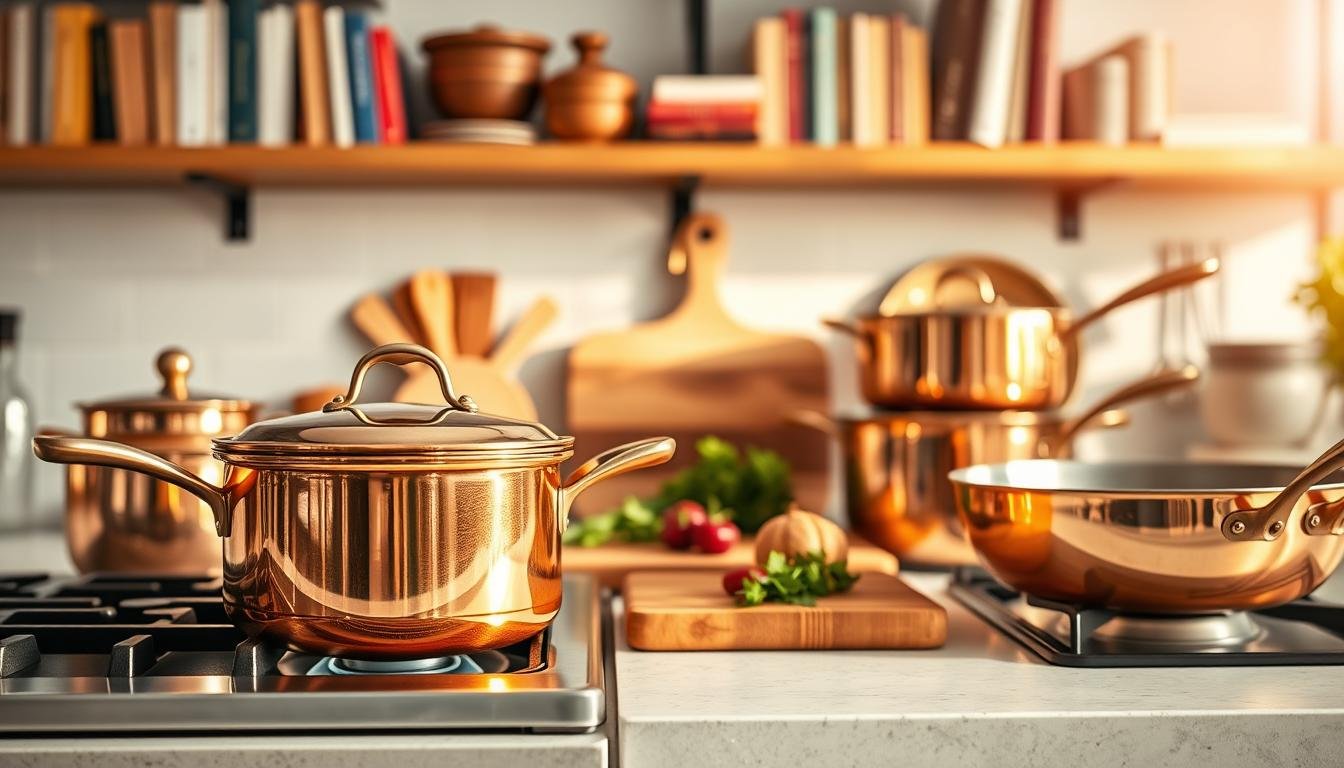
Copper Cookware: Performance and Upkeep
While stainless steel and aluminum dominate most home kitchens, a single material reigns supreme in professional settings. In fact, many top-tier chefs consider it non-negotiable for tasks requiring pinpoint temperature control.
This premium metal offers superior heat conductivity and an incredibly even heating surface. That performance makes it the preferred choice for anyone seeking quality results from their kitchen tools.
This comprehensive copper cookware guide is your definitive resource for selection, use, and long-term care. We’ll help you understand both the outstanding capabilities and the specific maintenance needs of this investment-grade product.
Owning these pieces is about more than just cooking. It’s about acquiring a long-lasting kitchen asset. Making an informed decision and committing to proper care practices are essential to protect your purchase.
You’ll gain actionable knowledge on historical significance, material indicators, and expert buying advice. Our goal is to help you maximize your cooking results and the value of your investment for years to come.
Table of Contents
Key Takeaways
- Copper provides exceptional heat conductivity for precise and even cooking.
- This material is a significant investment that requires informed selection.
- Understanding both performance benefits and maintenance needs is crucial.
- Proper care ensures your cookware remains a functional and beautiful asset.
- This guide covers everything from historical context to modern buying tips.
- You’ll learn how to choose, use, and maintain your pieces effectively.
Exploring the Legacy and Benefits of Copper Cookware
For centuries, professional kitchens have relied on a material known for its unmatched performance. Its journey from historic French restaurants to modern home kitchens is a story of enduring quality.
A Glimpse into Culinary History
Traditional French cooking established this metal as essential. Renowned chefs, including Julia Child, sourced their pots from prestigious makers like E. Dehillerin in Paris.
This choice set a standard for serious cooks everywhere. Many antique pieces used today are 75 to 200 years old.
Why Copper Remains a Preferred Metal
Superior heat conductivity is the key reason. This metal heats quickly and spreads temperature evenly across the entire cooking surface.
It also cools rapidly when removed from the burner. This precise control prevents hot spots and gives chefs a critical edge.
The craftsmanship in these pieces is evident. Heavy, well-made pans survive decades of use while performing excellently.
Owning such cookware connects you to a rich history. It’s a functional investment that also serves as a piece of heritage.
Copper Cookware: How to Choose Your Ideal Set
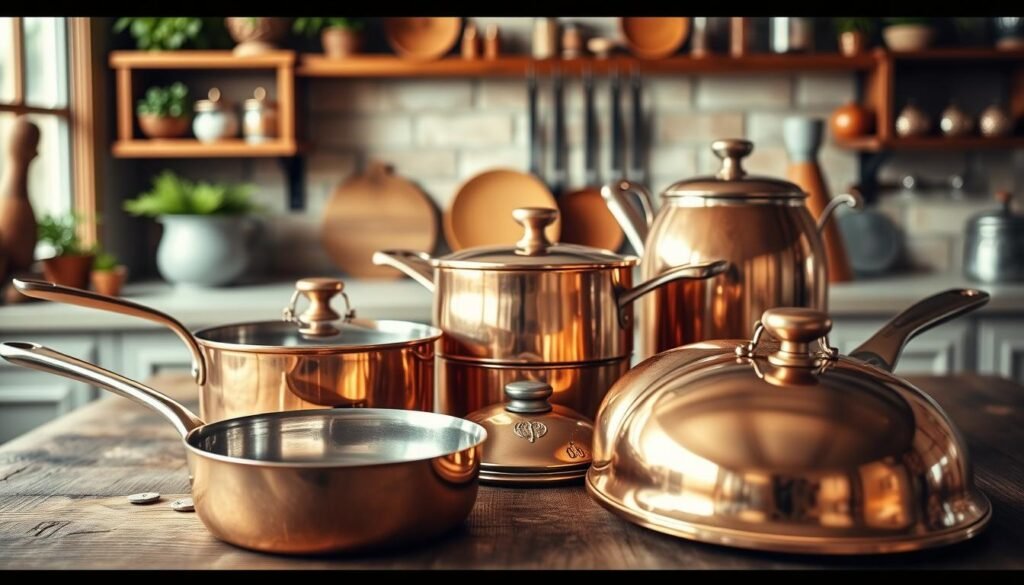
When building a professional-grade kitchen arsenal, the thickness of the metal is your first clue to quality. Look for walls between 1.5mm and 3mm for the best heat retention and durability.
Key Considerations and Material Quality
Trusted French makers like Mauviel, Havard, and E. Dehillerin set the standard. Authentic products are stamped with a brand or size mark.
Your choice of handle material matters. Brass stays rust-free but gets hot fast. Many chefs prefer cast iron handles for a cooler grip.
You can buy a complete set or build a collection piece by piece. Starting with a versatile pan is a smart move.
Understand that a higher price reflects thicker material and superior craft. Watch for a sale, but remember this is a serious investment. For more insights, consult our detailed buying guides.
Performance and Upkeep Essentials of Copper Cookware
For tasks where a few degrees make all the difference, nothing matches the thermal performance of this classic metal. To protect your investment, understanding its care is just as crucial as using it.
Optimal Heat Distribution and Cooking Efficiency
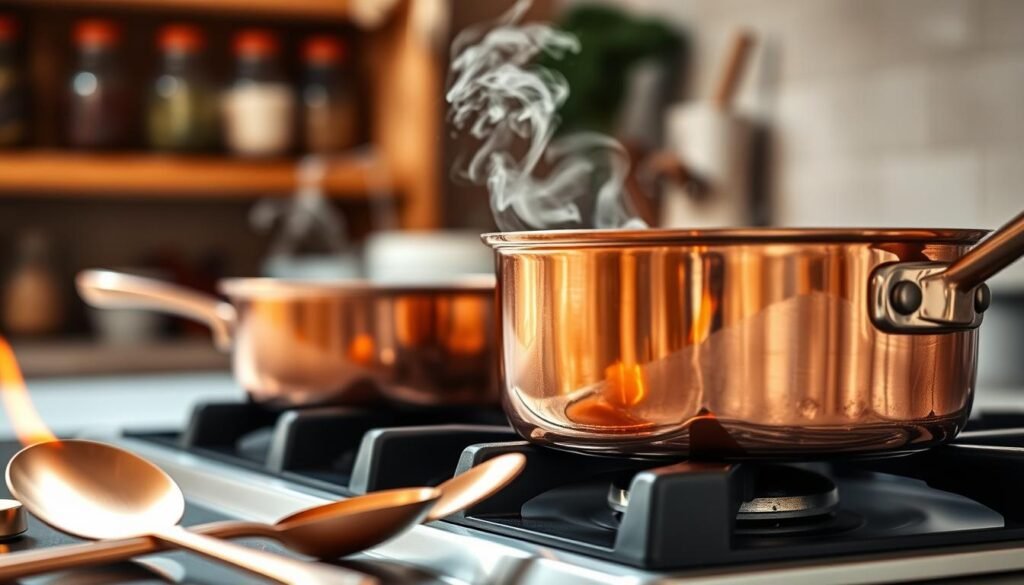
This material’s superior heat conductivity allows it to warm rapidly and spread warmth evenly. It eliminates hot spots that can burn your food.
When removed from the burner, it cools quickly. This gives you precise control for delicate sauces.
The tin interior is essentially non-stick when used correctly. It’s ideal for eggs and proteins.
Never heat a pot or pan empty. Tin melts at 450°F. Always have oil or food inside.
Only use wood or silicone-coated utensils. Metal tools can scratch the soft tin surface over time.
Maintenance, Restoration, and Tin Finishing
Hand-wash and dry your pieces immediately. This prevents water spots.
The exterior will change color from heat and air. This natural oxidation doesn’t harm it.
For a shine, apply a thin coat of copper polish with a damp sponge. Rinse it off right away.
For quick touch-ups, use the dry method. Rub polish on marks with a soft cloth.
Care for handles depends on the material. Brass can be polished. Iron should be washed, dried, and oiled.
The interior tin may need professional re-tinning every 10-20 years. This specialized process uses molten tin.
With proper use and care, these pieces are designed for lifelong service. For more on performance, see this guide to heat conductivity. Explore premium copper sets for your kitchen.
Expert Guidance for Buying and Caring for Copper in Your Kitchen
Online shopping for chef-quality equipment can unlock significant savings, provided you know what to look for. This final guide helps you make smart choices and protect your investment.
Navigating Styles, Prices, and Online Selections
Major brands like Mauviel offer distinct product lines at various price points. Understanding these differences is key to finding the right set for your kitchen.
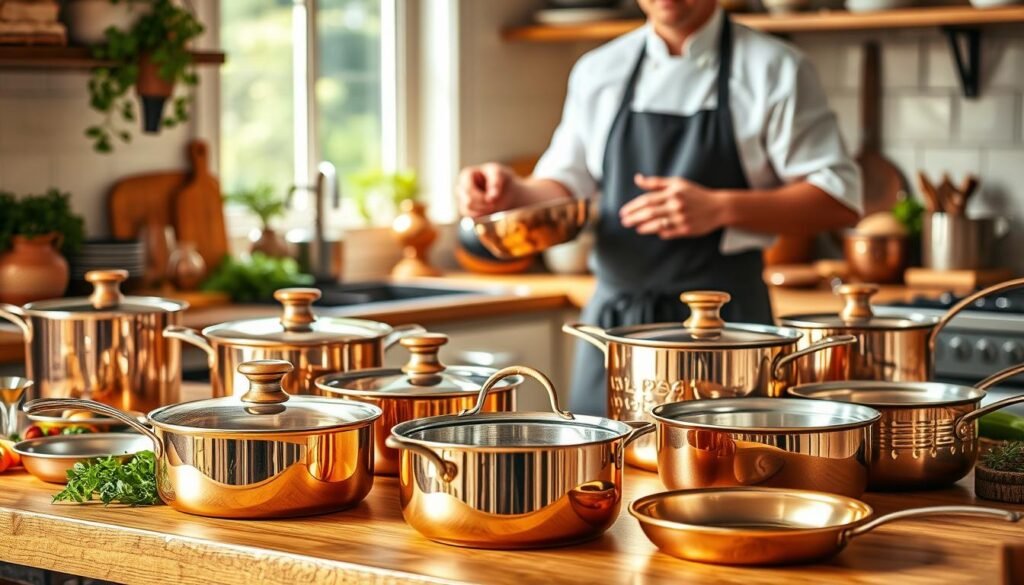
Watch for sale events offering 20-42% off. Many retailers provide free shipping on qualifying orders, reducing the total cost.
If a product page is blocked during your search, try disabling browser extensions. This often resolves loading issues.
Check cooktop compatibility. Standard pieces work on gas and electric. For induction tops, you need special lines or an adapter plate.
| Collection Line | Key Feature | Price Range | Best For |
|---|---|---|---|
| M’Heritage 150/200 | Traditional brass handles | $300 – $2,400+ | Gas/Electric tops, classic style |
| M’COOK | Cast stainless steel handles | Mid-range sets | Durability, modern kitchens |
| M’6 S | Induction-compatible | Premium | Induction cooktops |
| M’Steel | Multi-layer stainless steel | Varies | Easier care, some copper benefits |
Integrating Professional Tips and Practical Care
Start with one frequently used pot or pan. This lets you learn proper care without a large upfront cost.
Versatile pieces like gratins transition from oven to table. They offer great value for the price.
Consider vintage restored products. Chefs used pieces 75-200 years old. With a new tin interior, they are safe and perform beautifully.
Handle material affects your experience. Cast steel stays cooler. Brass handles get hot but look classic.
Build your collection over time. Watch for sales and shipping deals. This strategy helps budget-conscious cooks acquire quality piece by piece.
Conclusion
Investing in high-performance cookware transforms cooking from a chore into a precise art. Premium copper offers unmatched heat conductivity, outperforming standard steel or stainless steel.
Key indicators like wall thickness and brand heritage define quality. With proper care, these pieces last for decades, becoming multi-generational kitchen assets.
Start with one versatile piece rather than a full set. This lets you master its upkeep before expanding. Proper maintenance preserves its beautiful color and function.
For more on the sustainable performance benefits, see this resource. Use a comprehensive buying guide to make an informed choice. Your kitchen deserves tools that deliver lasting value.