
Cookware warranty claims are easy to print on a box and hard to actually honor — and in 2026, more buyers are checking the fine print before they check out. “Lifetime warranty” sounds like a promise, but lifetime of what, covering what damage, under what conditions? This guide breaks down which cookware brands are genuinely transparent about what their warranty covers, which ones bury the exclusions, and exactly what to check before you buy.
Table of Contents
- What a Cookware Warranty Actually Covers (and Doesn’t)
- Why Warranty Transparency Is a Bigger Deal in 2026
- Brand-by-Brand: Who’s Actually Transparent
- Red Flags: Exclusions That Catch Buyers Off Guard
- How to Verify a Warranty Before You Buy
- FAQ
What a Cookware Warranty Actually Covers (and Doesn’t)
Most cookware warranties promise to repair or replace a product with a “manufacturing defect” — not a product that simply wore out. That distinction does a lot of quiet work. Under U.S. federal law, warranty terms have to be disclosed before you buy and can’t be deceptive; the FTC’s consumer guide to warranties is a useful baseline for what sellers are actually required to tell you, and the Magnuson-Moss Warranty Act sets the rules for how those terms must be written. None of that forces a brand to offer good coverage — it just forces them to be honest about what they’re offering.
Why Warranty Transparency Is a Bigger Deal in 2026
Independent watchdog sites like Know Your Cookware have started publishing brand-by-brand verdicts alongside PFAS testing results, which means warranty fine print is getting the same public scrutiny that ingredient lists get in food. At the same time, DTC cookware brands are multiplying, and a flashy 1-year or “limited lifetime” warranty is often the least examined part of the pitch. Consumer Reports’ guidance still holds up here: a warranty is only as good as its coverage period, its exclusions, and how simple the claims process actually is — not the word “lifetime” on the label.
Brand-by-Brand: Who’s Actually Transparent About Their Cookware Warranty
Le Creuset
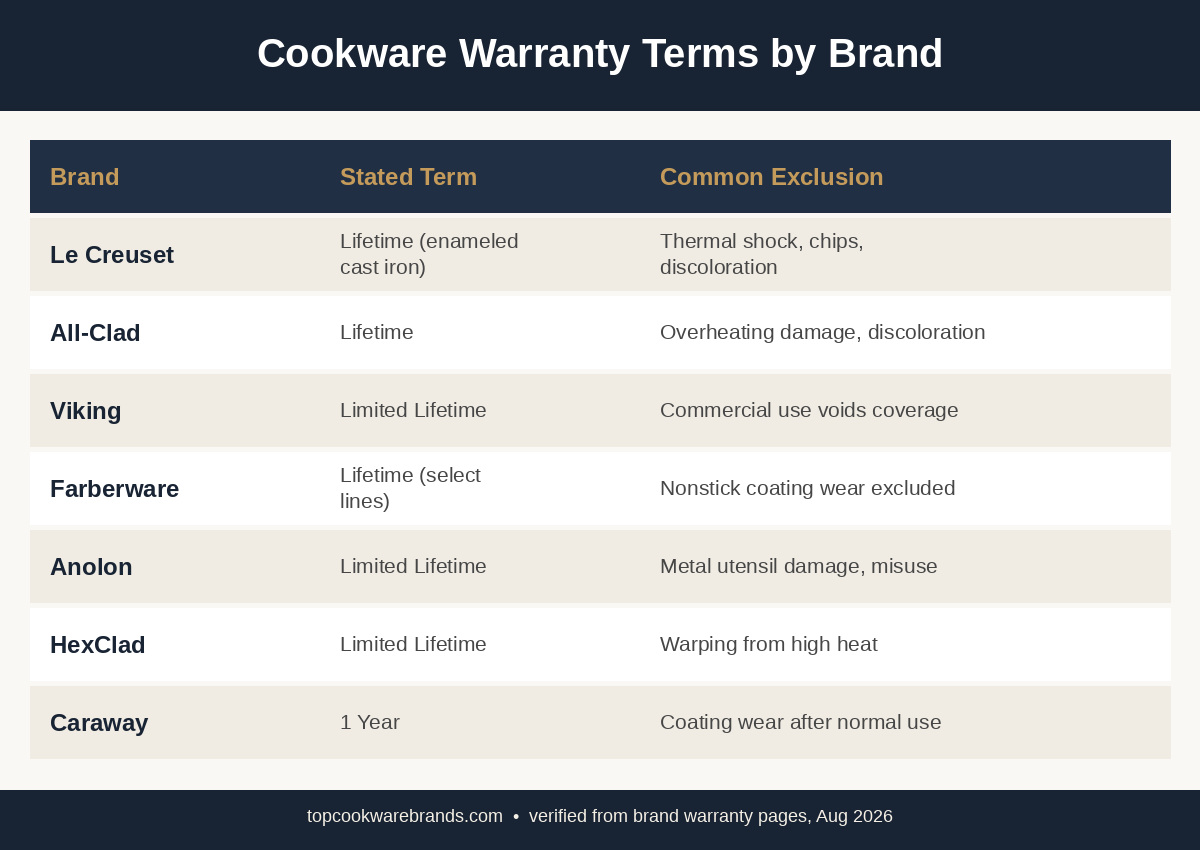
Le Creuset’s lifetime warranty on enameled cast iron is one of the most generous in the category, but it’s specific to manufacturing defects — chips from thermal shock, dropped pans, and gradual enamel discoloration from normal cooking aren’t covered. If you’re weighing it against another enameled cast iron heavyweight, our Le Creuset vs Staub Dutch oven comparison breaks down how their warranty terms and build quality actually differ.
All-Clad
All-Clad’s lifetime warranty is genuinely broad and one of the easier ones to actually use — but it excludes discoloration and damage from overheating an empty pan, which is a common way stainless cookware actually fails. We cover how that plays out in daily use in our All-Clad D5 Brushed review.
Anolon
Anolon’s limited lifetime warranty is clearly documented, but it explicitly excludes damage from metal utensils and dishwasher use on lines that recommend hand-washing — details that are easy to miss at checkout. Our Anolon Accolade review goes deeper on what’s actually covered on their hard-anodized line.
Viking
Viking’s limited lifetime warranty is well-documented on their site, but like several premium brands, it voids coverage the moment a pan sees commercial or restaurant use — worth knowing if you’re buying for a home business or side-hustle kitchen.
Farberware
Farberware advertises a lifetime warranty on select cookware lines, but nonstick coating wear — the single most common reason people replace a nonstick pan — is excluded, which is standard across nearly every nonstick brand, not just this one.
HexClad and Caraway
Newer hybrid and DTC brands vary widely. HexClad’s limited lifetime warranty excludes warping from high heat, a real risk given how the brand markets high-heat searing. Caraway’s standard warranty is a flat 1 year, considerably shorter than the legacy brands above, and coating wear from normal use isn’t covered.
Red Flags: Exclusions That Catch Buyers Off Guard
- “Lifetime” isn’t universal. It usually means lifetime of the base metal or shell, not the nonstick or enamel coating.
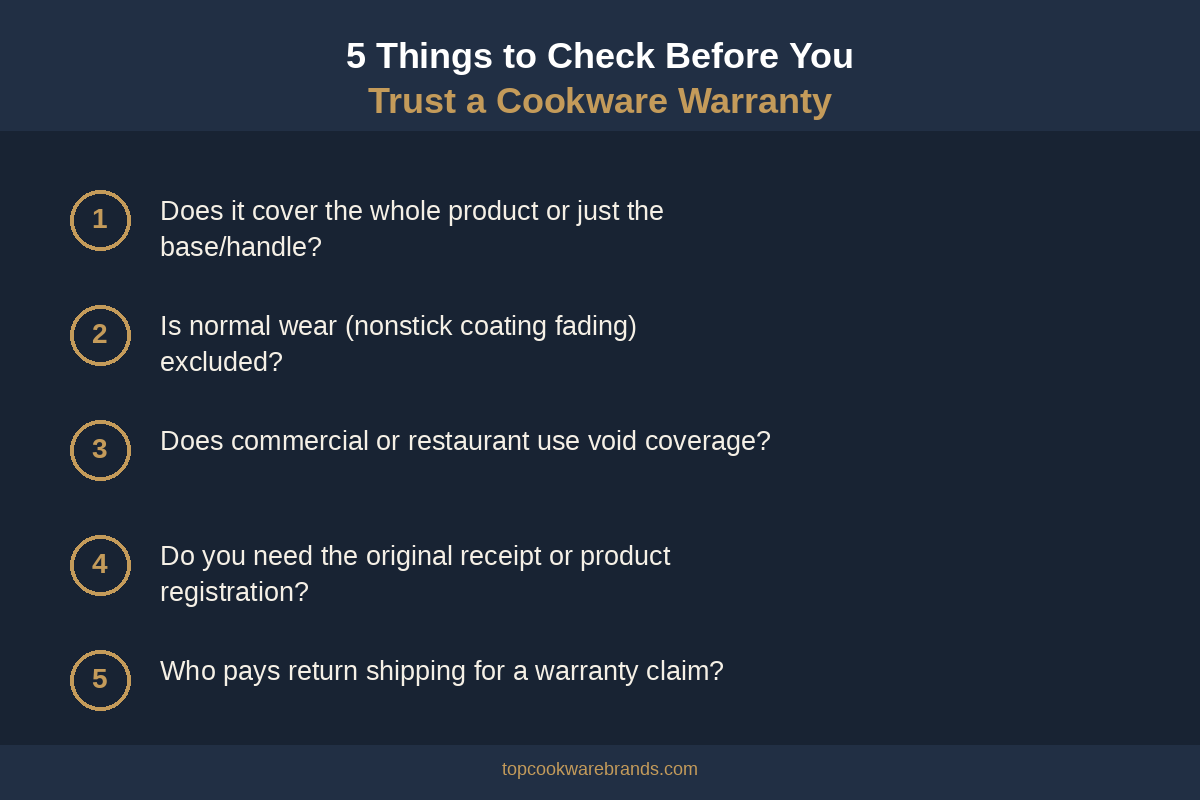
- Commercial use voids coverage on most residential-grade warranties, even for light home-business use.
- Dishwasher damage is a common exclusion, even on cookware marketed as dishwasher-safe.
- Proof of purchase or product registration is often required, and claims can be denied without it.
- Metal utensil damage voids nonstick and ceramic coverage on nearly every brand.
How to Verify a Cookware Warranty Before You Buy
Read the actual warranty PDF on the brand’s site, not the marketing page — the two often say different things. Search the document for “exclu,” which catches both “exclusion” and “excludes” in most PDFs. Check whether the warranty transfers if the pan is a gift or resold. And confirm who pays return shipping on a claim, since some brands quietly shift that cost to the customer.
For a broader look at which brands hold up across categories — not just on paper — our best stainless steel cookware brands guide and best cookware sets roundup both factor warranty terms into the rankings.
FAQ
Does a cookware warranty cover normal wear and tear?
No. Nearly every cookware warranty covers manufacturing defects only — scratches, coating fade, and discoloration from normal cooking are considered wear and tear, not defects.
Do I need to register my cookware for the warranty to apply?
Some brands require registration or proof of purchase to process a claim, so it’s worth registering or at least saving your receipt when you buy.
Are extended warranties worth it for cookware?
Rarely. Most cookware failures (coating wear, warping) fall under the same exclusions in both standard and extended warranties, so an extended plan often doesn’t cover the failure you’re most likely to have.
Leave a Reply