Why My Cookware Smells Weird After Use
Have you ever pulled a pan from the cabinet, only to be greeted by a strange smell? It’s a frustrating moment many home cooks know well.
This issue isn’t limited to one type of pot. It affects non-stick skillets, stainless steel pots, and more. These odd odors can turn a pleasant meal prep into a chore.
The scents themselves vary. You might notice a metallic hint or a burnt, rancid note. Often, they linger even after a good scrub with soap.
Understanding why this happens is your first step to a fix. Is it the non-stick coating? Could it be something in the food itself? This guide will help you find out.
I’ve faced this problem many times in my own kitchen. A once-trusted pan can suddenly make everything taste off.
For instance, a cast iron pan can develop a weird due to how it absorbs flavors. Other pans have their own quirks.
The good news? You usually don’t need to throw anything away. With the right approach, you can restore your pan to its fresh state. Choosing the right non-stick pans from the start can also help avoid some issues.
Table of Contents
Key Takeaways
- Odd odors in your cookware are a common and frustrating problem for home cooks.
- Various materials, including non-stick and stainless steel, can develop these smells.
- The odors can range from metallic and chemical to burnt or rancid, lingering after washing.
- Identifying the root cause is the essential first step toward eliminating the problem.
- Most smell issues are solvable and do not require you to replace your pans.
- Proper cleaning and maintenance techniques are often the key to restoration.
- Personal experience confirms that effective, practical solutions exist.
Understanding the Causes Behind Cookware Odors
When you heat your favorite skillet, unseen chemical processes can start. These reactions are often the root of persistent kitchen scents.
Common chemical reactions during cooking
Food particles interact with a pan‘s metal or coating at high heat. This creates new compounds that produce unpleasant odors.
For example, aluminum is reactive. When it contacts acidic items like tomatoes, a chemical change occurs. This often leaves a metallic smell on the surface.
The role of heat and residue buildup
High temperatures accelerate residue buildup. Oils and food bits can polymerize, forming a sticky layer on non-stick and other pans.
This coating can also degrade with excessive heat. It may release compounds that contribute to strange odors.
Even tiny food particles trapped in scratches decompose. Bacterial growth or rancid notes become noticeable after cooking.
Understanding these processes lets me address the cause, not just mask the scent.
Identifying the Culprits in Cookware Smells Weird After Use
Is the scent coming from burnt food or the pan itself? This distinction is crucial for a fix. Start by inspecting your non-stick pans closely.
Look for visible damage on the surface. Peeling, deep scratches, or discoloration on the non-stick coating are red flags. These flaws expose the underlying metal and trap particles.
A compromised coating often releases a chemical or plastic-like smell when heated. This is different from the odor of burnt-on residue.
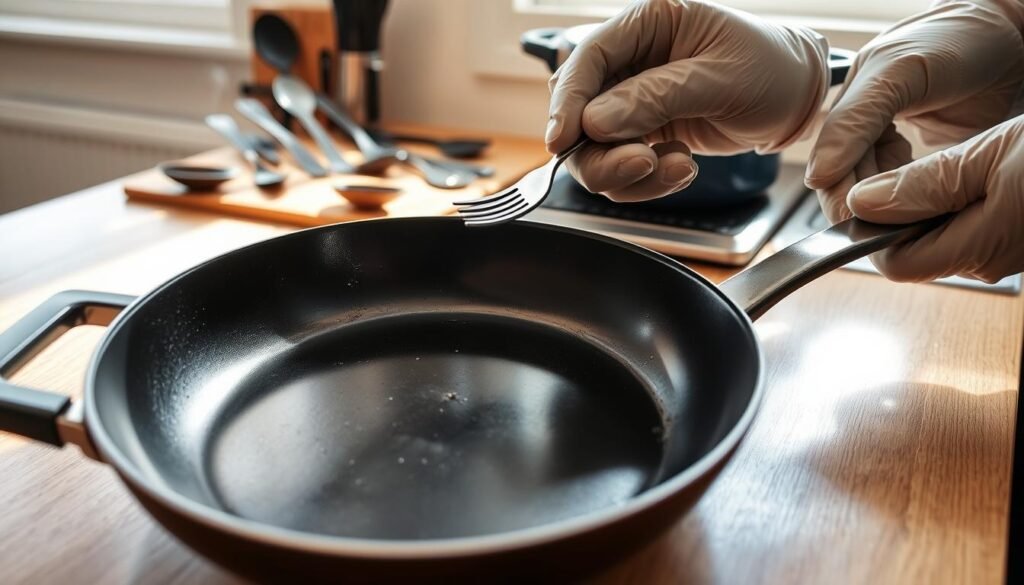
For aluminum pots, a metallic scent is common. It happens when the surface reacts with acidic ingredients. This creates a stubborn odor that lingers.
Sometimes, the issue is rancid oils baked into the non-stick coating. This creates a stale note. Check if the problem is isolated to one pot or non-stick pan.
Identifying the exact source determines your next step. It tells you if the pan can be saved or if the damage is permanent. This diagnostic approach is similar to troubleshooting a cast iron pan’s seasoning process.
Step-by-Step Guide to Tackle the Weird Smell Problem
Let’s walk through a proven process to eliminate those stubborn scents from your pots and pans. A methodical approach yields the best results.
Preparing your cookware for cleaning
I always start with a hot water rinse. This loosens food bits stuck on the surface.
Next, I wash the pan with dish soap and soapy water. This cuts through grease. It lets deeper treatments work better.
After washing, I check the pan. Is the odor gone? If not, I move to the next step.
Drying is crucial. Any leftover water can weaken the cleaning paste. I use a towel to dry the surface completely.
This prep way works for all pans, especially non-stick ones. Proper prep saves time later.
| Step | Action | Key Purpose |
|---|---|---|
| 1 | Rinse with hot water | Loosen debris |
| 2 | Wash with dish soap | Remove surface oils |
| 3 | Dry thoroughly | Ensure paste adhesion |
| 4 | Assess the pan | Decide on further treatment |
“Methodical cleaning is the foundation of a fresh kitchen. Skipping prep is like building on sand.”
Mixing the perfect paste with baking soda
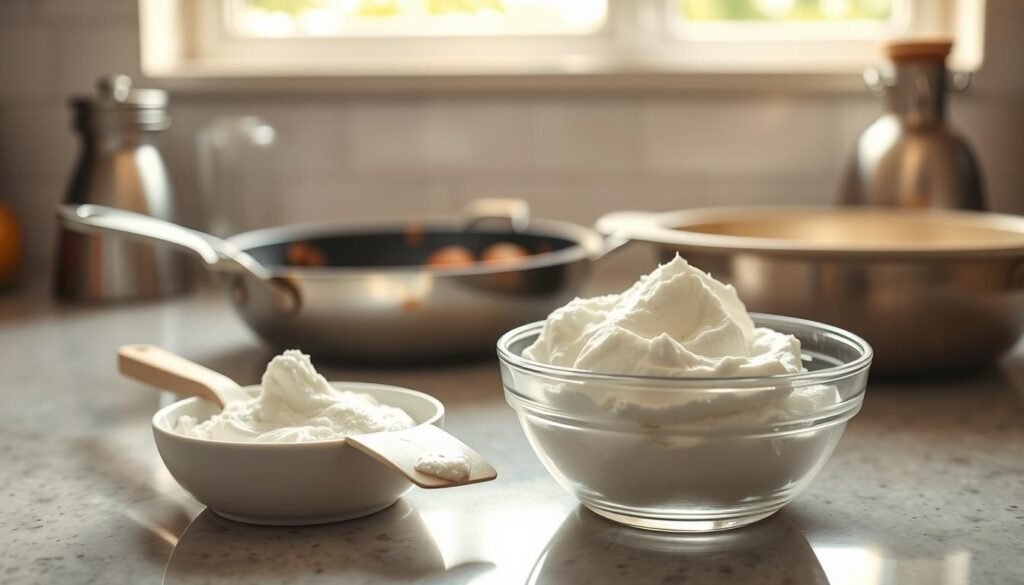
Now, I make the cleaning paste. I mix baking soda with a little water.
The goal is a thick, spreadable consistency. Too runny, it slides off. Too thick, it won’t cling.
This baking soda paste is mildly abrasive. It lifts residues without harming non-stick coatings.
I apply it generously to the problem areas. Then, I let it sit for some time. This contact time is key.
This reliable way restores my pans without harsh chemicals. Similar odor removal techniques for silicone items also rely on gentle abrasives.
With the pan prepped and paste ready, you’re set for success.
Using Baking Soda and Vinegar: A Natural Odor Neutralizer
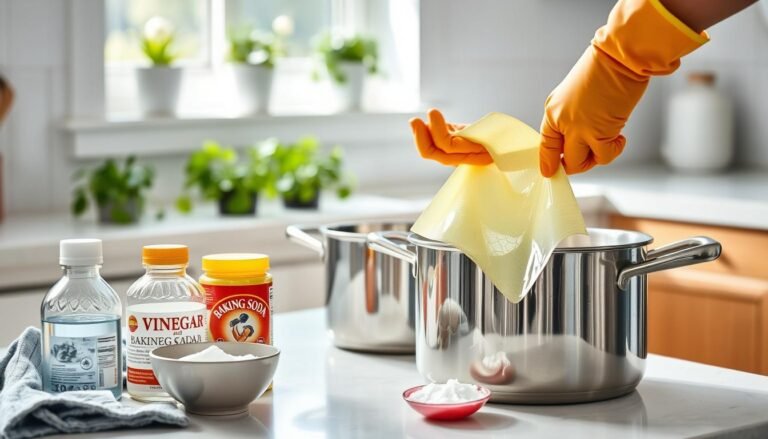
Baking soda is my secret weapon for banishing persistent kitchen odors. It works by reacting with both acidic and basic scent molecules. This makes it perfect for neutralizing stubborn problems in my pots.
How to safely apply the baking soda paste
I create a thick paste by mixing three parts baking soda with one part water. The goal is a spreadable consistency that clings to the pan.
I apply this baking soda paste evenly across the entire surface. I focus on areas where odors are strongest. Complete coverage is key for good results.
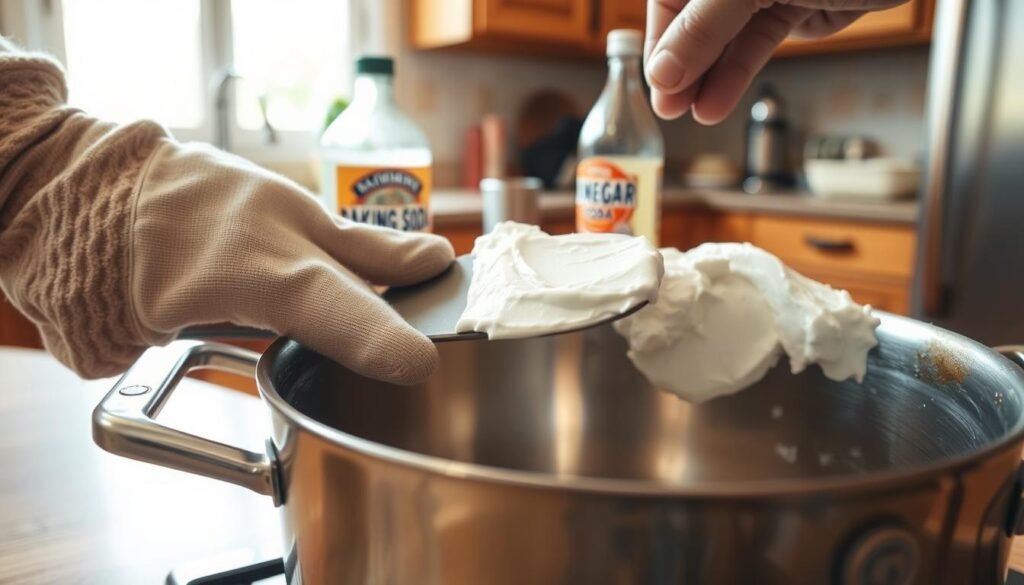
Next, I let the paste sit for at least 15 to 20 minutes. This gives the baking soda time to penetrate and neutralize embedded scents.
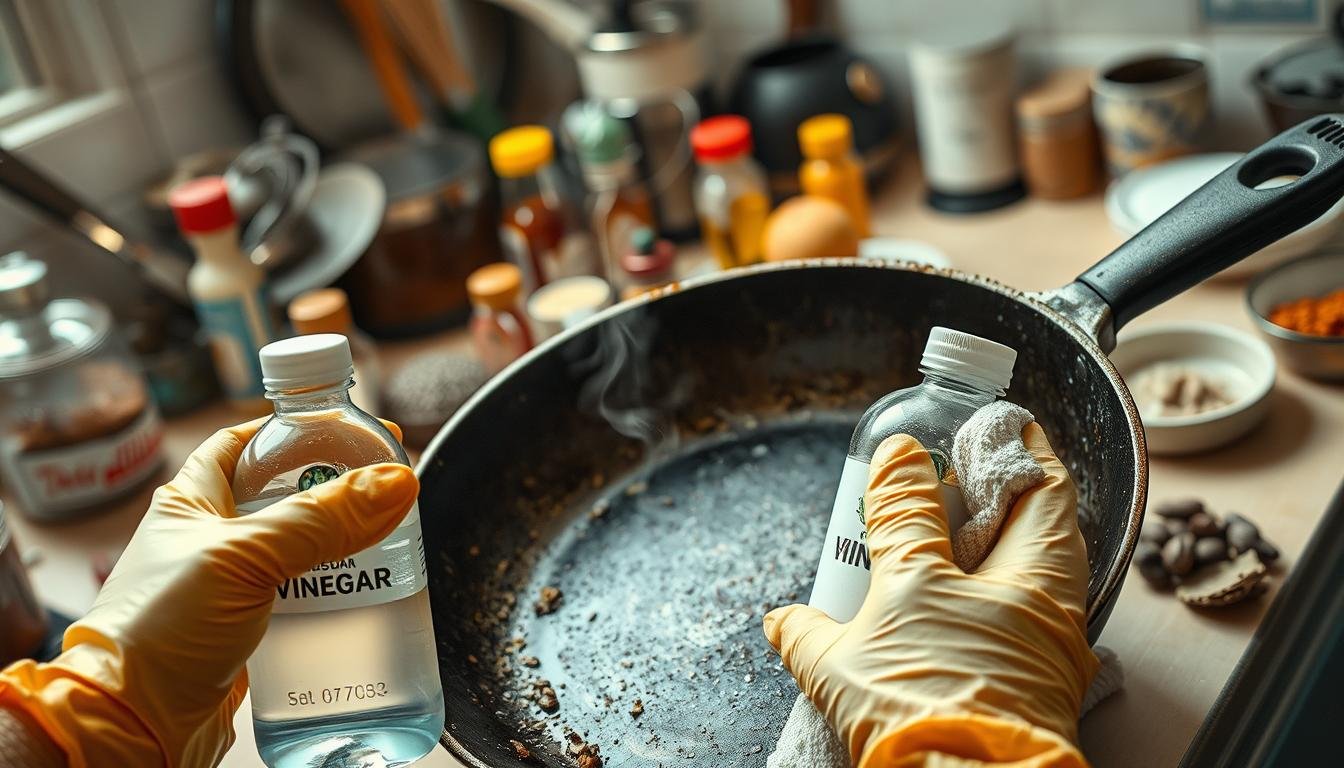
For tougher odors, I add a splash of white vinegar directly onto the paste. The fizzing reaction helps lift residues from the surface.
This combination of vinegar and baking soda is powerful yet gentle. It works safely on non-stick pans without causing damage.
After the waiting period, I use a soft sponge to scrub gently. I rinse everything thoroughly with warm water. For persistent issues, I repeat the process as needed.
Proper Maintenance Techniques for Cookware
A little daily attention can prevent big problems with your pots and skillets. I focus on two core habits: consistent cleaning and smart heat management.
Establishing a regular cleaning routine
I wash my pan with dish soap and hot water right after cooking. This is the best way to stop residue from bonding to the surface. Letting a pot sit allows oils to turn rancid.
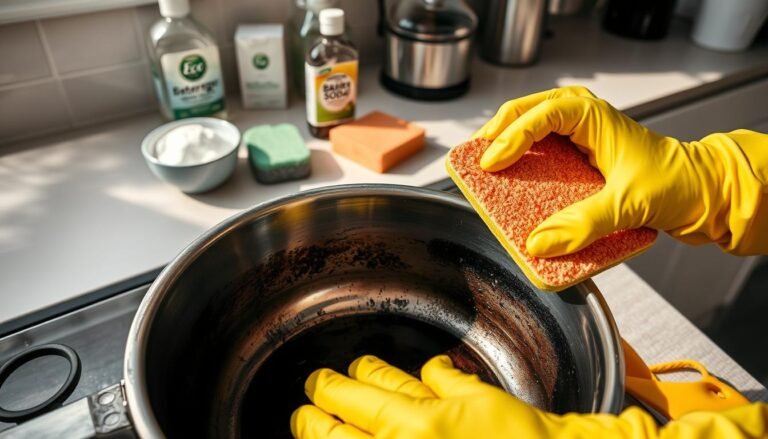
I always use a soft sponge. Abrasive scrubbers can damage the non-stick coating. Scratches trap food and cause odors over time.
This gentle approach works for my non-stick pans. For other materials like cast iron, proper maintenance is different but equally important.
Preventing high-heat damage and coating issues
Avoiding high heat is my top rule for non-stick items. Excessive heat breaks down the coating. This causes damage non-stick surfaces and creates chemical smells.
I cook on medium or low. I also watch the preheating time. Never leave an empty pan on a hot burner. This warps the metal and ruins the coating.
These steps preserve my pans. They save money by avoiding replacements. Choosing well-made cookware from the start also helps.
My Personal Experience with Odd Cookware Odors
The moment my favorite non-stick pan developed a chemical smell changed my cleaning routine forever. I was scrambling eggs when I noticed it. This frustrating event sent me searching for an answer.
My first attempts made things worse. I used harsh scrubbers on my non-stick surface. This damaged the coating and trapped more residue. My stainless steel pot also had issues. It held a metallic odor from acidic food.
These were key points in my learning. I switched to natural solutions. A simple paste of baking soda water worked wonders. A splash of vinegar provided the final lift.
There were times I thought a pan was ruined. The baking soda method brought it back. This was the practical answer I needed.
| Problem | My Mistake | The Solution |
|---|---|---|
| Chemical odor in non-stick pan | Used abrasive scrubbers | Gentle baking soda paste |
| Metallic smell in stainless pot | Ignored acidic food reaction | Immediate cleaning with vinegar rinse |
| Persistent odors after cooking | Let pans sit too long | Wash with hot water right away |
| Thinking pans were trash | Almost threw them out | Tested natural methods first |
The main points are clear now. Avoid high heat on non-stick items. Clean pans promptly after cooking. Use gentle, natural cleaners. This way keeps all my pans fresh and functional.
Conclusion
Ultimately, preventing persistent odors comes down to a few consistent habits. Understanding why your pan develops them is the first answer.
Whether you have non-stick or stainless steel, the principles are similar. Proper cleaning and heat management stop problems before they start.
The baking soda and vinegar method works in minutes. It neutralizes scents without harming the surface. Regular maintenance with hot water prevents food residue buildup.
Avoid high heat and clean promptly after cooking. These points make a huge difference. Most smell issues can be fixed unless the coating is damaged.
For durable options like carbon steel pans, proper care ensures longevity. Taking a few extra minutes extends your cookware‘s life and improves every meal.