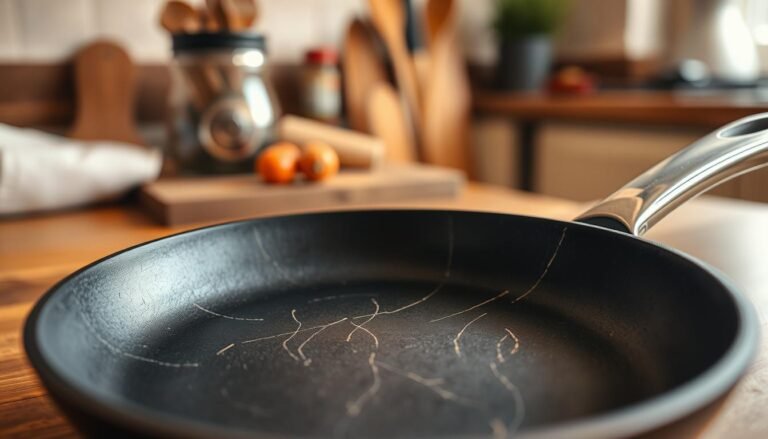

Cookware Hard to Clean? Proven Ways to Remove Stubborn Mess Fast
What if I told you the most stained pan in your kitchen could look brand new again in under 30 minutes?
Cookware hard to clean? I’ve felt the frustration. Years of searing, sautéing, and simmering leave behind a battlefield of burned-on food and stubborn grease.
I thought some of my favorite pieces were beyond saving. Then I discovered a better way.
With the right approach, even the toughest messes lift away. You don’t need harsh chemicals or endless scrubbing.
Understanding your material is the first victory. For example, giving your stainless steel pieces proper care is different from maintaining a carbon steel skillet.
Mastering the seasoning process for carbon steel creates a natural, non-stick surface that simplifies cleanup.
I’m excited to share the simple, step-by-step methods that transformed my cleanup from a chore into a quick win. My pots and pans last longer and perform better than ever.
Table of Contents
Key Takeaways
- The right techniques make cleaning even the most challenging cookware straightforward.
- Different materials, like stainless steel and carbon steel, require specific care methods.
- Gentle, targeted solutions are often more effective than aggressive scrubbing.
- A proper cleaning process can significantly extend the life of your kitchen investment.
- Understanding the cause of stains helps you choose the correct removal method.
- A consistent routine prevents buildup and makes maintenance easier.
My Journey to a Cleaner, More Efficient Kitchen
I used to believe a clean kitchen meant a quick wipe-down, until my favorite stainless steel pan told a different story. Despite washing it after every use, a dull, brown film slowly took over its surface. My pots and pans still worked, but they lost their professional shine.
I realized that soap and water alone weren’t enough. To maintain the appearance I wanted, I needed a better strategy. This sparked my mission to find the most effective way to restore my equipment without constant scrubbing.
My research taught me that different materials and stains require specific solutions. I experimented with everything, from store-bought solutions to simple pantry staples. Discovering the best way to clean became a game of science, not just muscle.
Now, I have a systematic approach. Understanding proper care for stainless steel was a major breakthrough. My kitchen looks sharp, and I spend far less time on maintenance. It’s a win for my space and my sanity.
Tackling Cookware Hard to Clean: Essential Techniques and Tools
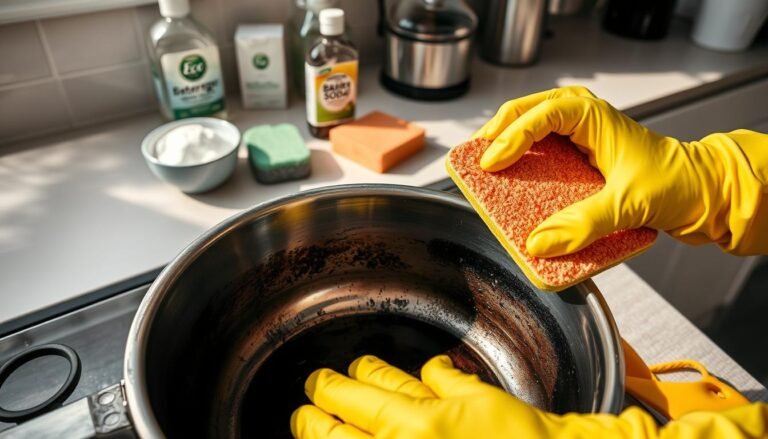
My cleaning process begins with a simple assessment: is this a fresh, greasy mess or a baked-on disaster? For everyday grease, my first move is always warm, soapy water and a soft sponge. This gentle approach works for most of my post-cooking cleanup.
I keep a variety of tools ready. A non-abrasive sponge protects delicate surfaces. For tougher jobs, I have more aggressive scrubbers. Matching the tool to the task prevents damage and saves effort.
Sometimes, a regular scrub isn’t enough. For a steel pan with stuck-on gunk, I use a secret weapon: crumpled aluminum foil. Its slightly harsh surface lifts stains a normal sponge can’t touch.
Patience is vital. If one method fails, I try another. The right method depends on the stain and your cookware. Assessing your pans before you start is the best way to clean them effectively.
Natural Cleaning Methods with Vinegar, Baking Soda, and Warm Water
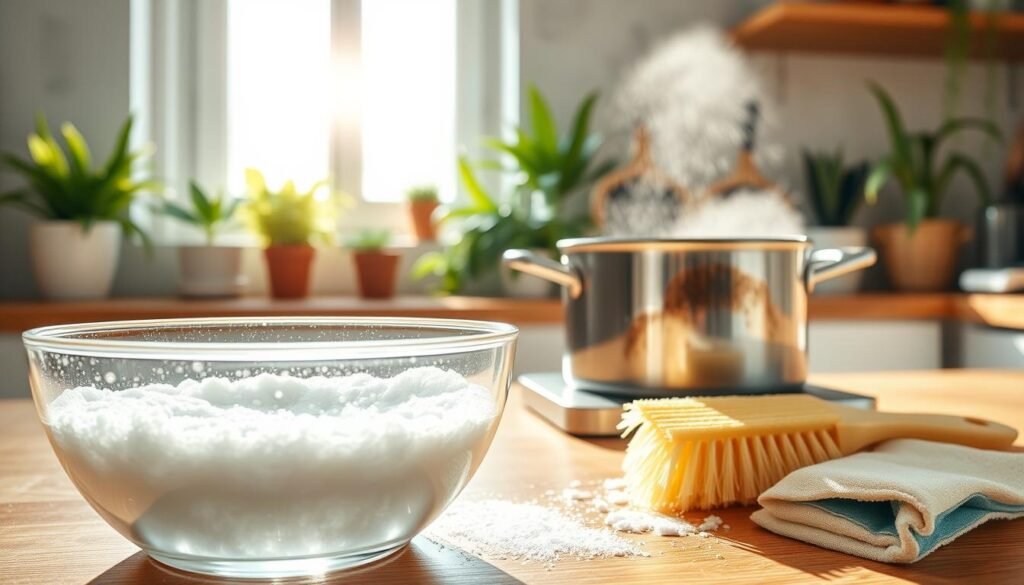
My pantry holds two powerful allies against kitchen grime: vinegar and baking soda. These natural staples tackle tough messes without harsh chemicals. I use them separately or together for a deep clean.
Using Vinegar to Break Down Grease and Stains
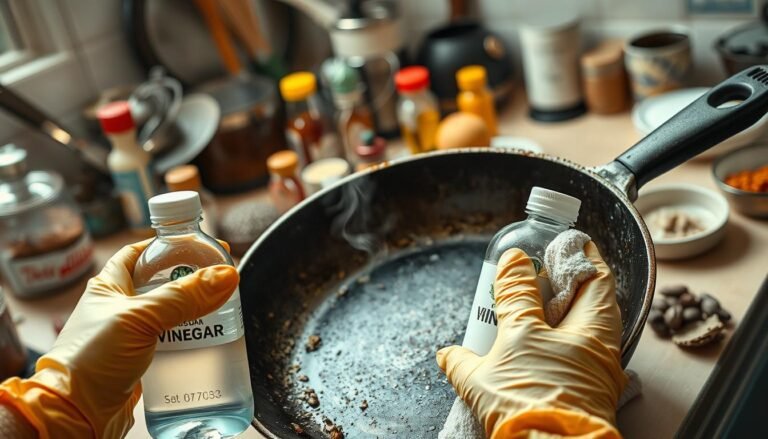
White vinegar is a fantastic degreaser. For light stains, I dab it directly with a cloth. For stuck-on food, I create a vinegar water mixture.
I pour equal parts into the pan, bring it to a boil, and let it simmer. The acid breaks down grease and oil. After it cools, I wipe the surface clean.
Creating a Baking Soda Paste for Deep Cleaning
For discolored pans, I make a thick paste. I mix baking soda with a little warm water. Then I spread it over the stains.
I let it sit for a few minutes. The paste lifts the residue. For the toughest jobs, I combine both ingredients.
I sprinkle baking soda, add water and vinegar, and boil for 10 minutes. The fizzing reaction loosens burnt-on food. After cooling, the mixture wipes away easily.
Caring for Different Cookware Materials: Stainless Steel, Non-Stick, and More
Each type of pan in my collection demands a specific care routine. Using the wrong method can cause permanent damage to the surface. I treat my stainless steel pieces very differently from my cast iron skillet.

Special Tips for Stainless Steel and Steel Pans
I never add salt to my stainless steel cookware until the water boils. This prevents pitting. I always dry these pans right away to stop water spots.
I also avoid rinsing a hot steel pan with cold water. Thermal shock can warp it. For a deeper dive on material choices, see this stainless steel vs. cast iron comparison.
| Material | Key Care Tip | Avoid This | Best For |
|---|---|---|---|
| Stainless Steel | Dry immediately after washing | Adding salt to cold water | Versatile, high-heat cooking |
| Non-Stick | Use wooden or silicone utensils | Heat above 500°F | Low-fat cooking, eggs |
| Cast Iron | Re-oil after cleaning | Soap on seasoned surfaces | Searing, even heating |
| Aluminum | Hand wash gently | High heat without food | Quick, even heating |
| Hard-Anodized Aluminum | Use pan protectors when stacking | Abrasive scrubbers | Durable, non-reactive cooking |
Maintenance Advice for Non-Stick, Cast Iron, and Other Surfaces
My non-stick pan gets special handling. I let it cool fully before I clean it. I only use soft sponges and mild soap.
For my cast iron, I skip soap if the surface is well-seasoned. A coarse salt scrub works well. I always apply a thin layer of oil after drying.
Understanding your steel cookware and other materials makes maintenance simple. It protects your investment for years.
My Step-by-Step Cleaning Routine and Expert Pro Tips
My kitchen cleanup transformed from a dreaded chore to a streamlined ritual once I developed a consistent step-by-step routine. This process saves time and protects my investment.
I always follow these steps in order. Patience and the right method yield the best results.
Preparing Your Cookware and Prepping Cleaning Solutions
I never rush. First, I let every pan cool completely. Pouring cold water on a hot surface causes thermal shock and damage.
Next, I rinse with warm, soapy water to remove loose food particles. This pre-cleaning makes the main scrub much easier.
For tougher stains, I prep my solutions ahead of time. A simple soap mixture works for daily cooking residue.

Techniques to Scrub, Boil, and Prevent Damage
I use a non-abrasive sponge for the initial scrub. For burnt-on food, I employ the boiling method.
I add water to cover the bottom of the pan and simmer for 5-10 minutes. This loosens stubborn gunk.
For sticky residue, a water and vinegar mix works wonders. I simmer it, then wash normally.
Prevention is key. I wipe my stovetop after cooking to remove grease and oil. This stops soot on the bottom of my pots.
I also use high smoke point oils like avocado oil. These tips are especially useful for cleaning stainless steel and other steel surfaces.
Focusing on the bottom and surface of each piece keeps everything looking new.
Conclusion
I’ve learned that the longevity of my kitchen investments hinges on a consistent and mindful cleaning routine. Mastering these techniques has transformed my maintenance and extended the life of my pots and pans collection.
I encourage you to implement these tips regularly. Consistent care prevents the buildup that makes restoration seem impossible. I’m confident you can tackle any challenge your pieces present.
For a comprehensive guide, consider this resource on how to deep clean your pots and pans. Maintaining pristine equipment reflects respect for your tools and the meals you create.
Always start with the gentlest approach. Escalate only as needed to protect your investment. Proper care, like the methods in this non-stick buying guide, is crucial.
Make these practices part of your regular kitchen rhythm. Your pots and pans will look professional and perform optimally for years.