Carbon Steel: The “chef pan” material
Over 85% of professional chefs surveyed name this specific material as their go-to for high-heat searing and sautéing. What makes it so special? It brilliantly combines the incredible heat retention of cast iron with the lightweight, responsive feel of stainless steel.
Modern manufacturing has perfected this material. Advanced processes like nitriding enhance surface hardness and corrosion resistance. The high-quality steel used meets strict Japanese and European standards for durability.
This versatility is unmatched. You can use it on any heat source, from induction stovetops to open campfires. Most reputable brands back their products with a solid lifetime warranty, making it a true long-term investment for your kitchen.
This guide cuts through the noise. We showcase the top-performing options in the U.S. market to help you decide. For a deep dive into features and care, check out our complete buying guide for carbon steel.
Key Takeaways
- Professional’s Choice: Favored by chefs for its exceptional heat performance and durability.
- Perfect Balance: Offers cast iron’s heat retention with much lighter weight for easy handling.
- Ready to Use: Many modern pans come pre-seasoned, eliminating initial prep work.
- Extreme Versatility: Safe on all cooktops, including induction, and in ovens or on grills.
- Built to Last: Constructed with high-grade materials and often backed by lifetime warranties.
- Develops a Patina: The cooking surface improves and becomes more non-stick over time with proper use.
- Investment Value: Delivers decades of reliable service, justifying the initial cost.
A Closer Look at Carbon Steel Pans
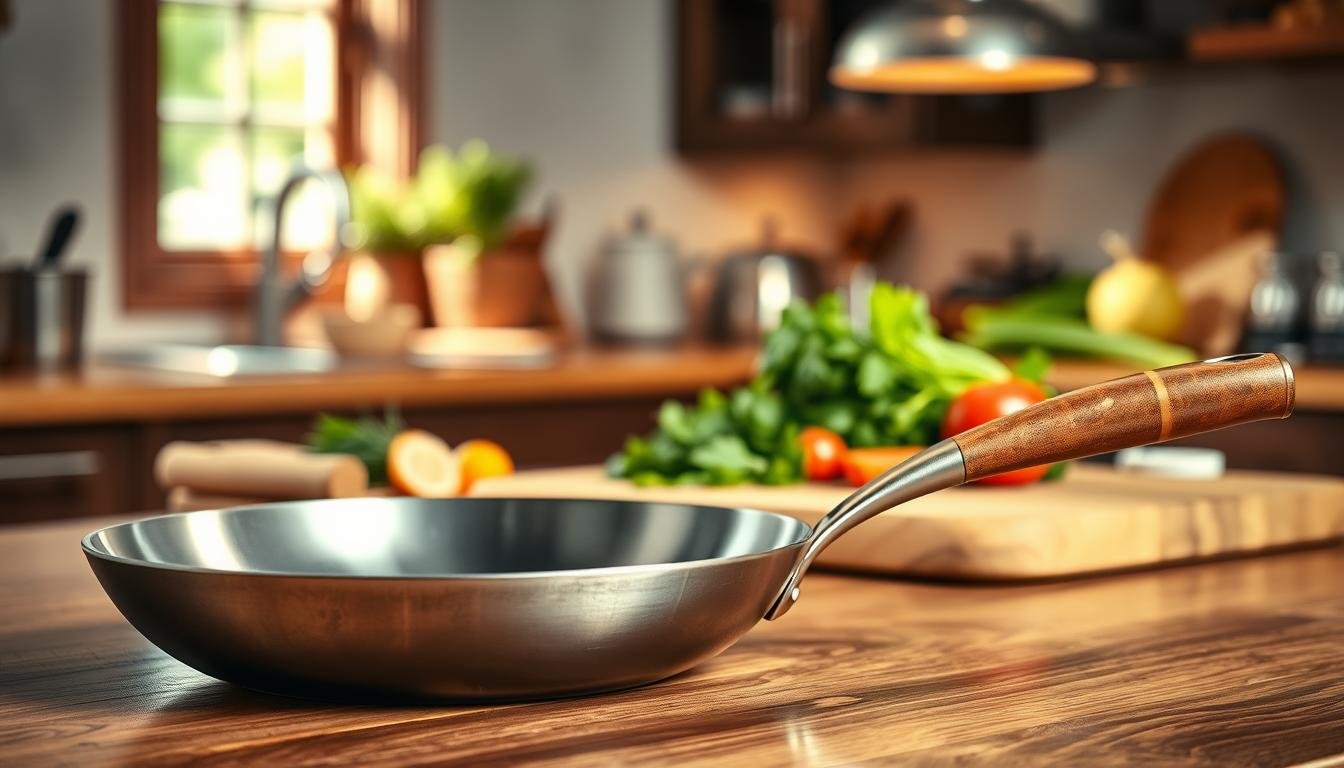
Many home cooks are surprised to find their new pan ready for the stove right out of the box. This is because quality models arrive pre-seasoned twice at the factory with natural vegetable oil. You get immediate performance without a lengthy breaking-in ritual.
Notice a slight bulge in the bottom? This is intentional, not a defect. The material expands with heat, and this pre-formed curve ensures stability on your burner, preventing annoying wobbles as it warms up.
The cooking surface develops a natural patina over time, becoming more nonstick with each use. Unlike coated alternatives, this seasoned layer only gets better. It also means you can use metal spatulas and whisks without fear of scratching, a freedom cherished in professional kitchens.
While it shares great heat retention with cast iron, a carbon steel pan is remarkably lighter. This reduces wrist fatigue, making tasks like flipping pancakes or sautéing vegetables much easier. The handle stays cooler than the pan’s body but always requires a mitt for safety.
Why Carbon Steel Cookware is the Ultimate Choice
For those seeking a lifetime of cooking enjoyment, one material stands out. It offers unmatched performance and enduring construction. This kitchen equipment becomes a trusted partner, improving with each use.
The superior heat retention ensures even temperatures. You get precise control for techniques like sautéing. This means better food quality and less energy used over time.
Choosing durable pans is a sustainable decision. It significantly cuts down on kitchen waste. Manufacturers back this confidence with solid lifetime guarantees, providing real purchase security.
| Feature | Carbon Steel | Typical Non-Stick Coated Pan |
|---|---|---|
| Lifespan | Virtually indestructible; improves with age | Degrades within a few years |
| Heat Performance | Excellent retention & fast response | Often uneven; coating limits high heat |
| Sustainability | One pan lasts decades | Frequent replacement creates waste |
| Warranty | Lifetime guarantee common | Limited, often 1-2 years |
The result is genuine culinary pleasure. You gain confidence and creativity in your kitchen. It’s an investment that truly pays for itself.
Unveiling the Technology Behind Carbon Steel Pans
The exceptional performance of professional-grade pans isn’t accidental. It’s the result of precise engineering and advanced manufacturing techniques.
The Nitriding Process and Heat Treatment
One key advancement is nitriding. This heat treatment exposes the material to nitrogen at controlled temperatures.
It creates an ultra-hard surface layer. This layer fights corrosion and boosts durability far beyond untreated versions.
Advanced protocols alter the molecular structure. They increase surface hardness while keeping the core flexible and impact-resistant.
Material Certification and Quality Assurance
Superior products come with material certification. This paperwork verifies the use of hot-rolled mild steel, like SPHC grade per Japanese standard JIS G 3131.
It’s equivalent to the European EN 10111 DD11 classification. Every production batch undergoes rigorous testing for rust resistance and surface hardness.
A natural seasoning coating is applied at the factory. This provides immediate rust protection and non-stick performance without synthetic chemicals.
Quality assurance includes multiple inspection points from raw material to final packaging. This process ensures consistency and eliminates defective items.
Diverse Cooking Applications for Carbon Steel Pans
The true magic of a carbon steel pan reveals itself across every cooking method, from a roaring campfire to a precise induction cooktop. This versatility lets you tackle endless recipe ideas with one trusted piece.
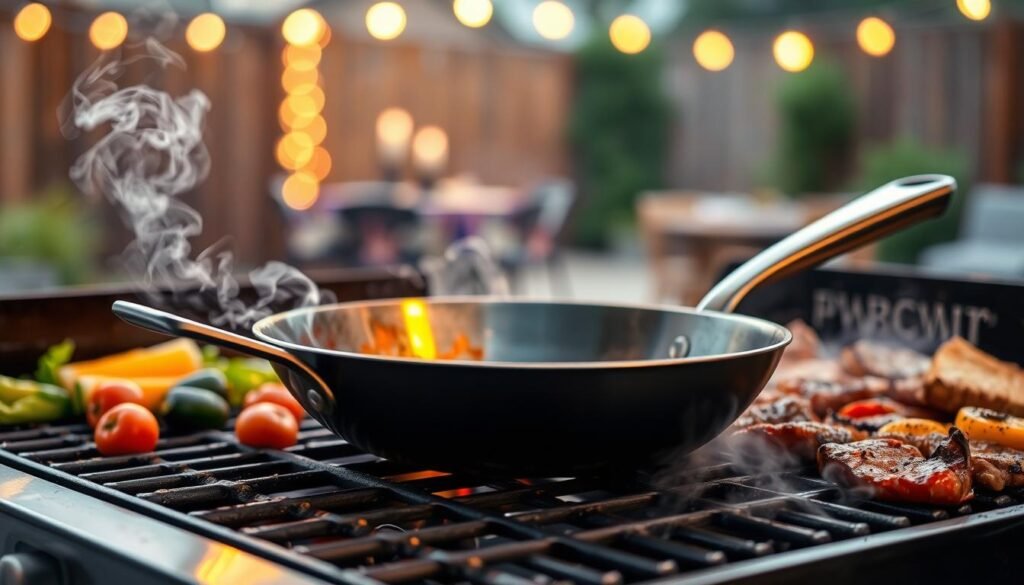
Cooking on Barbecue and Open Flame
These pans excel at barbecue and open flame applications. They tolerate extreme heat levels that warp other materials.
When grilling, verify your piece fits within your grill. Ensure the handle length allows the lid to close for proper temperature control.
Always use heat-resistant gloves. Handles get extremely hot and can cause serious burns without protection.
Optimizing Use on Induction Hobs and in Ovens
For induction cooking, increase heat gradually. Avoid using booster functions, as sudden extreme heat can cause warping.
Always lift the pan instead of sliding it. This protects both your pan and the induction surface.
Oven-to-table cooking is seamless. First, sear your meat or vegetables on the hob. Then, transfer the entire pan to the oven to finish.
Check that handle dimensions fit within your oven cavity first. Like on the grill, handles get very hot inside the oven. Use oven gloves every time.
This heat tolerance is a key advantage in any comparison with cast iron. It allows for perfect browning and charred edges.
Tips for Effective Maintenance and Seasoning
A simple care routine is the secret to unlocking decades of reliable performance. With minimal effort, you preserve its non-stick surface and prevent damage.
This process is straightforward. Consistent habits protect your investment and enhance cooking results every time you use it.
Regular Cleaning and Rust Prevention
Always hand wash your pan with hot water and a soft brush. Avoid the dishwasher, as it strips the protective seasoning layer.
Dry it thoroughly after each use. Apply a thin coat of cooking oil before storage. This creates a barrier against moisture and rust.
Simple Steps for Re-seasoning Your Pan
Refresh the seasoning every few months. This maintains optimal performance and protection. You can use your oven or stovetop.
For the oven method, coat the pan lightly with oil. Heat it upside-down at 450°F for an hour. This bonds a new, even layer.
If rust appears, don’t worry. Scrub the spot with steel wool, then re-season immediately. Your pan is not ruined.
For a complete detailed care guide, including storage tips, follow the linked instructions. Proper care makes your kitchen tool last a lifetime.
Design and Build: A Deep Dive into Craftsmanship
Every detail in a well-made pan, from its thickness to its surface finish, serves a specific purpose. This meticulous approach transforms simple material into a professional kitchen tool built to last.
Heat Retention and Even Temperature Distribution
Precise thickness calibration is key. It balances rapid heat response with superior heat retention. This ensures consistent cooking temperatures across the entire surface.
You get uniform browning without frustrating hot spots. The carbon steel heats up quickly and holds that energy well. This performance rivals heavier materials but with much faster adjustment.
Developing a Natural Non-Stick Patina
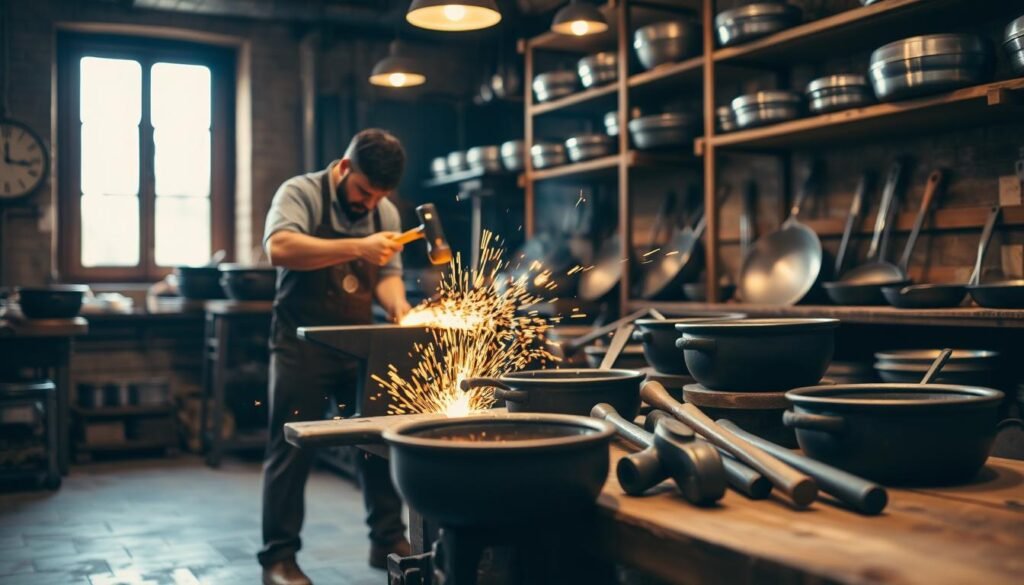
The cooking surface evolves beautifully with use. A natural patina develops through repeated cooking and proper care. This polymerized layer becomes increasingly nonstick over time.
This patina does more than prevent sticking. It adds subtle flavor complexity to foods and boosts rust resistance. Your carbon steel piece improves with age, becoming a uniquely personal kitchen asset.
Exploring the Product Range: From Skillets to Woks
The product lineup for this material extends far beyond basic skillets, offering specialized tools for every culinary tradition. You can find everything from a compact 20cm frying pan for single servings to a large 38cm paella pan for gatherings.
Frying Pans and Specialty Woks
A standard steel frying pan is the foundation. Sizes like 24cm and 28cm handle family meals. For authentic stir-frying, a 28cm wok provides intense, even heat.
Specialty items serve specific purposes. A crêpe pan has low walls for easy flipping. Deep farmhouse skillets are perfect for braising. Oval roasters handle whole poultry with ease.
Quality carbon steel pans represent a smart investment. Prices range from $200 for a small skillet to $375 for a paella pan. Customer ratings consistently exceed 4.7 out of 5 stars.
| Product Type | Size / Model | Best For | Rating |
|---|---|---|---|
| Frying Pan | Ø 28 cm | Family meals, searing | 4.9/5 |
| Wok | Ø 28 cm | Stir-frying, high heat | 4.7/5 |
| Paella Pan | Ø 38 cm | Large gatherings, socarrat | 4.9/5 |
| Deep Farmhouse Skillet | 12.5 inch | Braising, one-pot meals | 4.9/5 |
This variety ensures you have the right tool for any recipe. Each piece is built to last a lifetime.
Customer Reviews and Lifetime Warranty Assurance
Investing in premium kitchen equipment requires confidence, backed by real user experiences and solid guarantees.
Enthusiasts report these pans become indispensable. Performance improves with use, creating a superior non-stick surface.
“The Carbon Steel pans from Skottsberg are something I can’t live without in my kitchen! Durable and high-quality. Provided you apply the proper maintenance, you will have pans for life… After months of intensive use, my fried egg still glides nicely through the pan, and my reverse-sear sirloin steaks get that perfect crust! Highly recommended.”
This feedback highlights the lasting value of cooking carbon steel. Proper care yields a tool that lasts for decades.
A comprehensive lifetime warranty backs this durability. It shows maker confidence and protects your purchase from defects.
Authorities like Food and Wine praise hand-forged skillets as “stunning pieces… waiting to become family heirlooms.” This endorsement validates the heirloom quality.
| Aspect | Premium Carbon Steel | Standard Non-Stick |
|---|---|---|
| Warranty Length | Lifetime guarantee | 1-2 years typical |
| Coverage Focus | Manufacturing defects, material failure | Limited to coating issues |
| Customer Satisfaction | Consistently exceeds 4.7/5 stars | Often declines after 1 year |
| Heirloom Potential | High, improves with age | Low, planned obsolescence |
The combination of positive reviews and a strong warranty removes financial risk. Your investment in steel cookware pays off over time.
Cooking carbon materials outperform cheaper alternatives. They deliver professional results for searing, frying, and more.
Tips and Tricks for Optimal Use and Safety
Unlock the full potential of your pan by following these practical guidelines for everyday use. They ensure safety, enhance performance, and protect your investment for years.
Handle Safely on Hot Surfaces
The handle gets extremely hot during cooking. Always use heat-resistant gloves or leather covers. This prevents burns and gives you confident control.
Let meat sit out before cooking. Cold food hits a hot surface and can stick. Preheat your pan gradually to avoid warping.
Maximizing Performance While Avoiding Damage
Use the right amount of fat. Wait for proteins to release naturally. This builds a natural nonstick layer over time.
Always lift the piece when moving it. Sliding can scratch surfaces. Never plunge a hot pan into cold water.
Match your cooking to its strengths. High-heat searing and stir-frying work perfectly. This way maximizes your kitchen tool’s abilities.
| Key Practice | Correct Method | Reason |
|---|---|---|
| Handle Safety | Use heat-resistant gloves | Prevents serious burns |
| Preheating | Warm up gradually | Avoids thermal shock and warping |
| Food Release | Let proteins sear undisturbed | Builds natural nonstick patina |
| Moving the Pan | Lift, don’t slide | Protects stovetop and pan bottom |
Conclusion
Ultimately, the value of any kitchen investment is measured by its performance and longevity. The material discussed here delivers on both fronts, merging cast iron’s resilience with a lightweight feel.
Modern manufacturing, like nitriding, ensures these pans are ready to use immediately. They excel on every heat source, from your stovetop to an open flame.
This versatility means one pan can sear, sauté, and bake. The surface naturally improves, becoming more nonstick over time.
Simple care preserves this quality for decades. A lifetime warranty backs your purchase, adding confidence.
Choosing this professional-grade material transforms everyday cooking into a genuine pleasure. It’s an investment that pays off in every meal you create.