
If your non-stick pan is sticking in the middle, you already know how this morning went.
The omelette was fine until you tried to fold it. Then it tore down the centre, and half of it stayed behind, welded to the pan.
You scraped. You added a splash of oil you didn’t want to add. You served scrambled eggs and pretended that was the plan.
This is the same T-fal that used to let a fried egg skate around like it was on ice.
“This pan used to be so good.”
It did. You’re not misremembering.
Table of Contents
Key Takeaways
- A non-stick pan sticks for one of two reasons: the coating is worn, or there is baked-on residue on top of it.
- The middle goes first because it sits over the burner and gets hottest.
- High heat and aerosol cooking spray do the most damage.
- A baking soda paste and a soft sponge will tell you in ten minutes which problem you have.
- Residue can be cleaned off. A worn, flaking or warped pan needs replacing.
- Low to medium heat, real fat, hand washing and a towel between stacked pans make the next one last longer.
Why a Non-Stick Pan Starts Sticking With No Warning
A burnt pot is easy to live with, because you know what you did. You walked away, it boiled dry, and that was that.
This is different. Nothing happened. There was no accident and no single bad night.
The pan just got slightly worse, one breakfast at a time, until the morning you noticed you were soaking it in the sink again.
So you start running the investigation. Was it the dishwasher? The one time someone used a fork in it? Too hot? Not enough oil?
“I barely use any oil and it still sticks.”
And underneath all of it is the question you actually want answered: did I ruin it, or do they all do this?
Why is my non-stick pan sticking? A non-stick pan starts sticking for one of two reasons. Either the coating has worn down, usually from high heat, or a thin film of baked-on oil or cooking spray is sitting on top of it. Both show up first in the middle of the pan, directly over the burner, where it gets hottest.
Do All Non-Stick Pans Lose Their Coating? Yes, and Habits Speed It Up
The honest answer is both.
Every non-stick coating wears. Eggs slide because of a very thin, very slick layer on the surface, and that layer does not last forever on any pan, from any brand, at any price. Our non-stick material guide explains how that layer is made.
A non-stick frying pan is closer to a good pair of running shoes than to a cast-iron heirloom. It has a working life.
No one tells you this when you buy the pan. So when it starts to stick, it feels like a broken promise. It isn’t. It’s normal wear.
But how fast it wears is mostly down to a handful of habits. Almost all of them feel like perfectly reasonable cooking.
Why Your Non-Stick Pan Sticks in the Middle First
Look at where it sticks. It’s the middle, where the dull patch is.
That’s the spot sitting directly over the burner, so it gets the hottest and stays hot the longest. It’s also where oil pools and where the spatula does most of its work.
Whatever is wearing your pan down is doing it there first.
Two different things can cause that patch, and they look similar.
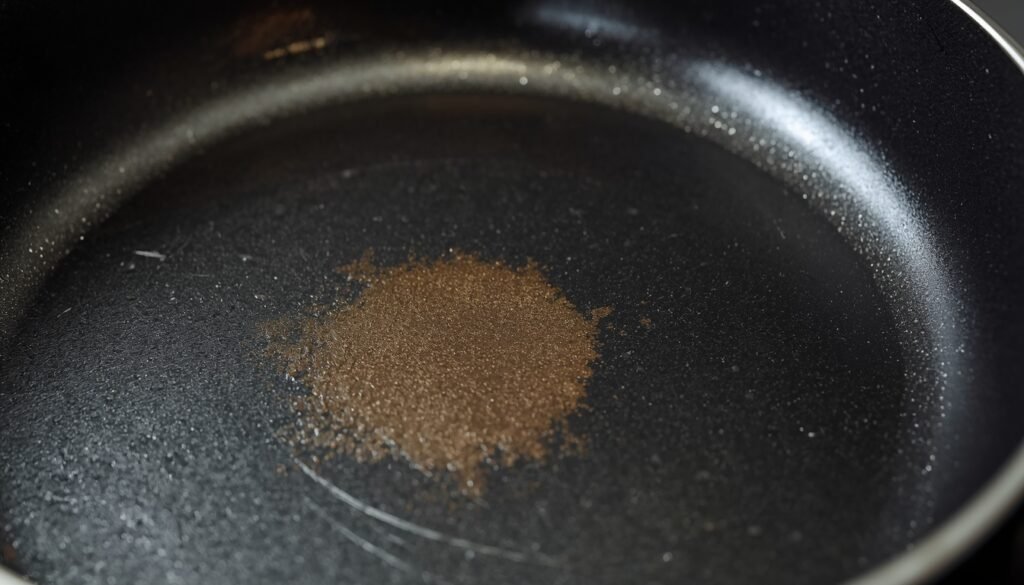
Worn Non-Stick Coating From High Heat
The coating itself has worn. High heat is the main cause. Non-stick doesn’t need it and doesn’t like it.
The standard non-stick coating, PTFE, starts to break down at around 260°C (500°F), which is why America’s Test Kitchen warns against preheating an empty non-stick pan. An empty pan on a high burner can get there within minutes.
If the pan regularly goes onto a high flame while empty, while you crack eggs and hunt for the butter, the centre takes the damage every time.
If you want to know what PTFE is and how it differs from ceramic, see PFAS-free cookware: what PFOA, PTFE and ceramic mean.
Cooking Spray Residue on a Non-Stick Pan
Something is sitting on top of the coating. This is the one that surprises people.
Oil can bake onto the pan in a thin film. Aerosol cooking spray is the worst for this, because the lecithin in it builds up into a sticky barrier. The film is faint and a little tacky, and normal washing won’t shift it.
Food grips that layer, not the pan underneath.
This is where “barely any oil” works against you. A light mist of spray on a hot pan is close to the ideal recipe for that baked-on film.
You were trying to be careful with the pan, and the careful habit was part of the problem.
6 Habits That Ruin a Non-Stick Pan
None of these kills a pan on its own. Together, over a year or two, they do.
- Preheating on high. It’s quick and it feels efficient, but it’s the fastest way to age the coating. T-fal’s own care guide says high heat doesn’t meaningfully shorten cooking time anyway.
- Cooking spray. The residue builds up in exactly the place you need to stay slick.
- Hot pan, cold tap. The hiss is satisfying, but the fast change in heat is hard on the pan. It can warp the base. A warped base heats unevenly, and the centre gets even hotter.
- The dishwasher. Even if your pan is labelled dishwasher safe, harsh detergent cycles are harder on the surface than a soft sponge.
- Stacking. Another pan sitting on the cooking surface, sliding around in the drawer, scratches it a little every day.
- Metal on the surface. Check what your specific pan says about utensils. Nothing non-stick wants a knife or a fork tine dragged across it. What a scratch actually releases is covered in non-stick pan safety.
If you recognised three of those, so would most people. That’s just what ordinary cooking looks like.
How to Clean a Non-Stick Pan That’s Sticking (the Baking Soda Test)
First, find out which problem you have. This is the quickest way to restore a non-stick pan that only has residue on it.
- Let the pan cool completely.
- Make a paste of baking soda and a little water.
- Work it gently over the dull patch with a soft sponge. Don’t use a scourer or steel wool.
- Rinse, dry, and look again.
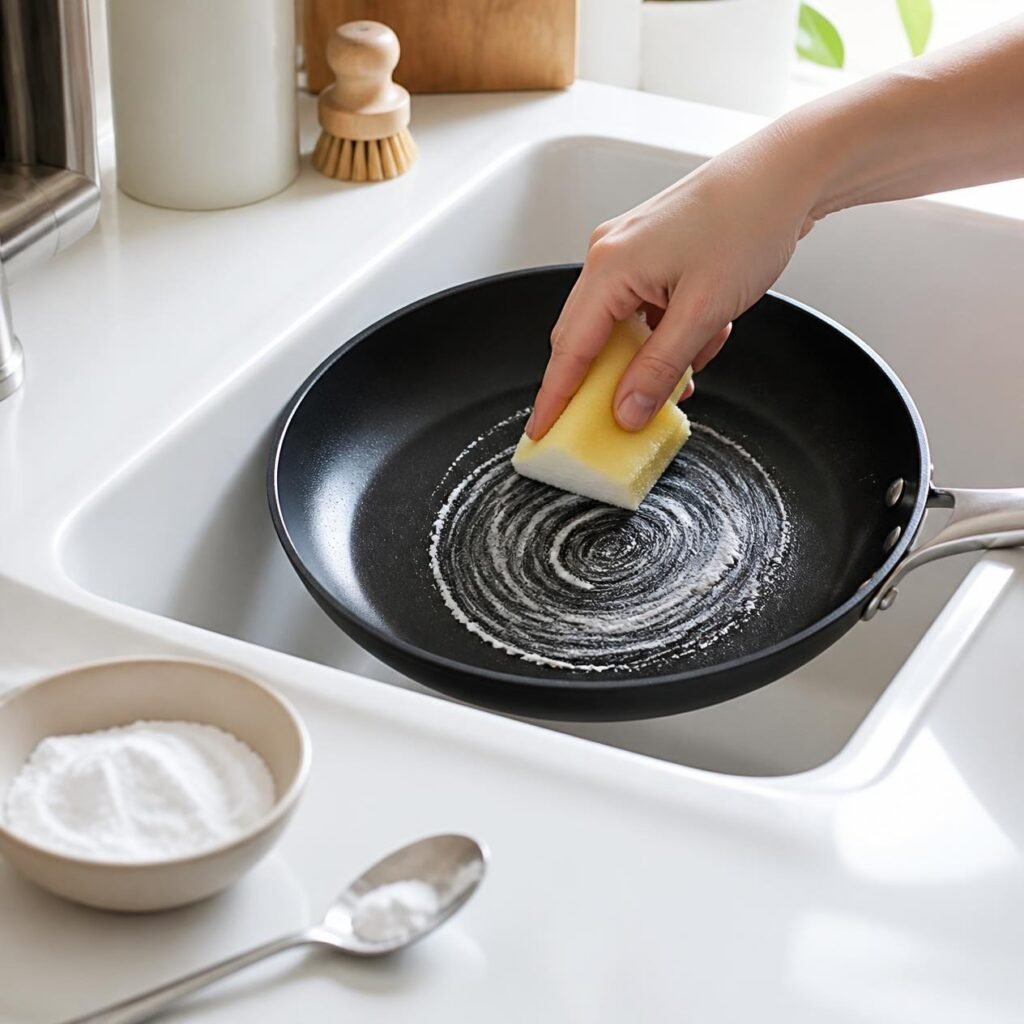
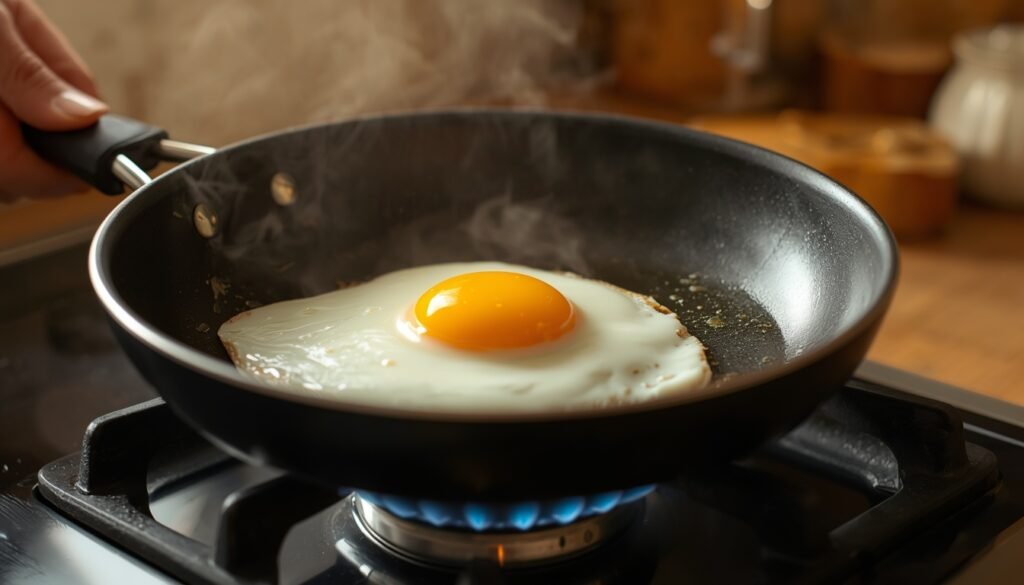
If the patch looks cleaner and feels smoother, you had residue. Cook an egg on medium-low with a little butter or oil and see how it behaves.
Plenty of pans that seemed finished come back noticeably after this.
Watch: The Best Non-Stick Skillet for Perfectly Fried Eggs on YouTube.
When to Replace a Non-Stick Pan
If nothing changes, the coating in that spot is worn, and cleaning won’t bring it back.
If it’s visibly scratched through, flaking, or the base has warped, the pan is done. Food safety agencies give the same advice: discard pans that show excessive scratches, peeling, flaking or chipping.
Replace it without the guilt. When you do, our best non-stick pans guide is the place to start.
How to Make a Non-Stick Pan Last Longer
None of this is a secret trick. It’s what non-stick makers, T-fal included, print in their care instructions, so check the ones for your own pan too.
- Low to medium heat, always. Eggs don’t need more. If your T-fal has the Thermo-Spot in the centre, use it: when it turns solid red the pan is ready, and you can stop guessing and stop overheating.
- A little real fat instead of spray. A small amount of butter or oil, added to a warm pan.
- Let it cool before it meets water. Have breakfast first and wash up after.
- Hand wash with a soft sponge. It takes thirty seconds, which is the whole point of non-stick.
- Put something between stacked pans. A tea towel or a paper towel will do.
- Keep it for what it’s good at. Eggs, pancakes, fish. Hard searing belongs in a different pan, such as cast iron or carbon steel.
Useful Kit for Looking After a Non-Stick Pan
As an Amazon Associate, we earn from qualifying purchases.
- T-fal non-stick frying pan with Thermo-Spot, if yours is past saving.
- Felt pan protectors to stop stacked pans scratching each other.
- Silicone spatula and turner set to keep metal off the coating.
- Non-scratch sponges for hand washing.
- Baking soda for the residue test.
- Cast iron skillet for the high-heat searing your non-stick shouldn’t do.
Non-Stick Pan Sticking: FAQ
Why is my non-stick pan sticking in the middle?
The middle sits directly over the burner, so it gets hottest. The coating wears there first, and oil or cooking spray bakes onto it there first.
Can you restore a non-stick pan that has started sticking?
Yes, if the cause is residue. A baking soda paste and a soft sponge will lift it. If the coating itself is worn, cleaning won’t bring it back.
Does cooking spray ruin non-stick pans?
It doesn’t strip the coating, but it leaves a sticky film that builds up over time. Food then sticks to the film. Use a little butter or oil instead.
Is it safe to use a scratched non-stick pan?
A few light marks are normal wear. Deep scratches, peeling or flaking mean it’s time to replace the pan. There’s more detail in our non-stick pan safety article.
Can I put my non-stick pan in the dishwasher?
Many are labelled dishwasher safe, but hand washing is gentler and helps the coating last longer. It takes about thirty seconds.
What heat should I use with a non-stick pan?
Low to medium. Don’t preheat it empty on high, and move hard searing to cast iron, carbon steel or stainless steel.
Did You Ruin Your Non-Stick Pan, or Do They All Do This?
They all wear out. Yours went early, and the reasons were printed on a cardboard sleeve you binned in the first five minutes.
But a non-stick pan sticking in the middle isn’t always a dead pan. Sometimes it’s just a dirty one.
So before you spend a cent, get the baking soda out tonight. Ten minutes, a soft sponge, one egg. Then decide.