Cast Iron Rust Removal: The Complete 2026 Guide to Restoring a Rusty Skillet
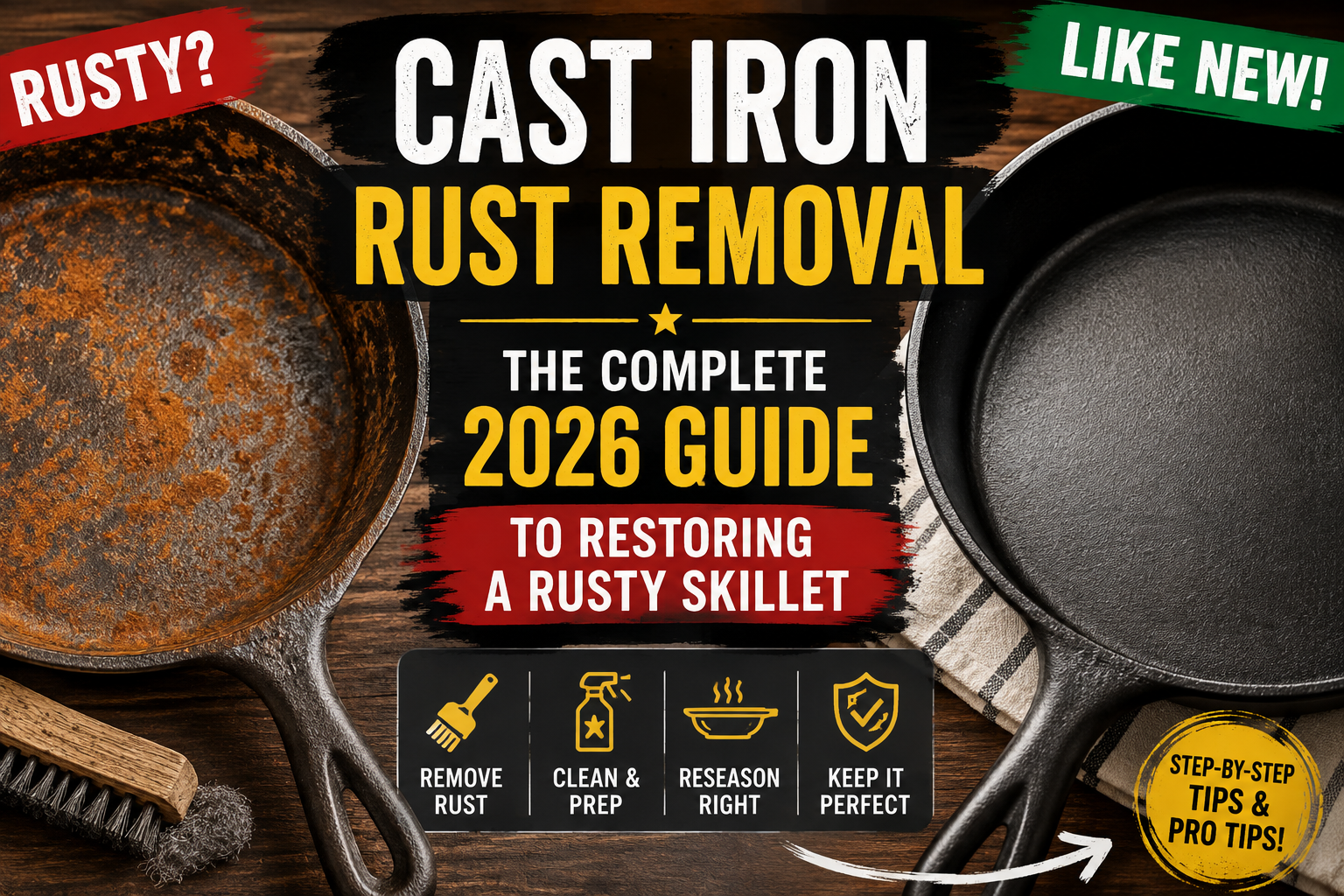
Cast iron rust removal looks scarier than it is. A rust bloom on a skillet you’ve had for years feels like a death sentence, but in almost every case it’s a 30-90 minute fix with things already in your kitchen. This guide walks through the full process — from light surface rust to pans that have been sitting in a damp garage for a year — plus how to re-season afterward and stop it from happening again.
Table of Contents
- Why Cast Iron Rusts (and Why It’s Not Ruined)
- What You’ll Need
- Step-by-Step Cast Iron Rust Removal
- Light Surface Rust
- Moderate Rust
- Severe Rust
- Re-Seasoning After Rust Removal
- How to Stop Rust From Coming Back
- FAQ
Why Cast Iron Rusts (and Why It’s Not Ruined)
Rust forms whenever bare iron meets moisture and oxygen long enough — usually because the pan was left wet in the sink, washed and air-dried instead of towel-dried, or stored in a humid space without a protective layer of seasoning. None of that means the skillet is done. Cast iron is solid metal; rust is a surface reaction, not structural damage. As long as the pan isn’t cracked or pitted all the way through, it can be brought back to a fully non-stick, cook-ready surface, as Lodge Cast Iron’s own restoration guide confirms.
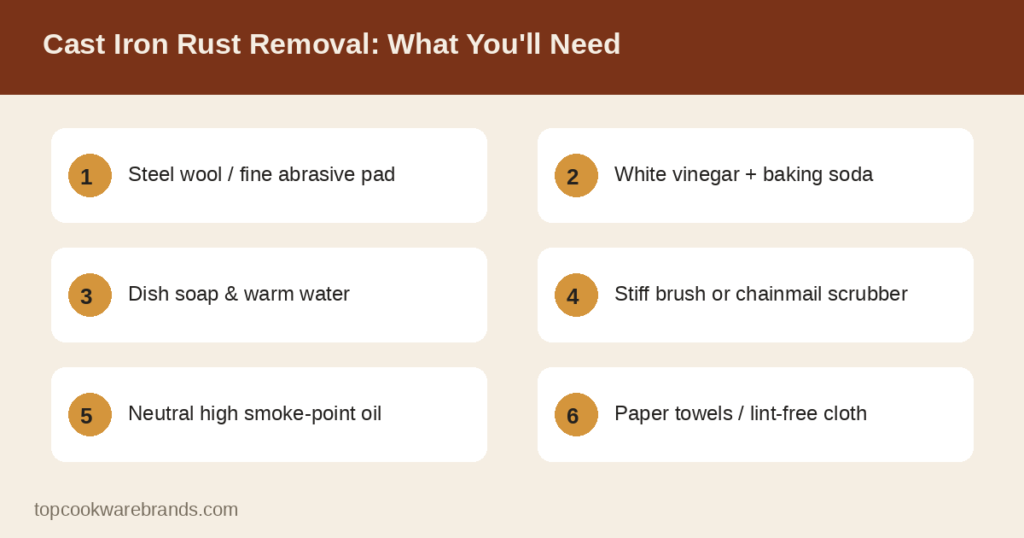
What You’ll Need
- Steel wool or a fine-grit abrasive pad (000 or 0000 grade)
- White vinegar and baking soda (for a paste on lighter rust)
- Dish soap and warm water
- A stiff-bristle brush or chainmail scrubber
- Neutral high-smoke-point oil (flaxseed, grapeseed, or vegetable oil)
- Paper towels or a lint-free cloth
- An oven
Step-by-Step Cast Iron Rust Removal
Match the method to how bad the rust actually is — using a heavier method than necessary just strips more seasoning than you need to remove, which means more re-seasoning work later.
Light Surface Rust
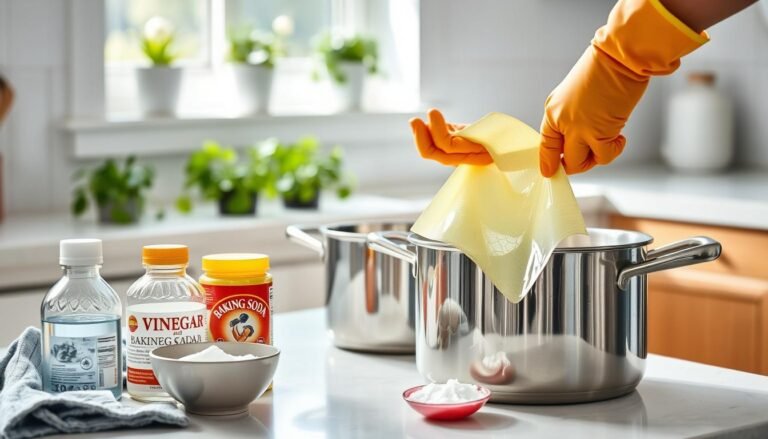
For thin, orange surface rust: make a paste from equal parts baking soda and white vinegar, spread it over the rusted areas, and let it sit for about 30 minutes. Scrub with a fine steel wool pad in circular motions, rinse, and dry immediately and completely — including the handle and underside. This method lifts rust without touching the good seasoning around it — it’s the same paste-based approach MasterClass recommends for early-stage rust.
Moderate Rust
If rust covers a larger patch or has started to flake, skip straight to steel wool or a fine abrasive pad with warm soapy water. Scrub until the rust is gone and you’re down to grey metal in the affected spots — it’s fine if this strips some seasoning nearby, since you’ll be re-seasoning the whole pan anyway. Rinse, dry thoroughly, and move straight to re-seasoning; don’t let a bare, scrubbed pan sit around, even for an hour.
Severe Rust
For a pan that’s heavily pitted or rusted across most of the cooking surface, a full strip is faster than fighting it spot by spot. Options include a vinegar-water soak (50/50, checked every 15-20 minutes since vinegar will eventually eat into good iron too, not just rust), an electrolysis setup if you’re comfortable with it, or having it media-blasted at a machine or metal shop. Once you’re back to bare metal everywhere, wash, dry, and re-season from scratch. If you’d rather not restore a badly pitted pan, our guide to the best affordable cast iron skillet brands is a good next stop.
Re-Seasoning After Rust Removal
Once the pan is rust-free and bone dry, rub a very thin layer of oil over the entire surface — inside, outside, and handle — then wipe off what looks like excess until the pan looks almost dry. Bake it upside down at 450-500°F for an hour with foil on the rack below to catch drips, then let it cool in the oven.
Repeat two to three times for a durable base layer, following the same layering logic The Kitchn walks through step by step. For the full method, including oil choice and troubleshooting a sticky or blotchy finish, see our cast iron seasoning and maintenance guide; the same core technique also applies to seasoning carbon steel pans if you cook with both.
How to Stop Rust From Coming Back
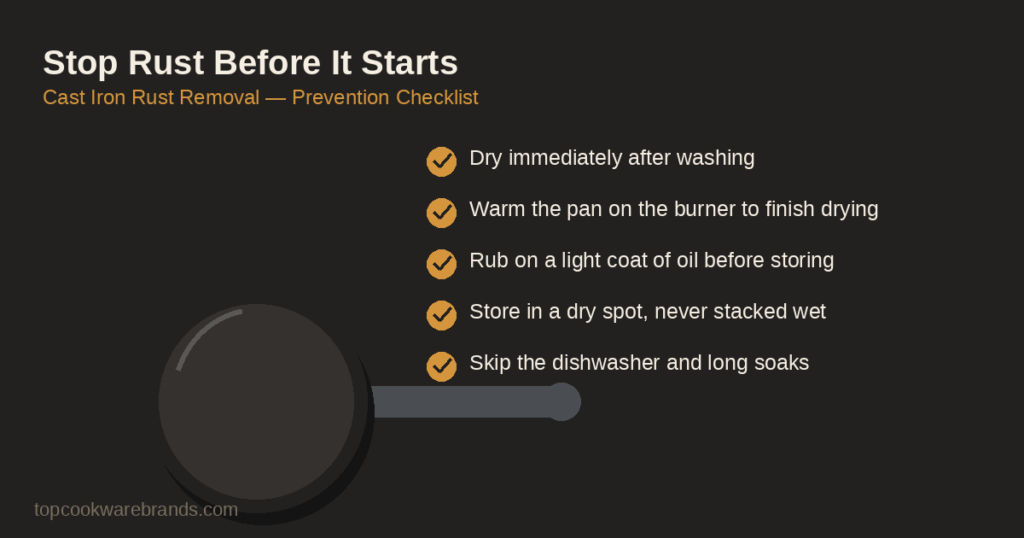
- Dry the pan immediately after washing — towel-dry, then set it on a warm burner for a minute to drive off any remaining moisture.
- Rub on a light coat of oil after every wash, before storing.
- Store it somewhere dry, not stacked wet inside another pot, and not in a humid basement or garage.
- Avoid the dishwasher entirely and skip long soaks in the sink.
- Cook with fat regularly — it’s the easiest way to keep seasoning built up and rust-resistant.
FAQ
Is a rusty cast iron pan safe to cook in once it’s clean?
Yes, once the rust is fully removed and the pan is re-seasoned. Cooking in visibly rusty cookware isn’t recommended, but rust alone doesn’t permanently contaminate the metal.
Can I use a wire wheel or angle grinder?
For severely rusted pans, yes — it’s faster than hand-scrubbing, just go slowly and keep the tool moving so you don’t gouge the surface.
How often should this actually happen?
If you’re drying and oiling the pan after every use, you shouldn’t see rust more than once in a great while, if ever.