Smart cookware and temperature-sensing pans exist to fix one specific failure: you’ve ruined a good steak. Maybe an expensive one. You stood at the stove, poked it, guessed, and served it gray in the middle. It happens to almost everyone, and the reason is boring—you were cooking blind. Smart cookware fixes that one problem. Not with magic. With a number.
If you’ve heard the hype before and rolled your eyes, good. This piece is written for you. Let’s take your best objections apart, one by one.
Table of Contents
Why Doneness Is a Temperature, Not a Time
Cooking failure is almost never about skill. It’s about information. Heat is invisible. You can’t see 400°F. You can’t see a chicken breast hit a safe, juicy 165°F inside. So you guess. You use timers built for someone else’s stove, someone else’s pan, someone else’s chicken. Then you’re surprised when it doesn’t work.
Here’s the truth every good cook already lives by: doneness is a temperature, not a time.
- “Perfectly seared” is a surface temperature. (It’s also why a screaming-hot cast-iron pan beats a cold one—the metal holds the heat you’re trying to hit.)
- “Food poisoning” versus “safe” is a single number.
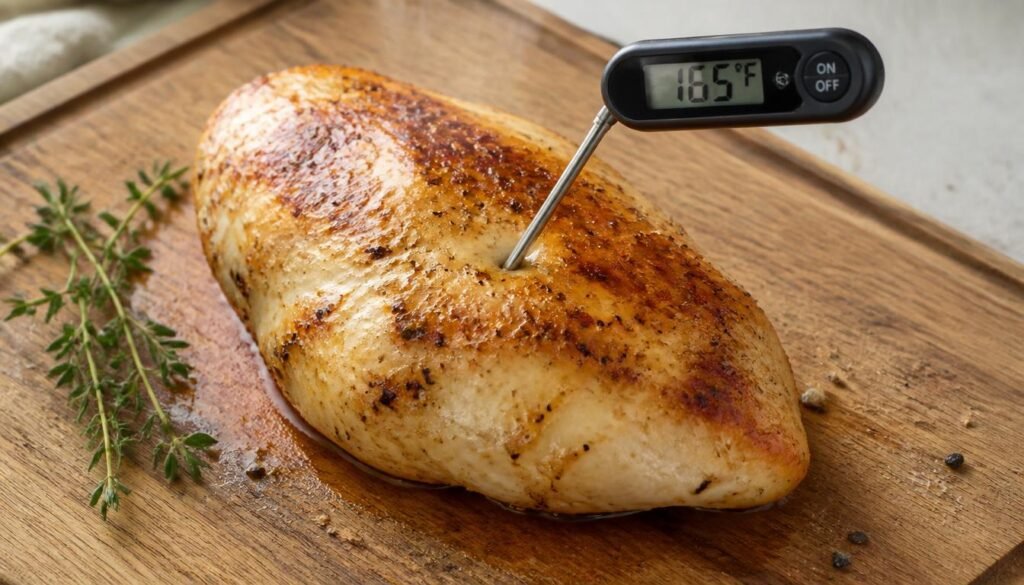
The USDA is blunt about this: poultry is safe at 165°F, ground meats at 160°F, and whole cuts of beef or pork at 145°F with a short rest. Those aren’t opinions. They’re the line between dinner and a night you’ll regret. Temperature is the one thing that actually decides your result. Smart tools just let you see it. That’s the whole pitch. Everything else is detail.
What Smart Cookware Actually Means in 2026
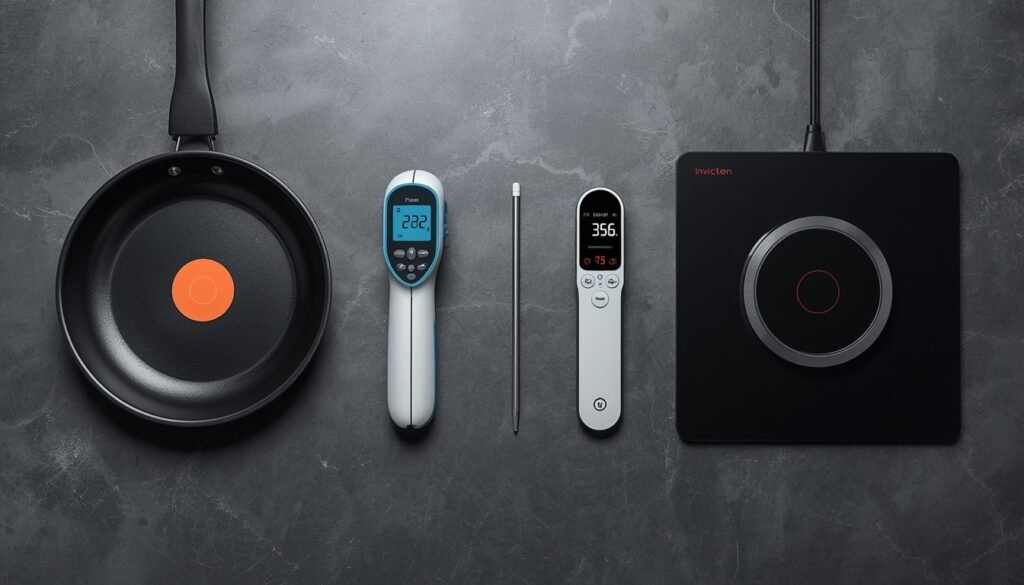
Smart cookware is any tool that measures cooking temperature so you stop guessing—from $15 color-changing heat-indicator pans to instant-read probes, infrared thermometers, predictive smart thermometers, and fully connected sensor-pan-and-burner systems. Only the highest-end options use apps; the core benefit, precision, starts at around fifteen dollars.
Let’s kill the biggest myth first. “Smart” does not mean a pan with a battery and a needy app. In 2026, smart cookware is a spread of tools. Some are dead simple. Some are high-tech. All of them do one job: they tell you the temperature so you stop guessing.
Here’s the honest range:
- Heat-indicator pans. A spot on the pan changes color when it’s ready. No app. No charging. Nothing to break.
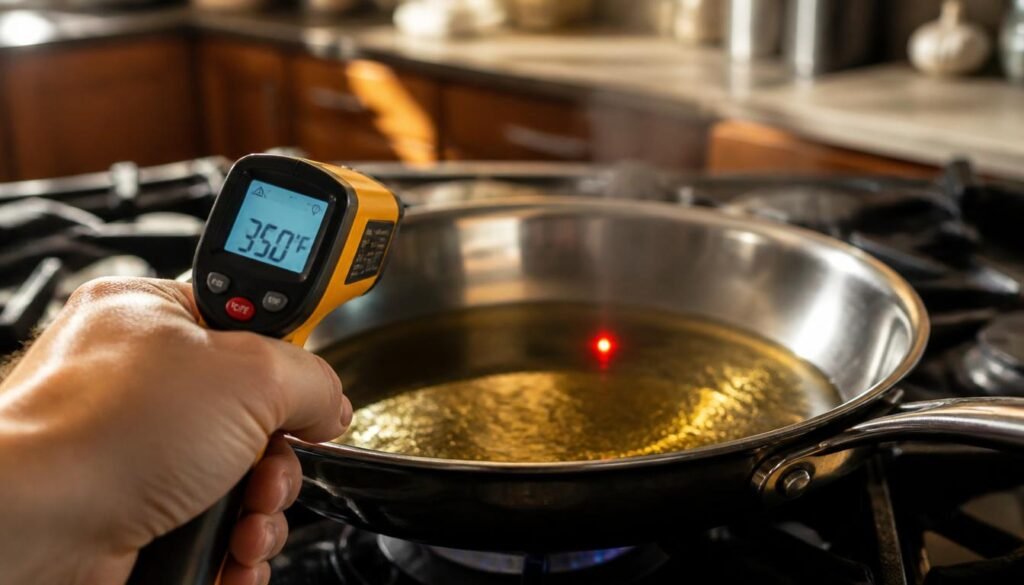
- Infrared thermometers. Point, click, read the surface or oil temp in a second.
- Instant-read probes. Stick it in, get the internal temp in one to three seconds.
- Predictive smart thermometers. Multiple sensors track your food and predict when it’s done.
- Connected cooking systems. A sensor-embedded pan, an induction burner, and an app that adjusts heat for you.
Notice something. Only the last two involve software. The core benefit—precision—starts at fifteen bucks. Keep that in mind. We’ll come back to it when we talk price.
Do You Really Need Smart Cookware If You Can Already Cook?
This is the proud cook’s objection. And it’s the easiest one to answer.
I spent two years insisting I could judge doneness by touch. Then I probed a “perfect” pork chop and watched the reading settle at 141°F—still pink, still unsafe, already on its way to the trash. That was the last dinner I cooked blind.
Walk into any serious restaurant kitchen. You will find thermometers everywhere. Line cooks with instant-reads in their apron. Probes in the fish. Infrared guns on the flat-top. These are people who cook for a living, and they don’t guess. Why would you?
The “feel” you’re proud of is real. But strip it down and it’s just temperature knowledge you’ve memorized over years. A thermometer hands a beginner that same knowledge on day one.
So a temperature-sensing tool isn’t a crutch. It’s what the best cooks already use. It doesn’t replace your skill. It removes your worst nights—the ones where a distraction turns dinner to rubber. Precision is not the enemy of craft. Precision is the craft.
The Hestan Cue Shutdown: How to Avoid Buying a Bricked Pan
Now the objection that actually stings. “These companies brick the app and your fancy gear becomes a paperweight.”
You’re right. It happens. Hestan invented the connected temperature-sensing pan, and in 2025 the brand shut down its Cue app for good. Owners lost the guided recipes overnight. I’m not going to pretend that away. It’s the single best reason to be careful.
So let’s turn it into a buying rule instead: separate the intelligence from the pan.
The smartest 2026 buy isn’t the pan that thinks for you. It’s the tool that senses temperature and keeps working with zero cloud, zero login, zero subscription. A color-changing heat indicator never needs a server—it works in a blackout. A standalone probe or infrared thermometer reads the same number in 2026 or 2036. A predictive thermometer with an onboard display still works even if the phone app dies.
Buy sensing, not dependence. A pan is a pan—and honestly, knowing when to replace a worn pan matters far more to your cooking than whether its app is still online. Do that, and the “bricked app” nightmare simply can’t touch you. The skeptic’s best weapon turns into your shopping list.
How Much Does Smart Cookware Cost?
Let’s talk money, because this is where most people bail. Yes, a full connected system can run steep. Premium bundles with a sensor pan, an induction burner, and extra pots have landed around $799. Some buyers love them. Most people don’t need them. (If you’re still sorting out the basics first, this cookware buying guide untangles what to buy for how you actually cook.)
Here’s the simple truth about price. The value is in the sensor. And sensors are cheap.
The $15 Fix: A Good Instant-Read Thermometer
A solid frying or candy thermometer costs about fifteen dollars. Good ones read within about a degree in one to three seconds. That’s it. That’s the upgrade that saves your fried chicken, your caramel, your steak. Fifteen dollars against a lifetime of ruined dinners.
Don’t take my word for it—here’s America’s Test Kitchen on why an instant-read is the one tool they won’t cook without:
The $30–$100 Upgrade: Infrared and Predictive Thermometers
Add an infrared thermometer for instant surface reads—perfect for oil, pans, and pizza steels. Or step up to a predictive smart thermometer. One popular model packs eight sensors. They work together to catch the exact moment your food is both safe to eat and still juicy.
The Full System: A Connected Sensor Pan and Burner
Want the pan, the burner, and an app that drives the heat? It exists. Bundles have started around $300 if you already own induction-ready gear. Buy it because you want a hands-off coach, not because you think it’s the only way in. The point stands: precision does not require a splurge.
The Best Smart Cookware and Temperature-Sensing Pans of 2026
Let’s get concrete. Here’s how the best smart cookware and temperature-sensing pans of 2026 stack up, ranked by one test: how badly could this let you down in five years? That’s why the cheapest, “dumbest” tools rank highest and the pricey systems come with a warning. (Whatever you pick, it works best paired with cookware that matches how you cook.)
- Best “can’t be bricked” pick: a heat-indicator pan. A visual cue tells you the surface is ready. No electronics. This is the safest entry point for a skeptic.
- Best precision-per-dollar: an instant-read thermometer. Around fifteen to thirty-five dollars. Fast, accurate, and useful for everything from steak to bread. If you buy one tool, buy this.
- Best for frying and surfaces: an infrared thermometer. Point-and-read oil and pan temps in a second. Ends soggy fries and burnt garlic forever.
- Best hands-off coach: a predictive smart thermometer. It watches the cook and tells you when to pull the food. Great for anyone who hates hovering over the stove.
- Best all-in-one system: a connected sensor-pan-and-burner bundle. Buy it for the guided experience. Just pick one with strong standalone control, so a future app change can’t strand you.
A quick note on accuracy, since it’s fair to be suspicious. The best sensors aren’t guessing. Premium instant-reads land within about a degree. The best sensors use Swiss-made chips. They’re accurate to about a third of a degree. Those are real numbers you can check, not hype.
Shop These Picks on Amazon
Affiliate disclosure: the links below are Amazon affiliate links. If you buy through them, we may earn a small commission at no extra cost to you. See our full affiliate disclosure.
- The $15 fix — instant-read thermometer: Shop instant-read meat thermometers on Amazon →
- For frying & surfaces — infrared thermometer: Shop infrared cooking thermometers →
- Hands-off coach — predictive smart thermometer: Shop wireless smart thermometers →
- Can’t-be-bricked pick — heat-indicator pan: Shop heat-indicator nonstick pans →
- For candy & deep-frying — clip probe thermometer: Shop candy & deep-fry thermometers →
What Critics of Temperature-Sensing Pans Get Wrong
Here’s the emotional truth under all of this. Cooking anxiety is real. That knot in your stomach when guests are coming and you’re not sure the pork is safe. The quiet dread of carving into a roast in front of people. A number erases that. You look, you know, you serve. The fear is just gone.
People who love these tools aren’t excited about gadgets. They’re excited about calm. They cook more, try more, and waste less, because failure stopped being random.
Critics frame temperature-sensing pans as lazy or fussy. They miss the point entirely. This isn’t about doing less. It’s about never again throwing out a $25 piece of fish because you guessed wrong. That’s not a gimmick. That’s confidence you can buy for fifteen dollars.
Is Smart Cookware Just a Fad?
One more thing for the “it’s a fad” crowd. By industry estimates, roughly 70 million U.S. households now own at least one connected cooking device, and the temperature-sensing pan market was valued near $2.8 billion in 2025. Sensor costs have dropped sharply since 2023, which is why these tools keep getting cheaper.
Fads shrink. This is growing, and the reason is simple. The physics of doneness never changes. Temperature is, and always will be, the one variable that matters. Tools that reveal it aren’t going anywhere.
Frequently Asked Questions About Smart Cookware
Are smart cookware and temperature-sensing pans worth it? For most people, yes—the payoff is huge for the price. A $15 instant-read thermometer removes guesswork on your very first cook, and even skeptics stop overcooking meat once they can see the number. You don’t need an $800 system to get the benefit.
Do temperature-sensing pans need an app to work? No. Only connected systems and some predictive thermometers use an app. Heat-indicator pans, infrared thermometers, and standalone instant-read probes work with zero app, no login, and no subscription—so they keep working even if a company shuts down its servers.
What is the best budget smart cookware tool? A good instant-read thermometer, usually $15–$35. It reads internal temperature in one to three seconds and works on everything from steak to bread. If you buy one tool, buy this one.
What temperature is safe for chicken and steak? Per the USDA, poultry is safe at 165°F, ground meats at 160°F, and whole cuts of beef, pork, or lamb at 145°F with a 3-minute rest. A thermometer is the only reliable way to confirm you’ve hit those numbers.
Will my smart pan stop working if the app is discontinued? The pan still cooks, but you lose any app-driven features like guided recipes—exactly what happened when Hestan shut down its Cue app in 2025. Buy tools that sense temperature on their own, and an app shutdown can’t strand you.
What’s the difference between an instant-read and a predictive thermometer? An instant-read gives you a fast spot check when you stick it in. A predictive smart thermometer stays in the food, tracks it with multiple sensors, and estimates when it’ll be done—better for hands-off cooking and large roasts.
The Bottom Line: Should You Buy Smart Cookware?
Believe the hype or don’t—it changes nothing. You cook better when you can see the temperature, and smart cookware is just the fastest way to see it. Everything else—the apps, the bundles, the $800 systems—is optional noise.
So here’s the move: buy one instant-read thermometer this week and use it on your next dinner. Three meals. If you’re not cooking with more confidence by the third, you’re out the price of a sandwich. Stop cooking blind.
Leave a Reply