Cookware Ruined After Dishwasher? Powerful Fixes You Need Now
What if your time-saving kitchen helper is secretly destroying your favorite pots and pans? I learned this hard truth the long way.
Cookware ruined after dishwater. For years, I tossed everything into the machine. I assumed my tools were tough enough. Then I noticed changes. My good skillet lost its sheen. A pot bottom began to warp.
That moment of realization hit me. My expensive kitchen investments were suffering from my own habits. This damage motivated deep research into proper care.
I discovered that high heat and harsh detergents are often the culprits. For instance, nonstick pans can be especially vulnerable in a dishwasher cycle.
Understanding material composition is everything. What works for stainless steel can ruin other types. Proper care extends the life of your quality items.
It saves you money over time by preventing early replacements. This guide shares the lessons I learned. We’ll cover the science behind the harm, prevention strategies, and material-specific care.
My goal is simple: help you keep your kitchenware in top shape for many years. It starts with knowing what not to do. For example, the care for a carbon steel pan is a unique of seasoning and drying.
Table of Contents
Key Takeaways
- Dishwasher cycles can cause hidden harm like warping and coating loss.
- Material compatibility is the key to choosing a cleaning method.
- High heat and strong detergents accelerate wear and tear.
- Proper hand care significantly extends the lifespan of your pots and pans.
- Learning specific care techniques saves money on replacements.
- Always check manufacturer guidelines, even for “dishwasher-safe” labels.
- Different materials, from nonstick to carbon steel, require tailored approaches.
Understanding Dishwasher Effects on Your Cookware
It’s a powerful combination of aggressive chemistry and intense heat. These two forces work together to clean, but they can also cause unseen harm.
Chemical Reactions with Detergents and Materials
Standard detergents contain surfactants to break down food and grease. They also have alkaline agents like sodium hydroxide.
These chemicals create a high-pH environment. This is particularly bad for soft materials like aluminum.
Many quality pans use a 3-ply construction. An aluminum core is sandwiched between stainless steel for great heat spread.
The rim, however, often exposes the raw aluminum layer. Harsh detergents can corrode this exposed edge over time.
Impact of Water Temperature and Dishwasher Cycles
High water temperatures supercharge chemical activity. This heat speeds up reactions between detergents and metal surfaces.
Chlorine in municipal water supplies can make this corrosion worse. The repeated cycle of high temperatures and aggressive chemicals is the real issue.
This process slowly breaks down protective coatings. For instance, the coating on a nonstick pan can degrade faster.
Understanding this science is the first step in protecting your kitchen investments. It helps you decide what truly belongs in the machine.
How to Prevent cookware ruined after dishwasher
Not all pots and pans are created equal when it comes to machine washing. Prevention is about matching the right care to each material in your kitchen.
My strategy begins with knowledge and ends with a simple, effective routine.
Choosing the Right Cleaning Methods and Detergents
I always check the manufacturer guidelines first. This step is crucial for warranty protection.
For items that can go in, I pick gentle, low-alkaline cleaning formulas. Harsh chemicals in standard detergents attack metal surfaces.
They can strip away protective coatings over time. A mild detergent is a safer bet for your compatible pieces.
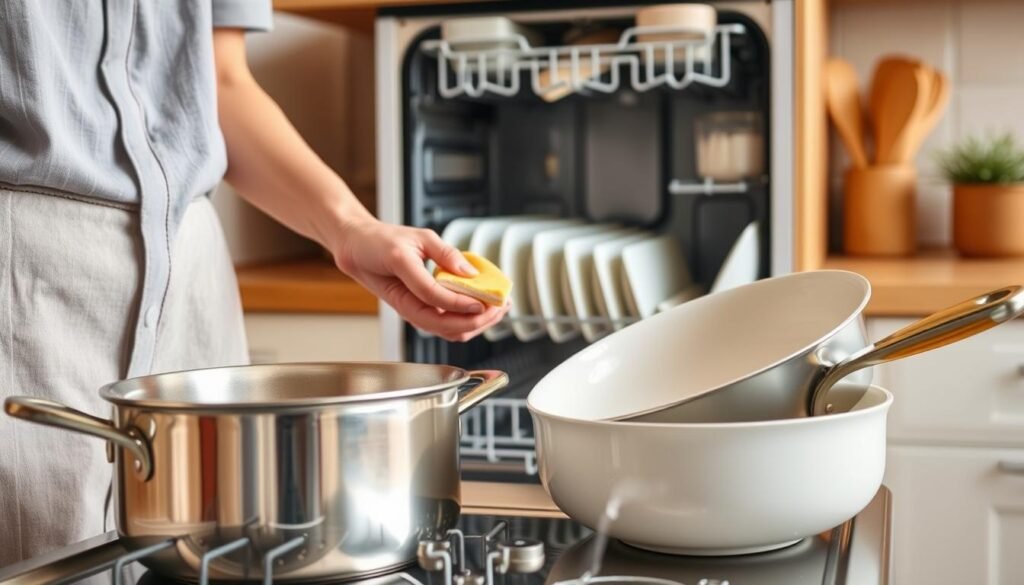
Material-Specific Care for Stainless Steel, Cast Iron, and More
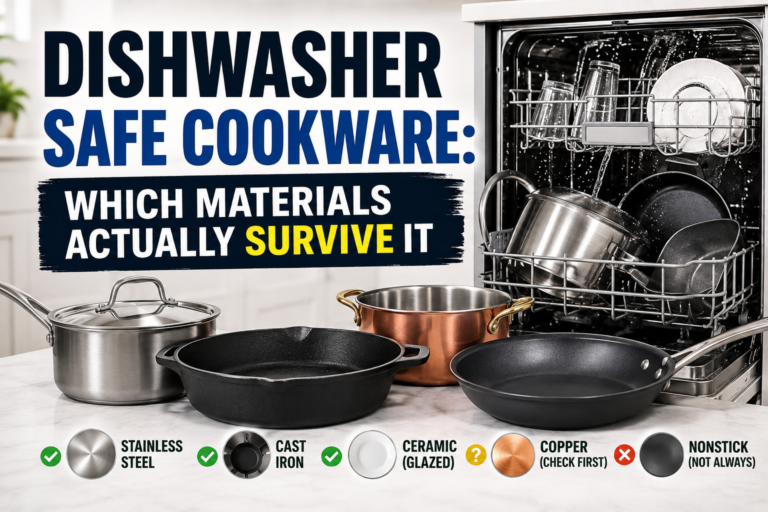
Stainless steel pans are often safe. Yet, prolonged high heat can cause dulling.
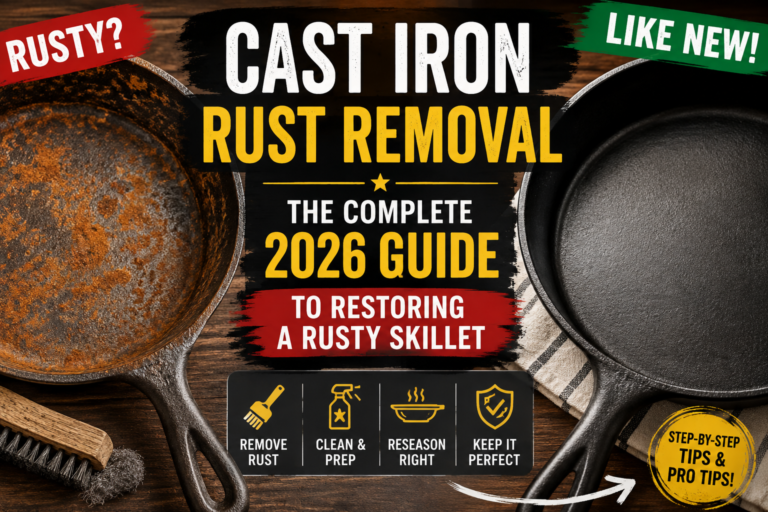
I never put cast iron in the machine. The water and soap strip its essential seasoning, leading directly to rust.
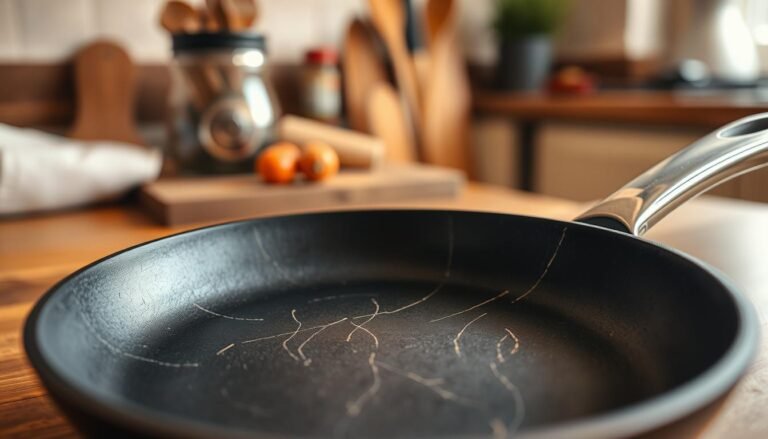
Non-stick surfaces require special attention. Dishwasher cycles make the coating degrade faster than hand washing.
This leads to flaking and poor performance. Aluminum reacts badly to alkaline agents, risking corrosion.
I organize my kitchen tools by their cleaning needs. This mental list keeps my cookware in top shape for years.
Best Practices for Maintaining Your Cookware
I treat my kitchenware like the investments they are, with a simple system for washing, drying, and storing. This routine is the cornerstone of preserving their performance and appearance for the long haul.
Hand Washing Versus Dishwasher Use
For my quality pieces, hand cleaning is always the safest way. I use warm water, mild soap, and a soft cloth. This provides a gentle yet thorough clean without harsh chemicals.
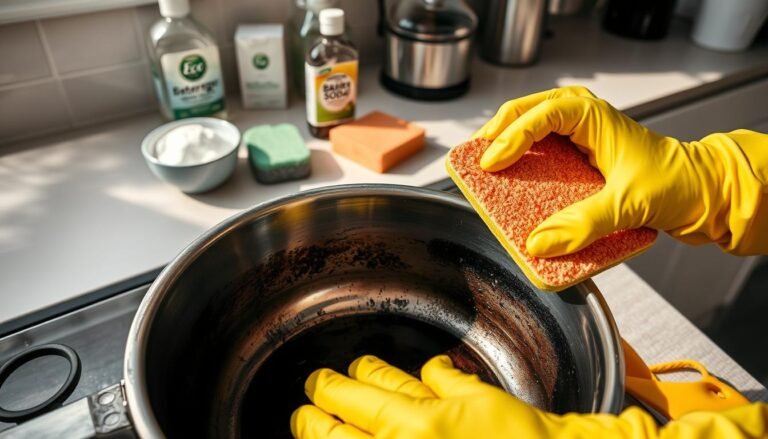
Stubborn food bits get a soak in warm, soapy water. For tougher residue, a baking soda paste works wonders. These methods protect delicate surfaces far better than any machine cycle.
I only use the dishwasher for very sturdy items. When I do, I secure each piece to prevent clanging. I select a gentle cycle with lower temperatures and a mild detergent.
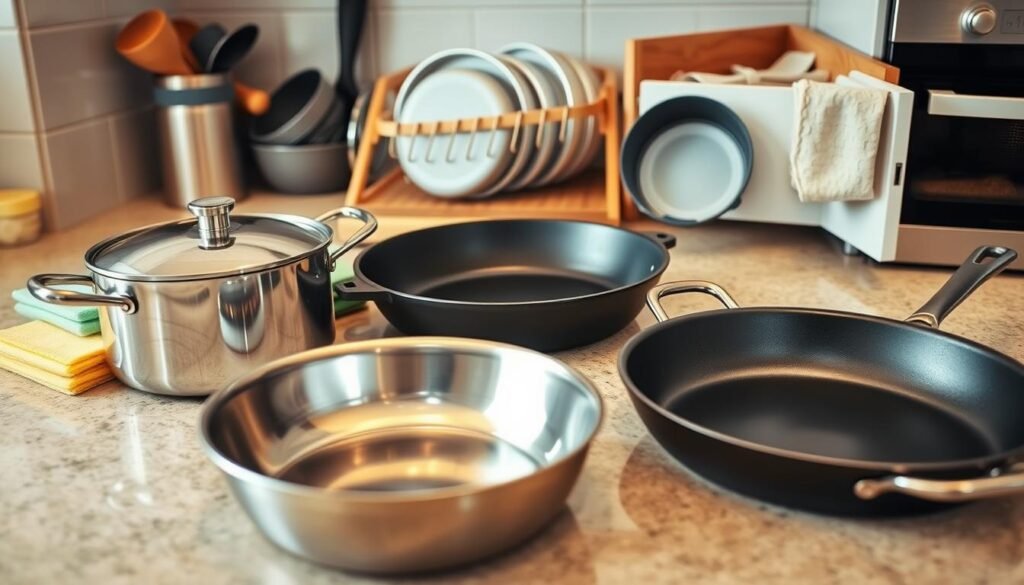
Post-Cleaning Maintenance and Proper Storage
Immediate drying is non-negotiable. I dry every pot and pan thoroughly with a soft towel. Air-drying leaves mineral spots and can promote rust, especially on items like cast iron.
For storage, I place cloth liners between stacked pans. This prevents scratches and dings. Hooks or racks are great for frequently used items, saving space and minimizing contact.
I make time for a quick inspection every few months. I look for scratches, warping, or coating issues. This habit helps me catch problems early and adjust my cleaning methods, much like the guidance for cleaning nonstick pans.
This small investment of time pays off. My tools stay in top shape, making every cooking session a pleasure.
Conclusion
Looking back, the most valuable lesson wasn’t about avoiding the dishwasher, but knowing when to use it. Understanding your pots’ material and following the manufacturer guide is everything. This prevents warping and keeps your quality items shining for years.
While some stainless steel can handle the machine, hand cleaning remains the safest way for most. This is especially true for non-stick surfaces and pieces with metal cores sensitive to heat and detergent. For a deeper dive on this balance, see the stainless steel care verdict.
Take a moment to evaluate your pan collection. Identify which ones need gentler care. A small investment of time in proper cleaning and drying extends their lifespan dramatically. Your cooking experience improves when every tool performs as intended, free from water spots and wear.