If you’ve ever searched for stainless steel vs nonstick cookware and somehow ended up researching cookware at 2 AM, welcome — you’re my kind of person. But here’s the real problem: the stainless steel cookware vs nonstick debate has been polluted by so much marketing noise that most home cooks end up buying the wrong pans, wasting money, and getting frustrated.
I’ve watched friends spend $300 on a nonstick set only to replace it in two years. I’ve also seen people buy stainless steel and then let it collect dust because every egg they tried turned into a crime scene. Both outcomes are totally avoidable. This cookware comparison guide is my honest, experience-backed breakdown of what actually matters — so you buy smart and cook better.
Table of Contents
- The Quick Answer: Stainless Steel vs Nonstick
- Heat Performance & Cooking Versatility
- Durability & Lifespan: The Real Cost
- Safety & Health Considerations
- Best Use Cases for Each Type
- Myth-Busting: What the Internet Gets Wrong
- My Buying Advice for Home Cooks
- Frequently Asked Questions
- My Top Recommended Gear
The Quick Answer: Stainless Steel vs Nonstick Cookware
Stainless steel cookware excels at searing, deglazing, and long-term durability, while nonstick pans are superior for low-fat cooking of delicate foods like eggs and fish. The best cookware for home cooks is actually both — a stainless steel skillet for everyday versatility and one quality nonstick pan for specific tasks.
I know that’s not the definitive “this one wins” answer you wanted. But anyone who tells you one type is universally better is either selling something or doesn’t cook enough. The real answer depends on how you cook, what you cook, and how much you value your money over time. Let me break it all down so you can build a kitchen that actually works for you. For a deeper look at top-performing options in both categories, check out our best cookware picks.
Heat Performance & Cooking Versatility
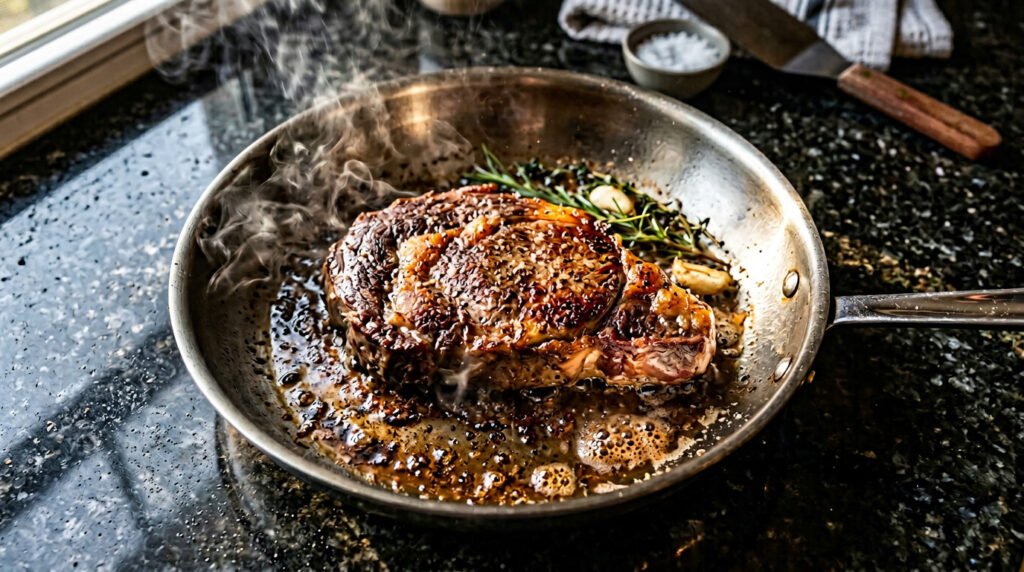
Here’s where stainless steel vs nonstick pans diverge the most dramatically. Stainless steel handles high heat like a champ. I routinely crank my tri-ply stainless skillet to 600°F+ when searing steaks, and the pan doesn’t flinch. That kind of heat is what creates the Maillard reaction — that gorgeous, deeply flavored brown crust that makes restaurant food taste like restaurant food.
Nonstick? Most manufacturers cap their recommended temperature at 400–500°F. Push a PTFE-coated pan beyond that range, and you risk degrading the coating and releasing fumes. The EPA has documented concerns about PFAS chemicals that were historically used in nonstick coatings, though modern PFOA-free versions are significantly improved.
But here’s the nuance people miss: nonstick pans distribute heat more evenly at lower temperatures. For scrambled eggs, pancakes, or sautéed vegetables where you want gentle, consistent heat, nonstick genuinely performs better. You use less oil, things release cleanly, and cleanup takes 30 seconds. That’s not a trivial advantage — it’s a daily quality-of-life upgrade.
My take: Stainless steel wins on versatility and peak performance. Nonstick wins on convenience for a specific category of cooking. This isn’t a competition where one takes all the medals.
Durability & Lifespan: The Real Cost
This is where the nonstick vs stainless steel pans debate gets interesting — and where I get a little heated (pun intended, fight me). People look at a $30 nonstick pan and a $130 stainless steel pan and think nonstick is the budget-friendly choice. Let me do some quick math.
A quality nonstick pan lasts 3-5 years. Let’s be generous and say 5. Over 25 years, you’ll buy five of them at $30 each — that’s $150. A quality stainless steel pan? I’m still using one I bought 12 years ago, and it looks better now than when I unboxed it. Those brown patina marks? They season the cooking surface. The pan improves with age.
According to research from Consumer Reports, stainless steel cookware consistently ranks highest in durability tests, often outlasting the testing protocols themselves. That’s not marketing — that’s independent verification.
Nonstick coatings scratch, chip, and degrade no matter how careful you are. I’ve babied nonstick pans with wooden utensils, hand-washed them gently, stored them with towel liners between them — and they still started losing their nonstick properties around year three. It’s built-in obsolescence, and it drives me a little crazy TBH 😅
Head over to our detailed comparisons page to see how specific brands stack up on longevity testing.
Safety & Health Considerations
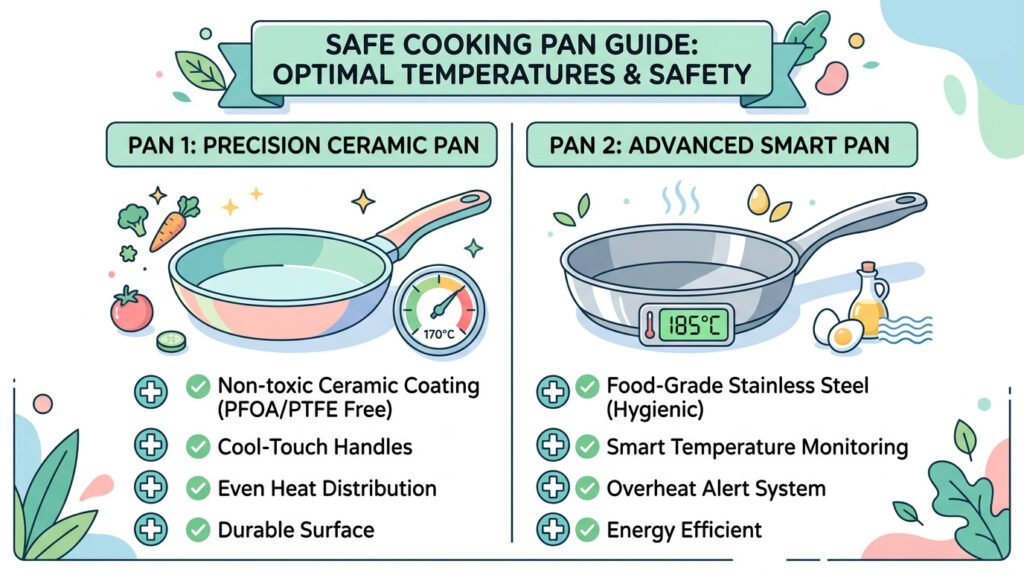
Let me cut through the fear-mongering. Modern nonstick cookware — the stuff labeled PFOA-free — is considered safe by pretty much every credible health authority when used at normal cooking temperatures. The American Cancer Society states there’s no proven risk to humans from using nonstick cookware under normal cooking conditions.
That said, I get why people are cautious. The history of PFOA (the chemical that WAS used in older Teflon manufacturing) is genuinely alarming. And if you accidentally overheat an empty nonstick pan, the fumes can cause polymer fume fever — a real thing that’s especially dangerous to pet birds. So there IS a ceiling to how carelessly you can use nonstick.
Stainless steel? It can leach trace amounts of nickel and chromium, especially when cooking acidic foods like tomato sauce. For the vast majority of people, these amounts are negligible. If you have a nickel allergy, consider nickel-free stainless steel options (look for 18/0 grade rather than 18/10).
Bottom line: Both are safe with proper use. Stainless steel has a slight edge because there’s no coating to worry about, period.
Best Use Cases for Each Type
After testing dozens of pans across both categories (and yes, ruining many meals in the process), here’s my definitive breakdown of which tasks each type handles best:
Use Stainless Steel For:
- Searing meats (steaks, chops, chicken thighs)
- Making pan sauces and deglazing with wine or stock
- Browning aromatics for soups and stews
- Oven-to-stovetop cooking (most are oven-safe to 500°F+)
- Acidic dishes like tomato sauces or citrus-based recipes
- Any recipe where fond (those brown bits stuck to the pan) adds flavor
Use Nonstick For:
- Eggs in any form — scrambled, fried, omelets
- Delicate fish fillets (sole, tilapia, flaky white fish)
- Crepes and thin pancakes
- Reheating leftovers quickly
- Low-fat cooking where minimal oil is a priority
- Quick weeknight meals where cleanup speed matters
Notice something? The stainless steel list is longer. That’s not bias — it’s physics. Stainless steel simply handles a wider range of cooking techniques. But man, I would not want to make a French omelet in stainless steel. Life’s too short for that kind of struggle.
Expert Commentary: This video offers an excellent visual demonstration of how food behaves differently on each surface — particularly the searing and egg tests — which reinforces why I recommend owning both types rather than choosing one exclusively.
Myth-Busting: What the Internet Gets Wrong
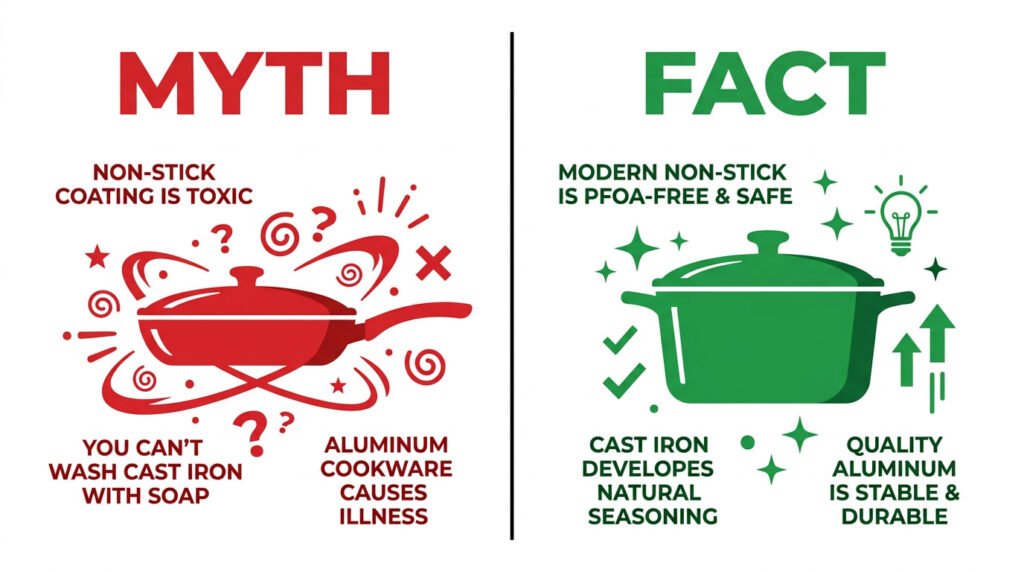
I spend way too much time reading cookware forums and comment sections (it’s a sickness, I know), and the same myths keep circulating. Let me put a few to rest:
Myth #1: “Stainless steel is nonstick if you heat it properly.”
Partially true, mostly misleading. Yes, the mercury ball test and proper preheating + fat create a temporary nonstick effect. But calling stainless steel “nonstick” is like calling a pickup truck “fuel-efficient” because you drove downhill once. It CAN release food cleanly, but it requires skill, attention, and proper technique. It’s not inherently nonstick.
Myth #2: “All nonstick coatings are toxic.”
Flat-out wrong in 2024. PFOA has been phased out of U.S. manufacturing since 2013. Ceramic nonstick options use entirely different chemistry. As I mentioned earlier, the FDA actively monitors PFAS in consumer products. Modern nonstick cookware from reputable brands is safe. Full stop.
Myth #3: “Expensive cookware always cooks better.”
IMO, this is the most damaging myth in the entire cookware space. I’ve used $40 Tramontina tri-ply stainless pans that performed nearly identically to $300 All-Clad pans in side-by-side tests. The diminishing returns curve in cookware is steep. You should spend enough to get proper construction (fully clad, not disc-bottom), but beyond that, you’re paying for brand prestige and slightly better handles. Read our in-depth reviews before you overspend.
Myth #4: “You only need one type of pan.”
Would you only own a hammer? No. You need different tools for different jobs. The best cookware for home cooks is a hybrid setup: two stainless steel pans (a 10″ and 12″ skillet) plus one quality 10″ nonstick. That’s it. That’s the whole kit. Everything else is optional.
My Buying Advice for Home Cooks
After more than a decade of testing, reviewing, and flat-out abusing cookware, here’s what I’d tell my best friend if they asked me what to buy:
1. Start with a 12-inch stainless steel skillet. This is your workhorse. Look for tri-ply (aluminum core sandwiched between stainless steel layers) fully clad construction. Skip anything that only has a thick disc on the bottom — heat distribution matters up the sidewalls too.
2. Add one 10-inch nonstick pan. Don’t spend more than $40. Seriously. Since nonstick pans are inherently disposable (3-5 year lifespan), there’s no point buying a $100 nonstick pan. Get something decent, treat it gently, and replace it guilt-free when the coating starts to go.
3. Consider a stainless steel saucepan (2-3 quart). For sauces, grains, reheating soups — stainless works better than nonstick here because you often want fond development and can deglaze freely.
4. Skip the 15-piece sets. You’ll use three of those pieces and the rest will collect dust. Buy individual pieces that you’ll actually use. Your wallet and your cabinet space will thank you.
Why do I keep harping on this “own both” strategy? Because the stainless steel vs nonstick pans question isn’t actually a versus question. It’s a “what do I grab for this specific meal” question. Once you reframe it that way, the decision becomes obvious 🙂
Frequently Asked Questions
Is stainless steel cookware safer than nonstick?
Modern PFOA-free nonstick cookware is considered safe for normal cooking temperatures below 500°F. Stainless steel has no coating to degrade, making it inherently stable at any temperature. Both are safe when used correctly, but stainless steel offers more peace of mind for high-heat cooking.
Can I use metal utensils on nonstick pans?
No. Metal utensils will scratch and damage nonstick coatings, shortening the pan’s lifespan dramatically. Always use silicone, wood, or nylon utensils with nonstick cookware. Stainless steel pans, however, handle metal utensils without any issues.
How long does nonstick cookware last compared to stainless steel?
Quality nonstick pans typically last 3-5 years with proper care before the coating degrades. High-quality stainless steel cookware can last decades — even a lifetime — making it a significantly better long-term investment despite the higher upfront cost.
Which is better for beginners: stainless steel or nonstick?
Nonstick pans are more forgiving for beginners since food releases easily and cleanup is simple. However, learning to cook on stainless steel builds better fundamental skills like heat management and proper fat usage. Most experts recommend owning both.
Do professional chefs use nonstick or stainless steel?
Most professional chefs primarily use stainless steel and carbon steel cookware for the majority of cooking tasks. They reserve nonstick pans specifically for delicate items like eggs, crepes, and fish. Nonstick pans are considered specialty tools in professional kitchens, not workhorses.
My Top Recommended Gear
These are the exact types of pieces I recommend based on everything I’ve covered above. I’ve linked search results so you can compare current prices and options:
- Best Stainless Steel Skillet: Tri-Ply Stainless Steel 12-Inch Skillet — The foundation of any serious kitchen. Look for fully clad construction with a comfortable handle and helper handle on the opposite side.
- Best Budget Nonstick Pan: 10-Inch PFOA-Free Nonstick Frying Pan — Don’t overthink this purchase. Grab something well-reviewed under $40, use it for eggs and fish, replace it in a few years. Simple.
- Best Stainless Steel Saucepan: Tri-Ply Stainless Steel 3-Quart Saucepan — Perfect for sauces, small batches of pasta, oatmeal, and anything involving liquid. The lid seal matters here — look for a tight fit.
Disclaimer: This post contains affiliate links. As an Amazon Associate, I may earn a commission from qualifying purchases at no additional cost to you.
Leave a Reply