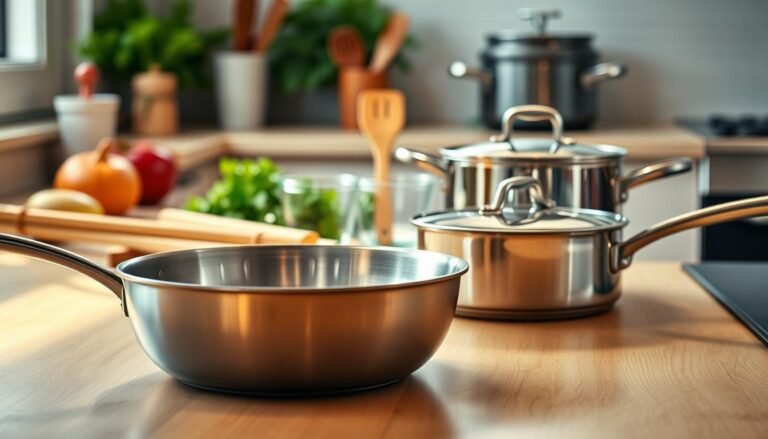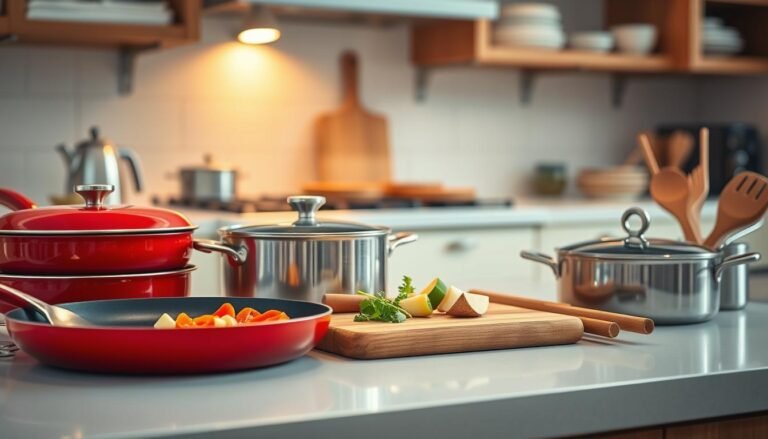
Stainless Steel: Pros, Cons, and Best Uses
Imagine a kitchen tool so reliable it can easily last over ten years of daily use. According to Bon Appétit’s food director, a great version of this item is practically “unkillable.” This isn’t a fancy gadget; it’s a fundamental piece of equipment found in professional kitchens everywhere.
This type of pan is a true multitasker. You can use it to sauté vegetables, sear a perfect steak, or create a rich pan sauce. Unlike more delicate options, you don’t have to baby it. Metal utensils are fine, and it can handle the high heat needed for a beautiful crust.
Its versatility is unmatched. It works on every type of stovetop, including modern induction. You can also move it straight from the burner into a hot oven. This makes it a long-term investment for your kitchen. While the initial cost might be higher, its decades of service make it a smart buy.
This guide will break down everything you need to know. We’ll cover the real-world benefits, what to look for when shopping, and how to care for your new pieces. Get ready to unlock the full potential of this essential kitchen workhorse.
Key Takeaways
- Professional chefs and home cooks rely on this durable kitchen essential for its unmatched reliability.
- It excels at high-heat cooking techniques like searing and browning, which develop deep flavors.
- This type of equipment is compatible with all cooktops, including induction, and is oven-safe.
- You can use metal utensils without fear of damaging the cooking surface.
- It represents a long-term investment due to its exceptional longevity, often lasting decades.
- It is a versatile multitasker, perfect for everything from searing meat to making sauces.
Understanding Stainless Steel Cookware
The transition from single-metal to layered construction revolutionized how we cook. This foundation explains why professional kitchens rely on this material.
History and Evolution
Early pots were simple. Over many years, metallurgy advanced. The creation of a rust-resistant alloy was a key moment.
This innovation quickly became a chef’s favorite. Its premium status has lasted for decades. Modern pieces use bonded layers for better performance.
What Sets It Apart
This material has a non-reactive surface. You can cook tomatoes or wine without a metallic taste. It also resists corrosion and staining.
Another benefit is how it browns food. It creates a flavorful fond perfect for sauces. For even heating, the core is often layered with aluminum or copper.
This smart design solves the main heat conduction challenge. It makes your pans versatile tools for any recipe.
The Benefits of Stainless Steel Cookware
A premium pan should excel in three key areas: durability, cooking control, and visual appeal. This material delivers on all fronts, making it a cornerstone for serious kitchens.
Durability and Longevity
This alloy is built to last. It resists scratches, dents, and corrosion with ease. Your pans will look and function like new for many years.
This toughness means heavy daily use is no problem. You get a long-term investment that outlasts cheaper options. Unlike nonstick coatings that wear out, these pieces can serve you for decades.
Even Heat Distribution
Quality construction prevents frustrating hot spots. Multi-ply designs spread warmth evenly across the entire cooking surface.
This consistent heat distribution is crucial for perfect results. Food browns uniformly without burning in one area. You gain better control for searing meats and making delicate sauces.
The non-reactive surface is another plus. Acidic foods like tomatoes won’t pick up a metallic taste. Your meals keep their true flavor and color.
Finally, the sleek, shiny finish adds a professional look to your kitchen. It’s equipment that performs beautifully and looks the part.
Exploring the Cons of Stainless Steel Cookware
No kitchen tool is perfect, and even high-performance stainless steel has its share of drawbacks. Acknowledging these limitations is key to making a smart purchase.
Potential Challenges and Limitations
The most common issue is a learning curve. Food can stick if the pan isn’t properly preheated or if you don’t use enough fat. This technique is crucial for success.
Quality pieces also command a higher price than basic nonstick cookware. They often require hand washing to preserve their finish, which adds to maintenance time.
This material demands more attention during cooking. It’s less forgiving for beginners or when you’re in a hurry. Delicate items like eggs can be tricky without mastered technique.
Understanding these points helps you decide if this investment matches your cooking style.
Performance and Heat Distribution
Achieving a perfect sear or a flawless pan sauce depends on one critical factor: precise temperature control. This is where high-quality pieces truly shine. Their ability to handle and evenly spread intense heat defines their performance.
High Heat Tolerance
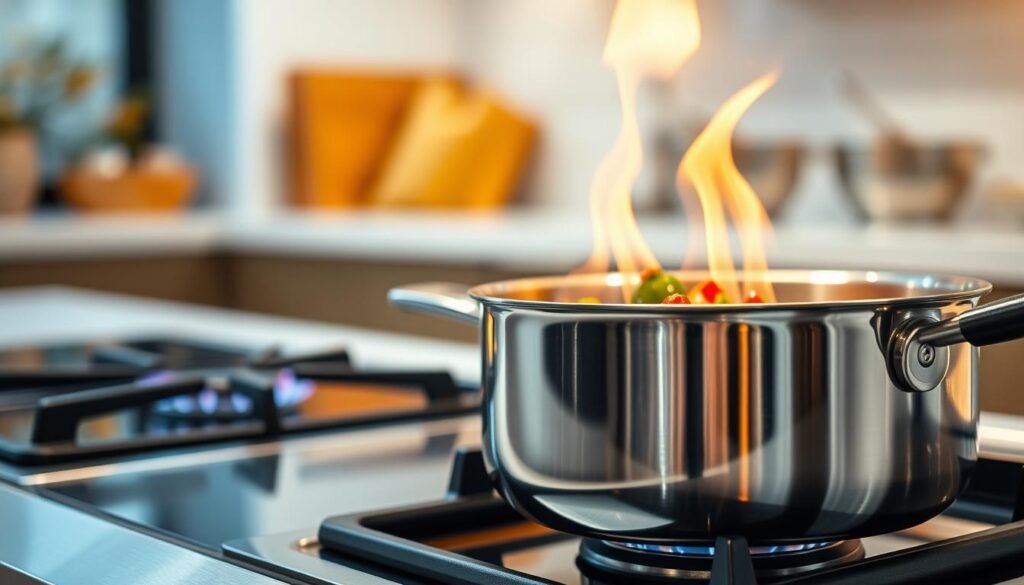
This material isn’t afraid of the flame. It can withstand very high temperature levels, which is essential for techniques like searing meat. You get that beautiful, caramelized crust without damaging the pan.
Most premium sets are fully oven safe. For example, All-Clad D3 can go up to 600°F, and Goldilocks pans handle 550°F. This lets you start a dish on the stovetop and finish it in the oven.
Working with such intense high heat requires excellent heat distribution. Without it, you get hot spots that burn your food. The layered construction inside the pan ensures heat conduction is even across the entire surface.
For the best results, always preheat your pan properly. This simple step improves cooking efficiency and prevents sticking. Understanding this heat response is key to mastering your kitchen tools.
Evaluating this performance is crucial before you buy. Our detailed buying guide breaks down what to look for in top brands.
Importance of Multi-Ply Construction
Multi-ply construction is the technological heart of what makes professional-grade cookware so effective. This layered bonding separates premium pieces from basic ones.
It directly impacts how your pan performs. You get even cooking and quick response to temperature changes.
Tri-Ply vs. 5-Ply Explained
Tri-ply stainless steel features three bonded layers. A conductive aluminum core sits between two durable outer sheets.
This design offers an excellent performance-to-price ratio. Brands like All-Clad D3 use this construction.
Five-ply pans add extra layers. They provide enhanced heat distribution and radiant warmth from the sides.
Fissler uses this thicker approach. It’s superb for consistent results but often heavier and costlier.
Core Materials and Conductivity
The central core material is crucial. Aluminum absorbs and retains heat very well.
The outer layers remain responsive to your stove’s adjustments. This combo prevents hot spots.
Some premium lines use copper cores for even faster heat response. The construction quality defines your cooking experience.
| Feature | Tri-Ply Construction | 5-Ply Construction |
|---|---|---|
| Layers | 3 (Stainless-Aluminum-Stainless) | 5 (Multiple alternating layers) |
| Best For | Most home cooks; great value | Enthusiasts seeking ultimate evenness |
| Heat Distribution | Excellent | Exceptional, with sidewall heating |
| Typical Weight | Moderate | Heavier |
| Price Point | Mid-range | Premium |
For daily use, tri-ply stainless is the smart sweet spot. It delivers professional results without excess weight or cost.
Detailed Stainless Steel Cookware Reviews
To help you make an informed purchase, we’ve tested and reviewed top-rated skillets across the price spectrum. Our findings highlight the best options for every kitchen.
High-End Choices
The All-Clad D3 Frying Pan is our top premium pick. Its tri-ply construction ensures remarkable heat distribution. Available in 10″, 12″, and 14″ sizes, it’s oven-safe to 600°F and comes with a lifetime warranty.
For exceptional performance, the 5-ply Fissler M5 Pro-Ply is a sturdy, thick option. It offers superb heat control but carries a higher price near $200. The Made In Cookware 12-inch pan is a comfortable, even-heating alternative at $139, though it lacks a lid.
Budget-Friendly Options
The Goldilocks Skillet delivers impressive value. Priced between $60 and $80, this lightweight pan is oven-safe to 550°F. It has a broad cooking surface perfect for searing.
You may notice quicker scorching and slight discoloration over time. For the price, it’s an excellent entry point into quality cookware. It performs well beyond its cost.
| Model | Price Point | Key Feature | Best For |
|---|---|---|---|
| All-Clad D3 | $140 – $150 | Lightweight, even heating | The premium workhorse |
| Fissler M5 Pro-Ply | ~$200 | Exceptional 5-ply distribution | Performance enthusiasts |
| Made In 12″ Pan | $139 | Comfortable handle | High-end alternative |
| Goldilocks Skillet | $60 – $80 | Affordable performance | Budget-conscious cooks |
For more context on how these pieces fit into a full kitchen setup, explore these comprehensive cookware set reviews.
Real-World Cooking Tests
To separate marketing hype from real performance, we designed five practical tests for each skillet. This hands-on approach reveals how pieces behave during actual cooking.
Flour and Onion Tests
The first test involves dusting the surface with flour over heat. As it browns, patterns show inconsistencies in heat distribution. This quickly identifies pans with problematic hot spots.
Next, we caramelize onions. This evaluates the cooking experience and user comfort. It also shows which skillet is prone to scorching food.
We then fry skin-on chicken thighs. This checks for sticking potential and whether a 12-inch pan fits four pieces well.
A deglazing test follows to see how easily flavorful fond releases for sauces. Finally, a washing test notes any hard-to-clean surfaces.
This transparent testing makes our findings credible for your own pan purchase.
Stainless Steel cookware
Building complex flavors in your dishes requires a surface that can handle high heat and deglazing. This material delivers consistent performance for every technique, from searing to simmering.
Proper preheating is key. Always warm your pan on medium before adding oil or butter. This creates a non-stick layer and ensures optimal browning.
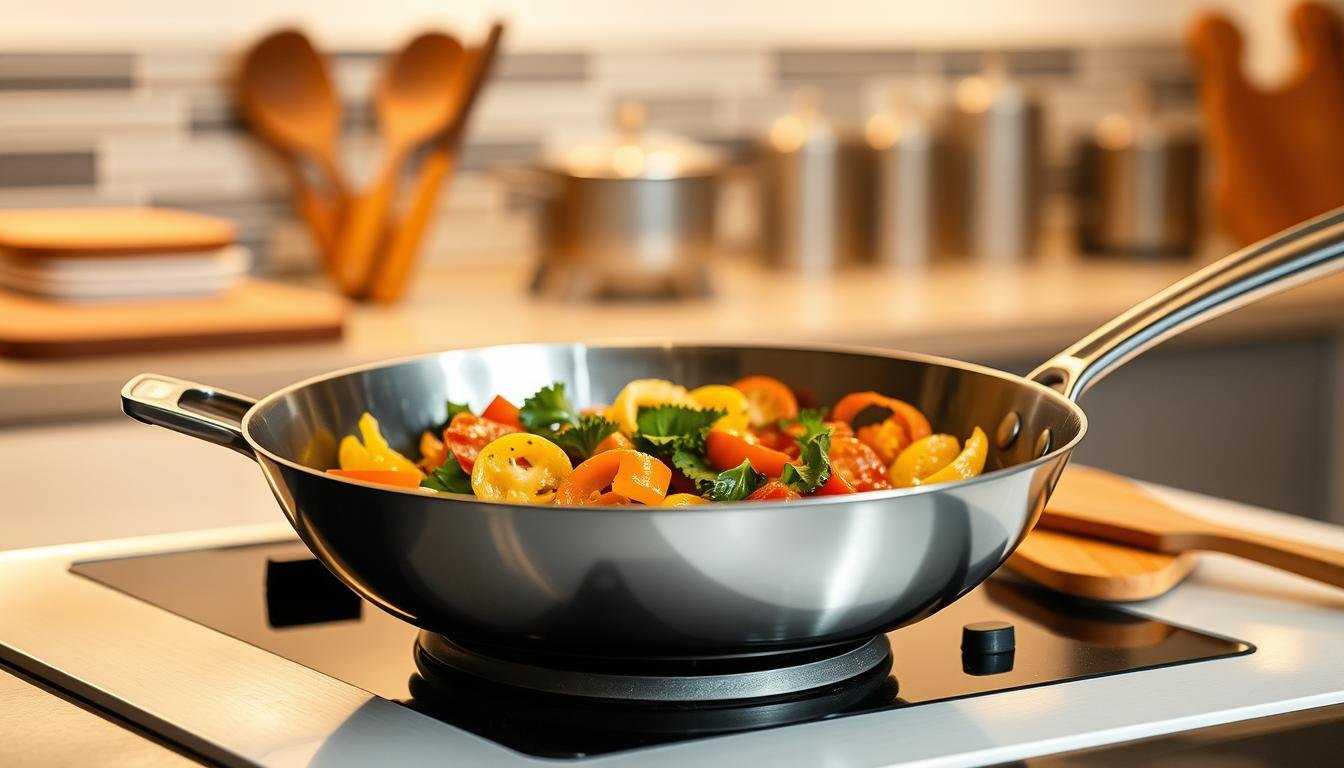
These pieces work on all stove types, including induction. Their versatility makes them a foundational choice for any kitchen setup.
The ability to brown food and deglaze the pan builds rich sauces. This flavor development is unmatched by nonstick alternatives.
With a timeless look and professional control, this cookware represents a smart long-term investment for serious home cooks. It justifies its learning curve with superior results.
Design and Ergonomics Insights
Beyond heating performance, how a skillet handles and pours dictates daily satisfaction. Often overlooked, these design elements transform a simple tool into a joy to use.
Handle Comfort and Pouring Ease
Handle design is highly personal. The Misen skillet’s long handle feels unwieldy to some. Others appreciate the Fissler’s thick, hollow design that stays cool.
Curved rims and sloped edges are practical heroes. The All-Clad D3 and Goldilocks pans feature these for easy pouring. This prevents messy dribbles when draining oil.
Balance and weight matter too. A heavy pan with a poorly placed handle strains the wrist. Lightweight construction helps in larger sizes.
Consider how you move a piece from stove to oven. Sardel’s steep handle curve can get in the way during transfers.
| Design Feature | Primary Benefit | Key Consideration |
|---|---|---|
| Sloped Edge | Facilitates easy pouring | Maximizes cooking surface |
| Hollow Handle | Stays cool during use | Subjective feel; some find it bulky |
| Long Handle | Provides leverage | Can feel unwieldy on crowded stovetops |
| Curved Rim | Directs liquids cleanly | May reduce usable pan wall height |
Your grip and cooking style should guide your choice. Test a skillet in person if possible. The right fit makes every meal more enjoyable.
Maintenance and Cleaning Tips for Longevity
The longevity of your kitchen investment hinges not just on how you cook, but on how you clean. Simple, consistent care protects both the performance and appearance of your pieces.
Hand Washing Recommendations
While many pans are labeled dishwasher-safe, hand washing is strongly advised. The powerful detergents and high heat in a dishwasher can gradually dull the brilliant finish.
Over time, this can also wear down the edges, making them dangerously sharp. For detailed proper care guidelines, follow the manufacturer’s advice.
Follow these simple steps after each use:
- Let your cookware cool completely.
- Wash with warm, soapy water and a soft sponge.
- Rinse thoroughly and wipe dry immediately to prevent water spots.
Cleaning Techniques to Preserve Shine
For stuck-on food, avoid harsh, abrasive scrubbers. They can scratch the cooking surface. Instead, use a dedicated cleaner like Bar Keepers Friend.
A little powder mixed with water creates a gentle paste that lifts stubborn residue. It restores the original shine without damage.
This routine saves you time and preserves your investment. Your pans will look and perform beautifully for years.
Comparing Top Brands and Models
Navigating the crowded market of premium kitchen tools requires a clear comparison of leading brands. This analysis helps you identify which manufacturer offers the best value for your cooking needs.
All-Clad Versus Competitors
All-Clad has long been synonymous with high-quality clad kitchenware. Its pans are the standard choice for professional chefs and recipe developers. Deputy food editor Hana Asbrink notes the brand’s entire range delivers remarkably consistent performance.
The company offers several collections, including D3 Stainless 3-Ply and D5 5-Ply. The D3 Stainless Everyday collection provides ergonomic design for daily use. Competitors like Hestan feature premium designs but can’t match All-Clad’s cooking surface consistency.
When choosing a cookware set, consider your budget and cooking style. Purchasing individual pots and pans may offer better value than a pre-packaged set. Higher price often reflects enhanced performance and durable construction.
User Experience and Performance Observations
Real-world performance observations from culinary experts provide invaluable guidance for any home cook. Their daily use in demanding kitchens reveals strengths and flaws that casual testing might miss.
Chefs’ Reviews and Feedback
Bon Appétit food director Chris Morocco calls a great skillet “unkillable.” He has used his current pan for a decade. “It will never let you down,” he states. This highlights the extreme durability of quality pieces.
Deputy food editor Hana Asbrink praises All-Clad’s consistency. She notes the entire range is “largely indestructible.” These pans resist warping and heat evenly. This reliability is crucial for consistent cooking results.
Not all feedback is glowing. Senior test kitchen editor Shilpa Uskokovic points out a design flaw. Some handle shapes make stove-to-broiler transfers tricky. This is a key performance observation for home cooks.
For more expert insights, see this comprehensive review of frying pans.
| Chef / Role | Key Feedback | Implication for Home Cook |
|---|---|---|
| Chris Morocco, Food Director | “Unkillable” pan after 10 years of use | Expect exceptional longevity from a quality investment |
| Hana Asbrink, Deputy Food Editor | Consistent, warp-resistant performance across a brand’s line | You can buy matching pieces with confidence |
| Shilpa Uskokovic, Test Kitchen Editor | Handle design can hinder oven transfers | Evaluate ergonomics as critically as heating ability |
This professional kitchen feedback confirms that a good piece is a lifelong tool. It justifies the initial cost. For a curated list of top-rated options, explore our guide to the best stainless steel cookware.
Market Trends and Price Points
The market for durable kitchen tools offers a wide range of prices, from budget-friendly to premium. Understanding where to invest your money requires a clear look at current trends. This analysis helps you find the best value for your cooking needs.
Budget vs Premium Considerations
Budget options like the Goldilocks skillet cost between $60 and $80. They perform well but have some compromises. The cooking surface may develop a bronzed patina over time with use.
Premium choices like All-Clad command a higher price near $200. You pay for refined surfaces and exceptional heat distribution. The performance difference justifies the cost for serious cooks.
| Feature | Budget Option | Premium Option |
|---|---|---|
| Average Price Point | $60 – $80 | $140 – $200 |
| Heat Distribution | Good, may scorch quicker | Excellent and even |
| Surface Longevity | May discolor over years | Retains finish for decades |
| Best For | Casual home cooks | Frequent cooks and enthusiasts |
Long-Term Investment Value
A premium pan can last over ten years, making it a smart purchase. As one chef notes, a great piece is “unkillable.” The annual cost becomes very low compared to replacing budget pots and pans every few years.
Buying individual pieces often offers better value than a full cookware set. Consider your cooking frequency. This financial view helps you make a rational choice at the right price point.
Conclusion
Your final decision on kitchen equipment hinges on balancing performance, budget, and personal cooking habits.
For premium results, the All-Clad D3 remains the top choice. Budget-conscious cooks will find excellent value in the Goldilocks skillet. Your ideal piece depends on how often you use your stove and your willingness to master technique.
This type of equipment is a long-term investment. With proper care, a quality pan can serve you for decades. Its versatility across all cooktops, from searing to sauce-making, justifies the initial cost.
Start with one essential skillet rather than a full set. This lets you develop skills before expanding your collection. For a comprehensive overview, explore this detailed pros and cons guide.
Choose the tool that matches your kitchen aspirations. Enjoy a lifetime of reliable performance from your new cookware.