How to Make Your Nonstick Pans Last Longer: Essential Tips You Need to Know
Did you know the average nonstick pan is often retired after just a few years? Many end up scratched and sticky long before their time.
We’ve all faced the morning scramble. Your once-trusty pan suddenly holds onto eggs like a jealous ex. That perfect slide for your grilled cheese is gone.
These kitchen heroes make cooking and clean-up a breeze. Yet, they won’t last forever without proper care. This cookware is a must-have for its convenience.
This guide reveals simple tips to extend your pan’s lifespan. You’ll enjoy years of perfect pancakes and flaky fish. We’ll tackle common frustrations like discoloration and sticking.
You’ll get practical strategies to protect your investment. Even budget-friendly pans can perform exceptionally well for longer. We’ll cover cleaning, heat management, and smart storage solutions.
Knowing when to replace your cookware is also key. With the right knowledge, your non-stick pans can defy their short-lived reputation. Let’s get your kitchen back to effortless cooking.
Key Takeaways
- Non-stick coatings have a finite lifespan but proper maintenance can significantly extend it.
- Common damage like scratching and peeling is often preventable with correct use.
- Heat management is crucial; excessive heat is a primary cause of coating failure.
- Gentle cleaning methods preserve the non-stick surface better than abrasive scrubbing.
- Using the right utensils (wood or silicone) prevents scratches and gouges.
- Proper storage prevents scratches from other pots and pans in the cabinet.
- Recognizing when a pan is beyond repair saves you time and ensures food safety.
Understanding the Importance of Non-Stick Pan Care
That effortless egg slide? It’s the result of a delicate chemical dance happening on your pan’s surface. The coating is a sophisticated barrier, not fancy paint.
The Role of Quality Coatings and Materials
Superior coatings use professional-grade materials. They last much longer than bargain options. A sneaky culprit shortens your pan’s life: grease buildup.
Oils and food residue bake on with each use. This creates chemical reactions that slowly degrade the protective layer. Avoiding these common mistakes is crucial.
Why Gentle Cleaning Makes a Difference
Gentle cleaning isn’t a polite suggestion. It’s the key to a five-year pan versus a one-year disappointment. Abrasive scrubbing strips away the vital surface.
Many think non-stick means maintenance-free. In reality, it needs more thoughtful care than other types, compared to stainless steel. This knowledge sets the stage for all the smart techniques ahead.
How to Make Your Nonstick Pans Last Longer
The biggest threat to a non-stick surface isn’t a metal fork—it’s your stove’s high setting. Smart cooking habits are your best defense.
Treat heat like a precious resource. Too much, too fast, ruins the delicate surface.
Effective Cooking Techniques to Protect the Surface
Medium-low heat is the sweet spot. It cooks food perfectly without attacking the coating.
Never preheat an empty pan. Those few minutes of naked heat cause irreversible damage. Add a little oil or butter to a cool pan first.
Managing Heat and Preventing Damage
Proper oil use creates a slick, extra shield. This makes the non-stick layer work less hard.
Gradual heating prevents thermal shock. It lets the pan materials expand evenly. This protects the coating’s integrity.
| Smart Practice | Why It Helps | Common Mistake |
|---|---|---|
| Start with medium-low heat | Prevents coating degradation and discoloration | Cranking burner to maximum |
| Add oil to a cool pan | Creates an initial protective layer | Preheating empty for several minutes |
| Cook with silicone or wood tools | Avoids scratches that trap heat and food | Using metal utensils |
| Allow pan to cool before washing | Prevents thermal shock to the surface | Running hot pan under cold water |
Preventing damage is easier than trying to restore a non-stick pan. For more expert tips from Delish, check their guide. Remember, for high-heat searing, consider carbon steel pans instead.
Smart Cooking Techniques for Superior Pan Longevity
Your choice of kitchen tools can be the difference between a pan that lasts for years and one that’s quickly retired. Smart cooking is a partnership between you, your utensils, and the heat.
Optimizing Heat Levels and Oil Usage
Stick to medium heat. It’s the sweet spot for most foods. A little oil or spray in a cool pan creates a slick, extra shield.
Avoid overcrowding. Cramming food lowers the temperature. This makes cooking take longer and strains the non-stick surface.
Choosing Utensils That Won’t Scratch
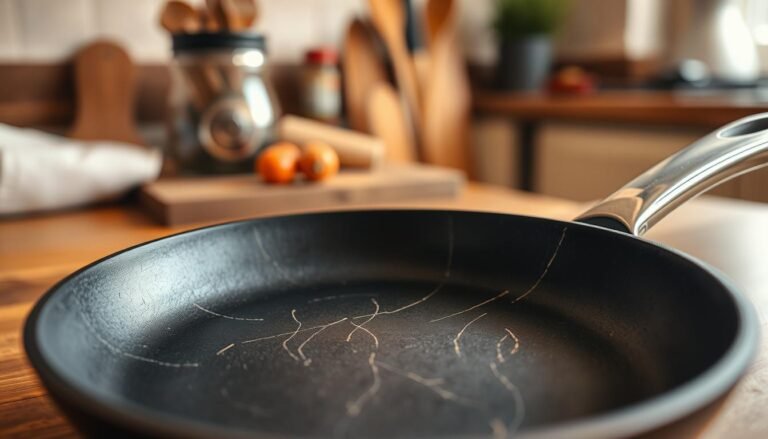
Metal tools are the frenemies of your cookware. Even gentle use causes microscopic scratches. These tiny gouges trap food and heat, speeding up wear.
Wood, silicone, and nylon are your pan‘s best friends. They’re sturdy yet soft, protecting the delicate non-stick coating.
| Utensil Material | Friend or Foe? | Why It Matters |
|---|---|---|
| Wood | Best Friend | Gentle, durable, won’t scratch or conduct heat. |
| Silicone | Trusted Ally | Heat-resistant and flexible for easy flipping. |
| Nylon/Plastic | Safe Companion | Budget-friendly and safe for the coating. |
| Metal | Hidden Foe | Scratches the coating, creating bacterial harbors. |
Superficial marks are usually fine. Deep gouges that expose the base metal are a health hazard. Investing in proper utensils is cheaper than replacing a ruined pan.
The right tool doesn’t fight the surface; it works with it.
Avoiding Pitfalls: High Heat, Scratches, and Dishwashing Disasters
Here’s a hard truth for anyone who loves convenience: your dishwasher is secretly sabotaging your cookware. Manufacturer claims of safety often clash with reality.
The machine’s triple threat—scalding water, harsh soaps, and forceful jets—creates a perfect storm for coating destruction.
Steering Clear of High-Heat Cooking and Abrasives
High heat cooking teams up with abrasive cleaning for a one-two punch. This combo attacks the non-stick surface relentlessly.
Avoid steel wool and harsh scrubbers. The rough side of a sponge handles most food messes safely.
Never douse a hot pan in cold water. This thermal shock stresses the coating and base metal, causing micro-fractures.
Why Dishwashers May Not Be Your Pan’s Best Friend
Even the “gentle” cycle subjects pans to conditions that accelerate aging. The non-stick layer disintegrates more quickly over time.
Hand-washing adds mere minutes but can extend a pan‘s life by years. It’s a compelling trade-off.
Visible discoloration or peeling isn’t just cosmetic. As noted by experts, these are your pans waving a white flag.
Practical Storage and Maintenance Strategies
Storage isn’t just about tidiness; it’s a frontline defense for your cookware. Those pan protectors are essential armor, not upselling gimmicks.
Using Pan Protectors and Proper Stacking Methods
Always place a dish towel, thick cloth, or a dedicated protector between each pan in your cabinet. This simple barrier prevents scratches when your non-stick pans get cozy.
Avoid storing them near abrasive neighbors like kitchen knives or metal utensils. Consider hanging pans on hooks for a space-saving, scratch-free solution.
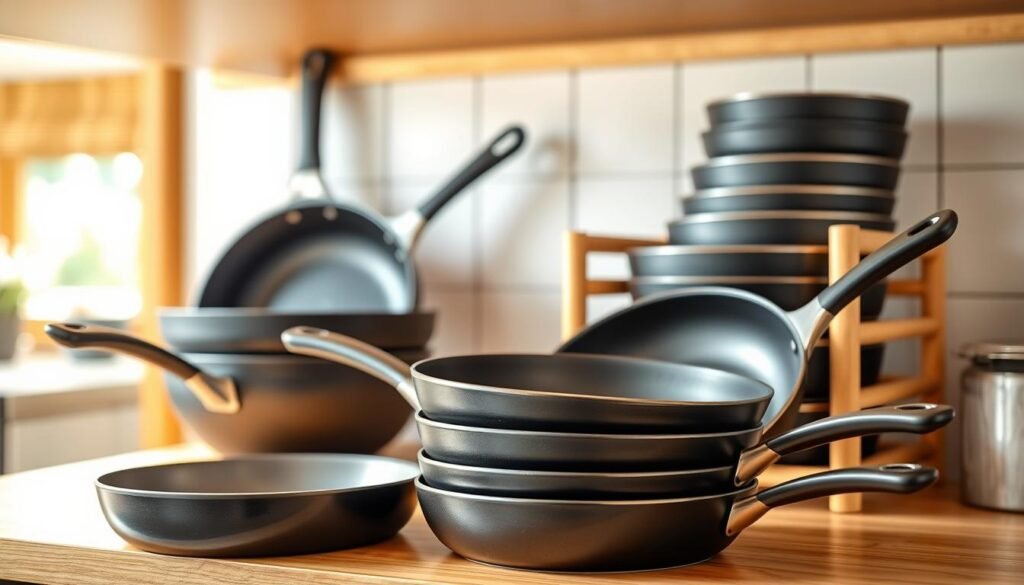
For cramped spaces, strategic stacking with a cloth liner works wonders. The goal is to keep each non-stick pan isolated and protected.
At-Home Remedies to Restore Non-Stick Shine
When your pan loses its luster, a humble science experiment can help. Combine one cup of water with half a cup of white vinegar in the pan.
Bring it to a boil, then simmer for ten minutes. The vinegar dissolves stubborn oil buildup. Pour out the mixture and wipe the pan clean.
Next, sprinkle baking soda inside and scrub gently with a soft sponge. Baking soda provides a mild abrasive action that won’t harm the coating. Rinse thoroughly with soap water.
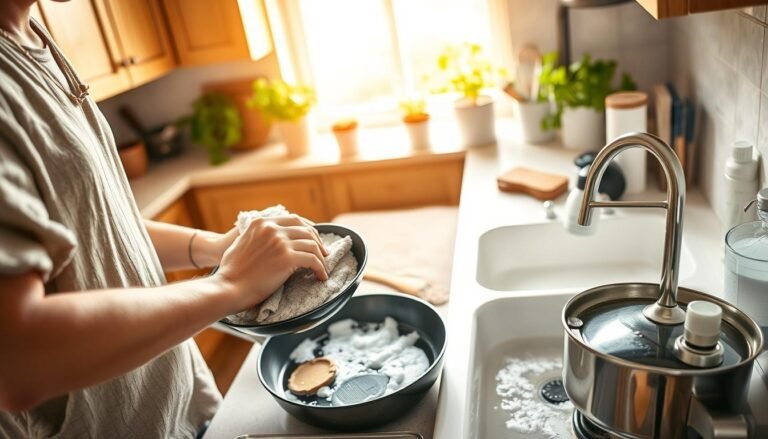
Never leave a dirty pan in the sink overnight. Acidic food residue can damage the coating while you sleep. Immediate cleaning with warm water and mild soap is best.
Dry your pans completely before storage to prevent spots and bacteria. This routine keeps your non-stick pans shining for years.
Conclusion
Unlike heirloom cookware that lasts generations, non-stick surfaces have a more limited, but extendable, lifespan. With proper care, even a budget pan can deliver several years of reliable service.
The essential philosophy is gentle treatment. Avoid high heat, skip the dishwasher, and use soft utensils. Investing in quality non-stick cookware with professional coatings pays off over time.
Eventually, every non-stick pan wears out. Watch for persistent sticking or a coating that peels. This differs from durable options like stainless steel vs. cast iron cookware.
Modern innovations offer dishwasher-safe and metal utensil-safe designs. With simple habit adjustments, you maximize your kitchen investment for years of effortless cooking.