How to Clean Stainless Steel Like a Pro: Effortless Tips for a Brilliant Shine
Your stainless steel refrigerator door might collect more fingerprints in a year than a detective’s case file. This sleek metal is the overachiever of modern materials, gracing everything from skyscraper elevators to surgical tables.
Yet, it proudly displays every smudge and water spot like it’s collecting autographs. Despite its “stain-less” name, this surface can look downright grimy when oils and marks accumulate.
Its popularity is no mystery. Valued for incredible durability and rust-resistance, it’s a staple in kitchens, hospitals, and industry. You find it on appliances, restroom fixtures, and frequently touched handles.
Achieving that brilliant, streak-free shine isn’t some secret art. With the right tips and techniques, anyone can master it. This guide will transform you from a frustrated scrubber into a confident pro.
Say goodbye to annoying water spots and the fingerprint magnet effect. You’ll learn professional methods, like using a microfiber cloth, and which products actually work. For example, discover five effective ways to clean stainless steel with household.
Key Takeaways
- Stainless steel is prized for durability and a modern look but shows smudges and fingerprints easily.
- Common problems include stubborn water spots, oily residues, and streaky finishes after cleaning.
- This material is ubiquitous in homes and businesses, found on kitchen appliances, medical equipment, and architectural fixtures.
- Professional cleaning techniques are simple to learn and can be done by anyone, not just experts.
- Using the correct tools, like a soft microfiber cloth, is crucial for achieving a streak-free shine.
- Testing any new cleaning method on a small, hidden area first is a smart safety tip.
- Mastering these methods will help you maintain showroom-quality results on all your steel surfaces.
Understanding Stainless Steel and Its Unique Challenges
The sleek, mirror-like finish of stainless steel is both its greatest appeal and its biggest headache. Its “stainless” reputation comes from a thin, invisible layer of chromium oxide. This shield protects the steel against rust and stains.
Everyday Applications and Durability
This durability makes stainless steel the top choice in many fields. You’ll find it in commercial kitchens on ovens and prep tables. Hospitals use it for surgical equipment and cabinets.
In homes, it’s the standard for appliances and sinks. That stylish refrigerator is a classic example.
Common Issues: Smudges, Fingerprints, and Water Spots
The smooth surface is a smudge magnet. Fingerprints are oil transfers from your skin. They cling and create visible marks.
Water spots occur when mineral-rich water evaporates. It leaves behind calcium and magnesium deposits.
Cleaning with improper products can worsen these stains. Harsh chemicals may strip the protective layer. Streaky residues then attract more dirt.
| Issue | Primary Cause | Typical Location |
|---|---|---|
| Fingerprints | Oil transfer from skin | Door handles, appliances |
| Water Spots | Hard water mineral deposits | Sinks, shower walls |
| Streaks | Cleaning residue | Any polished surface |
High-touch areas need frequent attention. Kickplates face splashes from floor cleaners. Maintaining stainless steel surfaces requires understanding these quirks.
Gathering Essential Supplies and Safety Essentials
Before you wage war on grime, you need an arsenal that polishes, not punishes, your surfaces. The right tools make the difference between a brilliant finish and a scratched mess.
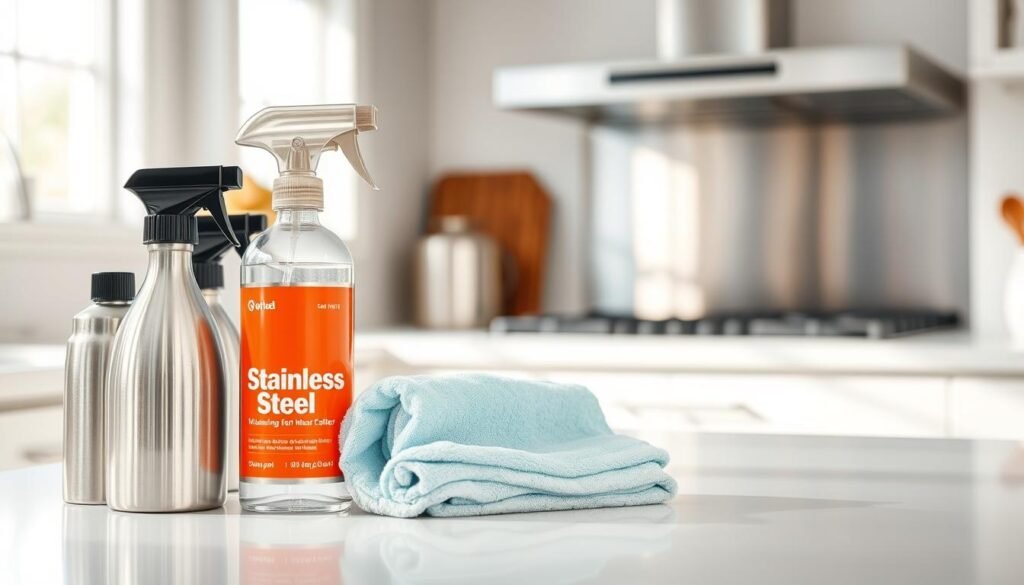
Tools and Materials: Microfiber Cloths, Non-Abrasive Sponges, and More
Microfiber cloths are the undisputed champions. Their split fibers create millions of tiny hooks that lift and trap dirt. This means less scrubbing and no streaks.
Pair them with a gentle, non-abrasive sponge for stuck-on spots. A soft-bristle brush tackles crevices without harm. A simple spray bottle offers perfect control.
Your cleaning products matter just as much. A pH-neutral cleaner is safe for daily use. An ammonia-free window cleaner works for quick touch-ups. For weekly deep cleaning, a cream cleanser with minimal grit is ideal.
| Tool/Material | Primary Role | Key Feature |
|---|---|---|
| Microfiber Cloth | Lifts dirt & polishes | Streak-free, non-scratching |
| Non-Abrasive Sponge | Gentle scrubbing | Safe for delicate finishes |
| Soft-Bristle Brush | Cleans textured areas | Nylon or horsehair construction |
| pH-Neutral Cleaner | Daily maintenance | Protects the metal’s surface |
Personal Protective Equipment and Best Practices
Always start by suiting up. Wear gloves to protect your skin. Safety goggles shield your eyes from splashes. Closed-toe shoes are a smart precaution.
Now, for the absolute no-nos. Never use steel wool or metal scouring pads. They will scratch your stainless steel permanently.
Avoid chloride-based cleaners and harsh abrasives. They strip the protective chromium layer. This leads to pitting and stains, ruining your steel’s beauty.
With the right cloth, safe products, and proper gear, your cleaning will be effective and damage-free.
How to Clean Stainless Steel Like a Pro
Let’s move from theory to action with a clear, foolproof process that guarantees stunning results. This is where you trade spraying and praying for confident, precise technique.
Step-by-Step Cleaning Process Explained
First, clear the stage. Use a dry microfiber cloth to remove loose dust and food particles. Trying to clean over dirt just grinds it in.
Next, pick your potion. A pH-neutral or glass cleaner works for daily touch-ups. For a weekly deep clean, a cream cleanser is your best bet. Always avoid harsh chloride-based products.
Here’s a pro secret: spray your cleaner onto the cloth, not the surface. This prevents drips and gives you perfect control.
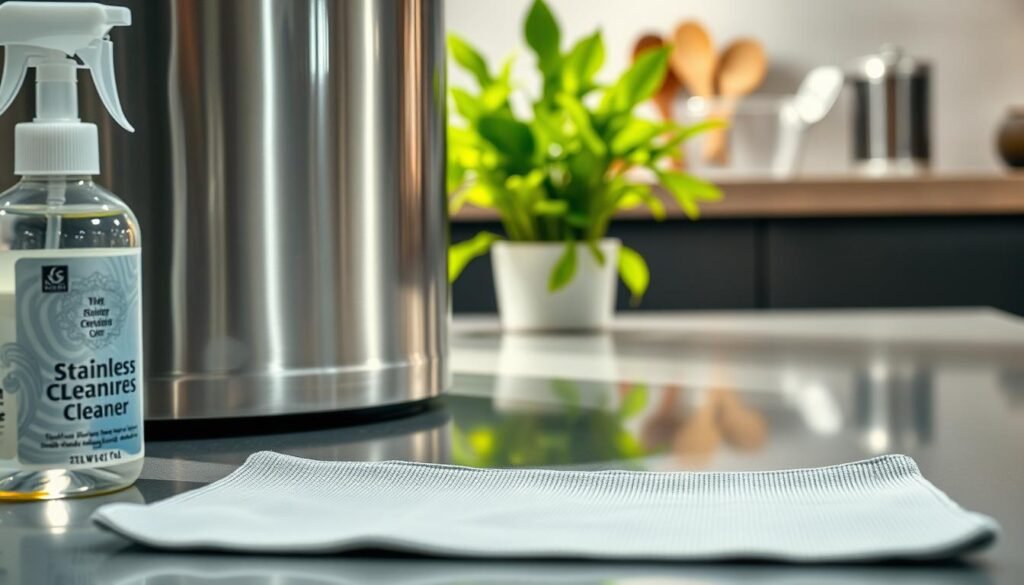
Proper Technique: Following the Grain for a Streak-Free Finish
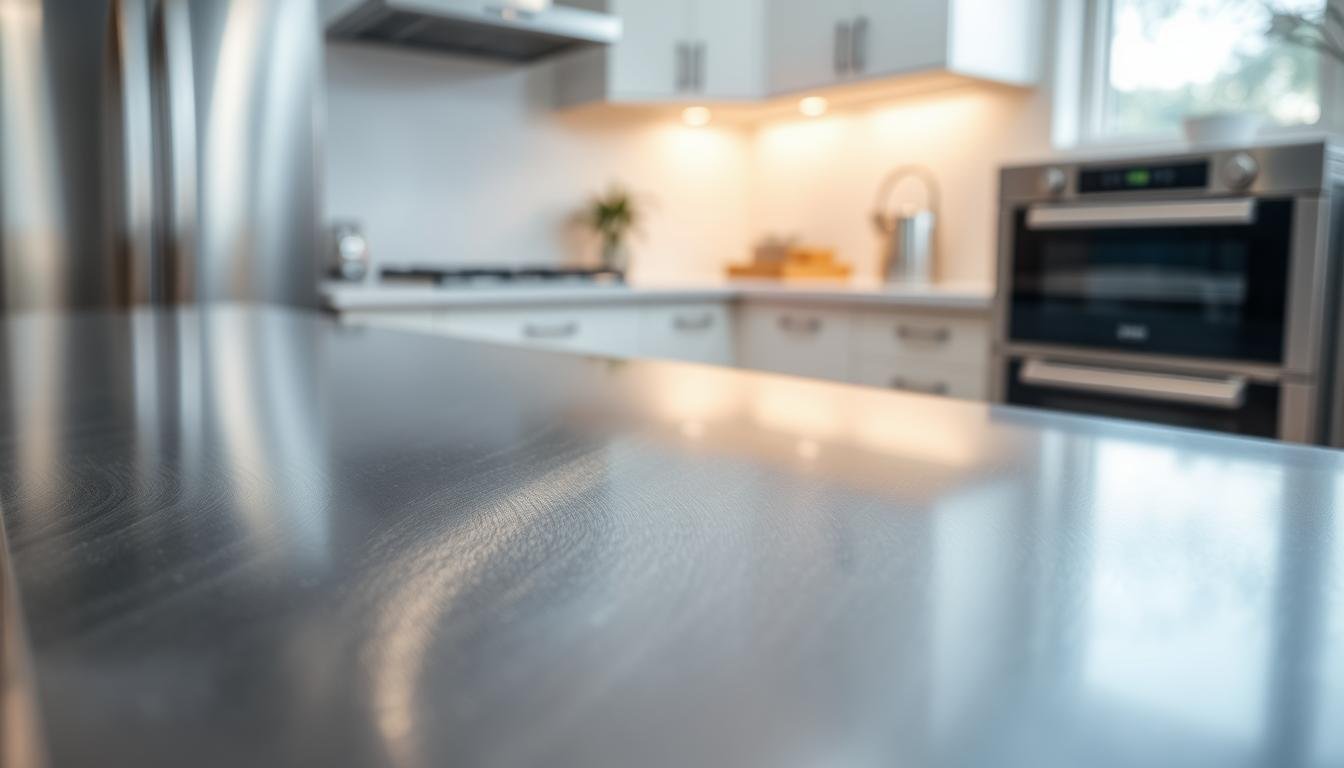
Look closely at your appliance. See those faint lines? That’s the grain. Like wood, you must wipe in one direction.
Going against the grain causes tiny scratches and streaks. Following it creates a flawless, professional finish. Commit to this single direction for the entire wipe-down.
Tackling Stubborn Stains and Grease with the Right Cleaner
For baked-on grease or tough stains, escalate. Use a commercial-grade stainless steel cleaner. Let it sit briefly to break down the grime.
Gently scrub with a soft brush. Then, this is critical, rinse with warm water and wipe dry immediately. Air-drying invites water spots.
Always use a separate, dry cloth for the final polish. Never leave moisture or residue behind. For more on material care, see this helpful comparison guide.
DIY vs. Store-Bought Cleaners and Daily Maintenance Tips
The debate between DIY and store-bought cleaners is the kitchen’s version of ‘make it from scratch’ versus ‘grab it off the shelf.’ Both paths can lead to a sparkling finish.
Your choice often depends on your priorities: budget, convenience, or specialized protection.
Crafting Effective Homemade Cleaning Solutions
Your pantry is a treasure trove for stainless steel cleaner alternatives. A classic home remedy is a two-step solution.
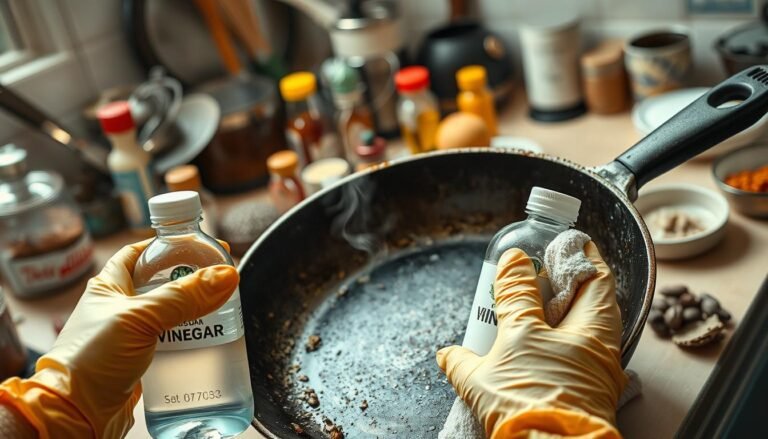
First, spray distilled white vinegar to cut grime. Wipe with the grain using a microfiber cloth. Second, apply a few drops of olive oil with a fresh cloth to polish.
For disinfecting power, mix equal parts water and rubbing alcohol. This solution evaporates quickly, leaving no residue.
For burnt-on messes on cookware, a paste of baking soda and water works wonders. Let it sit before gently scrubbing.
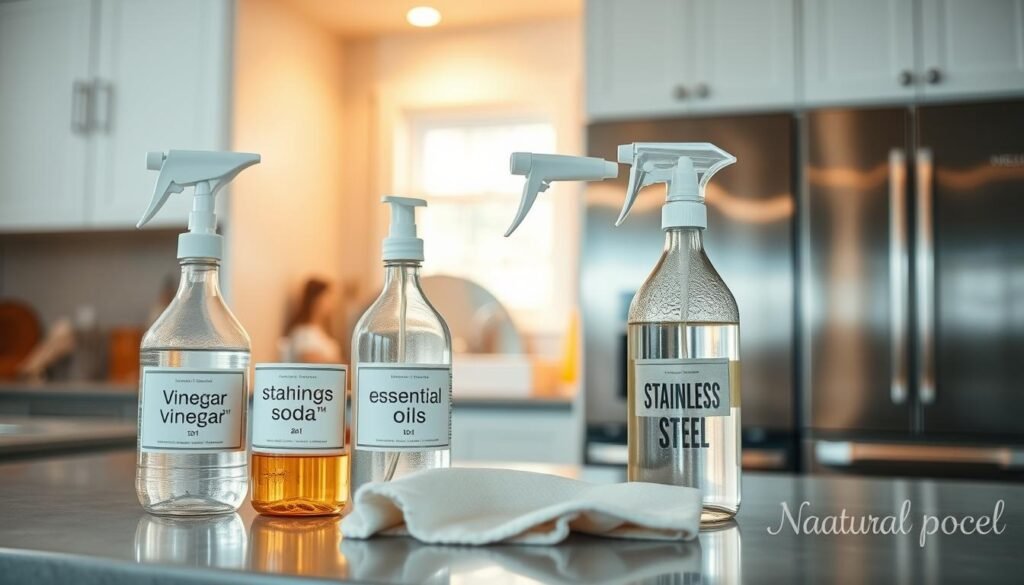
Pros and Cons of Commercial Stainless Steel Cleaners
Store-bought products like Weiman wipes or Bar Keeper’s Friend offer convenience. They are formulated specifically for the metal.
These cleaners often provide a protective coating. This helps repel fingerprints longer than most home mixes.
The trade-off is cost and potential chemicals. Always check labels to avoid chloride-based or ammonia formulas.
For daily maintenance, warm water with mild dish soap is often the best way. For pans, let them cool completely before cleaning to prevent warping.
Conclusion
Ultimately, the payoff for proper stainless steel maintenance is a surface that stays beautiful, safe, and functional for years. This cleaning isn’t just about looks. It’s about protecting your investment and upholding strict hygiene.
Regular care prevents grime buildup that weakens metal over time. In food service or healthcare, it’s a non-negotiable safety step. It meets health codes and keeps everyone safe.
Always wipe with the grain, use gentle cloths, and dry surfaces immediately to avoid water spots. Daily wipes take mere minutes. A quick routine becomes second nature.
Share these methods. Inspect for early wear. With the right approach, you can maintain that brilliant shine effortlessly. For more on proper care for stainless steel, explore detailed guides. Your appliances will thank you.