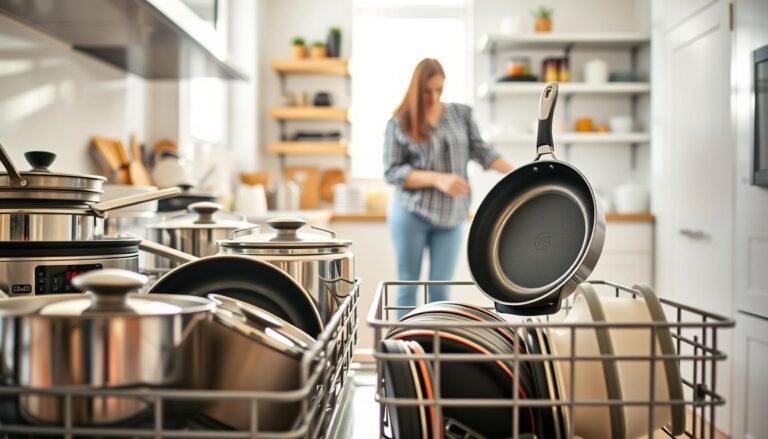

I Prevent Cookware Warping After Heat
Have you ever pulled a baking sheet from the oven to find it has a permanent wobble? That frustrating buckle isn’t just a minor annoyance.
It creates an uneven surface that leads to hot spots and undercooked food. Your eggs run to the edges, and your cookies bake lopsided. This is a genuine kitchen problem that impacts your results.
From frying pans to sheet pans, many pots are prone to this deformation. It happens due to rapid temperature changes causing metal to expand and contract unevenly.
I’ve made it my mission to help people stop this issue. While some change is natural, severe buckling that ruins your cooking is preventable.
This guide will give you practical, expert-backed strategies. You’ll learn how to protect your kitchen tools for consistent, delicious meals every time.
Table of Contents
Key Takeaways
- A warped pan creates an uneven cooking surface, leading to inconsistent results.
- This buckling is a common issue with many types of pots and baking sheets.
- The main cause is uneven thermal expansion during heating and cooling cycles.
- Severe deformation that affects cooking performance can often be prevented.
- Proper care and usage techniques are your best defense.
- Small changes in how you handle and store your pans make a significant difference.
- Flat, stable cookware is the foundation for reliable cooking.
Identifying the Causes of Cookware Warping
Understanding why your pans buckle starts with two key factors: thermal shock and material science. I see this issue often in home kitchens.
Both elements work together to distort a once-flat surface.
Rapid Changes in Temperature
One primary cause is sudden temperature shifts. Placing a hot pan under cold water creates thermal shock.
The metal contracts unevenly. This puts immense stress on the bottom and edges.
It can happen in an instant. Always give your pan time to cool down naturally.
Material Quality and Pan Thickness
The material itself is crucial. Stainless steel is denser than aluminum.
This makes it more resistant to bending under heat. High-quality, multi-ply construction also helps.
Thicker pans distribute heating more evenly. They have more mass to absorb energy.
Thin, single-ply aluminum is far more likely to warp. Investing in better cookware pays off.
The Impact of Overheating on Your Cookware
That loud pop from your oven isn’t just noise. It’s a sign of metal under extreme stress. Many people don’t realize how quickly they can damage a pan.
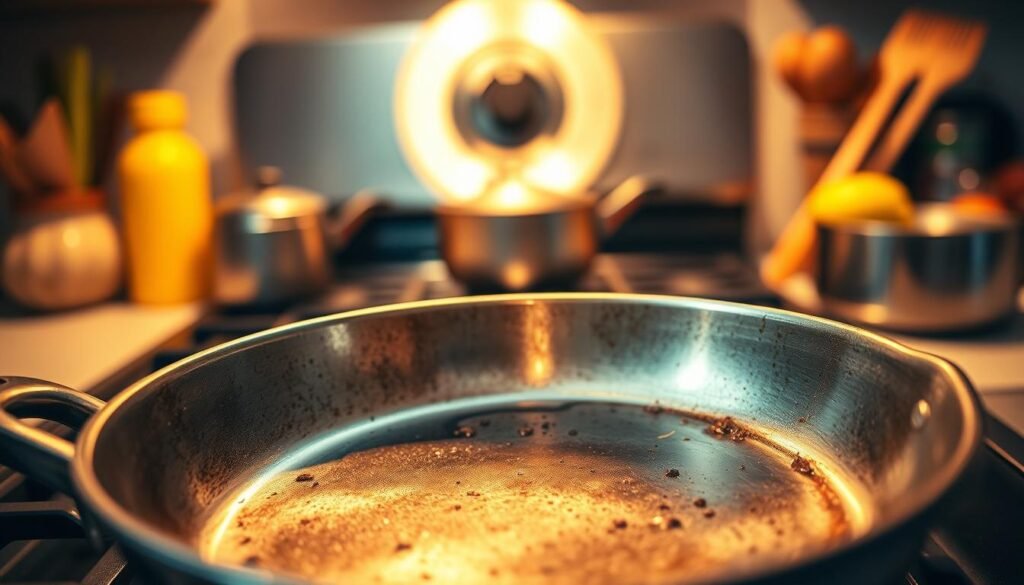
Overheating happens when you heat a pan too fast. This is a common but overlooked cause of damage.
How Fast Heating Affects Metal
Rapid heating creates internal stress. Metal expands when it gets hot. Different parts of the pan heat at different rates.
This uneven expansion can misshape the structure. Gradual heating over a longer period is much safer. It allows for even expansion.
“Thermal stress from rapid temperature change is a primary failure mode for thin metal structures,” notes a materials science report. Controlling the heating process is crucial.
The table below shows how common pan materials react to rapid heating:
| Material | Heat Conductivity | Susceptibility to Warping | Recommended Heating |
|---|---|---|---|
| Aluminum | Very High | High | Low to Medium, Gradual |
| Stainless Steel | Moderate | Low-Moderate | Medium, Even |
| Carbon Steel | Moderate | Moderate | Medium, Controlled |
This isn’t just a theoretical thing. It affects your everyday cooking. Investing a few extra minutes to heat a pan properly extends its life dramatically.
Preventing Cookware Warping After Heat
A few mindful habits can keep your pots and baking sheets perfectly flat for years. Prevention is your best defense against costly replacements and inconsistent results.
Focus on how you apply and remove temperature. Small changes make a huge difference.
Allowing Even Heat Distribution
Start on a low or medium setting. Never blast a cold pan with maximum heat right away.
This gives the metal time to expand evenly. Gradual warming prevents internal stress.
Place your food to cover the surface. Bare spots get hotter and can cause buckling.
Even coverage ensures uniform expansion. This simple step protects your investment.

Proper Cooling Techniques
Never rinse a hot item under cold water. This thermal shock is a primary cause of damage.
Let it sit for several minutes to cool naturally. Move it to a rack or trivet away from the sink.
This allows gentle, even contraction. For more detailed steps, see this guide on how to avoid a warped pan.
Choosing thicker, quality materials also helps. A good carbon steel buying guide can point you toward durable options.
Adopt these habits, and your cooking will be more consistent. Your tools will last much longer.
Troubleshooting: Fixing a Warped Pan
If prevention fails, there are practical ways to restore a pan’s original shape. I find that many warped pans can be salvaged with a bit of effort.
Two reliable methods exist for this task. The right way depends on how severe the bend is.
Hammer and Towel Method
This method works for mild deformation. First, warm the pan on low for several minutes.
This gentle heat makes the metal more pliable. Next, place it on a flat, durable surface like concrete.
Put a towel underneath as a cushion. Lay another towel on top of the metal.
Then, carefully tap the warped area with a hammer. Work slowly to avoid new dents.
Wood Block Technique
For a more severely warped pan, try this aggressive method. Use a solid wood block on the surface.
Place the block over the bent section. Strike the wood with your hammer.
The block distributes force evenly. This helps reform the shape without concentrating stress.
An alternative is to warm the item in a 200-degree oven for about 10 minutes. Then use a mallet while it’s warm.
This oven technique is great for baking sheets. Assess the damage first to pick the best solution.
Practical Kitchen Strategies for Consistent Cooking
Matching your pan to the burner beneath it is a simple yet overlooked strategy. Your daily techniques have a direct impact on your tools.
Small adjustments in how you use your stove and oven prevent stress on the metal. This leads to better cooking results every time.
Adjusting Burner Size and Placement
A common mistake is using a small burner for a large pot. The flame or element only hits the center of the pan‘s bottom.
This leaves the edges much cooler. The uneven heating creates a stress point that can distort the shape.
Always choose a burner that matches your pan‘s size. This ensures the entire base receives warmth evenly.

Ensuring Even Food Coverage
This principle is vital for baking. Widely spaced items on a sheet create hot and cold zones.
Areas under food are shielded. Bare spots get fully exposed to the oven‘s heat.
These temperature differences cause uneven expansion. If your food won’t cover the pan, switch to a smaller sheet.
Also, consider your rack position. The top and bottom of the oven can have different intensities.
Understanding these principles is key, similar to knowing why heat stainless steel pans properly. These practical steps protect your investment and make your cooking more reliable.
Expert Recommendations on Cookware Quality and Maintenance
Investing in robust kitchenware begins with understanding the core properties of metals like stainless steel and cast iron. The right material choice is your first defense against deformation.
I always guide people toward products built for longevity. Quality construction matters more than a low price tag.
Choosing the Right Material
Stainless steel is a premium choice for its density. It resists bending under high temperatures better than many alternatives.
Multi-ply construction in these products adds durability. It layers different metals for even heat spread.
Aluminum is lighter and heats quickly. To match steel’s stability, aluminum sheets need greater thickness.
Thin aluminum is prone to damage. Look for heavy-gauge versions for baking tasks.
Cast iron is the ultimate champion for durability. Its substantial weight and casting process make it incredibly stable.
People can use a well-seasoned cast iron pan for generations. It’s a lifetime investment.
For a detailed breakdown, see this comparison of carbon steel vs cast iron cookware.
| Material | Density | Warping Resistance | Best For |
|---|---|---|---|
| Stainless Steel | High | Excellent | Saucepans, Skillets |
| Aluminum | Low | Good (if thick) | Baking Sheets, Griddles |
| Cast Iron | Very High | Outstanding | Dutch Ovens, Frying Pans |
My top brand pick for baking sheets is Nordic Ware Naturals. Their half-sheet pan is a winner.
They also offer quarter and eighth-sheet sizes. This brand consistently delivers quality products.
Maintenance varies by material. Keep stainless steel clean and dry.
For aluminum, avoid harsh abrasives. With cast iron, maintain its seasoning layer.
These simple care steps protect your investment. They ensure your tools perform for years.
Conclusion
The journey to perfect, unwarped pans is built on smart habits and knowledge. I’ve shown that understanding the causes leads to effective prevention in any kitchen.
Avoiding rapid temperature changes remains the single most important way to prevent damage. Never rinse a hot pan under cold water; let it cool naturally. For a full prevention guide, see this resource on avoiding a warped baking sheet.
Investing in thicker, multi-ply cookware pays dividends over time. Premium stainless steel offers unmatched warp resistance due to its even heat distribution. This minimizes internal stress during the heating process.
Match your burner size to your pan and ensure even food coverage on baking sheets. If a warped pan occurs, the hammer and towel method can often restore its shape.
Some minor change may occur over a long period, but proper technique dramatically extends lifespan. Start implementing these strategies with your next meal. Protect your tools for consistent results on every surface.