You know exactly how this goes.
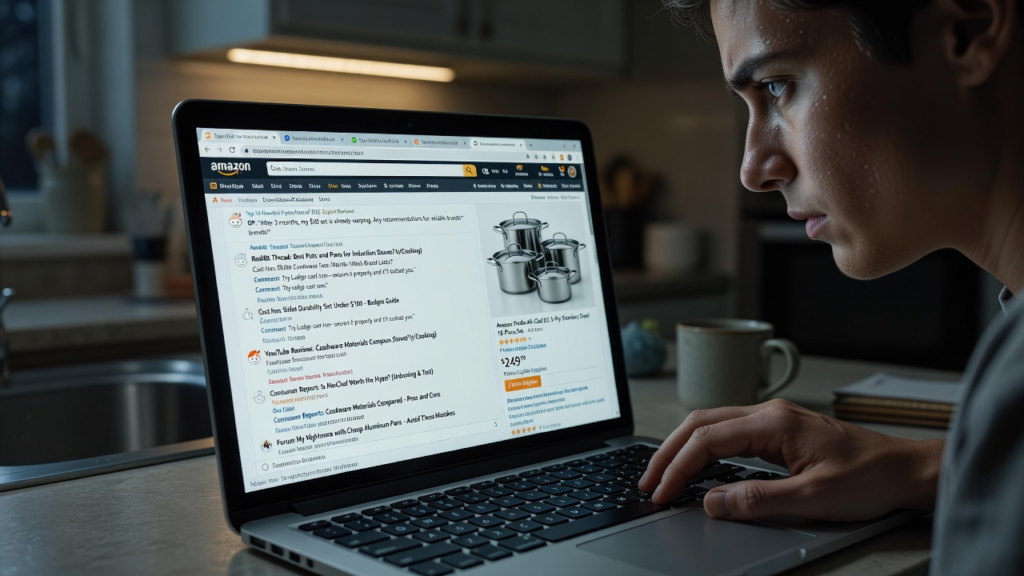
It starts with a sticking pan and a good intention. You’re going to finally use a cookware buying guide to figure out what real cookware to buy. So you open a “best cookware for beginners” article. Then a Reddit thread, because articles are basically ads now, right? Then two YouTube reviews. Then an Amazon listing with 40,000 reviews you’re apparently going to read.
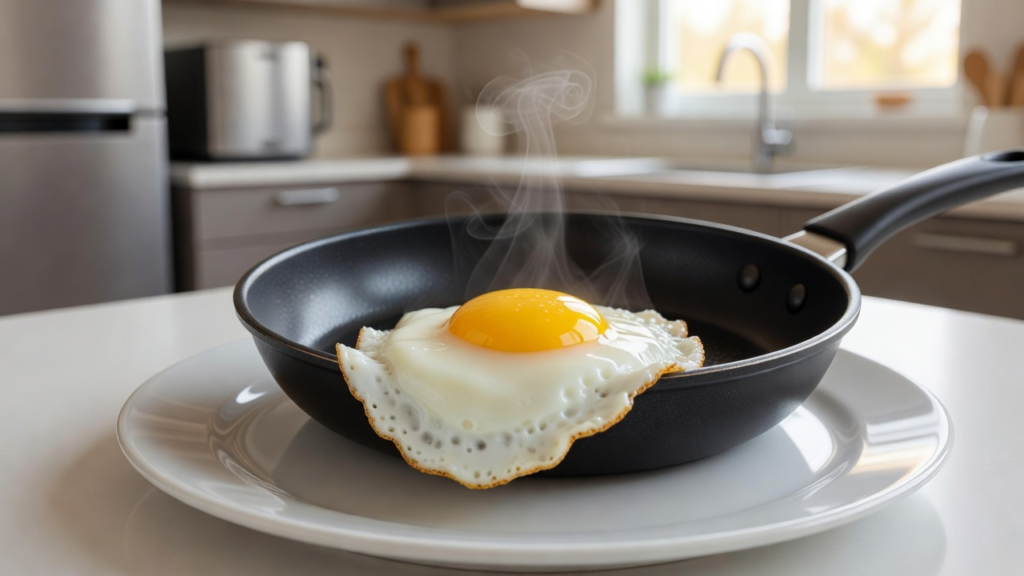
Two hours later, you close the laptop. You’ve bought nothing. You’ve decided nothing. And the same scratched pan you sat down to replace is still sitting on the stove, waiting to ruin tomorrow’s eggs.
If you’ve done this more than once — and be honest, you have — this article is about why it keeps happening. Not the cookware. The loop.
Table of Contents
Why Cookware Research Feels Productive but Leaves You Stuck
Here’s the uncomfortable part: all that tab-opening feels like progress.
You’re reading. You’re learning terms. You’re comparing. Your brain is busy, so it must be working toward something. But it isn’t. The information isn’t moving you closer to a choice. It’s making the choice feel bigger and scarier than it was when you started.
One source swears by stainless steel. The next says stainless is a nightmare for beginners and you’ll burn everything. A third recommends cast iron. A fourth warns cast iron is high-maintenance and heavy and you’ll hate it. Somebody’s five-star favorite is somebody else’s warped-in-three-months regret.
So you end the session knowing more facts and having less certainty. That’s not a knowledge gap. That’s the internet doing exactly what it does when a hundred people with different kitchens, budgets, and skill levels all talk at once. After outfitting more than a dozen first kitchens, I’ve watched the same pattern every time: the person who reads the least buys the fastest, and they’re almost never unhappy with what they pick.
If you want to see how many pans actually hold up over time versus how they’re marketed, our breakdown of the most durable cookware brands cuts through most of the noise you’re drowning in right now.
And the thought that surfaces around tab number eight is always the same: everyone contradicts everyone — who am I even supposed to believe?
What Is the Best Cookware to Buy First for Beginners?
For a first kitchen, buy in this order: one good nonstick or stainless skillet, one medium saucepan with a lid, and one larger pot for pasta and soup. These three pieces cover almost everything a beginner cooks. Add more only after you know what you actually make often. Skip the giant multi-piece sets.
For a deeper walkthrough of each piece and why the order matters, see our full beginner cookware essentials guide. And if you’d rather watch someone explain the difference between materials in plain English, this video is one of the clearest out there:
▶️ America’s Test Kitchen — “The Cookware You Actually Need” (YouTube)
Why “I’ll Deal With It Later” Is the Real Cookware Decision
Here’s what nobody tells you. When you close the laptop without buying anything, you didn’t fail to make a choice.
You made one.
You chose to keep the scratched pan. You chose another week of shredded eggs and pancakes that tear in half. “I’ll figure it out later” isn’t a pause — it’s a vote for the status quo, cast by default, over and over.
And the pan doesn’t care that you were “still researching.” It just keeps sticking. It keeps being the thing that makes cooking feel like a chore instead of the thing you moved out to finally start doing right.
That’s the part that stings. You went looking for a solution and quietly signed up for more of the problem.
What’s Actually Stopping You From Buying Cookware (It Isn’t Information)
Notice you don’t do this with everything.
You don’t open twelve tabs to buy dish soap. You don’t read 40,000 reviews before choosing a phone charger. You just pick one and move on.
So why does a frying pan turn into a research project?
Because this purchase isn’t really about the pan. It’s about not wanting to be wrong. You’ve probably already been wrong once — maybe you bought a cheap set with good-looking photos and watched the coating peel within months. That first mistake left a mark. Now every new purchase carries the ghost of that one, and buying nothing feels safer than getting burned again.
The research isn’t the path to certainty. It’s a way to avoid the moment where you commit and might mess up. As long as you’re still “gathering information,” you never have to choose. You never have to be on the hook for the choice. The open tabs are a comfortable place to hide.
That’s why you can spend two hours and still feel like you haven’t earned the right to buy anything yet. No amount of reading makes the fear of being wrong go away. Only a decision does that.
If your last “cheap set” mistake is still haunting you, it’s worth understanding why nonstick coatings peel and warp — it usually isn’t your fault, and knowing the cause makes the next choice easier.
The Cookware Buying Contradiction You Keep Missing
The whole reason you’re overwhelmed is that you’re treating conflicting cookware advice as a problem to solve.
It isn’t solvable. Those people aren’t going to agree. The cast-iron person and the stainless person and the nonstick person are all right — for their own kitchen and their own cooking. You could read for another ten hours and the contradiction would still be there.
You keep waiting for the research to hand you certainty. But certainty here doesn’t come from more sources. It comes from narrowing the question until the noise stops mattering.
You don’t need to know the best pan on earth. You need to know the best first pan for someone who cooks a few basic things, in a small kitchen, on a normal budget. That’s a much smaller question. And a smaller question has a much shorter list of right answers. Even America’s Test Kitchen, which tests cookware for years, keeps circling back to a handful of core pieces for most home cooks — not the fifteen-piece sets the market pushes. Consumer safety groups like the FDA on cookware materials confirm most modern pans are perfectly safe when used as intended, which means the “toxic pan” rabbit hole you fell into is usually another distraction from just deciding.
How to Get Out of the Cookware Research Loop for Good
You don’t fix this with a better article. You fix it by changing what you’re asking for.
Ask a smaller question. Not “what’s the best cookware.” That question has no answer, and it’s why you keep drowning. Ask instead: “What two or three pieces should I buy first, and in what order?” Fewer pieces. Clear priority. Done.
Pick one voice and follow it to the end. The problem isn’t that you have no advice. It’s that you have twelve. Choose one source that fits your situation, close every other tab, and let that one person be right. You can adjust later. What you can’t do is average twelve contradicting opinions into a purchase.
Set a decision deadline before you start reading. “I’m buying something by the end of tonight.” A loop with no endpoint runs forever. Give it one.
Aim for a good-enough first pan, not a perfect forever one. You are not marrying this cookware. You’re buying the thing that stops the daily egg disaster while you learn what you actually like. Perfect is what keeps you stuck. Good-enough is what gets you cooking.
Need a shortlist to end the loop tonight? Start with our top-rated starter cookware picks and buy one, not all.
Beginner Cookware Starter Picks Worth Buying Tonight
You don’t need all of these. Pick the skillet first, add a saucepan and a pot only if your budget allows this round.
- Tramontina Professional Nonstick Fry Pan — The classic “safe bet” first skillet. Restaurant-grade, forgiving for beginners, and cheap enough that a mistake won’t sting.
- Cuisinart MultiClad Pro Stainless Saucepan with Lid — A durable medium saucepan for rice, sauces, and reheating. Fits small cabinets, lasts for years.
- Lodge Cast Iron Skillet (10.25″) — If you want one pan that outlives you and you don’t mind a little upkeep. Great for searing.
- Cuisinart Chef’s Classic Stainless Stockpot — Your pasta-and-soup pot. Buy this last of the three.
As an Amazon Associate, purchases made through these links may earn a commission at no extra cost to you.
Frequently Asked Questions
What is the most important cookware piece to buy first?
A single good skillet. It’s the pan you’ll use most — eggs, vegetables, meat, quick meals — so it delivers the biggest daily improvement. Get the skillet right first, then add a saucepan and a pot later.
Is stainless steel or nonstick better for beginners?
Nonstick is more forgiving and easier to clean, which makes it the friendlier starting point for most first-time cooks. Stainless steel lasts longer and sears better but has a steeper learning curve. Many beginners start with one nonstick skillet and add stainless later.
Do I really need a big cookware set?
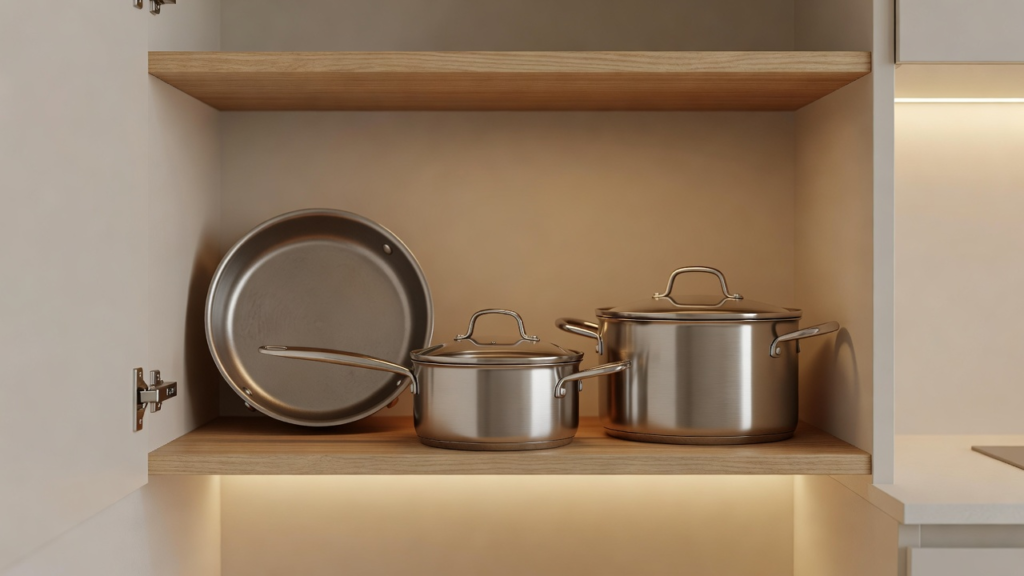
No. Most large sets include pieces you’ll rarely use and clutter that eats up limited storage. Two or three well-chosen pieces cover the majority of everyday cooking. Buy individual pieces in order of how often you’ll actually use them.
How much should I spend on my first cookware?
Enough to avoid
Leave a Reply