Ceramic: expectations vs reality
Did you know that many people replace their nonstick pans within just 12 to 18 months of purchase? This often happens because the shiny marketing promises don’t match everyday kitchen results.
This review cuts through the hype. We put ceramic cookware claims to the test against real-world use. Is it truly a revolution for your stove, or just clever advertising?
We analyzed performance across different foods and heat levels. You’ll see how long that slick surface really lasts on your favorite pans. The truth about heat tolerance and cleaning might surprise you.
We also investigate the safety and environmental angles. Are these products a healthier choice, or is that another sales pitch? For a deep dive on what to look for, see our detailed buying guide for ceramic.
Our goal is simple: to help you set realistic expectations before you spend your money. Know the genuine pros and the possible cons.
Key Takeaways
- Marketing claims often exceed the actual day-to-day performance of nonstick surfaces.
- Real-world lifespan is usually shorter than advertised, especially with improper care.
- Performance varies greatly between different brands and construction methods.
- Safety and “green” benefits depend heavily on the specific materials used.
- Proper heating and cleaning are critical for maintaining any nonstick coating.
- Initial excellent food release may degrade faster than with traditional options.
- Setting clear expectations is key to finding the best ceramic pan for your needs.
Introduction to Ceramic Cookware
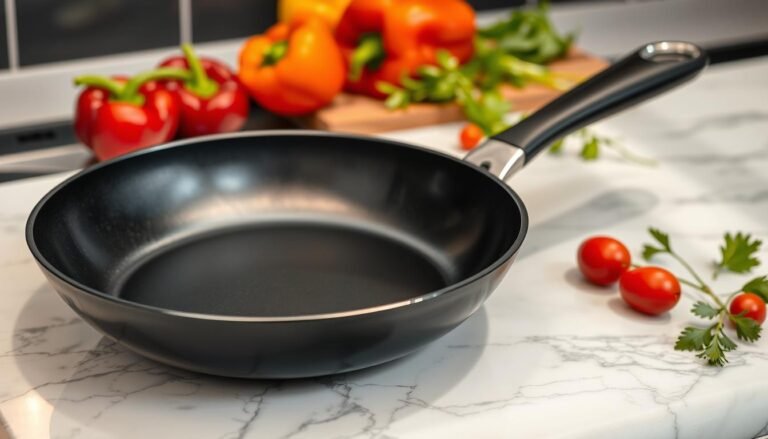
Stepping into the world of ceramic nonstick often means confronting a gap between marketing fantasy and daily cooking. This kitchenware has surged as a popular alternative to traditional nonstick options. Brands highlight its healthier and more eco-friendly profile.
Understanding the Expectations
Many buyers expect a miracle surface. The dream is effortless food release without any oil or butter. They also hope the slick performance lasts forever with just a quick rinse.
This ideal stems from bold advertising claims. It sets a very high bar for what these pans can do in a real home.
What Reality Offers in Your Kitchen
When new, this type of nonstick coating works exceptionally well. However, it needs proper preheating and medium heat to shine. A small amount of fat actually improves performance and protects the surface.
Most coatings deliver excellent results for the first 12 to 18 months. After that, you might notice a gradual decline. This depends entirely on your care and cooking habits.
For the best experience, avoid metal utensils and hand wash when possible. The crucial difference from traditional nonstick is the need for more attention to temperature. Setting these realistic expectations helps you get the most value from your purchase.
Comparing Ceramic and Traditional Nonstick Cookware
The battle for your stovetop isn’t just about brands; it’s a fundamental clash between coating chemistries. Knowing what sets them apart helps you choose the right tool for your kitchen.
Differences in Coating Technologies
Traditional nonstick cookware relies on PTFE, a synthetic polymer. The popular ceramic nonstick alternative uses a sol-gel ceramic coating made from sand-derived silica.
This creates a harder, smoother surface. It also allows for higher safe cooking temperatures. Many ceramic coatings resist heat up to 500°F.
A major advantage is the absence of PFAS chemicals. This “forever chemical” concern is linked to some traditional nonstick manufacturing.
Performance and Durability Insights
In a controlled test, quality PTFE nonstick cookware often shows longer-lasting slickness. It can maintain performance for several years.
The ceramic nonstick surface typically excels at searing when preheated correctly. However, it demands more precise temperature control during cooking.
Over the long term, traditional nonstick cookware usually proves more resilient to daily wear. This includes exposure to dishwashers and occasional metal utensil use.
While initial prices are similar, the shorter lifespan of many traditional nonstick pans affects overall value. Consider your replacement cycle when investing.
Benefits of Ceramic Cookware
Beyond just slick surfaces, today’s nonstick solutions offer tangible health and convenience perks. The primary advantage is a PFAS-free cooking surface. This eliminates exposure to “forever chemicals” linked to environmental and health concerns.
Your food releases cleanly with minimal oil. This promotes healthier meals without sacrificing a good sear. Stubborn residue buildup is rare on this smooth surface.
These products handle higher heat safely. You won’t encounter harmful fumes during high-heat cooking like stir-frying. This versatility expands your recipe options significantly.
The shift to PFAS-free coatings represents a meaningful step toward safer home kitchens.
Cleaning is remarkably simple. Most messes wipe away with a soft sponge and soapy water. This ease extends the enjoyable life of your pan.
Colorful exteriors add style to your kitchen. They transition nicely from stove to table. While manufacturing may be greener, consider the replacement cycle for full environmental impact.
Best Ceramic Cookware Sets for Modern Kitchens
Finding the perfect collection for your stovetop means balancing features, performance, and cost. The right cookware set streamlines meal prep and delivers consistent results.
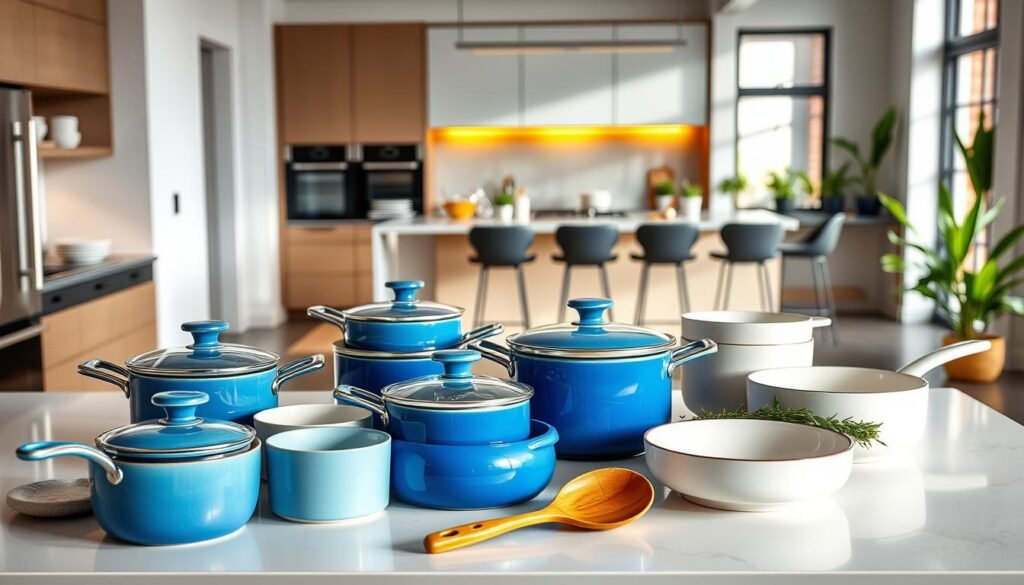
Top Brand Highlights
HexClad represents a premium choice. Their hybrid pans fuse a PFAS-free TerraBond™ coating with stainless steel durability. A 12-piece cookware set is priced at $699, while a 6-piece fry pan set offers entry at $399.
T-fal provides budget-friendly options with exceptional glide. GreenPan sits in the mid-range, focusing on eco-friendly ceramic cookware.
Features, Prices, and Value Analysis
Complete sets typically include multiple fry pans, saucepans, and a stockpot. Individual pans cost $30-$200, but sets offer significant savings.
The price spectrum runs from under $200 to over $700. Mid-tier cookware set options ($300-$500) often provide the best balance of longevity and price. Premium best ceramic nonstick sets justify their cost with superior heat distribution and warranties.
When evaluating the best cookware sets, consider oven-safe limits and coverage. The best ceramic investment fits your cooking style and budget.
Ceramic cookware: In-Depth Look
A deep dive into specifications reveals the stark differences between budget and premium options. Performance hinges on core materials and engineering.
Key Specifications and Material Insights
High-quality pieces feature a thick aluminum core. This ensures even heat and prevents warping.
The slick ceramic nonstick surface is made from sand-derived silicon oxide. Premium brands use multiple layers for better durability.
Some designs, like HexClad’s, are revolutionary. They combine raised stainless steel hexagons with ceramic nonstick valleys in one hybrid pan. This allows for searing and easy food release.
Oven-safe limits vary widely. Budget pans may handle 400°F, while premium ones like HexClad withstand 900°F. Look for stainless steel handles with secure grips.
Most work on all stovetops. For induction, you need a magnetic base. Reinforced rims and encapsulated bases are signs of a superior product.
Ceramic Nonstick Technology Explained
HexClad’s innovative TerraBond™ coating exemplifies the next generation of PFAS-free nonstick surfaces. This technology starts with a sol-gel process. Liquid silica from sand is applied and cured at high heat.
The result is a hard, inorganic ceramic coating. It provides natural slickness without synthetic chemicals. This fundamental difference defines modern nonstick performance.
PFAS-Free and Chemical-Free Advantages
The best ceramic nonstick formulas contain zero PFAS “forever chemicals”. These substances persist in the environment and human tissue. Eliminating them is a major health win.
Unlike traditional options, these ceramic coatings remain stable at high temperatures. You won’t encounter toxic fumes from polymer degradation. This safety feature is crucial for searing and stir-frying.
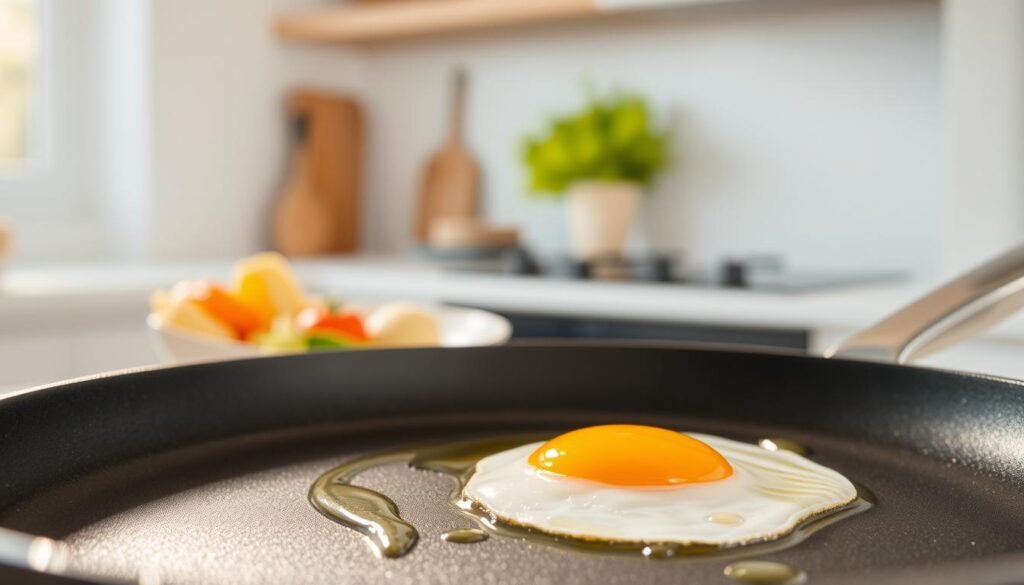
The surface is glass-like at a microscopic level. Its slight porosity is why a little oil improves performance. Food release is excellent with minimal fat.
Advanced versions add titanium or diamond particles. These reinforce the ceramic coating against scratches. They extend the functional life of the nonstick properties.
This chemical-free advantage appeals to health-focused families. Pregnant women and parents of young children especially value it. It minimizes daily exposure to potentially harmful chemicals.
| Feature | Ceramic Nonstick Coating | Traditional PTFE Coating |
|---|---|---|
| Key Component | Silica (Sand-derived) | Polytetrafluoroethylene (PTFE) |
| PFAS Content | None | Often Present in Manufacturing |
| Max Safe Temp | Up to 500°F+ | ~400-500°F |
| Durability | Harder, but can degrade from abrasion | Softer, but more resilient to scratches |
| Environmental Profile | Fewer GHG in production, shorter lifespan | PFAS pollution concerns, longer use |
Multi-layer systems use 2-4 separate applications. Each layer has a purpose: adhesion, durability, and final slickness. This builds a more robust surface.
While PFAS-free, the nonstick effect can fade. Microscopic scratches, oil buildup, or thermal shock are culprits. For a full breakdown of the pros and cons of ceramic coatings, explore detailed reviews. The environmental trade-off involves fewer emissions in making them versus more frequent disposal.
Safety and Cleanliness Considerations
The true test of any nonstick surface isn’t just how food slides off, but how easily it cleans up. Modern options prioritize a safe, hygienic kitchen environment.
They release no toxic fumes, even at high heat. This makes them safe to use around pets and in homes with limited ventilation.
Easy Cleanup and Dishwasher Safe Benefits
Cleanup typically requires a soft sponge, warm water, and mild soap. Most residue wipes away without aggressive scrubbing.
Many brands are dishwasher safe. Premium lines like HexClad are built for this. Their hybrid design also allows metal utensils.
Hand washing with a gentle sponge extends the coating’s life. It prevents harsh detergent exposure.
Using the right tools protects your investment. A silicone or nylon spatula prevents scratches. Metal utensils should be avoided on standard coatings.
The non-porous surface resists bacteria and odors. This maintains food safety standards. Sticky foods like eggs clean up in no time.
Always let pans cool before washing. Thermal shock can damage the nonstick finish. For stubborn spots, a baking soda paste with a soft sponge works well.
Avoid cooking sprays. They leave a sticky film. A small amount of oil on a paper towel is better for long-term use. For detailed safety insights, review ceramic-coated cookware safety guidelines.
| Cleaning Method | Tools Needed | Best For | Cautions |
|---|---|---|---|
| Hand Wash | Soft sponge, mild soap | Daily maintenance, extending coating life | Avoid abrasive pads |
| Dishwasher | Dishwasher detergent | Convenience, approved pans like HexClad | May shorten lifespan over time |
| Baking Soda Paste | Baking soda, water, soft sponge | Stubborn residue, restoring finish | Use gentle circular motion |
| Quick Wipe | Damp cloth or paper towel | Light use, between cooking steps | Ensure pan is cool |
Versatility and Multi-Use in the Kitchen
Modern kitchens demand tools that handle everything from morning eggs to evening stir-fries. A truly versatile pan becomes your daily workhorse.
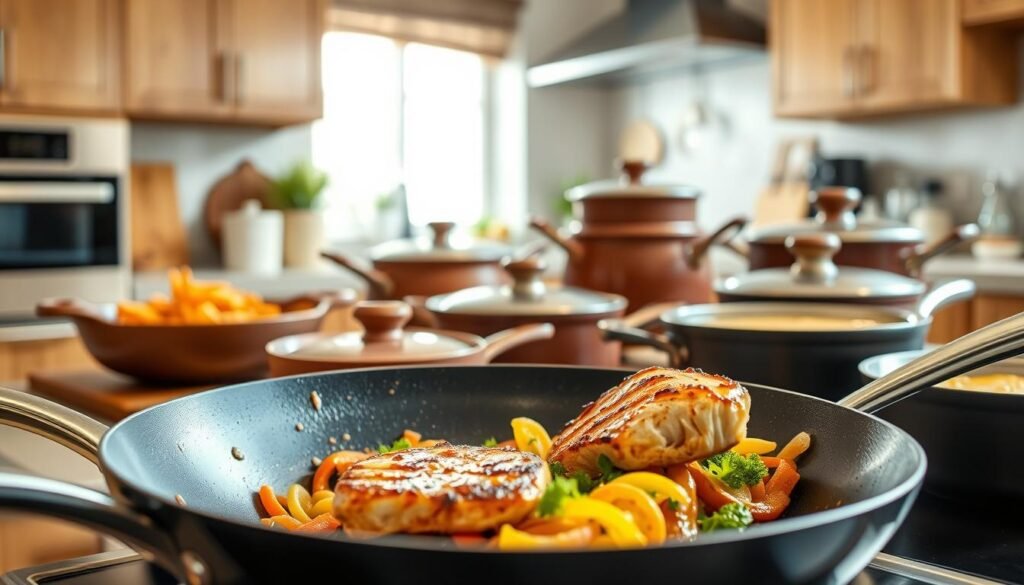
Cooking Techniques Supported by Ceramic Surfaces
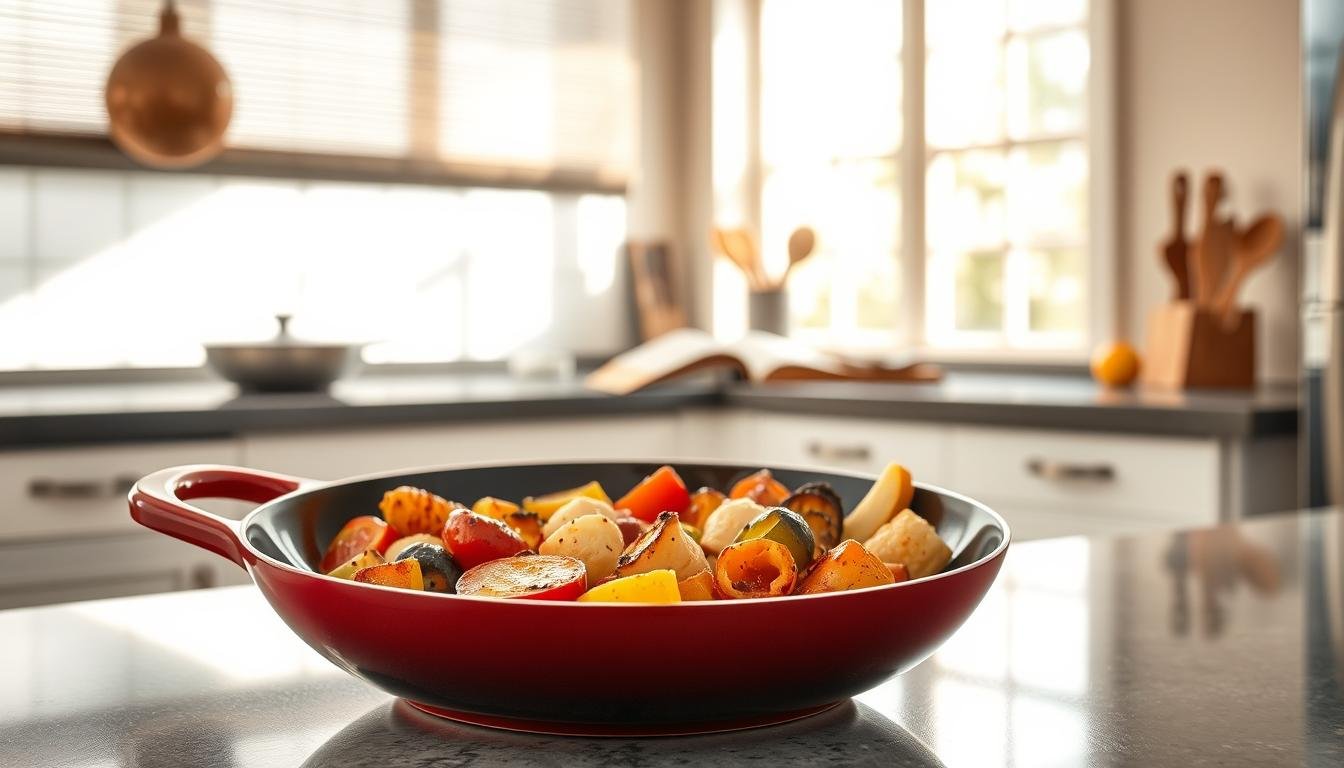
These surfaces excel at sautéing, pan-frying, and simmering. They manage a wide range of everyday recipes with ease.
The oven-safe construction is a game-changer. Quality pieces tolerate 400-500°F, while premium brands like HexClad withstand 900°F. This allows you to start a dish on the stove and finish it in the oven.
Proper preheating delivers excellent browning. Home cooks can achieve restaurant-quality sears on proteins. Chef Gordon Ramsay endorses this, stating:
“The sear I can get with these pans is incredible, with absolutely no stick.”
The nonstick properties are ideal for delicate food like eggs. They also handle heartier ingredients without sticking. This supports health-conscious cooking with minimal added fats.
Quick weeknight cooking becomes more efficient. Rapid heating and easy cleanup reduce total kitchen time. For guidance on selecting versatile kitchen tools, explore our resources.
While these pans handle most things well, extremely high-heat searing works better with cast iron. Acidic recipes cooked for hours may also affect the surface over time.
The versatility extends across cuisines and meals. From breakfast pancakes to dinner stir-fries, it’s a multi-purpose investment for diverse food preparation.
Comparing Ceramic with Stainless Steel and Cast Iron
The debate between stainless steel, cast iron, and ceramic nonstick is about matching performance to purpose. Each material excels in different kitchen scenarios. Your ideal choice depends on what you cook most often.
Pros and Cons for Every Cooking Style
Stainless steel cookware lasts for decades. A quality pan becomes a lifetime investment. Ceramic nonstick surfaces, however, often need replacement every few years.
Heating characteristics differ greatly. Ceramic pans with aluminum cores heat up fast. Stainless steel with a core heats evenly but slower, perfect for sauces.
Maintenance is a key factor. Stainless steel can handle metal utensils and tough scrubbing. A ceramic nonstick surface requires gentle hand washing to preserve it.
Price tells a long-term story. Good stainless steel or cast iron pans cost more upfront. They outlast many ceramic pans, offering better value over time.
| Feature | Stainless Steel | Cast Iron | Ceramic Nonstick |
|---|---|---|---|
| Durability | Extremely High | Extremely High | Moderate (1-3 yrs) |
| Best For | Sauces, Searing | High-Heat Searing | Eggs, Quick Meals |
| Maintenance | Dishwasher Safe | Seasoning Required | Hand Wash Recommended |
| Heat Response | Even, Slower | Excellent Retention | Fast, Responsive |
Hybrid designs like HexClad combine a stainless steel structure with a nonstick valley. This pan aims to bridge the gap. Many skilled cooks keep all three types of pans for different tasks.
Real Customer Experiences and Chef Reviews
Beyond lab tests, the true measure of any kitchen tool lies in the hands of those who use it daily. Real-world feedback reveals how products perform under pressure.
Multi-Michelin-starred chef Gordon Ramsay offers a powerful endorsement. He states home cooks deserve better tools.
“Home cooks, you deserve better pans! The sear I can get with these pans is incredible, with absolutely no stick. The cleanup is effortless. I love using HexClad at home.”
Over a million home chefs echo this satisfaction. Their daily use validates the hybrid technology’s claims.
Expert Opinions on Searing and Nonstick Performance
Professional test kitchens, like Serious Eats, credit these surfaces with excellent initial performance. However, long-term test results show a decline faster than traditional options.
This sets a realistic expectation for replacement time. Brands like Valencia Pro receive praise for budget-friendly, solid performance.
Pro reviewers note it doesn’t match premium brands in durability. Yet it delivers pro-level results at an accessible price.
User-generated content on forums highlights that success depends on proper technique. Those who preheat correctly report long-term satisfaction.
For a wide range of reviewed products, visit topcookwarebrands.com. This helps compare real user experiences.
Common praise focuses on easy cleanup and chemical-free peace of mind. The main critique is the shorter lifespan compared to other materials.
Value for Money: Pricing Strategies Uncovered
Smart shoppers know that the sticker price is just the beginning of the value calculation. You must analyze long-term cost and performance.
Premium cookware set options, like a 12-piece collection, can command $699. This high investment often includes a lifetime warranty. It targets serious home chefs.
Mid-range sets typically cost $200 to $400 for 10-14 pieces. They offer solid, PFAS-free performance at an accessible price. This range is the sweet spot for most kitchens.
Budget sets under $150 provide entry-level access. They often feature thinner construction and shorter lifespans. Replacement may come more frequently.
Purchasing a complete set yields significant savings. A 6-piece fry pan set at $399 can represent a 25% discount versus buying pans separately.
Calculate true cost per year. A $300 set lasting two years costs $150 annually. A $600 set lasting four years also costs $150 annually. Premium can be more cost-effective long-term.
| Price Tier | Investment Range | Key Value Factor | Ideal User |
|---|---|---|---|
| Budget | Under $150 | Low upfront cost | Occasional cooks |
| Mid-Range | $200-$400 | Best performance/price balance | Everyday home chefs |
| Premium | $400-$700+ | Durability & warranty | Serious enthusiasts |
Traditional nonstick pans often have lower initial prices. Health-focused buyers pay a premium for ceramic nonstick cookware. They value the chemical-free assurance.
Seasonal sales and promotions can slash price tags by 20-50%. Watch for Black Friday or direct manufacturer deals. Many brands also offer interest-free credit financing for 6-12 months.
This credit option makes premium sets more accessible. Your investment only pays off if you use proper care. Metal utensils or aggressive cleaning destroy any pan, cheap or expensive.
Tips for Choosing the Right Cookware Set
Your ideal kitchen arsenal should match your daily routines, not just look good on a shelf. Start by assessing how often you cook and what you typically make.
This honest self-assessment guides your choice between a full set or just a few key pieces.
Factors to Consider for Home Chefs
Think about pan sizes first. A versatile set includes 8-inch, 10-inch, and 12-inch frying pan options. This covers everything from single servings to family meals.
Check the oven-safe temperature rating. Many recipes require finishing dishes under a broiler. Your nonstick cookware should handle at least 450°F.
Consider your stovetop type. Most ceramic cookware works on gas and electric. Induction users need a magnetic base.
Examine handle comfort and balance. A good grip prevents accidents with a full pan. Also, review the warranty terms for clues about expected lifespan.
Budget-Friendly Recommendations
Start with a quality 3-piece fry pan set. This lets you test the use and performance before a bigger investment.
For small kitchens, look for nesting sets. They save cabinet space while providing all necessary pan sizes.
Target mid-tier brands for the best value. They offer solid construction without the premium price tag. Always read professional reviews to confirm real-world performance.
If you already own good pots, just buy the ceramic cookware pans you need. This avoids redundant pieces in your kitchen.
Conclusion
Making an informed choice means seeing beyond the shine to the substance underneath. Ceramic cookware delivers a truly PFAS-free surface for healthier cooking. Its easy cleanup and excellent food release are real advantages.
The reality is a functional lifespan of one to three years. Success depends on using medium heat and gentle tools. View this as an ongoing kitchen expense, not a lifetime purchase.
Your best approach combines these pans with other materials like stainless steel. For a full breakdown, explore the detailed pros and cons. This balanced perspective ensures your cookware meets both expectations and daily needs.