Cast Iron: Seasoning and Maintenance
Did you know a single, well-cared-for skillet can serve multiple generations, often outlasting its original owner? This legendary durability is the core reason this heavy-duty material remains a non-negotiable staple in serious kitchens.
That incredible longevity and unmatched cooking performance aren’t automatic. They are the direct result of one critical practice: proper seasoning. This process transforms raw metal into a premium, naturally nonstick cooking surface.
This comprehensive guide cuts through the confusion. You will learn the essential techniques for selecting, seasoning, and maintaining your pan. We provide clear, step-by-step protocols to build and preserve that perfect surface.
From budget-friendly finds to heirloom-quality pieces, understanding this process unlocks the full potential of your cookware. It ensures every meal is a success and your investment lasts a lifetime.
Key Takeaways
- Get complete guidance on choosing, seasoning, and caring for your cast iron for top performance.
- Learn the simple techniques that create a superior, natural nonstick cooking surface.
- Explore highly-rated products suitable for every budget, built to last for generations.
- Understand the unique properties that make this material a favorite of chefs.
- Access tested recommendations to make confident purchasing decisions.
- Master easy maintenance habits that protect your investment and improve results.
- Navigate the marketplace with clarity using detailed comparisons and insights.
Introduction: The Legacy of Cast Iron
Long before modern nonstick coatings were invented, cooks relied on a time-tested material that only got better with age. This traditional skillet represents centuries of cooking history.
It was the original solution for stick-free cooking, predating ceramic and PTFE finishes. Families have passed these pieces down as treasured heirlooms.
Through regular use, thin layers of oil bond to the surface. This creates a slick, polymerized coating that improves over decades.
Unlike modern surfaces that wear out, this one grows more resilient. You can explore this timeless legacy in more detail.
| Feature | Historical Cast Iron | Modern Nonstick Coatings |
|---|---|---|
| Nonstick Development | Improves with continued use | Degrades over time |
| Utensil Compatibility | Safe for metal tools | Scratches easily |
| Longevity | Lasts for generations | Requires frequent replacement |
| Surface Maintenance | Builds a natural patina | Coating can flake off |
The material’s strength allows for metal spatulas without fear. This versatility is unmatched by contemporary options.
Its enduring popularity comes from consistent results and minimal need for replacement. For a selection of top-rated pieces, see our dedicated guide. Understanding this history shows why traditional cookware remains vital today.
The Timeless Appeal of Cast Iron Cookware
What if your most trusted kitchen tool became more reliable and slicker with every meal you cooked? This isn’t a fantasy. It’s the reality of using a material that develops its own superior surface through natural use, completely free from questionable synthetic coatings.
This versatility is legendary. A single skillet moves seamlessly from a blazing stovetop sear to gentle oven baking. This adaptability eliminates the need for specialized single-purpose pots. It’s why professional kitchens rely on it as a staple for consistent results.
The surface actually improves with each use. A natural, polymerized patina builds up over time. This creates enhanced nonstick properties. Unlike modern coated alternatives that flake and break down, this one grows more resilient.
Its timeless appeal lies in a powerful combination: superior cooking performance, exceptional durability, and freedom from modern coating concerns. Investing in this tool means acquiring gear designed for lifelong use, not periodic replacement. Discover more about this timeless appeal in versatility and durability.
Cast Iron cookware: Unmatched Heat Retention and Versatility
While other materials flash hot and cool fast, one kitchen essential maintains a rock-steady temperature for flawless cooking results. This superior heat retention is its defining superpower.
The material’s density allows it to absorb and hold thermal energy like a battery. This creates an ideal environment for high-heat techniques.
When you add cold food, the pan doesn’t chill. It keeps searing, giving steaks and chicken a crispy, restaurant-quality crust with juicy interiors.
This thermal stability also enables seamless moves from stovetop to oven. You can start a sear on the burner and finish baking inside. This versatility expands your recipe options.
| Material | Heat Retention | Best For | Energy Efficiency |
|---|---|---|---|
| Cast Iron | Excellent | Searing, baking, slow cooking | High (maintains temperature well) |
| Stainless Steel | Good | Quick sautés, deglazing | Medium (loses heat faster) |
| Carbon Steel | Moderate | Fast frying, lightweight searing | Medium-Low (requires more energy) |
Superior heat retention means you use less energy to keep your pan hot. It’s a efficient choice for consistent, high-quality results every time.
Seasoning Fundamentals for Perfect Cast Iron
Forget everything you’ve heard about fragile nonstick surfaces; the most durable one is built by you, layer by layer. This process, called seasoning, is the simple ritual that creates a superior, natural cooking surface.
It involves bonding oil to metal through high heat. The result is a slick, polymerized coating that improves with each use.
Pre-Seasoning vs. Re-Seasoning Techniques
Pre-seasoning is a factory-applied head start. Brands like Victoria use flaxseed oil for a glossy, exceptionally nonstick finish right away.
This initial layer is vital for rougher-textured iron, which is more prone to sticking. Re-seasoning is your ongoing maintenance.
You add protective layers to enhance performance over time. When your pan looks dull or dry, it’s a clear signal to re-season.
Choosing the Right High-Heat Oil
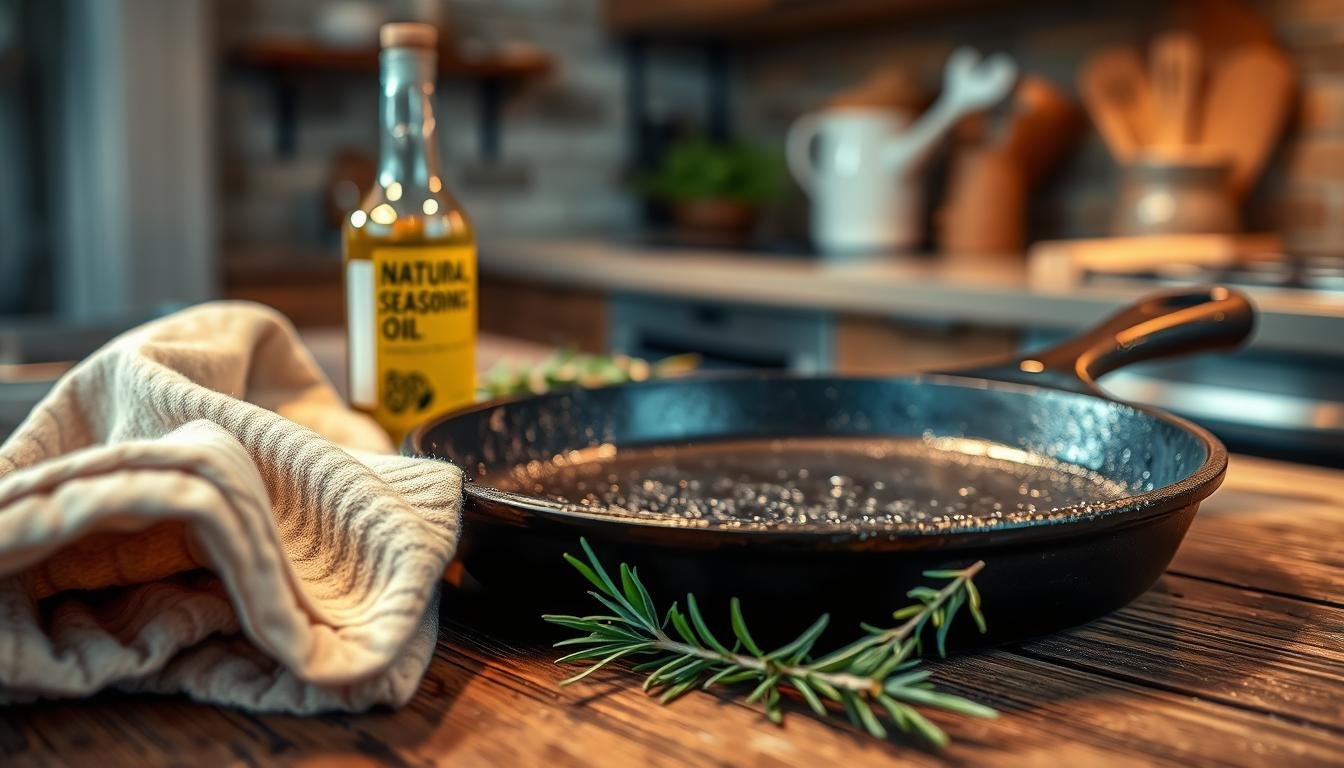
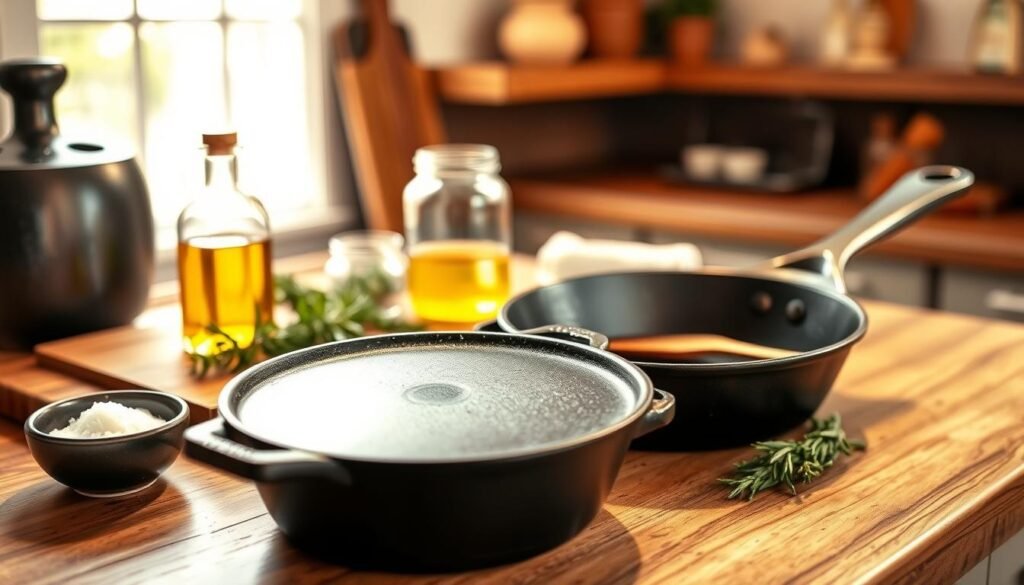
Start with a completely dry pan. Apply a whisper-thin layer of high-heat, neutral vegetable oil.
Place it upside down in a scorching oven at 450°F–500°F for one hour. This heat allows the oil to polymerize, bonding to the metal.
Turn off the heat. Let the pan cool inside the oven. Then, rub on a tiny bit more oil before storage.
Repeat this cycle to build a glossy, nonstick patina. Each layer fortifies your surface for better cooking results.
Maintenance Made Simple: Cleaning and Ongoing Care
Don’t let cleaning myths intimidate you; caring for your cookware is straightforward and fast. A proper routine takes only minutes but safeguards your investment for years.
After cooking, simply wipe the pan surface with a damp rag. Dry it thoroughly right away. This quick step prevents water-related rust from forming.
Effective Drying and Re-Oiling Methods
Always dry your cast iron completely after any wash. Any leftover moisture can cause rust spots in a short time.
Once dry, apply a thin layer of oil. This maintains the seasoning and creates a protective barrier. Re-oil whenever the surface looks dry.
Using Salt Scrub for Tough Residue
For stubborn, crusty bits, use a coarse salt scrub. Pour salt into the pan.
Use a soft-bristled Tawashi scrubber to whisk residue away. This cleans without damaging your seasoning layers.
A little dish soap is fine. Just never let the pan soak in hot water. Avoid dishwashers entirely, as they cause severe damage.
High-Performance Cast Iron Skillets: Top Product Picks
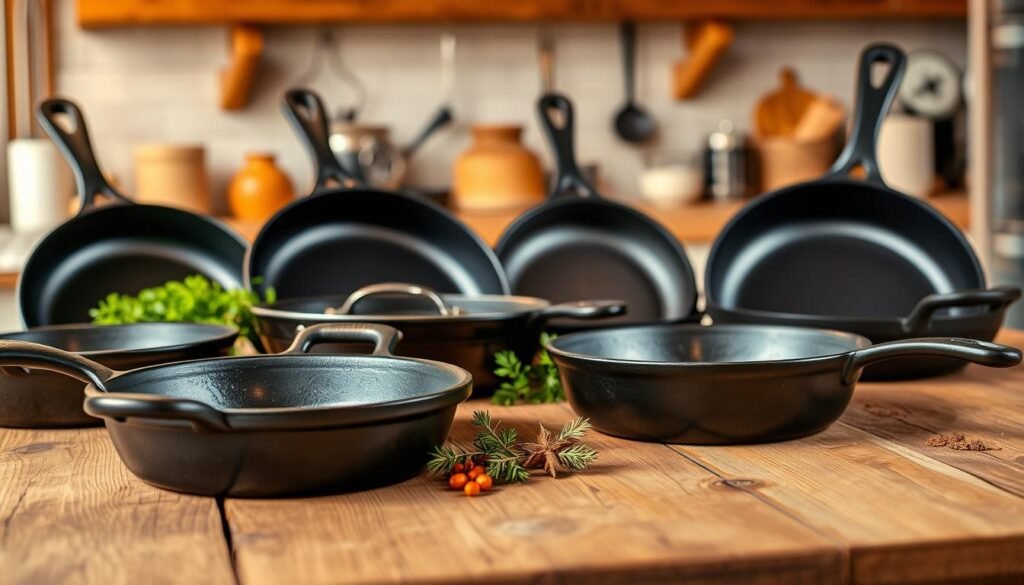
From lightweight luxury to budget-friendly staples, today’s market offers skillets that excel in performance and value. Your perfect match depends on your priorities for handling, heating speed, and aesthetics.
Luxury Options: Lancaster and Smithey Highlights
The Lancaster cast iron skillet is our top overall pick. Its No. 8 size weighs just 4.5 lb, making it the lightest tested. Thinner walls let this pan heat over a minute faster.
It has a smooth, polished surface that’s exceptionally nonstick right away. A recent design update added a helper handle for safer moves from oven to stovetop.
For heirloom quality, consider Smithey Ironware. Their skillets feature gorgeous, smooth surfaces and a lifetime guarantee. They represent modern craftsmanship at its finest.
Budget-Friendly Choices: Victoria and Lodge Insights
Victoria delivers the best cast iron value. For about $30, you get flaxseed oil pre-seasoning for a glossy, slick surface. Practical features include wide pour spouts and a helper handle.
The classic Lodge cast iron skillet remains a proven workhorse. At $20-24, it offers reliable factory seasoning and generations of trusted durability. It’s the go-to for no-fuss performance.
Choosing your ideal piece is straightforward. Prioritize lightweight speed with Lancaster, heirloom beauty with Smithey, outstanding value with Victoria, or proven reliability with Lodge.
Expert Testing Insights and Comparative Analysis
To separate marketing hype from real-world performance, we put leading cast iron pans through a series of standardized kitchen tests. Our methodology simulates actual home cooking conditions for accurate, actionable results.
How We Tested Cast Iron Pans
Multiple testers assessed each skillet’s weight and balance during cooking tasks. We fried sunny-side up and scrambled eggs with minimal oil to evaluate initial nonstick capability.
Searing skin-on chicken thighs revealed heat distribution patterns. We timed how fast each pan reached 375°F at medium heat.
After washing, we noted any seasoning wear. All skillets were then re-seasoned in a 500°F oven for one hour. A final egg test showed performance evolution.
| Test Phase | Primary Metric | Equipment Used | Key Insight |
|---|---|---|---|
| Initial Handling | Weight & Maneuverability | 10-inch Skillets | Identified easiest-to-use models |
| Nonstick Evaluation | Egg Release & Cleanup | Minimal Cooking Oil | Measured out-of-box performance |
| Heat Distribution | Time to 375°F | Skin-on Chicken Thighs | Revealed efficiency differences |
| Durability Check | Seasoning Integrity | Hot Water Wash | Showed surface resilience |
This rigorous process, detailed further in our comprehensive testing guide, ensures our recommendations are based on empirical evidence, not speculation.
Understanding Factory Seasoning and Surface Quality
Not all skillets are created equal right from the start. The factory-applied finish can be the difference between immediate cooking success and a frustrating break-in period.
Brands like Victoria use flaxseed oil for a glossy, exceptionally nonstick surface. This makes the pan nonstick right out of the box.
Smooth-surfaced skillets, like those from Lancaster, have a different approach. Their polished finish provides inherent nonstick properties. This allows for a lighter factory seasoning coat.
Rough-textured iron needs a more thorough factory treatment. Without it, food particles can stick in the surface irregularities.
Don’t worry about “stains” on a smooth pan after first use. This is seasoning development, not damage. It shows your skillet is building its superior patina.
| Surface Type | Factory Seasoning Need | Best For |
|---|---|---|
| Glossy Pre-Seasoned | High-quality, complete coat | Users wanting a skillet nonstick right out of the box |
| Polished Smooth | Lighter application | Cooks who value a slick surface that builds a patina |
| Rough-Textured | Essential, heavy application | Budget buyers willing to build seasoning over time |
| All Types | Protects against rust | Ensuring your pan is ready for its first cook |
This knowledge helps you choose. Pick a pre-seasoned skillet for instant performance. Or select a smooth one for a project that improves with each meal.
Efficient Cooking Techniques with Cast Iron
From a sizzling breakfast to a hearty dinner, one pan can expertly handle every task in between. Mastering a few fundamental methods unlocks this legendary versatility.
Searing, Frying, and Baking Best Practices
High-heat searing is where this material shines. It creates a restaurant-quality crust on steaks and chicken thighs.
The skillet’s thermal mass prevents temperature drops when food is added. This ensures even, crispy browning every time.
For perfect eggs, use medium heat. The seasoned surface delivers crispy edges with tender, runny yolks. It’s ideal for sunny-side up or scrambled varieties.
Baking cornbread in a preheated skillet creates an incomparably crispy bottom crust. The pan also transitions seamlessly from stovetop to oven.
| Technique | Key Practice | Ideal For |
|---|---|---|
| Searing | Preheat skillet until very hot | Strip steaks, pork chops, chicken thighs |
| Frying | Use moderate, consistent heat | Eggs, skillet hashes, sautéed greens |
| Baking | Preheat the pan in the oven | Cornbread, deep-dish pizza, fruit cobblers |
This versatility means one tool replaces many. Mastering these methods is straightforward compared to lighter carbon steel pans, which require different heat management.
Design Innovations: Modern Craft Meets Vintage Style
Today’s leading brands are reimagining classic cookware with thoughtful updates that prioritize both form and function. This fusion creates pieces that are both beautiful and incredibly practical for daily use.
Modern manufacturing focuses on user comfort and visual appeal. Even a small reduction in weight makes a surprisingly big difference in your hand.
Ergonomic Handles and Pour Spout Features
The handle design is critical for safety and control. Lancaster recently added a helper handle to its skillet. This makes moving a hot pan from oven to stovetop much safer.
In contrast, testers found the Lodge Blacklock’s handle uncomfortable. This shows how design details impact the experience.
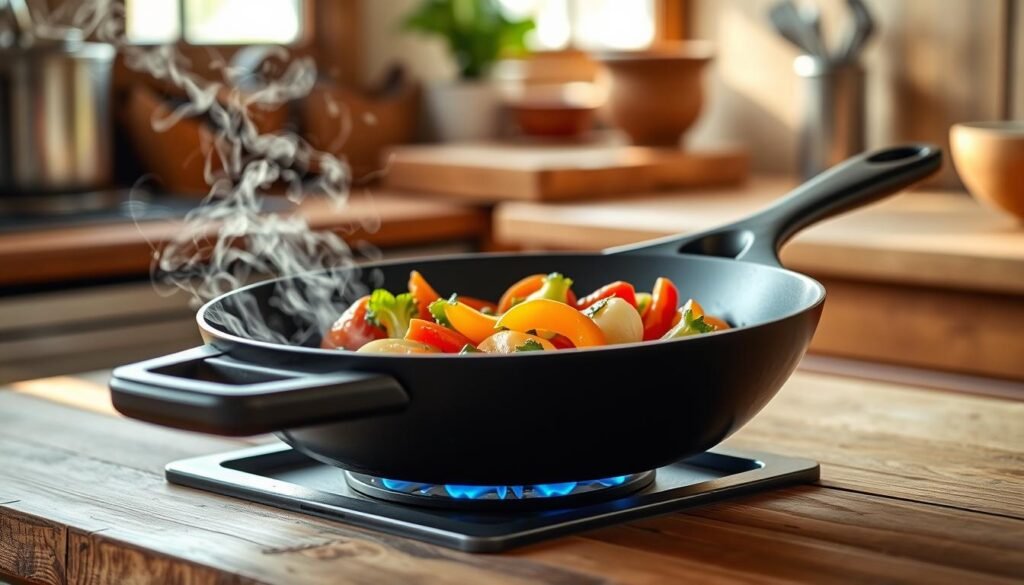
Pouring style also varies. Victoria uses wide spouts for clean pouring. The Stargazer skillet features a curved lip. This allows easy pouring from any angle.
Surface style matters too. Smithey creates exceptionally gorgeous pieces with smooth surfaces. The Field Company No. 8 skillet is a close second lightest at 4.3 lb. It has a velvety surface for great performance.
| Brand | Key Innovation | Weight Impact | User Benefit |
|---|---|---|---|
| Lancaster | Helper handle addition | 4.5 lb (light) | Improved safety and control |
| Victoria | Wide pour spouts | Standard weight | Clean, mess-free pouring |
| Smithey | Polished smooth surface | Heirloom weight | Aesthetic showpiece & easy cleaning |
| Field Co. No. 8 | Velvety surface finish | 4.3 lb (very light) | Superior handling comfort |
| Stargazer | Curved lip design | Balanced weight | Versatile pouring at any angle |
These innovations prove that modern cast iron doesn’t sacrifice performance for comfort. A better handle and a thoughtful design add a bit of luxury to every meal.
Healthy Cooking Benefits and Nutrient Retention
Beyond durability and heat retention, cast iron offers a hidden advantage: it nourishes your body. This traditional material provides completely chemical-free cooking.
It has no synthetic coatings that may flake into food. This way of cooking adds trace amounts of dietary iron to your meals.
This nutritional benefit is valuable for individuals with iron deficiency concerns. The cookware remains stable at all temperatures.
It eliminates concerns about toxic fume release. Some modern nonstick alternatives degrade under high heat.
Cast iron represents one of the safest cookware materials available. Centuries of use show no adverse health effects from properly maintained pieces.
You can use metal utensils freely without releasing coating particles. This is a significant advantage over delicate nonstick surfaces.
This traditional way of cooking offers peace of mind. Health-conscious cooks minimize exposure to questionable chemicals.
| Material | Chemical Coating | Iron Leaching | Utensil Safety |
|---|---|---|---|
| Cast Iron | None | Yes, trace amounts | Metal-safe |
| Stainless Steel | None | No | Metal-safe |
| Nonstick Coated | PTFE/PFOA common | No | Plastic/Silicone only |
| Aluminum | Often anodized | No | Varies |
Versatile Recipes for Every Cast Iron Kitchen
Imagine a single kitchen tool that effortlessly transitions from morning eggs to evening meats, mastering every meal in between. This legendary versatility is why a well-seasoned cast iron skillet becomes the most used piece in your kitchen.
From Breakfast Eggs to Hearty Steaks
Classic skillet cornbread is the ultimate test. Baking it in a preheated cast iron pan creates a signature crispy crust with a tender interior. This recipe alone showcases the material’s superb heat retention.
Fried egg recipes in a seasoned skillet demonstrate the nonstick capabilities of a properly maintained surface. You achieve perfectly crisp edges with runny yolks that release cleanly.
Hearty steak preparations highlight the high-heat performance. You get steakhouse-quality searing that develops complex flavors through the Maillard reaction. This is a key advantage over other materials, as detailed in our stainless steel vs cast iron comparison.
Skillet hashes made in this pan benefit from even heat distribution. They create the crispy potato textures that define comfort food. Sautéed greens cook quickly without burning.
London broil and other tough cuts become tender when properly seared. The pan maintains consistent temperature throughout the process.
Recipe versatility ranges from delicate egg frying to aggressive searing. From perfect cornbread to seared meats, one reliable skillet handles breakfast through dinner with unmatched results.
Cast Iron for Lifelong Use: Heirloom Quality and Durability
Heirloom quality isn’t a marketing term; it’s a tangible result of craftsmanship, material, and care. This skillet cast iron category is genuinely designed for lifelong use.
Properly maintained pieces last generations without performance loss. Premium manufacturers like Smithey create modern heirlooms through collaboration.
Designers, engineers, and craftsmen build skillet cast iron with passion. They back products with lifetime guarantees and free exchanges.
This way of making cookware in the USA supports domestic craftsmanship. It ensures quality control that justifies heirloom status.
Functional vintage pans from Griswold and Wagner prove the material’s exceptional durability. They are often found at scrap yards, still cooking after decades.
Heirloom-quality pieces from Lancaster and similar producers combine traditional durability with modern refinements. The Lancaster No. 8 is a prime example.
Unlike disposable cookware, this material actually improves with time and use. Enhanced nonstick properties develop through accumulated seasoning.
The way cast iron maintains performance makes it a sound economic investment. Higher upfront costs are offset by decades of service.
Choosing to use cast iron as a family heirloom creates cooking traditions. It connects generations through shared kitchen experiences.
| Brand Example | Heirloom Feature | Guarantee | Key Design |
|---|---|---|---|
| Smithey | Modern heirloom, polished surface | Lifetime | US-made, collaborative craftsmanship |
| Lancaster No. 8 | Lightweight, traditional durability | Varies | Helper handle, modern refinement |
| Vintage Griswold | Proven multigenerational durability | N/A | Smooth cooking surface |
| Field Company No. 8 | Velvety surface, heirloom quality | Limited | Lightweight, ergonomic handle |
This skillet cast iron represents a legacy purchase. It is the ultimate kitchen investment for those who value permanence over disposability.
Conclusion
Ultimately, the decision to incorporate this timeless kitchen essential comes down to valuing performance that improves with age. A well-chosen piece belongs in every serious cook’s arsenal.
Selecting the best overall skillet means balancing your budget with desired features like weight and surface finish. The Lancaster No. 8 leads for its light design, while Victoria offers outstanding value.
Proper care takes just a few minutes after use. This simple way protects your investment and builds a superior nonstick surface.
Cooking with cast iron delivers excellent results, from seared meats to fluffy eggs. Understanding the options empowers you to choose a skillet that will serve you for decades.
Investing in quality cookware is an investment in countless successful meals and lasting culinary satisfaction.