By Danilo C. G. · Last updated June 12, 2026
Quick answer: Buy five core pieces, not a big box set: a tri-ply stainless skillet, a saucepan, a sauté pan or Dutch oven, a stockpot, and one mid-priced nonstick skillet for eggs. That covers almost everything a home cook does. Add specialty pans later, only when a real need shows up.
The most common first-cookware mistake is buying a giant matching set for the piece count. You end up with pans you never touch and a few mediocre core pieces. Start smaller and better instead.
The five pieces that do almost everything
- 10″ or 12″ tri-ply stainless skillet — searing, sautéing, building pan sauces. Your workhorse.
- 2–3 qt saucepan — sauces, grains, reheating, small batches.
- 3–4 qt sauté pan or 5–6 qt Dutch oven — braises, soups, stews, one-pot meals. (Pick the Dutch oven if you make soups, stews, or bread.)
- 6–8 qt stockpot — pasta, stock, boiling, big batches.
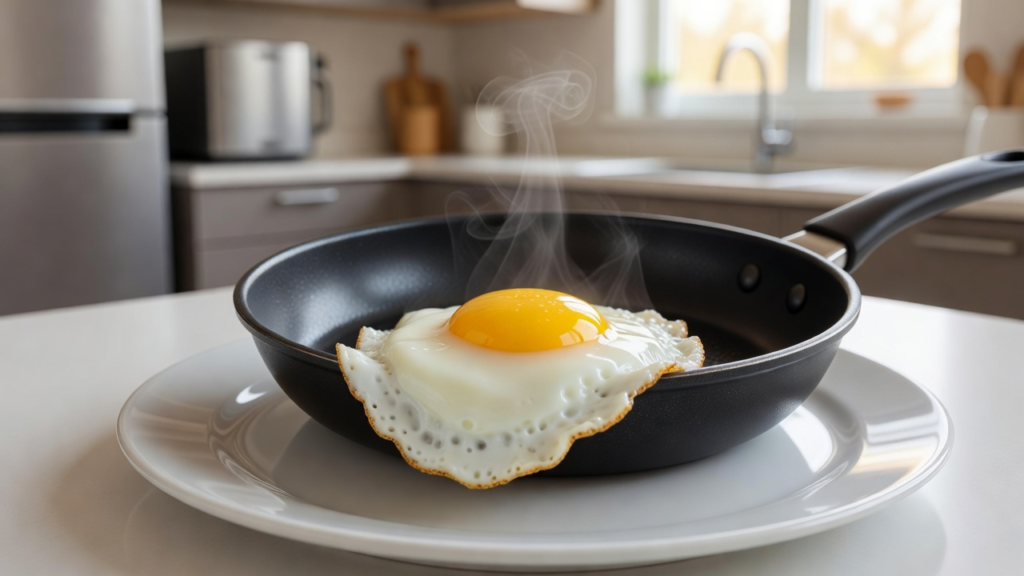
- One mid-priced nonstick or ceramic skillet — eggs, pancakes, fish, delicate foods only.
Buy these individually in the materials that fit your stove and cooking, and you’ll out-cook almost any big-box set for the same money.
FREE 2-PAGE CHEAT SHEET
Buy the right pan the first time
- Which material fits how you cook
- The 10-second induction test
- PFAS, PFOA and “non-toxic” labels decoded
- 5 red flags to check before you buy
Why this order
Stainless steel is the backbone because it’s durable, oven-safe, works on every stove, and handles high-heat tasks nonstick can’t. But stainless is frustrating for eggs, so you pair it with one nonstick pan — treated as a replaceable specialty item, since no coating lasts forever.
Notice what’s not on the list: a full nonstick set, a griddle, a wok, a grill pan, a dozen lids. Those are real tools, but they’re additions you make once you know you’ll use them — not starting purchases.
Match it to your situation
| Your kitchen | Tweak the starter setup |
|---|---|
| Induction cooktop | Make sure stainless is fully clad and check that any nonstick is induction-rated — a magnet must stick to the base. See best cookware for induction. |
| Small/apartment kitchen | Drop the sauté pan, keep the Dutch oven; it doubles for braising and boiling. |
| You mostly cook eggs | Spend a bit more on the nonstick skillet, a bit less on the stainless. |
| Tight budget | Buy the stainless skillet and Dutch oven first; add the rest over a few months. |
What to skip (at first)
- Giant box sets sold on piece count — most pieces are filler.
- A second nonstick pan before the first one wears out.
- Single-use gadgets (egg pans, mini grill pans) until a real need appears.
- “Lifetime” nonstick — it isn’t; budget to replace it.
Beginner Cookware Starter Picks Worth Buying Tonight
You don’t need all of these. Pick the skillet first, add a saucepan and a pot only if your budget allows this round.
- Tramontina Professional Nonstick Fry Pan — The classic “safe bet” first skillet. Restaurant-grade, forgiving for beginners, and cheap enough that a mistake won’t sting.
- Cuisinart MultiClad Pro Stainless Saucepan with Lid — A durable medium saucepan for rice, sauces, and reheating. Fits small cabinets, lasts for years.
- Lodge Cast Iron Skillet (10.25″) — If you want one pan that outlives you and you don’t mind a little upkeep. Great for searing.
- Cuisinart Chef’s Classic Stainless Stockpot — Your pasta-and-soup pot. Buy this last of the three.
As an Amazon Associate, purchases made through these links may earn a commission at no extra cost to you.
How to Get Out of the Cookware Research Loop for Good
You don’t fix this with a better article. You fix it by changing what you’re asking for.
Ask a smaller question. Not “what’s the best cookware.” That question has no answer, and it’s why you keep drowning. Ask instead: “What two or three pieces should I buy first, and in what order?” Fewer pieces. Clear priority. Done.
Pick one voice and follow it to the end. The problem isn’t that you have no advice. It’s that you have twelve. Choose one source that fits your situation, close every other tab, and let that one person be right. You can adjust later. What you can’t do is average twelve contradicting opinions into a purchase.
Set a decision deadline before you start reading. “I’m buying something by the end of tonight.” A loop with no endpoint runs forever. Give it one.
Aim for a good-enough first pan, not a perfect forever one. You are not marrying this cookware. You’re buying the thing that stops the daily egg disaster while you learn what you actually like. Perfect is what keeps you stuck. Good-enough is what gets you cooking.
Need a shortlist to end the loop tonight? Start with our top-rated starter cookware picks and buy one, not all.
FAQ
How many pots and pans do I really need? Five core pieces cover almost everything. Most home cooks never need more than seven or eight.
Should I buy a set or individual pieces? If you’re starting out and know your cooking, individual pieces give you a better kitchen for the money. Sets are convenient but pad the count. See best cookware sets for 2026 if you’d rather buy one box.
What material should the first pieces be? Stainless steel for the core, plus one nonstick pan. See cookware materials explained.
Related: Cookware materials explained · Best cookware sets for 2026 · Best cookware for induction
About the author: Danilo C. G. runs Top Cookware Brands, helping home cooks buy cookware they won’t regret — without the marketing fluff.
FREE 2-PAGE CHEAT SHEET
Buy the right pan the first time
- Which material fits how you cook
- The 10-second induction test
- PFAS, PFOA and “non-toxic” labels decoded
- 5 red flags to check before you buy