What Cookware Should I Buy First?
Did you know the average person setting up their first home kitchen will view over 50 different product pages before buying a single pot? That’s a lot of scrolling.
Welcome to your new favorite guide. We’re here to help you navigate this surprisingly complex world. Staring at endless options can make your head spin faster than a whisk in meringue.
Whether you’re moving into your own place or finally upgrading that hand-me-down collection, we have the insider scoop. You’ll learn what pieces truly deserve a spot on your stovetop.
This guide cuts through the marketing fluff. We give you straight talk on what matters for your cooking style and budget. You’ll view your options with new clarity and confidence.
By the end, you’ll know exactly which pieces to shop cookware for first. Think of us as your personal consultant—minus the pretentious chef’s hat.
Key Takeaways
- Start with a few versatile pieces instead of a huge, expensive set.
- Understanding materials like stainless steel and non-stick is crucial for performance.
- Your first purchases should match your most common cooking tasks.
- Quality construction (like even heating and secure handles) matters more than fancy brands.
- Proper care and maintenance will make your investment last for years.
- Mixing different material types creates the most flexible kitchen toolkit.
- You don’t need every pot and pan on the product page to cook amazing meals.
Introduction: Get Cooking with the Right Cookware
Ever felt your eyes glaze over while scrolling through endless product listings for kitchen gear? You’re not alone. The right cookware transforms a frustrating chore into an enjoyable experience.
It’s the difference between a burnt mess and a meal you’re proud to share. Starting your home kitchen journey is about smart investment, not buying a pro chef’s entire arsenal.
Think of a great pan like a good friend. It’s reliable when things heat up and makes daily life better. You don’t need all the pans at once.
Build your collection piece by piece, based on what you actually cook. This guide cuts through the noise. We’ll help you make confident choices and get you cooking with clarity.
Understanding the Essential Pieces in a Cookware Set
Your stovetop deserves a supporting cast that turns simple ingredients into memorable meals, not a cluttered collection of single-use gadgets. Think of your kitchen gear as a team. Each piece has a specific, valuable role in your daily cooking routine.
The Role of Pots and Pans
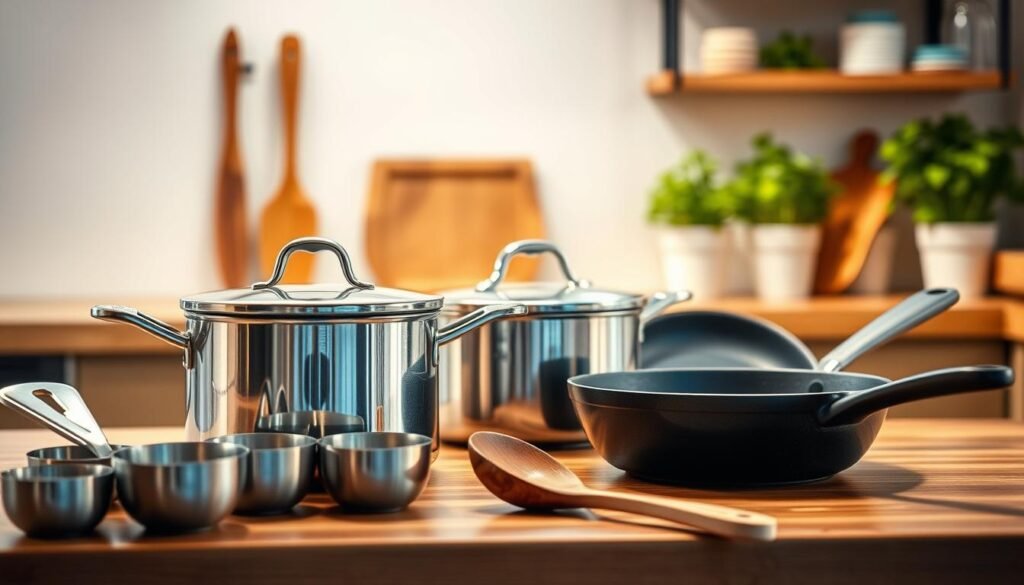
Pots and pans are the backbone of your kitchen. They’re not interchangeable. A versatile skillet handles tasks a tall stockpot simply can’t. Knowing what each one does best helps you build a smart, functional set.
From a trusty Dutch oven for slow braises to a wok for quick stir-fries, variety is key. Your goal is to own the right tools for the meals you actually make.
Skillets, Saucepans, and Stockpots Explained
Let’s break down the three heavy hitters. A skillet (or fry pan) is your go-to for frying eggs or searing meat. Sizes typically range from a personal 8-inch to a family-sized 12-inch model.
A saucepan has deep sides. It’s perfect for simmering sauce or cooking rice without boil-overs. For big batches, you need a stockpot. This tall piece is ideal for boiling pasta or making hearty soup.
A well-rounded starter collection covers most needs. Think: a large stockpot, medium and small saucepans, and a versatile skillet. This combo handles about 90% of home cooking.
Exploring Different Cookware Materials
The metal in your pan isn’t just decoration—it’s the secret to whether your dinner is a triumph or a tragedy. Not all material is created equal. Each type brings unique benefits to your cooking.
Material Benefits and Considerations
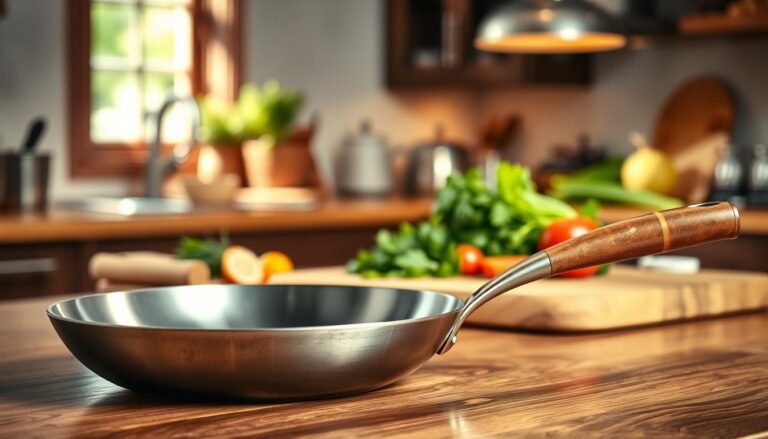
Stainless steel is the durable workhorse. It resists scratches and won’t react with acidic foods. But pure stainless isn’t a great heat conductor on its own.
That’s why it’s often paired with an aluminum or copper core. Aluminum spreads heat quickly and evenly. Copper responds to temperature changes almost instantly.
Your choice depends on what you cook. A searing steak needs a different material than a delicate omelet. For a deep dive on pros and cons, check our detailed buying guides.
How Construction Affects Performance
The build quality is just as crucial as the material. A pan’s construction determines how it handles heat.
Multi-ply or clad cookware bonds different metals. You get the durability of steel on the outside with a core of superior conductive metal inside.
This “team-up” prevents hot spots. Your food cooks evenly, not just in the center. Good construction turns your cooking from a chore into a joy.
It’s a smart upfront investment for better results and a longer-lasting kitchen toolkit.
Stainless Steel Cookware: Durability & Performance
Imagine a kitchen tool that never flakes, chips, or loses its luster, no matter how many meals you scorch. That’s the promise of stainless steel. It’s the workhorse material prized for its brute strength and sharp looks.
Professional chefs love it for a reason. Modern engineering has transformed simple steel into a performance powerhouse.
Tri-ply and 5-ply Constructions in Modern Sets
The magic is in the layers. Today’s best pieces use a “ply” system. This sandwiches a core of super-conductive metal, like aluminum, between layers of stainless.
This design is the key to flawless even heating. It banishes hot spots that burn your sauce while the edges remain cold.
| Construction Type | Layers | Best For | Performance Highlight |
|---|---|---|---|
| Tri-ply (e.g., D3 Stainless) | 3 | Everyday cooking, excellent all-rounder | Superior heat spread vs. single-ply |
| 5-ply (e.g., D5 Polished) | 5 | Precision searing, professional results | Ultimate thermal stability and even heating |
Easy Maintenance for Long-Lasting Shine
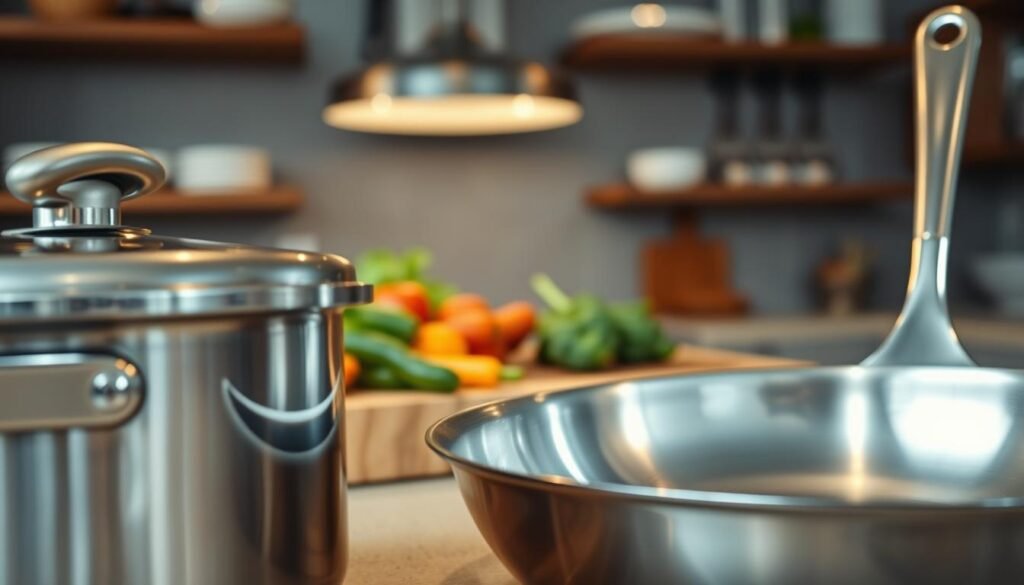
The beauty of this cookware is its easy care. No special rituals are needed. A simple scrub keeps it gleaming for decades.
It’s also brilliantly versatile. The non-reactive surface handles tomato sauce without a fuss. Plus, most pieces are oven-safe for finishing dishes.
For all the specifics on picking your perfect set, our detailed stainless steel guide has you covered. Building a collection with this level of even heating and durability is a genuinely smart kitchen investment.
Copper Core Cookware: Quick Heating & Precise Control
Picture this: you turn down the burner, and your pan actually listens, adjusting its heat instantly. Welcome to the world of copper core.
This is the sports car of the kitchen—highly responsive and built for performance. The secret is a strategic core of copper sandwiched between aluminum and stainless steel.
This design creates unmatched thermal responsiveness. Your cooking gains masterful control, perfect for delicate sauces or temperature-sensitive food.
That distinctive copper band isn’t just for show. It’s a visual badge of premium construction.
These versatile pans work on all stovetops, including induction. You get the quick-heating advantage of copper with the easy-care durability of stainless steel.
For the home chef who wants restaurant-caliber control, a copper core pan is a brilliant upgrade. It makes precise cooking not just possible, but effortless.
Modern Nonstick Cookware: For Gentle, Hassle-Free Cooking
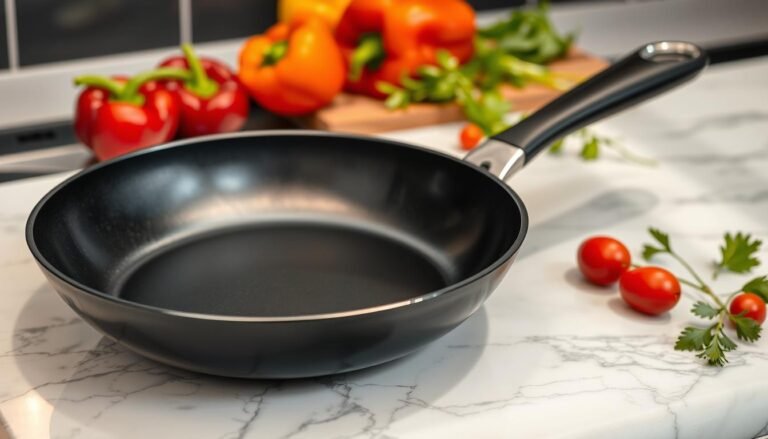
Forget everything you think you know about sticky pans—today’s nonstick surfaces are kitchen game-changers. They transform everyday cooking with superior food release and minimal oil requirements.
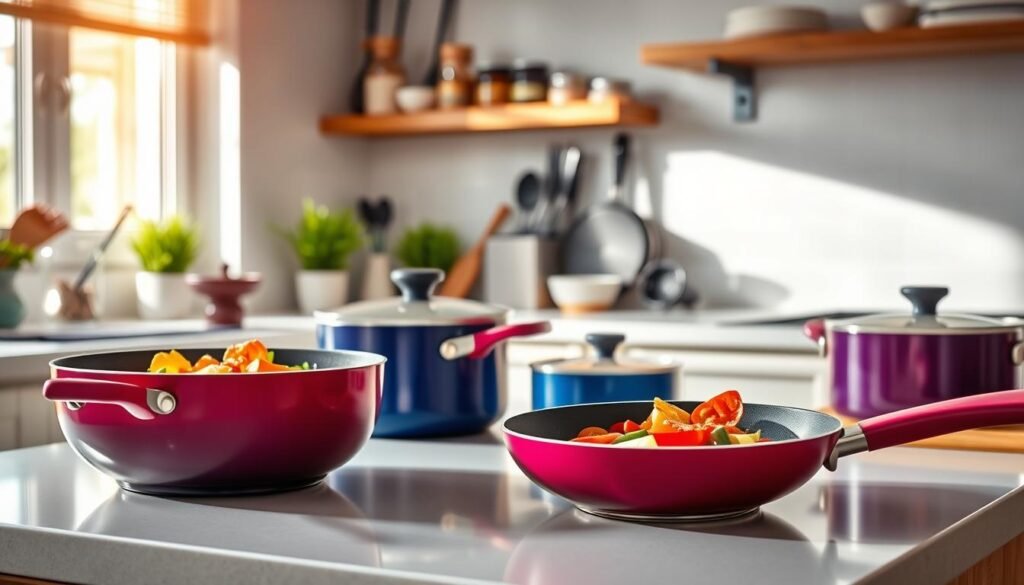
It’s your kitchen’s easy button. Imagine frying eggs or cooking delicate fish fillets without a spatula wrestling match.
Advanced PTFE Coating for Flawless Food Release
Modern surfaces use advanced PTFE coating. This isn’t your grandma’s flaky nonstick. It offers exceptional durability and peak performance that actually lasts.
Ceramic nonstick provides another excellent option. It’s perfect for health-conscious cooks who want similar benefits with different technology.
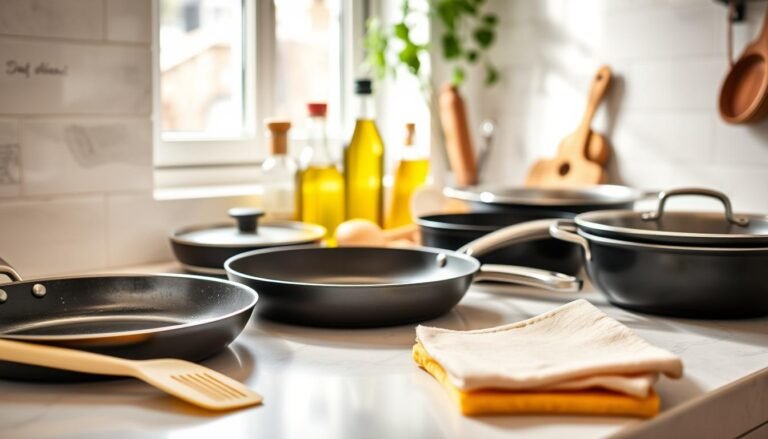
These pans are champions for low to medium-heat tasks. They excel at frying eggs, making omelets, and cooking pancakes. Many pieces, like those in the NS Pro nonstick collection, are even oven safe up to 500°F.
This versatility allows for many cooking methods. For a detailed look at top performers, check out this review of the best nonstick pan.
Treat your nonstick cookware with respect for longevity. Use wooden or silicone utensils and hand-wash with mild soap. Avoid high heat to keep the coating performing for years.
Enameled Cast Iron: A Classic Choice with Contemporary Appeal
Enameled cast iron proves that sometimes the oldest ideas are the best—especially when they’re dressed for the 21st century. This material combines legendary heat retention with a colorful, easy-care exterior.
Modern versions eliminate the seasoning rituals of traditional cast iron. You get all the performance without the maintenance headache.
Superior Heat Retention and Versatility
The remarkable heat retention of cast iron means it holds temperature exceptionally well. This makes it perfect for slow-cooking, braising, and maintaining even heat.
This versatile material transitions seamlessly from stovetop to oven to outdoor grill. It’s ideal for recipes that start with a sear and finish with a slow braise.
From baking crusty bread to simmering stews, it handles both everyday cooking and special occasion dishes. The enamel coating provides a smooth, non-porous surface that resists staining.
Cast iron’s induction compatibility adds to its versatility. It works on literally every cooking surface, including the latest induction cooktops.
While heavier than stainless steel alternatives, that weight contributes to superior heat retention. Consider it your daily arm workout disguised as cookware.
| Feature | Enameled Cast Iron | Traditional Cast Iron | Stainless Steel |
|---|---|---|---|
| Heat Retention | Excellent | Excellent | Good |
| Maintenance | Easy (no seasoning) | Requires seasoning | Easy |
| Oven Safe | Yes (high temp) | Yes | Yes |
| Induction Compatible | Yes | Yes | Depends on base |
| Best For | Slow cooking, baking | High-heat searing | Everyday versatility |
For baking tasks that demand steady, even heat, enameled cast iron outperforms many steel options. Its ability to go from stovetop to oven makes it incredibly flexible.
The colorful enamel exterior aligns with contemporary kitchen aesthetics. Performance and beauty truly aren’t mutually exclusive here.
Cookware for Induction Cooktops: What to Look For
Navigating induction compatibility is less about cooking skill and more about understanding a simple law of physics: magnetism. These sleek cooktops are famously selective, only heating pots and pans with a magnetic personality.
Features That Ensure Compatibility
The magic happens with a magnetic stainless steel base. This base responds to the cooktop’s electromagnetic field. Popular collections from D3 Stainless Steel to NS Pro Nonstick are built with this feature for full induction compatibility.
Always verify details on the specific product page. Manufacturers highlight this feature because no one wants a compatibility surprise. Here’s a quirky rule: square or rectangular items often lack the needed base and won’t work.
Your safest bet is stainless steel cookware. Try the magnet test—if it sticks firmly to the pan’s bottom, you’re good for induction. Choosing compatible pieces is a smart move for flexibility, as they work on all stovetops. Find your perfect match in our guide to the best induction-ready pieces.
Mix and Match: Create Your Ideal Home Cookware Collection
Think of your kitchen as a wardrobe. You wouldn’t wear a tuxedo to the gym, so why use a stockpot to fry an egg? Your ideal collection is a strategic assembly, not a one-size-fits-all set.
It should match what you actually cook daily. This approach gives you more power than any pre-boxed bundle.
Choosing the Perfect Pan Set for Your Needs
Start with a foundational pan set. A good one covers the basics. Look for an 8-inch and a 10-inch skillet, plus a couple of saucepans.
This handles most home cooking tasks right away. Next, identify your patterns. Do you make big batches of pasta or sauté veggies nightly?
Your answers reveal your priority piece. Often, it’s a high-sided sauté pan. This pan is a versatile workhorse for everything from searing to simmering.
Complementing Your Kitchen’s Style and Function
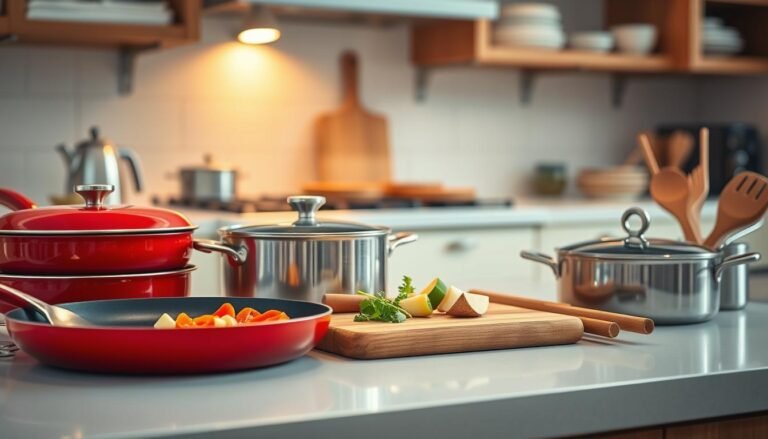
Your home kitchen thrives on mixed collections. Use stainless pans for searing and a nonstick skillet for eggs. Each material serves its highest purpose.
Your style isn’t about matching lids. It’s about choosing the best tool for each job. A 12-inch cast iron pan might live beside your nonstick piece.
That’s a smart, functional kitchen. For a great starting point, see this review of the best cookware set. Then, add specialty cookware sets or single pans as your skills grow.
The perfect pan set evolves with you. Build it thoughtfully, one brilliant sauté at a time.
Shop Smart: Navigating Price, Sales, and Exclusive Offers
Smart shopping for kitchen gear isn’t about finding the lowest number—it’s about decoding the entire offer. The regular price is often just a starting point for negotiation with yourself.
Your first move should be to create an account on your favorite retailer’s site. This unlocks member-only sale alerts and lets you track price drops on wish-listed items.
- Always view multiple product pages. Compare construction and warranties, not just the bottom line.
- Time your shopping. Black Friday Sale events and end-of-season clearances offer deep discounts.
- Prioritize perks like free shipping or a “Free Gift With Purchase.” These add real value.
Patience pays. A higher upfront price for a quality nonstick skillet often means lower cost over a decade. Think total ownership, not just today’s sale tag.
Encounter a page blocked extension error while browsing? Don’t panic. Simply try disabling extensions like ad blockers. They can sometimes interfere with a shopping site’s features.
Build your set wisely. Sometimes buying a single perfect pan on sale beats a cheap, mismatched bundle. Your future kitchen self will thank you.
Conclusion
Consider this your graduation from kitchen confusion to culinary clarity, ready to invest in pieces that last. Building your perfect collection is a personal journey. Start with a few quality tools that match what you actually fry and simmer.
Quality always beats quantity. Three brilliant products you use daily are worth a cabinet full of dust collectors. Your home cooking transforms when you have the right gear.
Use your new knowledge. Choose materials that fit your style and commit to simple care. For your next step, explore guidance on a perfect cookware set or read detailed reviews.
Now, go forth and cook with confidence. Your next great meal is waiting.