
What size Dutch oven you should buy depends less on how many people you feed and more on what you cook, how wide your burner is and what you can comfortably lift when the pot is full. A 6-quart round pot is the right first pot for most households of three to five. It is the wrong pot for a solo cook who mostly braises two chicken thighs, and too small for anyone who batch-cooks chili for the week.
The usual “one quart per person” rule gets you into the right aisle. The seven checks below settle what size Dutch oven belongs on your stove, using published capacity, weight and dimension figures rather than guesswork.
Affiliate disclosure: As an Amazon Associate, we earn from qualifying purchases. Product mentions are based on published specifications and manufacturer data, not our own hands-on testing. Photos are royalty-free images from Unsplash and are not pictures of the specific products recommended.
Table of Contents
Quick answer: what size Dutch oven fits your kitchen
Use this Dutch oven size chart to see what size Dutch oven matches your household, then run the checks that follow. The “servings” column uses Lodge’s own math of 12-ounce bowls at full brim capacity, which is generous: a pot never cooks well filled to the rim.
| Who you cook for | Size to start with | Brim capacity in 12-oz bowls | Why this size |
|---|---|---|---|
| 1–2 people, small batches | 3–4.5 quarts | 6–9 | Enough floor space to brown without the liquid spreading too thin |
| 3–5 people, weeknight meals | 5.5–6 quarts | 11–12 | Fits a 4 lb chicken, a standard loaf and most soup recipes |
| Batch cooking, guests, big roasts | 7–7.5 quarts | 14–15 | Room for a 6 lb chicken or a double batch of stew |
| Crowds of 8+, holiday chili | 9 quarts and up | 18+ | Only worth the weight if you fill it regularly |
Bowl counts come from the Lodge Dutch oven sizing guide, which also lists the chicken capacities used above. If you want one pot and you are unsure, the Lodge Essential Enamel 6-quart Dutch oven is the sensible default: it sits in the size range both Lodge and Le Creuset report as their most popular, and it costs a fraction of the premium French brands.
1. Count servings, then add a leftovers margin
Le Creuset’s sizing advice is to plan one quart per person and then round up, which puts a family of four at 5 to 6 quarts. That rule assumes you eat everything at one sitting. Most people who own a Dutch oven do not.
Before you decide what size Dutch oven to order, ask yourself one honest question: do you cook stews and soups to eat for three days? If yes, add 1.5 to 2 quarts to the rule. A couple who meal-preps will get more use from a 5.5-quart pot than from the 3-quart pot the per-person math suggests.
Why brim capacity overstates what size Dutch oven you need
Advertised quarts are measured to the rim. In practice you stop well short of that, because a simmering stew needs headroom to bubble and you need room to stir without slopping broth over the edge. Our working rule: plan to fill a pot about two-thirds full for soups and braises. That turns a 6-quart pot into roughly 4 quarts of finished food, which is about five generous bowls, not twelve.
For solo cooks, the Lodge Essential Enamel 3-quart Dutch oven is worth a look. It handles a pot of beans or a two-portion braise without the empty floor space that makes small amounts of sauce scorch in a larger pot.
2. Match the shape to the dish, not just the quarts
When people ask what size Dutch oven to buy for braising, the honest answer is usually a width, not a quart figure. Two pots with the same capacity can cook very differently. A tall, narrow pot suits soup, stock and deep-frying, where depth matters. A wide, shallower pot suits braising and searing, because meat needs space around each piece to brown instead of steaming. Le Creuset makes the same point in its own guide, which is why it sells a “Round Wide” version alongside its standard rounds.
Lodge’s published dimensions show this clearly. Its 6-quart enameled pot stands 7.31 inches tall, while the 7.5-quart model is shorter at 6.18 inches and wider. The bigger pot gains most of its capacity in floor area, which is exactly what you want for short ribs and whole chickens.
If you braise more than you boil, the Le Creuset Round Wide 6.75-quart Dutch oven is built for that job: its listed dimensions are about 12.5 inches across and 6.3 inches high. It is expensive, so buy it only if browning large batches is your main use. Our Le Creuset vs Staub Dutch oven comparison covers how the two premium brands differ beyond size.
What about oval? Lodge notes that oval pots are less efficient on the stovetop but better for long roasts such as pork loin. Choose oval only if roasts are a regular dinner rather than a holiday event.
3. Check the base against your largest burner
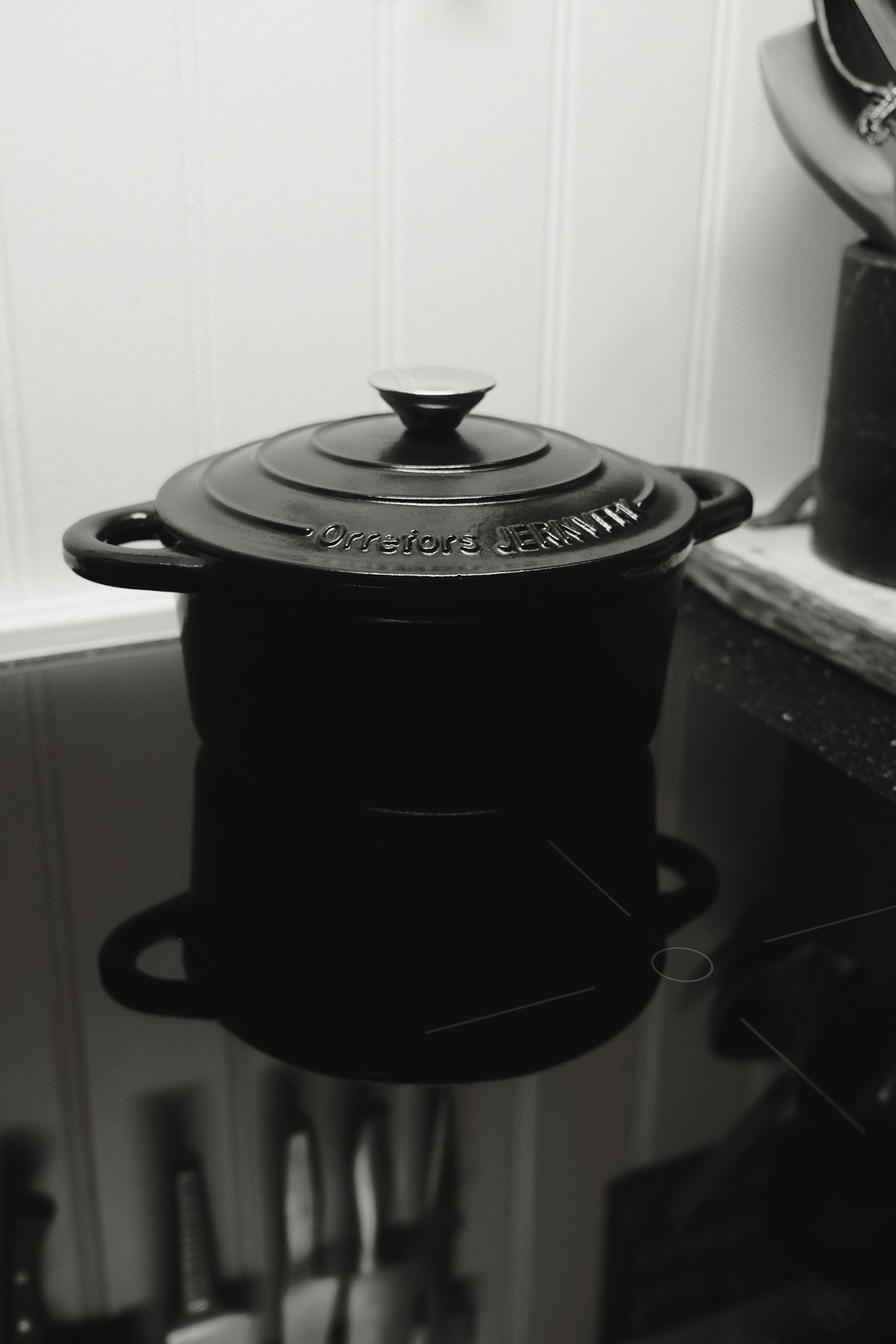
Your burner quietly limits what size Dutch oven you can use well. Cast iron spreads heat slowly. When the base of a pot is much wider than the burner, the outer ring of the pot runs cooler than the center, and onions burn in the middle while they sweat at the edges. This matters most on electric coils, smooth glass tops and induction zones, which have a fixed heating diameter.
Measure your largest burner or induction ring, then compare it with the pot’s base diameter, not the rim diameter listed in most product titles. A base up to about an inch wider than the burner is usually fine with patient preheating. Much wider than that, and you will be rotating the pot to brown evenly. If your induction hob refuses to start with a heavy pot, our guide to an induction pan not detected walks through the likely causes, and choosing cookware for your stove covers compatibility in general.
4. Weigh it empty, then weigh it full
Weight is the real ceiling on what size Dutch oven you will reach for on a Tuesday. It is the check most size guides skip, and it is the one that decides whether a pot leaves the cabinet. Lodge lists its enameled pots at 9.5 pounds for 3 quarts, 13.52 pounds for 6 quarts and 17.73 pounds for 7.5 quarts, before any food goes in. Consumer Reports measured a 5-quart Staub at close to 12 pounds.
Water-based stews weigh roughly 2.1 pounds per quart. Fill a 6-quart Lodge two-thirds full and you are carrying about 22 pounds to the oven. Do the same with the 7.5-quart model and the total climbs past 28 pounds, held by two short loop handles at oven height.
A two-minute lift test at home
Put a stockpot on your bathroom scale and add water until the reading matches the full weight of the pot you are considering. Then lift it with oven mitts from your oven’s middle rack height to the stovetop, twice. If that feels risky, you have found the ceiling on what size Dutch oven suits you: size down or choose a lighter material. Wrist or shoulder trouble is a perfectly good reason to choose 5.5 quarts over 7.5.
5. Size a Dutch oven for bread separately
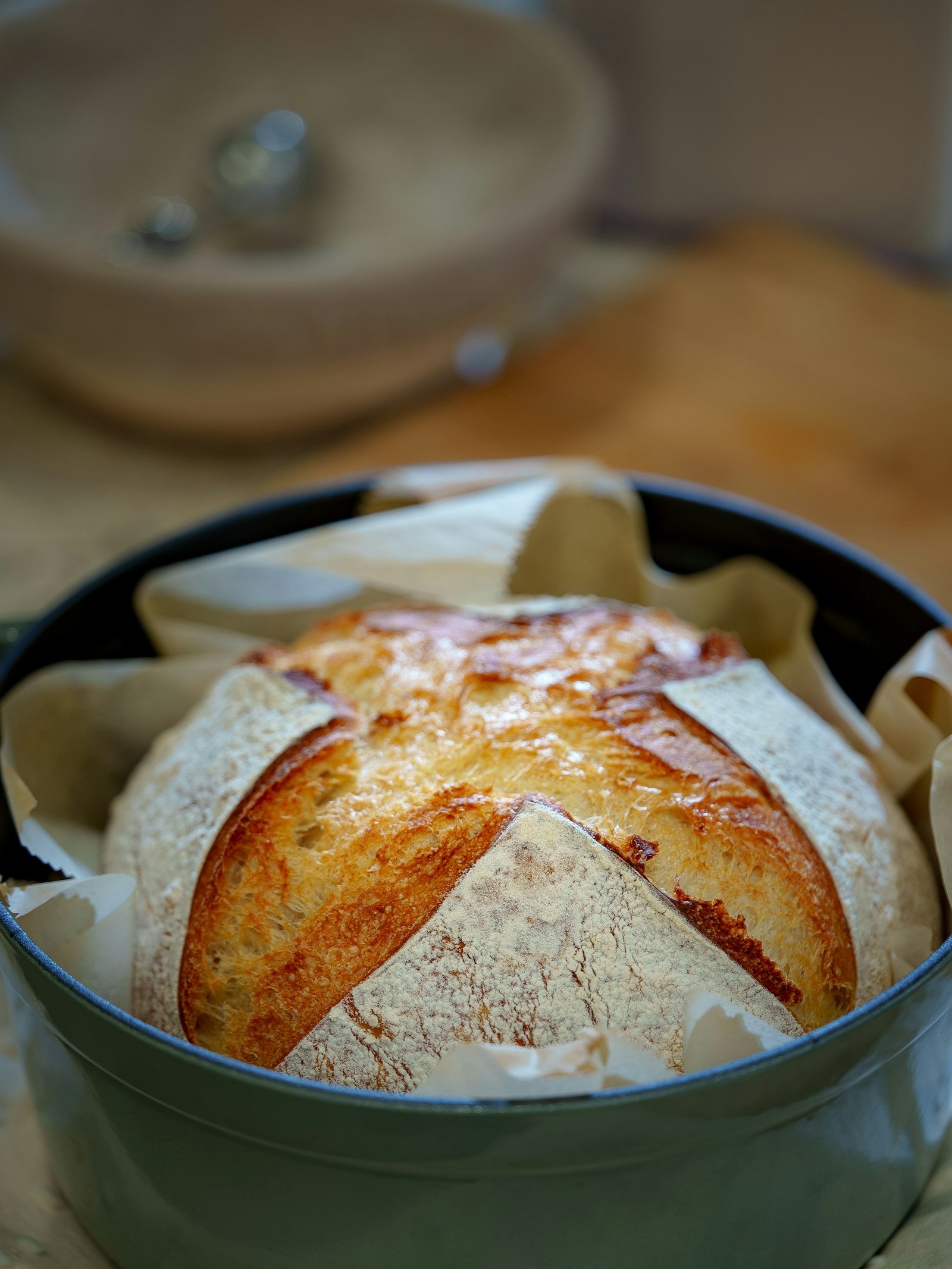
Bread is the reason many people buy their first pot in November, and it plays by different rules. The famous NYT no-knead bread recipe from Jim Lahey calls for a heavy, covered 6- to 8-quart pot preheated at 450°F. That range is wide on purpose, but bakers on forums report a consistent pattern: in a very wide pot, a slack dough spreads into a flat loaf, while a snugger pot pushes it upward.
So what size Dutch oven for bread should you buy? For a loaf made with around 500 grams of flour, a 5- to 6-quart round pot is the sweet spot. Before you bake, confirm the lid knob’s temperature rating in the manufacturer’s care guide, because some plastic or phenolic knobs are rated below bread-baking heat. Stainless knobs avoid the issue, and many brands sell them as replacements.
The easiest Dutch oven for bread to load
Lowering dough into a 450°F pot is where burns happen. A combo-style pot fixes that by letting you bake on the shallow lid with the deep base inverted over the top. The Lodge Cast Iron Double Dutch Oven, 5 quart works this way, and its lid doubles as a skillet. It is bare seasoned cast iron, so dry it promptly; our guide to cast iron rust removal helps if you forget.
6. Measure your oven, shelf and cabinet
Oven space is the last filter on what size Dutch oven you can own. Le Creuset warns that anything over 7 quarts deserves an oven-fit check, and it is right. Product titles list capacity, but the number that matters inside the oven is total height including the lid knob, plus the width across the handles. Lodge’s 6-quart enameled pot measures 13.56 inches across its handles; the 7.5-quart measures 14.75 inches.
- Oven height: with the rack in the lower-middle position used for most braises, measure from the rack to the upper element and leave at least 2 inches above the knob.
- Oven width: compact and wall ovens can be tight once handles are counted, the same trap we flagged in our roasting pan size guide.
- Storage: a lidded 7.5-quart pot needs a deep lower cabinet or open shelf. Heavy pots that live on a high shelf rarely get used.
7. Decide whether you need one Dutch oven or two
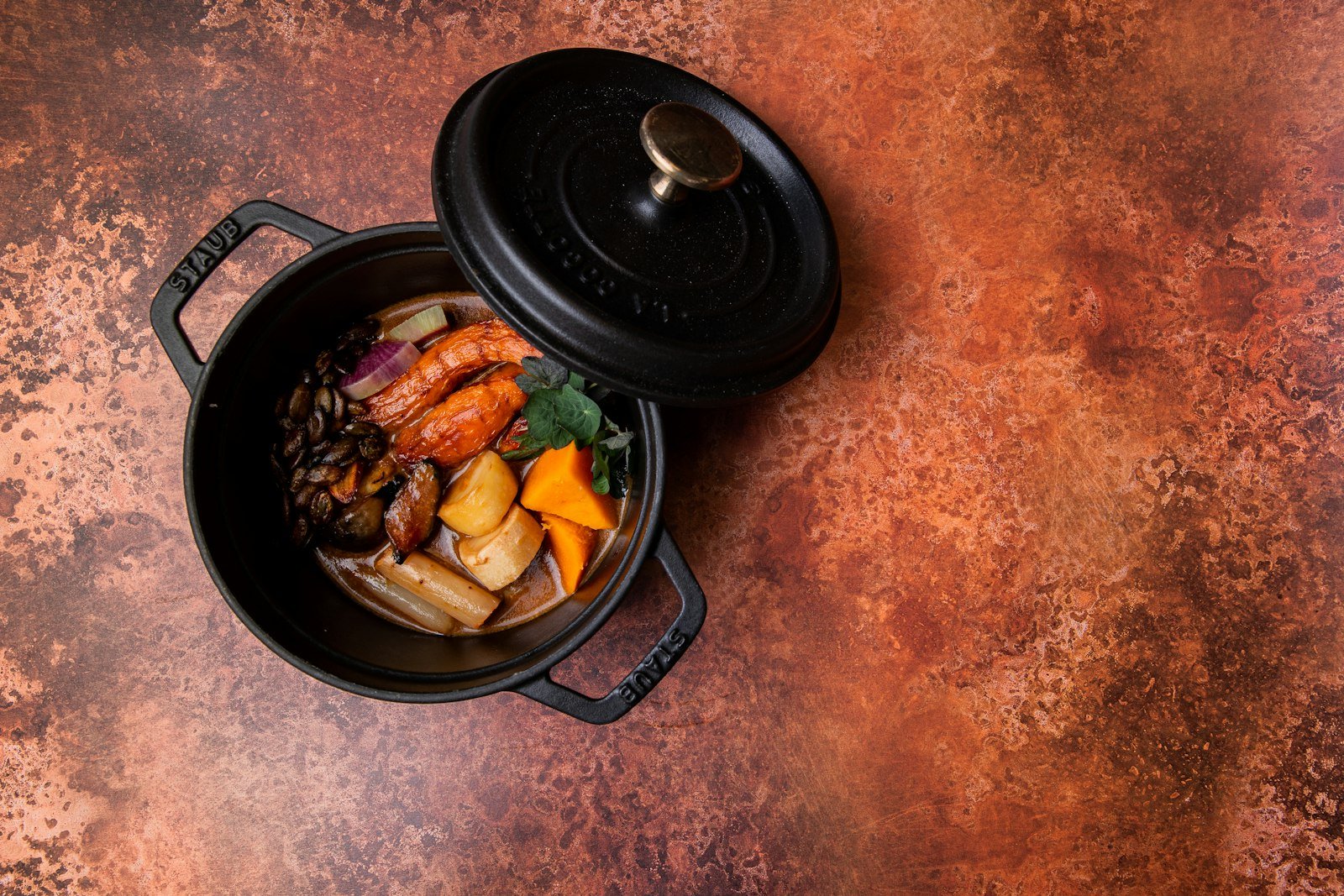
Sometimes the best answer to what size Dutch oven to buy is two sizes. If you cook both small weeknight meals and big weekend batches, one pot will always be a compromise. Two mid-priced pots, such as a 3-quart and a 7.5-quart, often cost less than one premium 5.5-quart pot and cover more ground. The Lodge Essential Enamel 7.5-quart Dutch oven is a practical big-batch partner, with Lodge rating it for up to a 6-pound chicken.
Big pots bring a food safety detail that size guides ignore. A full 7.5-quart pot of stew cools slowly, and the USDA’s leftovers guidance says to divide large amounts into shallow containers so food reaches the refrigerator within two hours. If you buy big, buy the storage containers too.
Still building a kitchen from scratch? Pair this decision with our guide on how to choose a cookware set, since many sets include a Dutch oven that may already cover one of the two sizes. And if you are torn between a 10- and 12-inch pan as well, the same logic of floor space applies in our 10 inch vs 12 inch skillet breakdown.
What size Dutch oven for chili, soup, braises and frying
If you already know the one dish you will cook most, that dish decides what size Dutch oven you need; let everything else fit around it. These are our working recommendations, based on the capacity and dimension data above.
- Chili and soup for a crowd: 7 to 7.5 quarts. A double batch of chili with beans fills about 5 quarts, which sits comfortably at two-thirds of a 7.5-quart pot.
- Short ribs, pot roast and coq au vin: a 5.5- to 6.75-quart pot with a wide floor. Brown meat in two batches if the pieces touch.
- Weeknight soup for two: 3 to 4.5 quarts. A smaller pot comes to a simmer faster and is easier to wash in a standard sink.
- Shallow frying and deep frying: at least 5.5 quarts with tall walls. Keep oil well below the halfway mark so it has room to bubble up when food goes in.
- Rice, beans and grains: any size from 3 quarts up, as long as the pot is at least one-third full so liquid does not evaporate before the grain cooks.
Notice the pattern: no single dish needs more than 7.5 quarts in a home kitchen. Pots of 9 quarts and above earn their keep only for very large families, canning-style batch cooking or outdoor cooking.
Our verdict on Dutch oven sizes
So, what size Dutch oven should you buy? Choose a 5.5- to 6-quart round pot if you want one pot that does most things well. Size down to 3 or 4.5 quarts if you cook for one or two and rarely keep leftovers. Size up to 7 or 7.5 quarts only after you have done the lift test and measured the oven. And if bread is the main reason you are shopping, choose by loaf fit and knob rating first, capacity second.
Whatever size you choose, check the warranty terms before you pay premium prices; our cookware warranty guide explains what “lifetime” actually covers when enamel chips.
What size Dutch oven questions people ask most
What size Dutch oven is best for a family of four?
A 5.5- to 6-quart round pot. Le Creuset’s one-quart-per-person rule, rounded up, lands in that range, and Lodge recommends its 6-quart model for families. Go to 7 quarts only if you regularly cook for leftovers or guests.
Is a 5.5-quart Dutch oven big enough?
For most households of up to four, yes. Filled to a practical two-thirds, it holds a little under 4 quarts of finished stew, and Lodge rates its 5- and 6-quart pots for a chicken of up to about 4 pounds.
What size Dutch oven do I need for sourdough bread?
A 5- to 6-quart round pot suits a loaf made with about 500 grams of flour. Wider pots let slack dough spread. Check that the lid knob is rated for 450°F or higher before baking.
Is a 7-quart Dutch oven too big for everyday cooking?
It can be. A 7.5-quart enameled pot weighs close to 18 pounds empty and can pass 28 pounds when two-thirds full. If you only fill it a few times a year, a 5.5- to 6-quart pot will get far more use.
What size Dutch oven fits a whole chicken?
Lodge’s guidance is up to a 4-pound chicken in a 5- or 6-quart pot, up to 6 pounds in a 7- or 7.5-quart pot and up to 9 pounds in a 9-quart pot. Leave room for the lid to close fully.
Should I buy a round or oval Dutch oven?
Round for most people. It heats more evenly on a round burner and suits soups, stews and bread. Oval makes sense if you often roast long cuts such as pork loin in the oven.
Leave a Reply