
Eggs in stainless steel can stick even when water beads perfectly across the pan. The missing step is often what happens next: you need to bring the pan to a gentle cooking heat, spread fat beneath the whole egg, and stop treating a water test as a promise of clean release.
Before buying another skillet, run one controlled breakfast. Use the same pan, one egg, a measured amount of butter, and a lower burner setting. The seven fixes below help you identify whether the problem is excess heat, insufficient fat, old residue, or the way you lift the egg.
Affiliate disclosure: As an Amazon Associate, we earn from qualifying purchases. Product suggestions are optional; start with the cookware you already own. Images are AI-generated editorial illustrations, not photographs of product testing.
On this page
Eggs in stainless steel: diagnose the first failure
Watch the butter before watching the egg. If it turns dark almost immediately, the pan needs to cool. If the egg sits in quiet liquid fat and spreads without beginning to set, the heat may be too low. If one patch sticks while the rest releases, inspect that patch for residue or missing fat.
These clues are more useful than copying someone else’s dial number. A setting of three means little without the burner’s output, the pan’s construction, and the amount of food. Your goal is a repeatable combination for your own kitchen, rather than a universally correct preheating time.
For your first attempt at eggs in stainless steel, use a small batch. One egg exposes the response clearly and costs less to troubleshoot than a four-egg omelet. Make toast and prepare the plate beforehand so you can concentrate on the pan during the short cooking window.
7 smart fixes before you replace the pan
1. Lower the heat for eggs in stainless steel
A skillet ready to brown meat may be much too aggressive for the breakfast you want. Reduce the heat before adding eggs, especially if you prefer tender whites rather than crisp edges. A pan retains heat after you turn the dial down, so the change is not instantaneous.
If butter browns rapidly or oil visibly smokes, take the pan off the burner using a dry oven mitt and let it cool safely. Do not pour water into hot fat. Restart with fresh fat once the pan has cooled enough for gentle cooking; scorched butter carries its flavor into the egg.
All-Clad’s stainless steel cooking guidance recommends moderate heat and identifies butter as appropriate for low-heat egg cooking. That is a better starting point than assuming every stainless steel recipe needs a hard sear.
2. Treat the water test as a clue, not a thermostat
A gliding droplet demonstrates a hot-surface behavior. It does not measure the exact temperature across the pan, tell you how much heat remains in the metal, or account for the egg you are about to add. Passing that test does not make bare steel behave like a coated skillet.
For eggs in stainless steel, you can skip chasing a dramatic dancing droplet and warm the pan gradually at a gentler setting. Add butter and observe it. You want melted fat with mild activity, not instantly browned milk solids. Follow any preheating restrictions supplied with your particular cookware.
If you do use a few drops of water, test only a dry, oil-free pan. Let all the water disappear before adding fat. Do not repeat the test once oil is present. If your usual routine passes the test and burns the butter, change the routine rather than blaming the egg.
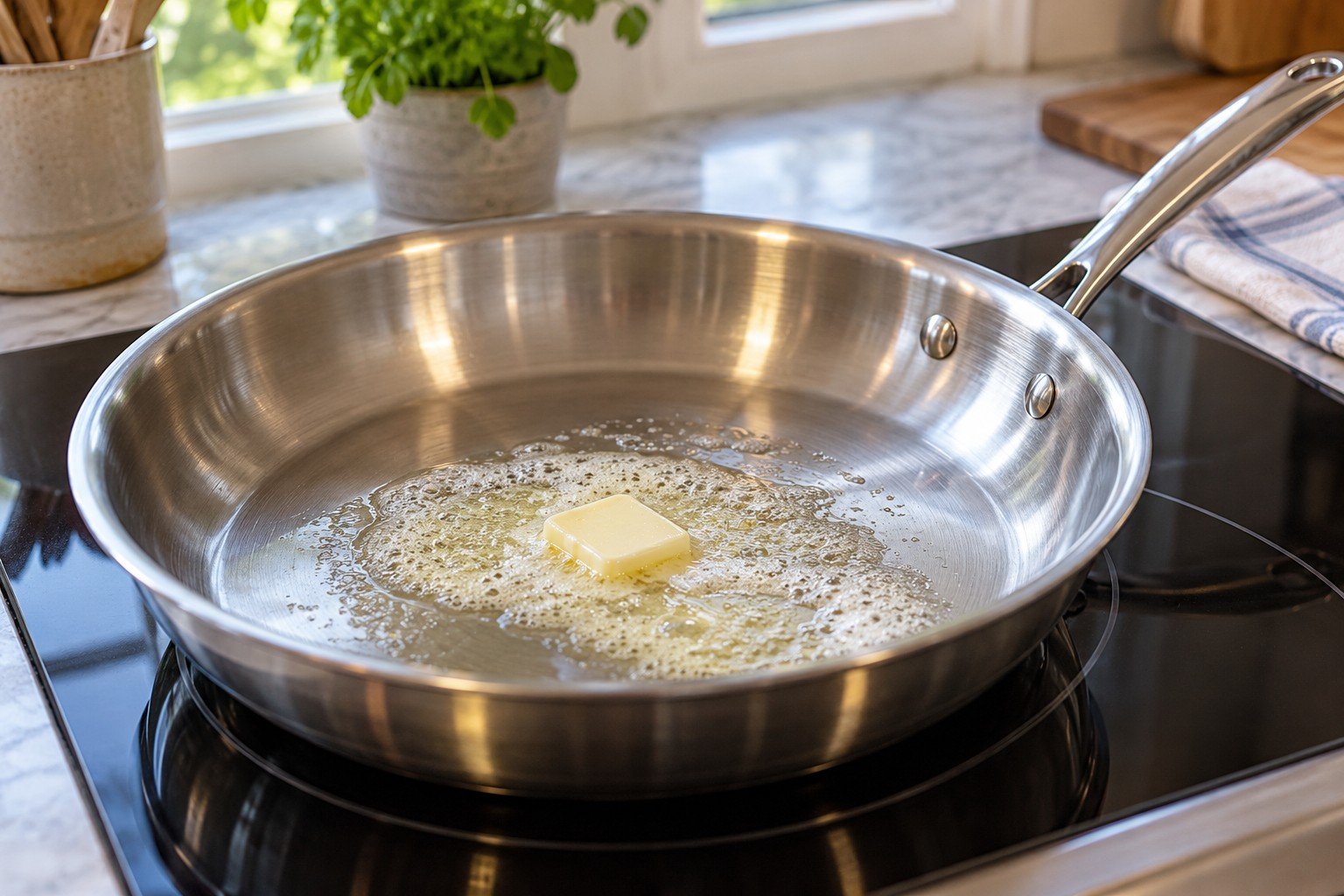
3. Cover the cooking area with fat
For an initial two-egg trial in a typical 10-inch skillet, try roughly two teaspoons of butter. This is a practical starting quantity, not a laboratory threshold or a nutrition recommendation. Tilt the pan so the melted butter reaches the whole area the whites will occupy.
A teaspoon of oil pooled at one edge cannot protect a dry patch on the other side. Recheck coverage after placing the pan flat. If the base slopes enough to collect most fat at the rim, keep the eggs in the coated area and inspect the pan once it is cool.
Olive oil or a neutral cooking oil can also work. Butter is particularly helpful while learning because its foaming and browning are visible. Adding oil to butter does not make the milk solids immune to burning. You still need to manage the heat.
4. Remove yesterday’s invisible obstacle
Run a clean fingertip over the cold, washed cooking surface. A sticky amber patch suggests leftover oil; raised rough spots may be dried food. Neither is the same as a harmless color change. Eggs in stainless steel are a demanding test of surface cleanliness because their thin whites spread into small irregularities.
Wash away the film before another trial. Our stainless steel cleaning guide explains the broader cleaning routine. Follow the pan maker’s instructions for approved cleaners and sponges, then rinse thoroughly so cleaner is not left on a cooking surface.
Blue or rainbow coloring alone does not prove the skillet is ruined. Compare a smooth discoloration with tacky buildup using our guide to stainless steel pan rainbow stains. Diagnose the surface before buying a replacement or scrubbing it aggressively.
5. Give the egg room without oversizing the pan
Choose a cooking area large enough that the whites can sit without overlapping. An oversized pan on a small heating zone can leave a hot center and cooler edges. Adding more heat to fix the edge may burn the center before the rest catches up.
For eggs in stainless steel, the actual flat base matters more than the diameter across the rim. Our 10-inch versus 12-inch skillet guide helps you match portions and burner coverage. Two eggs in a suitable smaller pan can be easier to manage than one egg roaming around a large dry base.
6. Wait for structure before lifting
A white that is still translucent cannot support a turner. Let its underside set before checking release. Test one edge gently: if it lifts cleanly, work the blade farther underneath at a shallow angle. If you meet strong resistance, stop pushing and reassess the heat and doneness.
Waiting helps an intact underside form, but it is not a repair for every failure. An egg already burned onto a dry patch may never slide free neatly. Lower the heat, salvage what you can, and correct the cause next time instead of cooking it indefinitely.
A OXO Good Grips Stainless Steel Fish Turner is useful for fried eggs in stainless steel because its beveled edge approaches the underside gently. Its head is relatively broad, so compare it with your pan’s flat cooking area; reserve metal utensils for surfaces whose manufacturer permits them.
7. Reset the pan between batches
The second batch often fails because the pan is hotter and the first batch used up the fat. Remove loose bits, assess the remaining butter, and adjust before cracking another egg. If residues are burnt, stop and clean once the pan is cool enough to handle safely.
Measure fresh fat for each learning batch rather than assuming the visible shine is sufficient. Keep one variable constant while changing another. If eggs in stainless steel work with two teaspoons of butter, do not simultaneously halve the butter, increase the burner, and add another egg the next morning.
A controlled method for fried eggs
Begin with a clean, dry pan and an egg cracked into a small bowl. Warm the skillet gradually over low to medium-low heat, adapting to your cooker and the manufacturer’s guidance. Add butter, swirl it across the base, and lower the heat if it colors quickly.
Slide the egg close to the surface rather than dropping it from above. Listen for a mild sizzle. A loud aggressive crackle and rapidly crisping edge mean you should reduce heat or briefly move the pan away from the burner. Leave the egg undisturbed while the white begins to set.
Check the underside with a thin turner when the edges have enough structure to lift. Turn carefully if that is your preferred method, then continue until cooked through. Eggs in stainless steel become more manageable when the goal is a controlled cooked egg, not an impressive shake of the skillet for a camera.
The FDA’s egg safety advice recommends cooking until both white and yolk are firm, and cooking egg dishes to 160°F (71°C). For preparations served raw or undercooked, it recommends pasteurized eggs or pasteurized egg products. A clean release is not a food-safety test.
Do not leave eggs out for a long period to imitate a video. You can organize your tools while they remain refrigerated. For eggs in stainless steel, controlling the pan is more useful than turning room-temperature ingredients into another compulsory ritual.
Scrambled eggs and omelets need a different rhythm
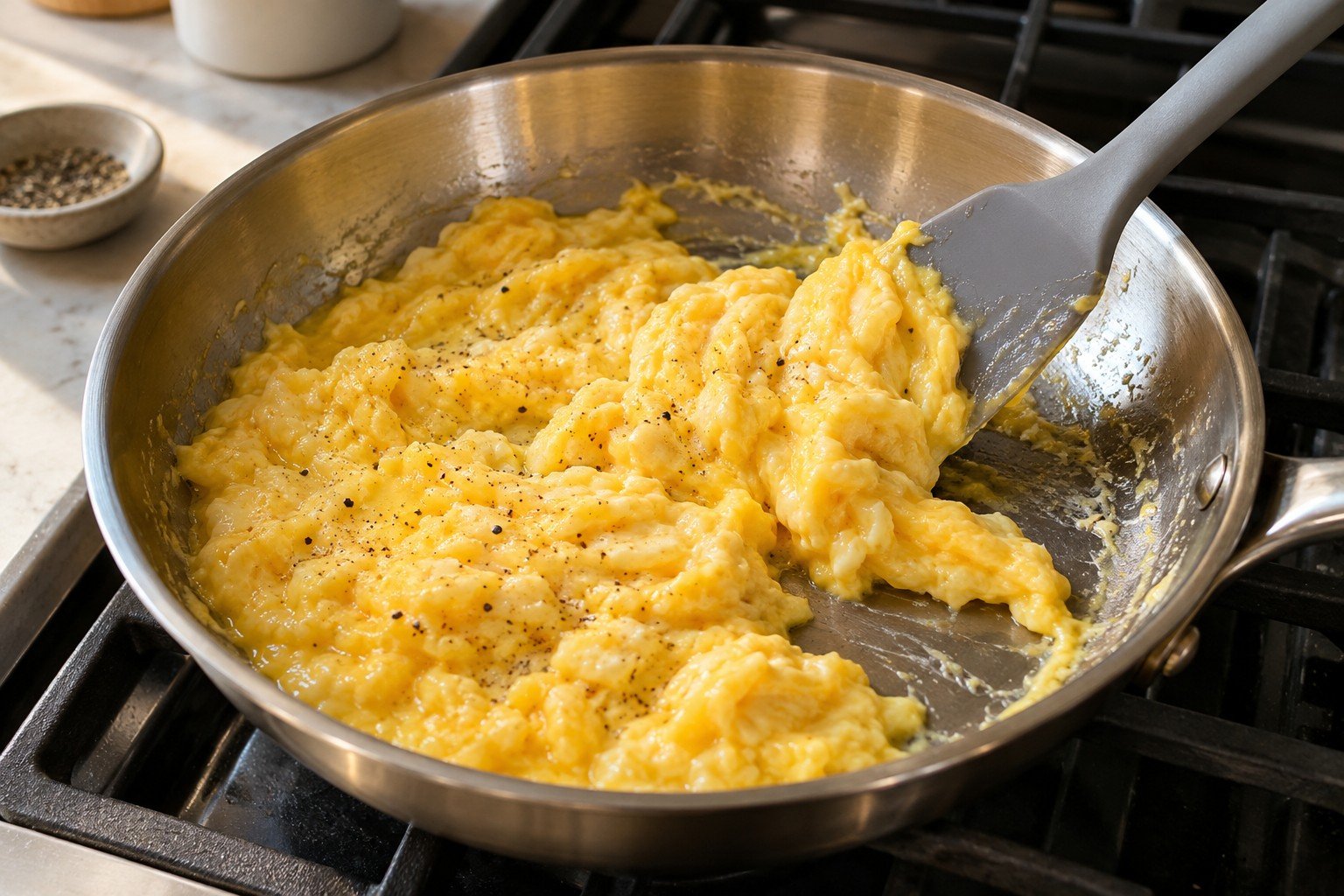
For scrambled eggs in stainless steel, melt butter gently and add the beaten eggs before the fat browns. Use a flexible spatula to sweep setting egg away from the base, then let uncooked egg flow into the cleared area. Keep the movement steady without scraping violently against the steel.
If a cooked film forms faster than you can gather it, lower the heat or lift the pan briefly off the burner. A thin residual film can happen even when most of the batch comes out cleanly. That is a different problem from a thick scorched layer with dry curds piled above it.
For an omelet, start with a modest batch that can spread thinly across the coated base. Loosen the perimeter before attempting the fold. Cook watery fillings separately and drain them; a pile of wet mushrooms makes it harder to read how the egg itself is setting.
The OXO Good Grips Small Flip and Fold Silicone Omelet Turner provides a flexible edge for gathering curds or folding a small omelet. Choose its size deliberately: a compact head suits small pans, while a larger omelet needs support across more of its width.
You do not need to master every style at once. Learn fried eggs in stainless steel first if you want a clear view of release; learn scrambled eggs first if appearance matters less. A delicate folded omelet combines more variables and is a less forgiving first experiment.
Adjust for induction, gas, and electric burners
On induction, start conservatively and avoid boost for empty-pan preheating. A fast change in power does not instantly equalize the temperature across the metal. Keep the skillet centered and match the magnetic base to the cooktop’s recommended zone size.
On gas, keep the flame beneath the base instead of licking up the sides. On a radiant electric or coil burner, anticipate stored heat after turning the control down. Moving the skillet briefly to a safe, unheated zone can give you faster relief than waiting on the hot element.
The useful record is simple: pan, burner, starting setting, butter quantity, and result. After a successful breakfast, repeat that combination before experimenting. This turns eggs in stainless steel from a daily guessing exercise into a routine you can reproduce.
An infrared thermometer is optional, not a necessary fix. Shiny metal can complicate readings, and a temperature number still does not tell you whether fat covers the exact spot where the egg will land. Observable butter behavior and small controlled batches are a sensible first investment of attention.
For example, if the first egg develops a brown ring while its top remains loose, record that result as excess heat before changing your butter quantity. If the next egg cooks gently but catches at one dry edge, keep the lower heat and improve fat coverage. These are troubleshooting examples, not results from a product test. Repeating eggs in stainless steel with one deliberate adjustment tells you more than replacing the skillet after each disappointing attempt.
When a different skillet is worth considering
Replace equipment for a physical mismatch, not a single stuck breakfast. A pan that rocks on a flat cooker, has a loose handle, or heats an impractically small area deserves closer inspection. If its base is sound and it cooks other foods well, technique remains the cheaper next step.
The All-Clad D3 10-inch stainless steel fry pan is an optional upgrade for cooks seeking a fully clad skillet for broader everyday cooking. It is not a nonstick shortcut: eggs in stainless steel still require heat control and fat, so compare the handle, weight, and cooking area before spending.
See our stainless steel cookware shortlist for alternatives. Keep a sound existing skillet if it meets your needs. Buying an entire set to solve one breakfast problem usually adds more cupboard space requirements than useful information.
After cooking, allow the skillet to cool before washing. Soak stubborn egg residue in warm soapy water and loosen it with a suitable nonabrasive sponge. Dry the base and interior before storage so the next attempt begins with a clean, predictable surface.
Frequently asked questions
Can you cook eggs in stainless steel without sticking?
Yes, clean release is possible with controlled heat, fat covering the cooking area, and careful lifting after the underside sets. Results depend on the pan, burner, and egg style; bare steel does not become permanently nonstick.
Why do eggs stick after the water test?
The test does not guarantee the correct cooking heat or complete fat coverage. A pan can pass it and still be too aggressive for tender eggs. Watch the butter and lower the heat before adding food.
Is butter or oil better for eggs in stainless steel?
Either can work. Butter gives beginners visible foaming and browning cues, while oil offers a different flavor and cooking response. Use enough to coat the egg’s footprint and avoid smoking or scorching the fat.
Do stainless steel pans need seasoning for eggs?
Normally, no. Follow your pan’s care instructions rather than building a permanent seasoning layer. Clean steel, suitable preheating, and fresh cooking fat are the useful starting points.
Should I use high heat for eggs in stainless steel?
Usually start lower, particularly for tender fried eggs, scrambled eggs, or omelets. Raise heat only if the actual cooking response calls for it. Never assume a setting shown on another stove transfers directly to yours.
Why does the second batch stick when the first one worked?
The skillet may have accumulated heat, lost fat, or collected residue. Reassess all three before adding more eggs, and allow excessive heat to fall. Add fresh fat to cover the cooking area.
Leave a Reply