7 Best Induction Cookware Sets for 2026 (Ranked)
Buying induction cookware in 2026 should be simple — but it isn’t. You can plug in a beautiful new induction stove, drop a pan on it, and get nothing. No heat. No sizzle. Just a blinking error light and a sinking feeling. That’s because induction cooking runs on physics, not habit, and most people learn it the hard way. So let’s fix that right now. By the end of this post, you’ll know exactly which induction cookware sets are worth your money in 2026 — and why your old pans probably aren’t “fine,” no matter how much you love them.
I’ll be upfront: I’ve cooked on an induction cooktop for six years, and my first mistake was assuming my old aluminum pans would be fine. They weren’t. That one lesson is what this whole guide is built to save you from.
Table of Contents
Will Your Old Pans Work on an Induction Cooktop?
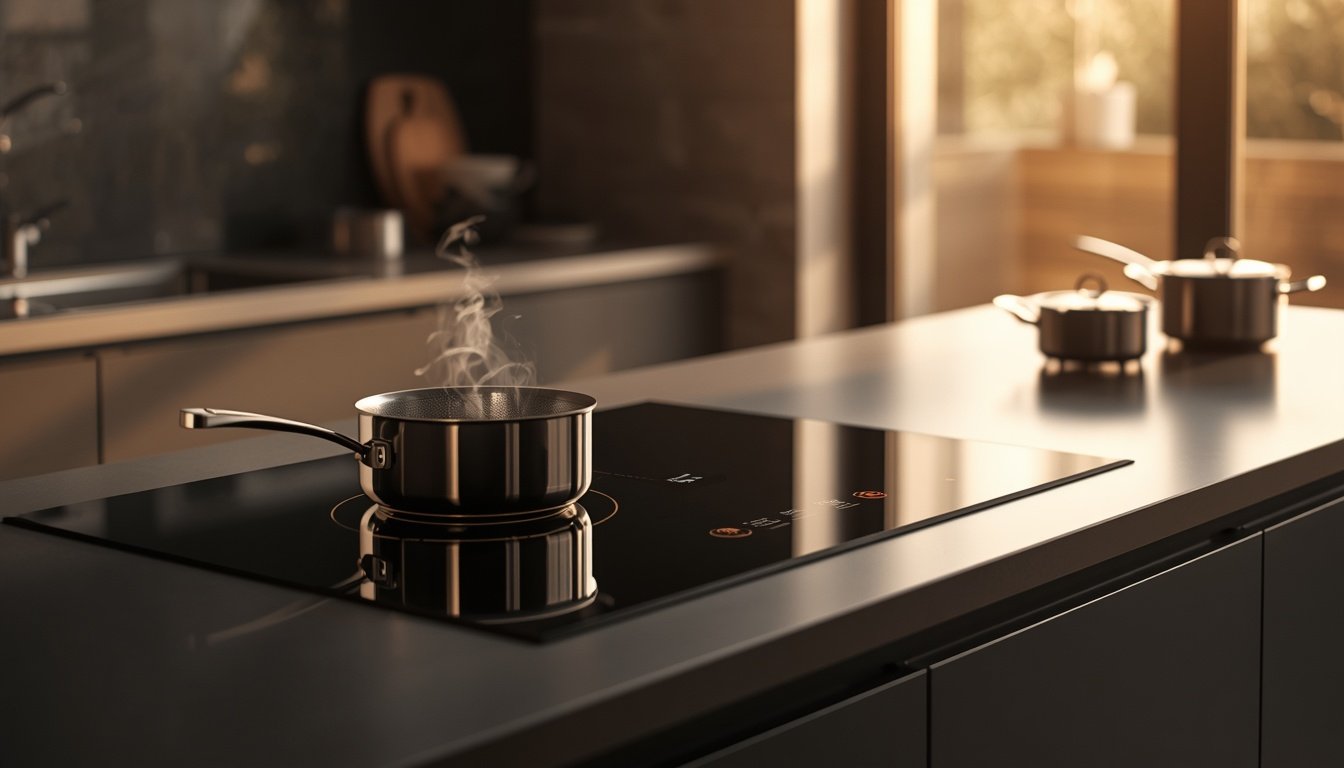
Let’s deal with the biggest objection first. You think your current cookware is fine. Maybe it is — on gas. Induction is different. It doesn’t use a flame or a hot coil. It uses a magnetic field that heats the pan directly. Induction only works with magnetic cookware — that’s the whole ballgame. Your pan must be magnetic, or nothing happens.
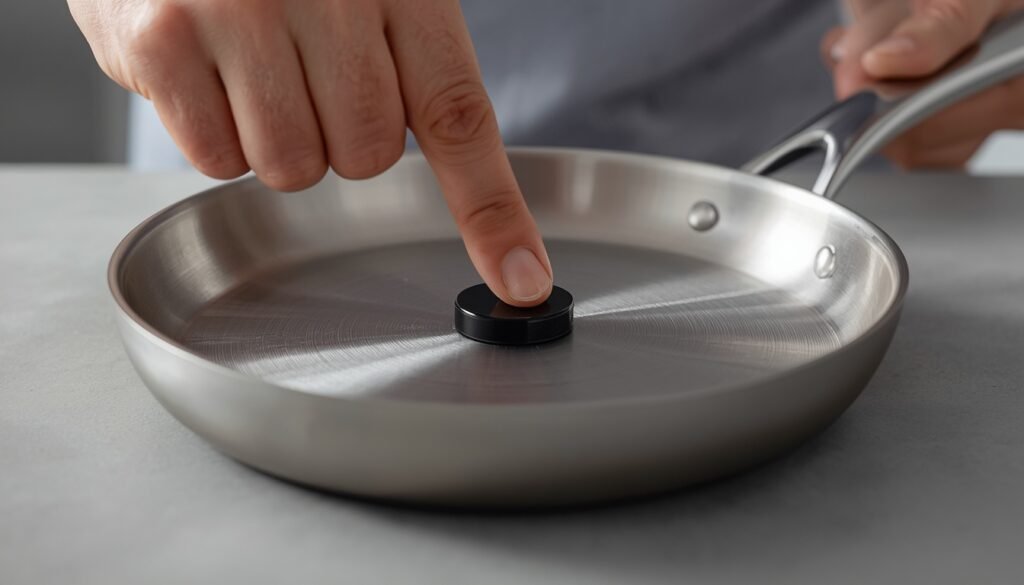
How do you know if cookware is induction compatible? Place a magnet against the bottom of the pan. If it sticks firmly, the cookware is induction compatible and will heat on an induction cooktop. If the magnet slides off, the pan won’t work. Cast iron, stainless steel, and carbon steel usually pass; aluminum and glass usually fail.
So before you dismiss this as an upsell, go try the magnet test at home — it’s the same quick check ENERGY STAR recommends. A lot of people are surprised by what fails. “Induction-compatible” isn’t marketing fluff — it’s a pass-fail test built into the machine.
Is Induction-Compatible Cookware Just a Sales Gimmick?
Now the second objection. “Every listicle just wants me to buy expensive cookware.” Fair. Plenty of them do. But induction compatibility isn’t invented demand. The stove physically requires a magnetic, flat-bottomed pan to work well. That’s not opinion — that’s how the technology heats food.
Here’s the part critics skip. Induction is spreading fast because it’s better, not because someone needs to move inventory. An induction cooktop only heats the pot, not the whole surface around it. Many models shut off on their own when they don’t detect a pan. And they waste less energy — in fact, induction transfers about 85% of its energy into the pan, versus only about a third for gas. Cooler kitchen. Lower bills. A stove that turns itself off. Those are real wins, not sales copy.
Why 2026 Kitchens Switched to Induction Cooking
Let me give you the genuine case — the one people who cook on induction already know.
- Speed. Water boils faster because the heat goes straight into the pan.
- Precision. Temperature changes happen instantly, like a gas flame but sharper.
- Efficiency. Almost no heat escapes into the air around the pot.
- Safety. The glass surface stays much cooler than a burner or flame.
- Cleanup. Spills don’t bake onto a hot coil. You wipe the flat top and move on.
But every one of these wins depends on one thing. Your pan. A warped or non-magnetic pan cancels out all of it. So the cookware isn’t a side detail. On an induction cooktop, the pan is the engine. The stove is only as good as what sits on it.
The Best Induction Cookware Sets of 2026, Ranked
Enough theory. You want names. These are the sets that keep winning real 2026 testing, sorted so you can find your lane fast. And these picks lean on independent lab testing — boil times, heat distribution, and durability — not brand claims. I’ll be honest about trade-offs. No pretending one pan rules them all.
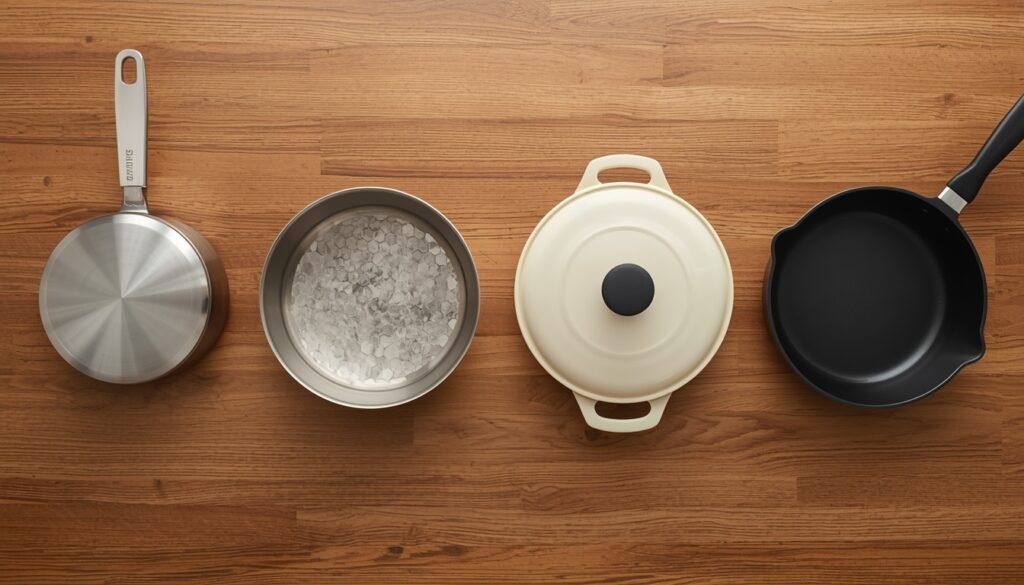
Best Overall: Stainless Steel Induction Cookware
If you want one set to do everything, start here. The best overall pick is the All-Clad D3 Stainless 10-Piece set. It has a tri-ply aluminum core that heats fast and evenly, a tough stainless surface, full induction compatibility, and it’s oven-safe up to 600°F, according to CookwareGrid’s testing. Stainless steel induction cookware like this is built to last for decades. The catch is price: the All-Clad D3 runs about $799.95, per Reviewed.
Best Hybrid Induction Cookware Set
Want stainless durability with a nonstick feel? Hybrid sets try to give you both. The HexClad Hybrid 12-piece set is a top hybrid pick, pairing stainless steel peaks with a nonstick surface, per Reviewed. It’s a smart middle ground for people who hate eggs sticking but still want to sear.
Best Non-Toxic Ceramic Induction Cookware
If “non-toxic” is your top priority, ceramic-coated sets lead here. The Caraway 12-Piece Ceramic set is a top overall pick for 2026, with a magnetic stainless base, matching lids, and included storage — and it runs about $445, per Kitchpulse. Ceramic is lighter and easy to clean. The honest downside? Ceramic-coated cookware wears out faster than stainless.
The Best Budget Induction Cookware Under $200
Here’s where skeptics dig in hardest. They assume good induction cookware means dropping $800. That’s just not true anymore. Budget sets have gotten genuinely good.
- The Calphalon Classic Stainless Steel set is a strong budget pick at about $199.99.
- The Tramontina 10-Piece Stainless Steel set is a great-value option with three-layer construction for even heating.
- The Cuisinart MCP-12N 12-piece set delivers strong performance for the price, per Reviewed.
And these aren’t just cheap — they perform. In lab testing, the Tramontina stockpot was the fastest of the group to boil water. So the “premium gatekeeping” argument falls apart. Budget sets start around $200, mid-range sets run $350 to $450, and most home cooks are well served in the $200 to $450 range. You don’t need to overspend. You just need the right base and honest construction.
Best Splurge Induction Cookware: Cast Iron and Titanium
Maybe money isn’t the issue. Maybe you want an heirloom. Cast iron is a natural fit for an induction cooktop — it’s magnetic by default and holds heat beautifully. The Staub Cast Iron 4-Piece Stackable set is a top splurge pick at about $599.95.
Want something more premium and modern? The Hestan NanoBond Titanium set is a strong upgrade. And for maximum base stability and a quieter, premium feel, the Demeyere Industry 5 is another top choice, per Reviewed. These cost more. But you buy them once.
How to Buy Induction Cookware Without Wasting Money
Now the practical part. Follow these steps and you won’t waste a cent.
- Do the magnet test. If a magnet grips the base firmly, you’re good. If it slides off, skip it.
- Demand a flat base. Induction needs full, even contact. A warped bottom heats poorly and wastes energy.
- Look for a fully magnetic exterior. Some pans only have a partial disc. You want even coverage.
- Check the core. A tri-ply build with an aluminum core spreads heat evenly and responds fast.
- Match your pan size to your cooktop zone. A tiny pan on a big zone wastes heat and money.
Why does this matter so much on induction? Because the stove is less forgiving than gas. A gas flame can still heat a slightly warped pan. An induction cooktop can’t hide poor magnetic response or a bad base. That’s not a flaw. It’s the trade for all that speed and control. The stove rewards good cookware and punishes bad cookware. Simple as that.
Which Induction Cookware Material Is Best for You?
Still torn? Let me make it easy. Here’s the quick decision guide.
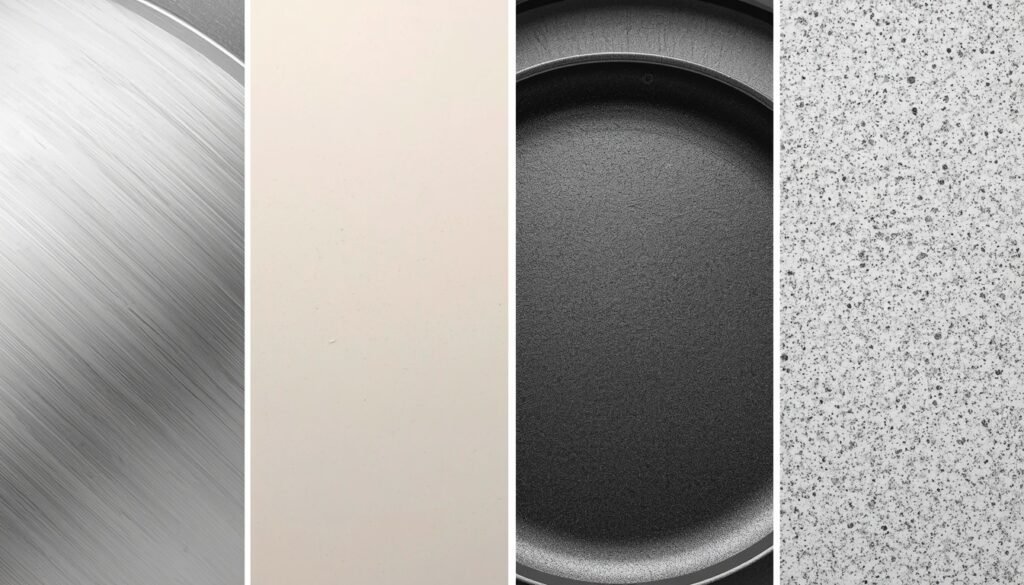
- Want it to last forever? Go stainless steel or uncoated cast iron.
- Want easy cleanup and low weight? Go ceramic-coated — and accept it won’t last as long.
- Want maximum heat retention? Go cast iron.
- Want the best of both worlds? Go hybrid.
In 2026, induction cookware comes in a lot of material combinations. Stainless steel with a ceramic coating balances durability and easy cleanup. Bare stainless steel lasts the longest. There’s no single “right” answer — only the right answer for how you cook.
One money tip most guides bury: high-quality induction sets sometimes go on sale for up to 45% off. Time your purchase and you can save real cash.
Induction Cookware: The Bottom Line
Don’t let a shiny new stove turn your favorite pans into paperweights. The right induction cookware isn’t about spending the most — it’s about a magnetic base, a flat bottom, and honest construction. Everything past that is just preference and budget. Your old pans might fail. The good sets aren’t all $800. And the “best of 2026” hype actually points to real, tested winners.
So stop reading and go grab a magnet. Test every pan in your kitchen right now. The ones that grip, you keep. The ones that slide off just told you exactly what to shop for.