The Best Cookware Brands for Budget-Conscious Buyers in 2026
If you’ve priced out a “professional-grade” cookware set recently, you already know the sticker shock. A single All-Clad Dutch oven can cost more than an entire 10-piece set from a budget brand — and in a lot of cases, the cheaper pan will cook your dinner just as evenly. The hard part is knowing which cheaper brand actually holds up and which one warps, chips, or loses its nonstick coating in six months.
This guide breaks down the top cookware brands 2026 buyers are actually choosing when they want reliable performance without a four-figure kitchen bill. It’s built from lab and hands-on test results across nonstick, stainless steel, and cast iron — not marketing copy. By the end, you’ll know exactly which two or three pieces to buy first, and which brands are worth skipping entirely.
How We’re Evaluating These Brands
Not every “best of” list is built the same way, so here’s the filter used for every recommendation below:
- Durability — does the coating, seasoning, or finish hold up after regular use, not just the first month
- Price per piece — what you’d actually pay if you bought pieces individually, since most beginners don’t need a full set
- Ease of care — dishwasher safety, seasoning maintenance, and how forgiving the material is for a first-time cook
- Real cooking performance — even heating, food release, and searing ability based on independent test results, not brand claims
One thing worth saying upfront: brand name is the wrong first filter. A first kitchen doesn’t need a matching 10-piece set — it needs two or three pans that do specific jobs well. Keep that in mind as you read through the categories below.
Best Overall Budget Brand: Tramontina
If you buy one brand name to trust on a budget, make it Tramontina. Independent testing has found that Tramontina’s cookware sets cost less than a single Dutch oven from a premium brand like Le Creuset, while still performing well across searing, simmering, and cooking evenness.
The trade-off shows up in the details rather than the daily cooking experience. Tramontina’s enameled cast iron has thicker walls than some competitors (4.4mm), which actually works in its favor for heat retention, but its temperature ceiling is lower — oven-safe to 450°F versus 500°F for some rivals. For anyone browning a roast or baking bread in a Dutch oven, that’s rarely a dealbreaker.
Where Tramontina earns its “best overall” spot is versatility: it makes competent stainless steel, nonstick, and cast iron lines, so you can build a mixed-material starter kitchen from one brand instead of piecing together three.
For a deeper breakdown of full sets, see our guide on what to buy and what to skip.
Best Nonstick Cookware
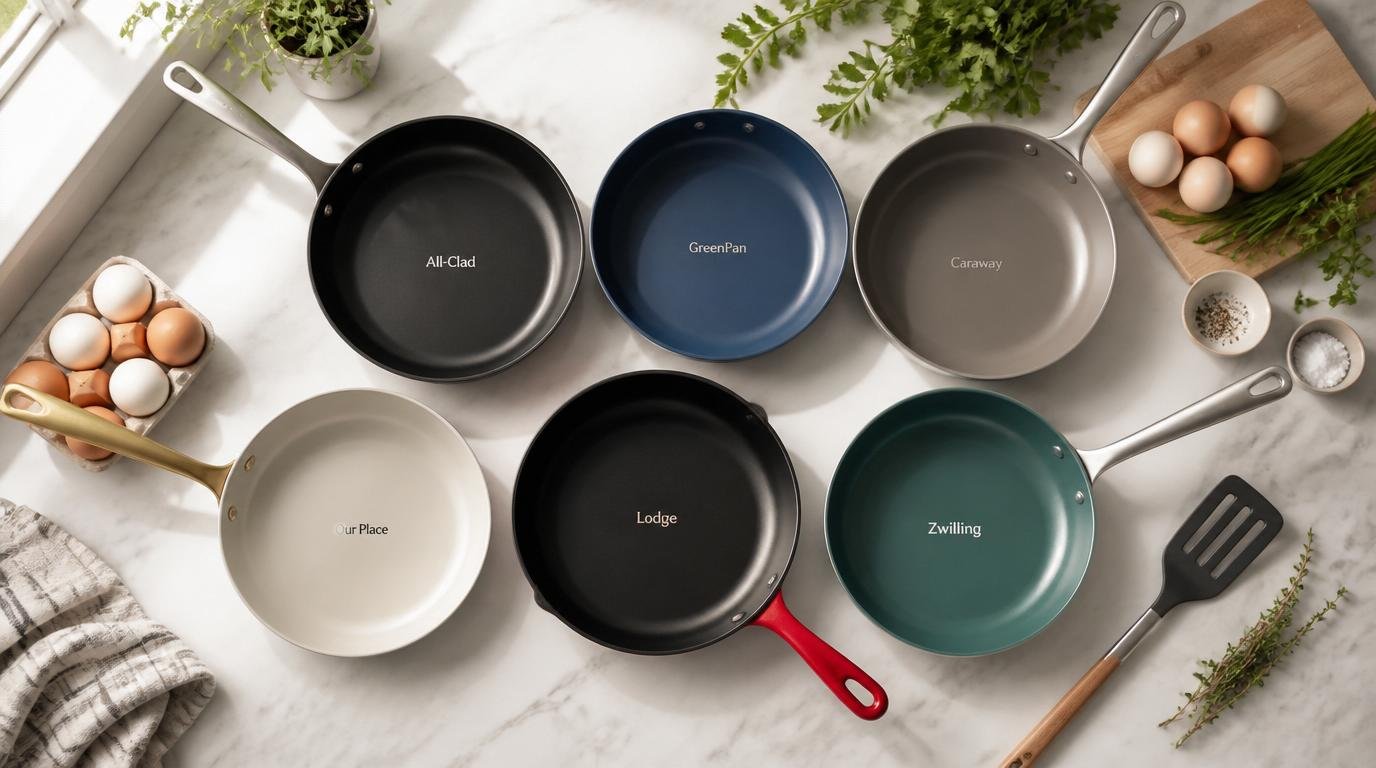
Nonstick is where most first-time buyers start, and it’s also where cheap options fail fastest — coatings scratch, flake, or stop releasing food within a year. Two brands stood out in testing for holding up better than that. For the complete rundown, see our ranked nonstick brands guide.
GreenPan Reserve
GreenPan’s ceramic nonstick line scored top marks across nearly every major cooking test, including an excellent rating for how quickly it heats up. Ceramic coatings are also PTFE-free, which matters if you’re specifically trying to avoid traditional nonstick chemicals. The handles stay cool enough to grab without a towel, which sounds minor until you’re juggling three pans on a stovetop.
Cuisinart Classic Tri-Ply
If you’d rather have stainless-clad construction with a nonstick interior, Cuisinart’s Classic Tri-Ply line tested as the best budget cookware set overall in recent Consumer Reports testing. It won’t match a $300 set piece-for-piece on longevity, but for a first apartment or starter kitchen, it’s hard to beat on price-to-performance.
Best Cast Iron: Lodge vs. Tramontina
Cast iron is the one category where “budget” and “buy it for life” genuinely overlap — a $30 skillet can outlast every nonstick pan you’ll ever own. The two names that come up constantly are Lodge and Tramontina, and the honest answer is that both are excellent, with small differences that matter depending on how you cook.
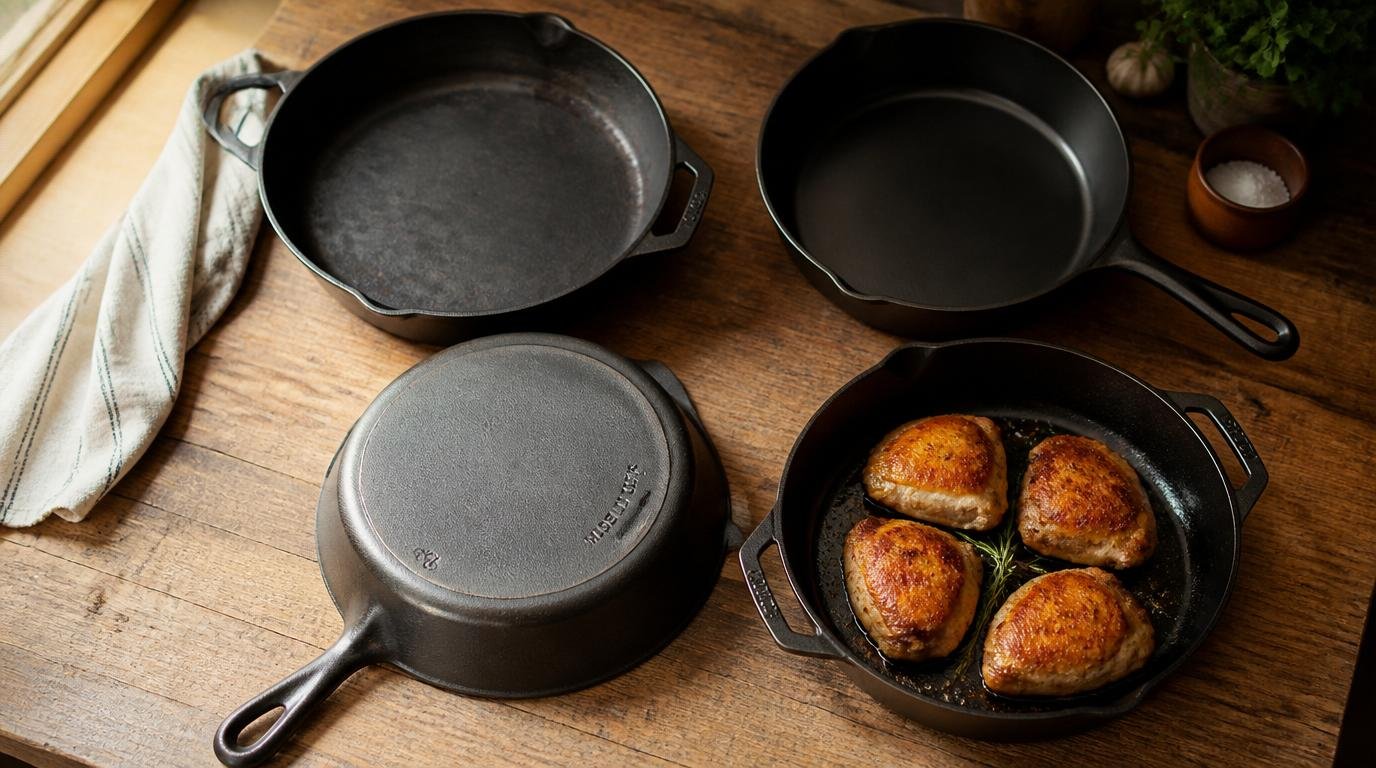
Lodge is the more affordable entry point for bare seasoned cast iron, with a 10-inch skillet often running under $30. Its enameled cast iron is priced similarly to Tramontina’s, but Lodge’s enameled ovenware is rated safe up to 500°F, compared to Tramontina’s 450°F ceiling — useful if you sear at high heat before finishing a dish in the oven.
Tramontina counters with thicker enamel walls (4.4mm vs. Lodge’s 3.18mm), which means slightly better heat retention for long braises. In practical terms: pick Lodge if you want the classic seasoned skillet experience and higher oven temperatures; pick Tramontina if you’re buying an enameled Dutch oven and want maximum heat retention for soups and braises.
For more options, check our affordable cast iron picks, and once you’ve bought one, don’t skip seasoning your cast iron properly.
Best Stainless Steel on a Budget
Stainless steel is the workhorse material for anyone who wants a pan that will never need replacing, but the premium brands (All-Clad, Demeyere) charge accordingly. Two budget alternatives closed that gap in recent testing.
OXO’s Tri-Ply Mira Series excelled at cooking evenness, speed of heating, and simmering sauce without scorching — the exact tasks a stainless pan needs to nail. A more surprising entry was a cost-conscious 11-piece stainless set that aced tests for cooking evenness, sauce simmering, and food release while staying easy to clean, proving that solid tri-ply construction doesn’t require a designer name attached to it.
The lesson here: look for “tri-ply” or “5-ply” in the product description regardless of brand. That construction detail — not the logo — is what determines whether a stainless pan heats evenly or develops hot spots that scorch your food. See our full stainless steel brand guide for more options.
When It’s Worth Spending More (and What to Skip)
Budget brands cover most of what a home cook needs, but there are two places where spending more genuinely pays off. All-Clad pioneered bonded stainless steel cookware over 50 years ago and still leads on longevity — expensive, but built to be the last stainless pan you ever buy. Le Creuset’s enameled cast iron has been in production since 1925, and its enamel finish resists staining and chipping better than most budget alternatives over a 10+ year timeline.
If you’re going to splurge on one piece, make it a stainless steel skillet or sauté pan from one of these two brands, since that’s the piece that gets the most daily wear. Everything else on this list can reasonably be a budget pick.
On the flip side, be cautious with ultra-cheap nonstick sets sold primarily on price rather than test performance — thin-gauge aluminum bases and unrated coatings are the most common source of warping and flaking within the first year. If a nonstick set doesn’t show up in independent testing anywhere, treat that as a signal, not a coincidence.
Read our hands-on All-Clad D5 review or our Le Creuset vs. Staub comparison before you buy.
Build a Kitchen Piece by Piece, Not a Whole Set
Here’s the advice most “top cookware brands” articles skip: you probably don’t need a set at all. Boxed sets bundle pieces you’ll rarely use (a second saucepan, a steamer insert) to hit a lower per-piece price, which means you’re often paying for volume, not value.
For a genuine first kitchen, start with three pieces: one 10-12 inch nonstick or cast iron skillet, one stainless steel sauté pan with a lid, and one stockpot. That combination covers eggs, searing, sauces, pasta, and soup — the overwhelming majority of what a home cook actually makes in a given week.
Pick one skillet from the nonstick or cast iron section above, one stainless piece from the stainless steel section, and you’ve built a functional kitchen for less than the cost of most boxed sets — without a drawer full of pans you’ll never touch. Start with those three pieces this week, and add specialty pans only once you know what you’re actually missing. Still not sure what to buy first? Our guide on what to buy first breaks it down further.