Last updated: October 24, 2026
Images are AI-generated editorial illustrations, not photographs of product testing.
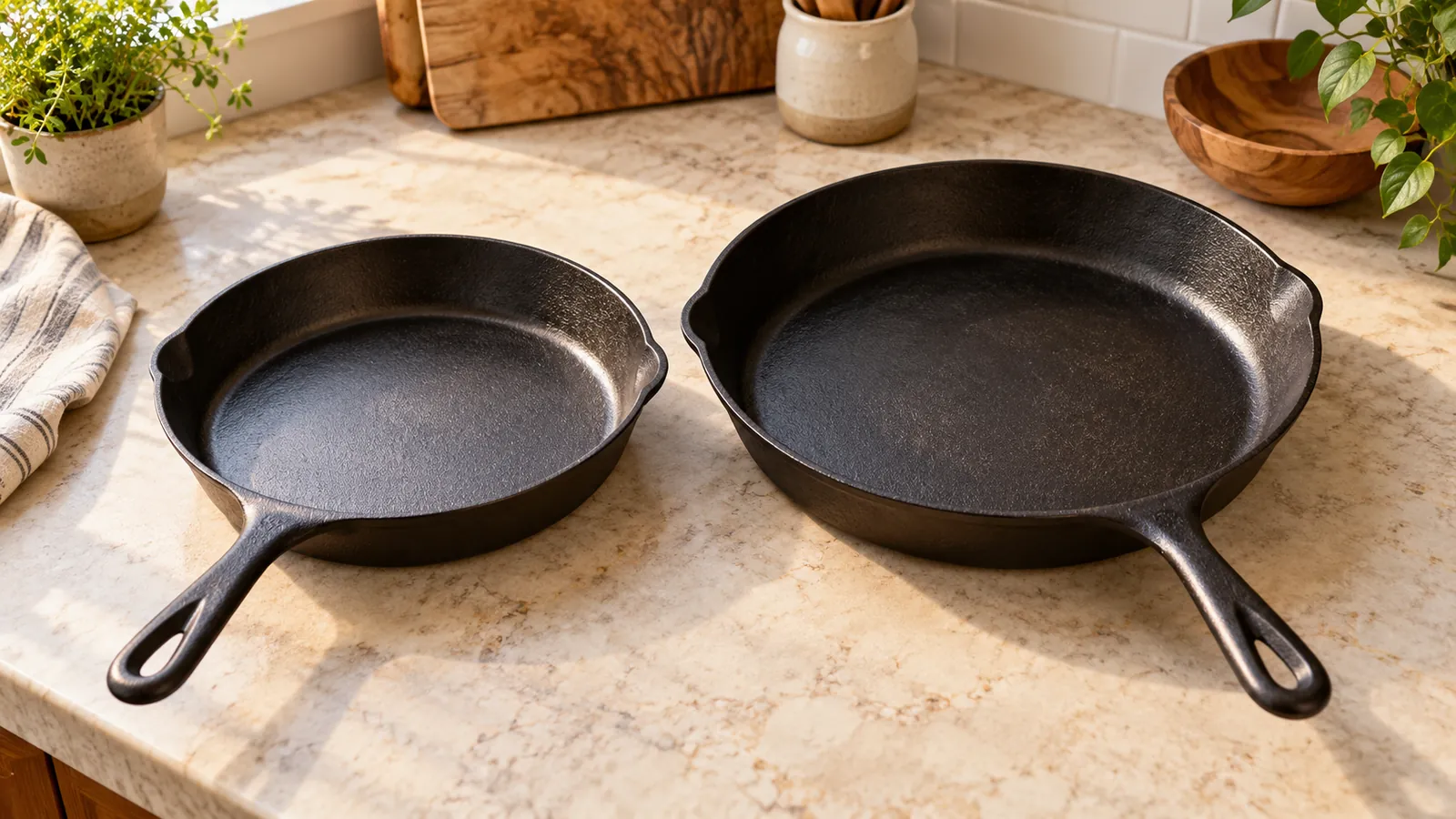
The 10 inch vs 12 inch skillet decision looks simple until you picture dinner. Will two portions fit? Will the bigger pan crowd your stove? Will you actually want to lift it when it is full?
Start with a 10-inch skillet if your usual meals are small and easy handling matters most. Choose a 12-inch skillet if you regularly need more room for browning or cooking several portions together, provided it suits your burner and storage. Neither size wins every kitchen. The useful comparison is cooking space, stove fit, and loaded weight.
Table of Contents
10 inch vs 12 inch skillet: the quick choice
Use this comparison as a starting point, then check the exact model. A size label describes width; it cannot tell you how large your chicken breasts are, how much you eat, or how strong your stove is.
| Your usual situation | Start by considering | Check before buying |
|---|---|---|
| Small breakfasts, sides, or meals for one | 10 inches | Enough flat space for your actual ingredients |
| Meals for two | Either size | Whether you often brown food in batches |
| Several portions cooked together | 12 inches | Burner coverage and comfortable lifting |
| Limited storage or difficulty lifting heavy pans | 10 inches or a lighter model | Weight, handle shape, and cabinet clearance |
| Small portable induction burner | A model that fits its instructions | Magnetic base diameter and allowed pan size |
Household size is a useful clue, but the meal matters more. Two people sharing pasta need a different amount of flat space from two people each eating a large steak. If your current pan regularly forces you to cook the second portion after the first, investigate a larger cooking surface.
Check 1: compare frying pan cooking surface, not just the rim
A skillet’s advertised width generally refers to its top diameter. The flat floor inside is smaller because the walls take up space. A wide flare can make a pan look generous while leaving less room where the food actually rests.
Ask for three separate measurements: top diameter, flat interior cooking diameter, and underside base diameter. The first identifies the size class, the second helps plan food placement, and the third helps assess burner fit. Also note the full length with handles.
Made In’s frying pan size guide illustrates the distinction with published Stainless Clad dimensions: its nominal 10-inch pan has a 7.5-inch cooking diameter, while its 12-inch has a 9.5-inch cooking diameter. Those are examples from one range, not measurements for every skillet.
How much extra space do two inches provide?
For a circular cooking floor, area equals π × radius squared. Using those 7.5-inch and 9.5-inch diameters gives approximately 44.2 and 70.9 square inches. The larger circle has about 60% more area. This is a calculation from the published diameters, not a cooking test.
It also explains why percentages differ between comparisons. Using the advertised 10-inch and 12-inch rims gives 44% more area, but that is rim-circle area. It does not establish how much food fits on the floor. Only compare measurements describing the same part of both pans.
Make a simple paper comparison
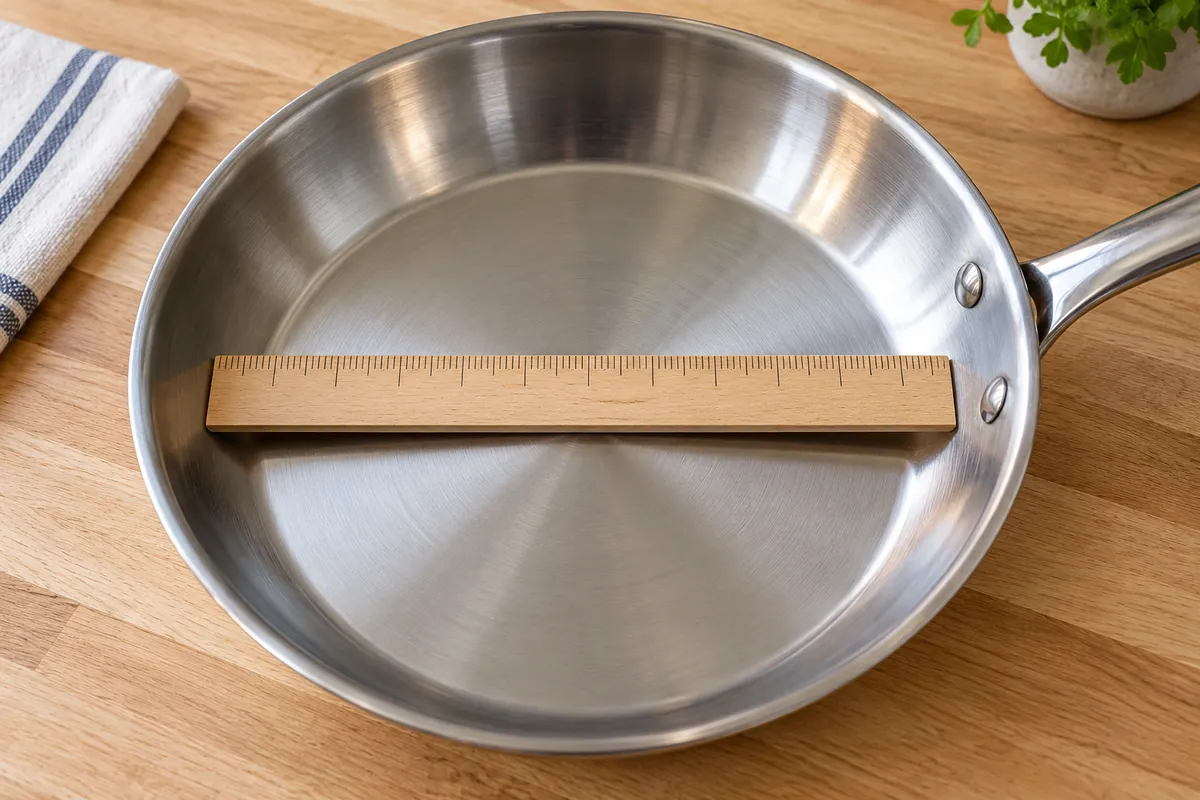
Draw the two candidate cooking diameters on separate sheets of paper. Use clean plates or paper shapes to represent the foods you commonly cook. Keep raw ingredients off the paper and away from the countertop.
This is a layout exercise, not a heat test. It helps answer whether two sandwiches fit side by side and whether there is room to use a spatula. It cannot predict browning, cooking time, or the exact number of servings a pan will produce.
Check 2: choose for your normal dinner
Write down three meals you cook often. For each one, decide whether you need ingredients spread across the floor or whether they can share space in a sauce. That is more useful than buying for a dinner party you host once a year.
When a 10-inch skillet makes sense
Consider the smaller pan for a personal breakfast, a small omelet, a side dish, or a modest portion of leftovers. It may also be enough for dinner for two when the skillet handles only one part of the meal and vegetables or starch cook elsewhere.
Be honest about your tolerance for batches. Cooking two rounds is reasonable when it happens occasionally. It becomes a daily inconvenience when one person is always waiting. Before replacing a pan, identify whether the problem is insufficient floor space or trying to cook the whole meal in one vessel.
When a 12-inch skillet earns the space
Consider the larger size when your regular meals need ingredients arranged side by side. It is a sensible candidate for several portions of protein, a larger vegetable sauté, or a shared skillet meal. Check the actual cooking diameter before assuming it will accommodate a specific number of pieces.
A large pan does not automatically make a large recipe work. Sauce volume, wall height, and room to stir matter too. For a saucy meal that nearly reaches the rim, you may need a deeper vessel rather than another two inches of width.
Manufacturer advice supports using meal size as a starting point: All-Clad’s frying pan guide positions 10-inch pans for one or two people and 12-inch pans for larger quantities. Treat those as broad suggestions rather than portion guarantees.
For a visual comparison, Prudent Reviews’ independent video shows common skillet sizes and explains why rim size differs from usable cooking space.
Two households, two sensible choices
Imagine a couple who cook a shared omelet on weekdays and prepare vegetables in a separate saucepan. Their existing skillet rarely feels crowded, but its handle catches on the drawer. For them, checking full length and choosing a comfortable 10-inch model may solve more than buying extra cooking space.
Now imagine someone who lives alone but regularly cooks several portions to keep for later meals. They dislike cooking in rounds and have already checked that their stove and cabinet suit a larger pan. A 12-inch skillet may fit their routine better despite the smaller household.
These are decision examples, not performance claims about particular pans. Use the same questions on your own routine: what is frustrating you now, which dimension would fix it, and what new inconvenience would the larger model introduce? Buy the size that solves the recurring problem.
Check 3: match skillet base size to your burner
A 12-inch rim does not require a 12-inch heating element. The relevant comparison is the pan’s underside and your appliance’s instructions. Find the cooktop model number, then check its guidance on minimum and maximum cookware dimensions.
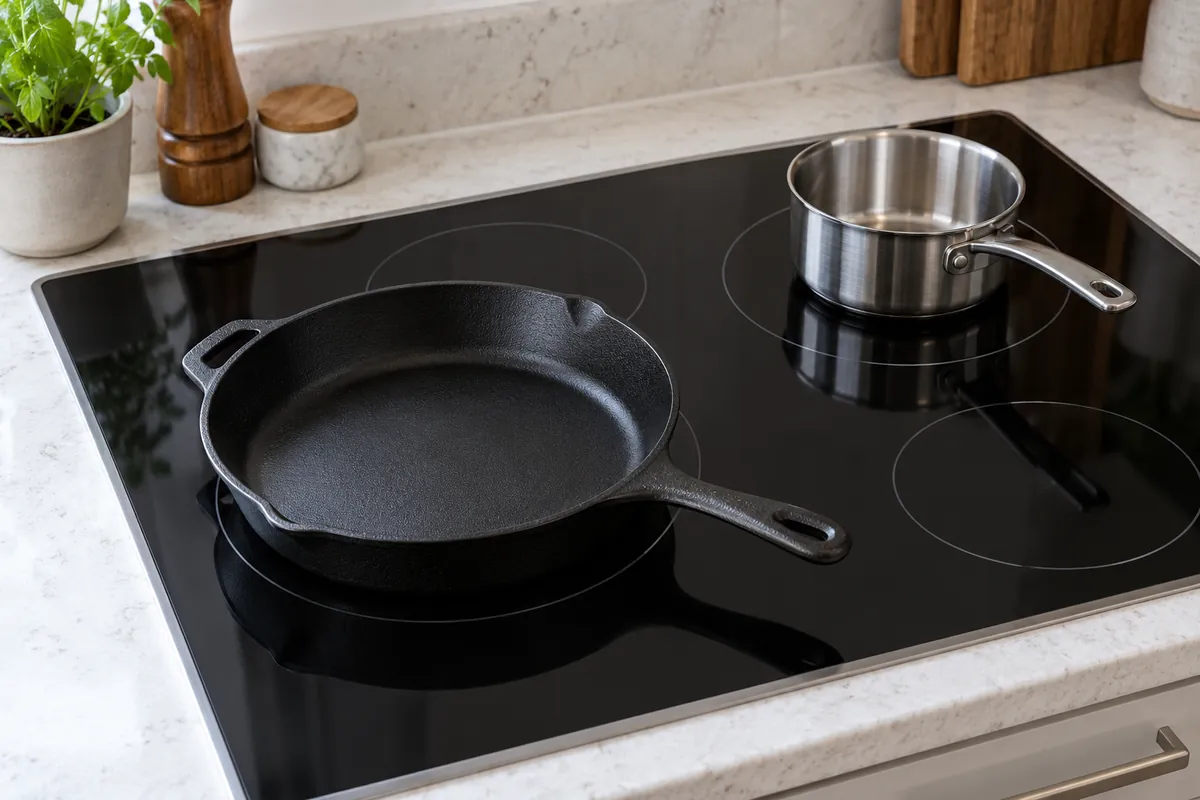
For induction, GE Appliances’ cookware size guidance says to measure the flat magnetic area of the bottom. It explains that an undersized pan may not activate an element and that a larger pan receives direct heating only above the cooking circle. Your own model’s manual takes priority.
Avoid a blanket rule that every 12-inch skillet is unsuitable for a small stove. Equally, do not assume that detecting the pan proves the entire cooking surface heats evenly. Compatibility and useful heating coverage are different checks.
Check the whole stovetop arrangement
With the stove off and cool, picture the candidate pan beside your most-used saucepan. Will the handles collide? Can you reach the controls? Is there room to lift either vessel without moving the other? Include the helper handle in the footprint.
For gas or electric stoves, use the same manual-first approach. Do not import an induction rule or a manufacturer’s suggested burner size into a different appliance. If the larger skillet makes your normal two-pan dinner awkward, the smaller one may be the more useful purchase.
Check 4: compare 10 inch vs 12 inch cast iron skillet weight
Size becomes especially noticeable in cast iron. Lodge’s published Classic skillet specifications list the 10.25-inch L8SK3 at 5.66 pounds and the 12-inch L10SK3 at 7.69 pounds. That is about two pounds of extra empty weight before dinner goes in.
These figures come from the manufacturer’s 10.25-inch Classic listing and 12-inch Classic listing, checked October 24, 2026. Other collections and materials can differ substantially.
Think through the full handling routine
Consider lifting from the stove, transferring food, washing, drying, and putting the skillet away. A comfortable lift in a shop does not tell you how pleasant repeated handling will be. Look at the helper handle, your grip, and the route between stove and sink.
If heavy lifting is a concern, compare actual product weights before choosing a diameter. A smaller cast iron skillet is not automatically lighter than a larger pan made from another material. Choose the material and size together.
Our cast iron cookware guide covers the material choice in more detail. If you are considering a different construction, the stainless steel cookware guide is a useful next comparison.
Check 5: measure storage, oven space, and lids
Measure the shelf or drawer where the skillet will actually live. Use the manufacturer’s full outside dimensions, including both handles. A drawer that accommodates the bowl of a pan may still be too short for its handle.
Check access as well as space. If retrieving the 12-inch skillet requires moving three pots every night, you may keep reaching for the smaller one. Before ordering, clear a place for the candidate and confirm that it can slide in and out comfortably.
Do not assume your old lid will fit
A nominally 10-inch lid is not a promise of compatibility with every 10-inch skillet. Check the manufacturer’s fit information or the exact dimensions where the lid meets the rim. Look for whether a lid is included, sold separately, or unavailable for that model.
If you plan to finish food in the oven, verify the pan, handle, and lid instructions individually. Also check full handle-to-handle clearance. A pan that works on the stovetop still needs room to enter the oven and sit on the rack without interference.
For induction-specific shopping, see our guide to induction-compatible cookware. If a set is tempting you mainly because it includes both sizes, use our advice on choosing a cookware set around the pieces you need before paying for extra vessels.
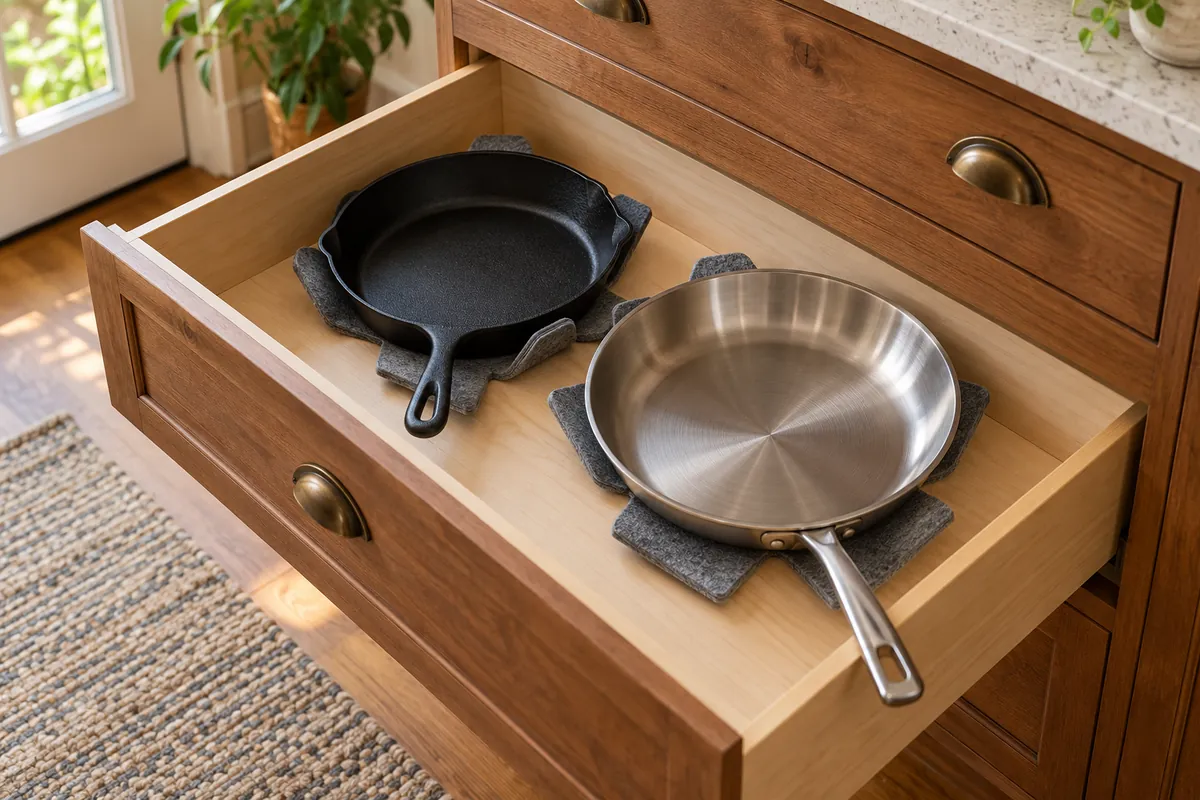
Two cast iron options to compare after choosing your size
This article contains affiliate links. As an Amazon Associate I earn from qualifying purchases.
These are two sizes of the same basic cookware type, offered as practical starting points. They are not a claim that cast iron suits everyone, and this guide does not report hands-on testing. Choose one if it fits your needs; there is no reason to buy both automatically.
Lodge Classic 10.25-inch skillet
This smaller option suits a reader who wants a cast iron skillet for modest meals and accepts its handling weight and care routine. The quarter-inch in its name matters: it is a specific model, not a perfectly 10-inch example.
Its main buying consideration is capacity. Compare your usual food layout with the available cooking floor before relying on it as your only skillet. It also remains a substantial pan to lift.
Lodge Classic 12-inch skillet
This larger option suits a reader who wants more room for shared meals and has checked burner fit, storage, and comfortable handling. It is worth considering when the smaller candidate would regularly mean cooking dinner in separate rounds.
The trade-off is the additional bulk and empty weight. Check the selected size and package on the listing; accessories and bundles can vary. Do not buy the larger version simply because its name sounds more versatile.
Make the decision before opening another product tab
Write down your three regular meals, the cooking diameter you need, the burner guidance, and the weight you can handle comfortably. Then compare only models that clear those requirements. This prevents a sale or an impressive product photograph from deciding the size for you.
Choose 10 inches when compact meals and easy everyday handling dominate. Choose 12 inches when the extra cooking floor solves a frequent problem and the pan fits your kitchen. Keep the pan you already own if it meets those needs. Your next step is a tape measure and your cooktop manual, followed by one short product comparison.
Skillet size FAQ
Is a 12 inch skillet too big?
It can be too big for your storage, comfortable lifting, or appliance guidance. It may be useful for larger meals even if you cook for only two. Check base diameter and full handle length before deciding from the rim size alone.
Is a 10 inch skillet big enough?
Often, for small meals, sides, and some dinners for two. The deciding factor is whether your ingredients fit the flat floor in the arrangement your recipe needs. If you repeatedly cook in batches you dislike, compare a larger model.
What is the best size for a skillet?
The best size fits your usual meal, burner, grip, and storage. Start by comparing 10 and 12 inches, but use the exact model’s cooking diameter and weight. Serving estimates cannot account for every recipe or portion.
What is a 10 inch frying pan good for?
Consider it for smaller breakfasts, omelets, sides, and modest portions of leftovers. Those are suggested uses, not capacity guarantees. Wall shape and your ingredient sizes determine what fits; the material and its instructions determine appropriate cooking methods.
Should I choose a 10 inch or 12 inch cast iron skillet?
Choose the smaller candidate if it handles your regular meals and lifting matters most. Consider the larger one when extra cooking space will help often. Compare published weights and helper handles as carefully as diameter, especially if the pan will be stored overhead.
Is a 10 inch pan big enough for two people?
It may be, especially if it cooks one part of dinner rather than the whole meal. Compare the flat cooking floor with two of your normal portions. Two large pieces of meat can need a different layout from a shared omelet or side dish.
Leave a Reply