
Learning how to preheat stainless steel pans is key for great sears and browning. It helps food not stick and cooks evenly.
Preheating stainless cookware is a basic step in cooking with stainless steel pans. It means heating the pan to the right temperature before adding food.
Key Takeaways
- Understanding the science behind preheating is essential.
- Choosing the right burner size is key for even heating.
- Testing the temperature ensures the pan is ready for cooking.
- Mastering preheating techniques leads to professional-quality results.
- Preheating prevents food from sticking to the pan.
Why Proper Preheating Matters for Stainless Steel Cookware
Stainless steel cookware needs careful preheating for even heat and to prevent sticking. This step is key for a perfect sear on meats and consistent cooking.
The Science Behind Preheating Stainless Steel
Stainless steel cookware is durable and resistant to corrosion. But, it doesn’t conduct heat well on its own. It often has layers, like a heat-conductive core of aluminum or copper, between stainless steel. Preheating helps distribute heat evenly across these layers.
Benefits of Correct Preheating
Correct preheating brings many advantages, including:
- Prevents food from sticking to the pan
- Promotes even cooking
- Aids in achieving the perfect sear on meats
- Enhances the overall cooking experience
By preheating your stainless steel cookware right, you can greatly improve your cooking.
What Happens When You Skip Preheating
Skipping preheating can cause several problems, like uneven cooking and food sticking. Adding food to a cold pan can lower its temperature, leading to uneven cooking.
| Issue | Description | Impact on Cooking |
|---|---|---|
| Uneven Cooking | Food cooks at different rates due to uneven heat distribution | Poor texture and flavor |
| Food Sticking | Food adheres to the cold pan surface | Difficult to cook and clean |
| Poor Cooking Results | Inconsistent cooking temperatures affect the final dish | Less satisfying meal |
Proper preheating of stainless steel cookware is essential for great cooking. It’s not just a good practice; it’s a must for top-notch results. By understanding preheating’s science, benefits, and the risks of skipping it, you can take your cooking to the next level.
Understanding Your Stainless Steel Cookware
To get the most out of your stainless steel cookware, it’s key to know how it’s made. This knowledge helps with preheating. Stainless steel cookware comes in different types, each affecting how it heats up.
Construction and Heat Distribution
Stainless steel cookware is built by layering materials for better heat and durability. Multi-ply construction is common, where metals are bonded together. This method greatly influences heat distribution.
Experts say, “The key to effective preheating is knowing your cookware’s construction and heat distribution.” (
This is vital for even cooking.
Ply Layers and Their Impact on Preheating
The number of layers in your cookware affects preheating. More layers mean better heat spread. Here’s a look at common layer setups:
| Ply Configuration | Heat Distribution | Preheating Performance |
|---|---|---|
| Single Ply | Poor | Slow and uneven |
| Tri-Ply | Good | Moderate |
| Multi-Ply (5 or more layers) | Excellent | Fast and even |
Difference Between Fully Clad and Disc Bottom Pans
Fully clad and disc bottom pans are two main types of stainless steel cookware. Fully clad pans have layers for great heat spread. Disc bottom pans have a single layer with a heat-conductive disc at the bottom.
Choosing between these pans depends on your cooking style. Fully clad pans are best for delicate cooking due to their heat distribution. Disc bottom pans are more affordable and work well for many tasks.
Knowing these differences helps pick the right cookware and preheat it right. By choosing the right cookware and preheating it well, you’ll get the best cooking results.
Preparing Your Pan Before Preheating
Getting your cookware ready is key to preheating. Before you start, make sure your stainless steel cookware is ready for the process.
Cleaning and Drying Your Cookware
Start by cleaning your stainless steel cookware well. Any leftover food or dirt can mess up preheating. Use a mild cleanser and a soft sponge to clean it.
After cleaning, dry the cookware completely with a towel. This is important because moisture can cause uneven heating or warping.
Choosing the Right Burner Size
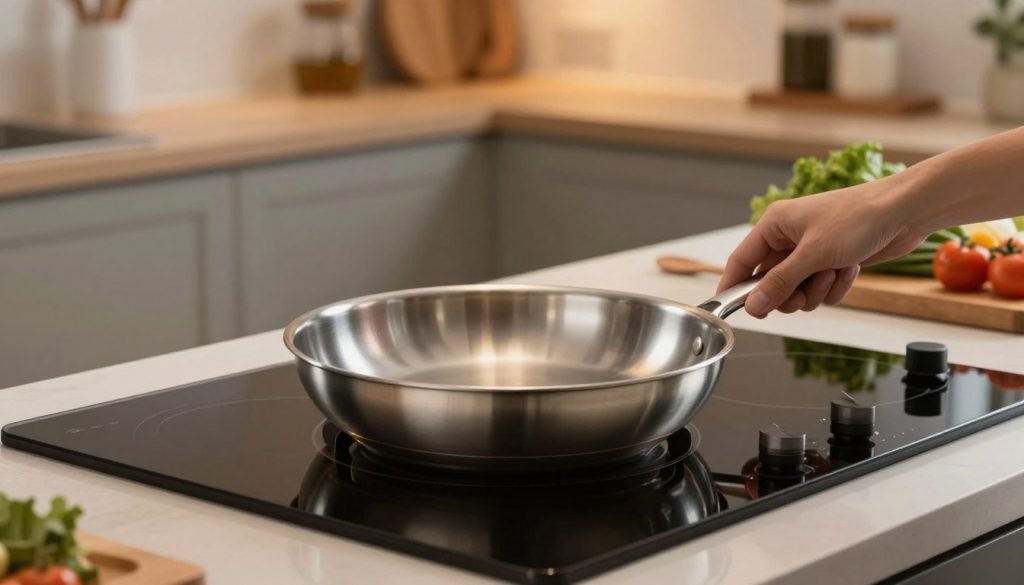
Picking the right burner size is critical for safe and efficient preheating. A burner that’s too small won’t heat evenly. One that’s too big can damage the bottom of the pan.
Make sure the burner size fits your pan’s bottom for even heat.
Setting Up Your Cooking Station
Setting up your cooking station before preheating is important. Have all your cooking tools and ingredients ready. This makes cooking smoother and keeps you safe while preheating.
By following these steps, you’ll preheat your stainless steel cookware safely and efficiently. This prepares you for a great cooking experience.
How to Preheat Stainless Cookware Correctly: Step-by-Step Method
To cook well with stainless steel pans, preheating is key. It makes sure your cookware is ready for cooking. This helps in even heat distribution and prevents food from sticking.
Step 1: Place Your Pan on the Burner
Start by placing your pan on the burner. Make sure it’s centered and stable for even heating.
Step 2: Set the Heat to Medium
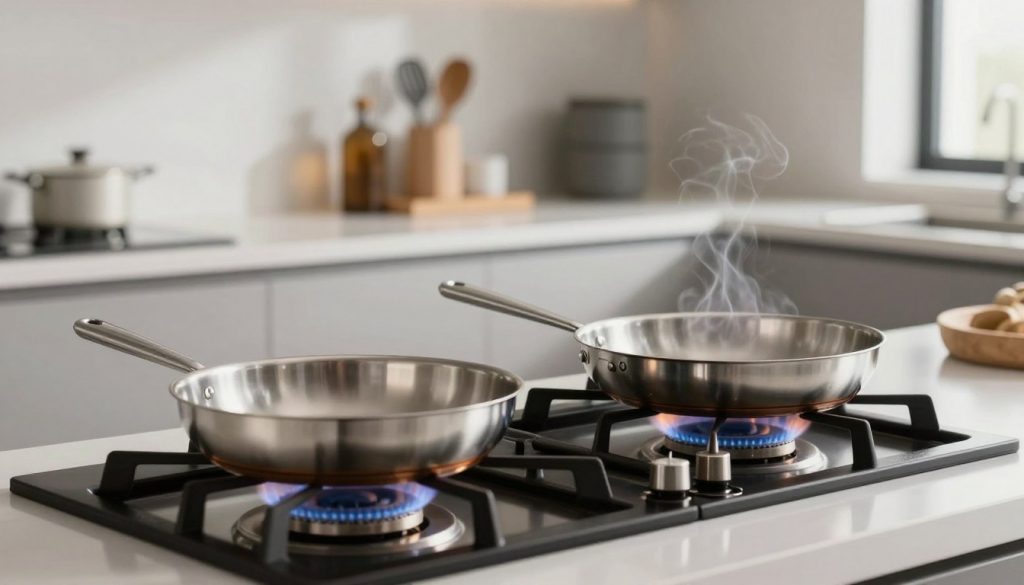
Next, set the heat to medium. High heat can cause uneven heating and damage the pan. Medium heat helps in gradual and even warming.
Step 3: Allow Adequate Heating Time
Let the pan heat for a good amount of time. The time needed depends on the pan’s size and thickness. Usually, it takes 5-10 minutes for full preheating.
Step 4: Test the Temperature
Testing the pan’s temperature is important. You can use the water droplet test. Sprinkle a few drops of water on the pan. If they sizzle and evaporate fast, the pan is ready.
| Preheating Step | Description | Time/Temperature Indicator |
|---|---|---|
| Step 1: Place Pan on Burner | Center the pan on the burner | Immediate |
| Step 2: Set Heat to Medium | Adjust heat for even warming | Medium heat setting |
| Step 3: Allow Heating Time | Let the pan heat gradually | 5-10 minutes |
| Step 4: Test Temperature | Use the water droplet test | Sizzling and quick evaporation |
By following these steps, you can preheat your stainless steel cookware correctly. This leads to better cooking results and a longer life for your pans.
Temperature Testing Methods for Stainless Steel Pans
Preheating stainless steel cookware needs precision. Knowing the right temperature testing methods is key. It’s important for techniques like searing and sautéing.
The Water Droplet Test (Mercury Ball Test)
The Water Droplet Test, or Mercury Ball Test, is simple yet effective. To do it, flick a few drops of water onto the pan. If they bead up and move before evaporating, your pan is ready.
This means the pan has reached the Leidenfrost temperature. Water droplets are suspended on vapor, showing the pan is hot enough.
Key characteristics of the Water Droplet Test:
- Water droplets bead up and move quickly across the pan
- Droplets evaporate rapidly
- Pan is ready when droplets “dance” on the surface
The Hover Hand Method
The Hover Hand Method is another way to check the pan’s temperature. Hold your hand a few inches above the pan. If you feel a gentle warmth, the pan is at a moderate temperature.
As the pan gets hotter, you’ll feel more heat. This method uses your sensitivity to heat and gets more accurate with practice.
Using an Infrared Thermometer
An infrared thermometer gives a precise temperature reading. Just point it at the pan’s surface to see the temperature. This method is great for specific cooking techniques.
| Method | Description | Accuracy |
|---|---|---|
| Water Droplet Test | Flick water onto the pan; if it “dances,” the pan is ready | Moderate |
| Hover Hand Method | Hold hand above the pan to gauge heat | Subjective |
| Infrared Thermometer | Provides an exact temperature reading | High |
Visual Cues to Watch For
Experienced cooks use visual cues to check if a pan is preheated right. Look for a shimmer or sheen on the pan as it heats. Also, food should sizzle right away if the pan is ready.
As noted by culinary experts, “The key to successful cooking lies in the preparation, and preheating your stainless steel pan is a critical step.”
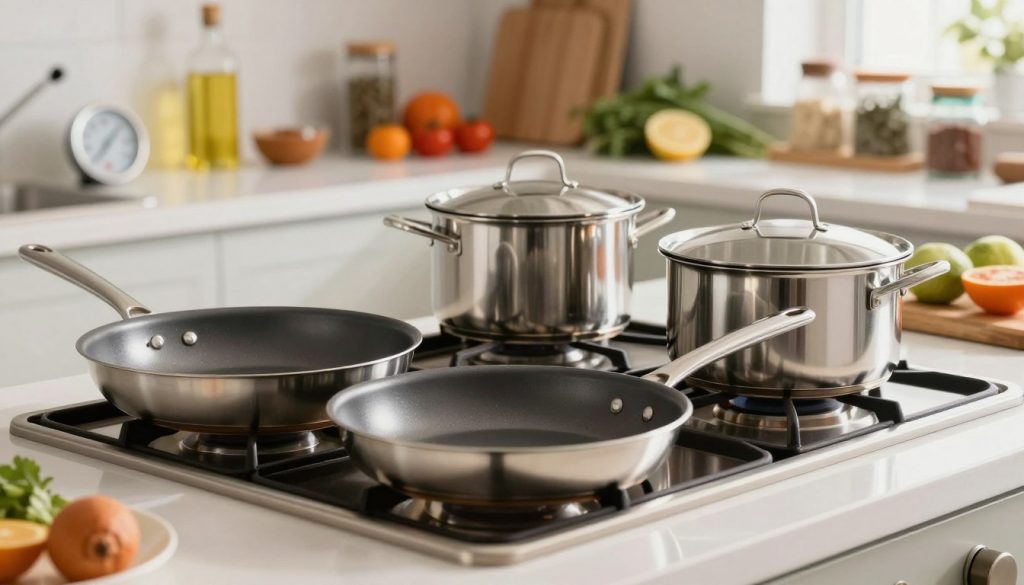
Using these methods, you can preheat your stainless steel pans confidently. They’ll be ready for various cooking tasks.
Common Preheating Mistakes and How to Avoid Them
To get the best cooking results, it’s key to avoid common preheating mistakes. Preheating stainless steel cookware is a critical step. It can greatly impact your cooking quality. By knowing the common mistakes, you can prevent them and make sure your stainless steel pans work their best.
Using Too High Heat Too Quickly
One big mistake is using too high heat too fast. This can warp your stainless steel pan. It leads to uneven heat and might damage your cookware. Start with medium heat and slowly increase it as needed. This helps the pan heat evenly and avoids warping.
Not Allowing Enough Preheating Time
Another mistake is not giving enough preheating time. Preheating is not just about reaching a certain temperature. It’s also about making sure the pan heats evenly. Rushing this can cause hotspots and uneven cooking. Give your pan enough time to heat up fully before adding food.
Adding Oil to a Cold Pan
Adding oil to a cold pan is a mistake that can cause sticking and uneven cooking. When oil is added to a cold pan, it takes time to reach its smoke point. Start by preheating your pan, then add oil and let it heat up together. This creates a smooth, non-stick surface for cooking.
Overcrowding the Pan After Preheating
Overcrowding the pan after preheating is another common mistake. Adding too much food at once can lower the pan’s temperature. This leads to uneven cooking and can cause food to stick. Cook in batches if needed, so each piece of food has enough room to cook evenly.
By avoiding these common preheating mistakes, you can greatly improve your cooking with stainless steel cookware. Remember, the key to successful cooking is not just the food. It’s also how you prepare your cookware.
Preheating Techniques for Different Cooking Methods
Preheating stainless steel cookware changes with each cooking method. Knowing these differences is key to getting the best results in your cooking.
Searing Proteins
For searing proteins, you need a very hot pan. This high heat seals in juices and flavors. “A hot pan is essential for a perfect sear,” say chefs.
To get this hot, preheat your stainless steel pan on medium-high for a few minutes. For more cooking tips, check out top cookware review sites.
Sautéing Vegetables
For sautéing vegetables, medium heat works best. It cooks veggies gently, keeping their color and texture. Preheating the pan ensures even cooking.
Pan Frying
Pan frying uses a bit of oil and medium-high heat. It’s great for cooking many foods, like chicken or doughnuts. Preheat the pan to the perfect frying temperature for a crispy outside and inside.
Deglazing and Sauce Making
For deglazing and sauce making, start by preheating the pan. Use low heat to deglaze, so you don’t burn the browned bits. This step is key to making tasty sauces.
Adjusting your preheating based on the cooking method can greatly improve your dishes. Whether searing, sautéing, frying, or making sauces, the right preheat is essential.
Safety Tips and Best Practices for Preheating Stainless Steel Cookware
Preheating stainless steel cookware safely is key for a great cooking experience. It’s not just about turning on the heat. It’s about doing it right to keep your cookware safe and your kitchen safe too.
Avoiding Warping and Damage
Warping and damage are big concerns when preheating stainless steel pans. These pans are tough but can warp from sudden heat changes. To avoid this, heat them up slowly.
Start with medium heat and let the pan warm up gradually. This even heating reduces warping risks. For more on heating stainless steel pans safely, check out this detailed guide.
Handle Safety During Preheating
Handle safety is very important when preheating. Handles get very hot and can burn you if not careful. Use oven mitts or a towel to handle the pan.
Also, watch the handle’s temperature to avoid accidents. This keeps your cooking safe and enjoyable.
Proper Ventilation and Smoke Point Awareness
Good ventilation is essential when preheating and cooking with stainless steel. Make sure your kitchen is well-ventilated to clear out fumes and smoke. This is important, even at high temperatures.
Knowing the smoke point of oils is also critical. Heating oil too high can release harmful fumes and even start a fire. Always pick oils with a high smoke point for high-heat cooking.
When to Adjust Heat Levels
Adjusting heat levels during preheating is important for the right cooking temperature. Adjust the heat based on your cooking method, like searing or sautéing. For example, reduce heat for searing to avoid burning.
Being careful with heat and adjusting it as needed keeps your cookware safe and efficient. This ensures a great cooking experience.
Conclusion
Preheating stainless steel cookware is key to getting top results in the kitchen. It’s important to know the science behind it and follow the right steps. This way, home cooks can cook safely, efficiently, and effectively.
Proper preheating depends on the cooking method. Whether you’re searing proteins, sautéing veggies, or pan-frying, it matters. Avoiding mistakes like using too high heat or not preheating enough helps prevent damage. It also ensures the best results.
By following the tips in this article, home cooks can improve their preheating skills. This skill is essential for getting the most out of stainless steel cookware. With practice, cooks can consistently achieve high-quality dishes.
0 Comments