HexClad Cookware Review: Honest Testing Results – Does the Hype Match Reality?
Is a kitchen tool endorsed by a famous chef truly worth its premium price, or are you just buying into clever marketing? This is the core question many home cooks face when considering a viral brand like HexClad.
Our evaluation is based on real-world testing over several months. Multiple users put these pans through their paces in everyday home kitchens. We looked at everything from searing steaks to cleaning up sticky eggs.
The brand recently switched its nonstick coating from PTFE to a ceramic formula. This major change makes it a crucial time to reassess the product’s safety and daily performance. We’ve gathered insights from professional chefs and long-term owners to give you a balanced view.
Ultimately, we aim to see if the substantial investment translates to tangible benefits for your cooking. Or, if the reality of use doesn’t quite live up to the impressive hype.
Table of Contents
Key Takeaways
- This analysis is an honest, hands-on review based on months of actual use in home kitchens.
- HexClad has gained massive attention through celebrity endorsements and social media.
- Testing involved multiple users assessing performance, durability, and safety over extended periods.
- The review covers design, cooking results, ease of cleaning, and overall value for money.
- A key focus is whether the high cost is justified by better cooking outcomes.
- Insights from chefs and everyday users provide a well-rounded perspective.
- The brand’s recent shift to a ceramic nonstick coating is a significant factor in its current evaluation.
Introduction to HexClad Cookware and Its Market Impact
Imagine a single pan that claims to handle everything from delicate eggs to a hard sear on a steak. This is the promise behind the hybrid category that has gained massive attention.
The brand’s rise is closely tied to high-profile endorsements. Celebrity chef Gordon Ramsay famously called these skillets “the Rolls Royce of pans.”
Overview of the Hybrid Cookware Concept
This innovative approach aims to merge three classic materials. It combines the sturdiness and heat retention of cast iron with the even heating of stainless steel.
The convenience of a nonstick surface is also part of the package. A laser-etched hexagonal pattern creates the functional core.
Raised peaks of durable steel allow for searing. The valleys are filled with a smooth, PTFE-free ceramic coating for food release.
What Sets HexClad Apart from Competitors
Its tri-ply construction is key. An aluminum core sits between layers of stainless steel for even heat and no warping.
The shift to a proprietary TerraBond™ ceramic coating addresses modern health concerns. It is completely free of PFAS and PTFE materials.
The market positioning challenges the need for a cabinet full of specialized tools. The claim is one pan for multiple techniques.
| Feature | Cast Iron | Stainless Steel | Traditional Nonstick | Hybrid (HexClad) |
|---|---|---|---|---|
| Searing | Excellent | Excellent | Poor | Excellent |
| Food Release | Requires Seasoning | Food Sticks | Excellent | Very Good |
| Durability | Very High | Very High | Low | High |
| Heat Distribution | Uneven | Even | Even | Even |
| Maintenance | High | Medium | Low | Low-Medium |
HexClad Cookware Review: In-Depth Testing Overview
To move beyond marketing claims, we assembled a team of professional testers for a rigorous, long-term evaluation. This analysis represents genuine, unbiased feedback from experts who assess hundreds of kitchen products annually.
Our Rigorous Testing Methodology
Multiple independent reviewers used these pans in real home kitchens for extended periods. Testing durations ranged from three months to over two years. One professional used a 12-inch hybrid pan for a quarter of a year.
Three food writers used skillets for over a year, performing almost every cooking task. They fried eggs, seared proteins, and sautéed vegetables. Sticky ingredients like tofu and halloumi cheese were also part of the assessment.
| Tester Role | Test Duration | Key Tasks Evaluated |
|---|---|---|
| Product Testing Manager | 9 Months | Long-term wear, metal utensil use |
| Deputy Editor | 2 Years (Daily Use) | Nonstick longevity, searing power |
| Recipe Developers | 1+ Years | Versatility across cuisines, cleaning ease |
Testers used different pan sizes on induction, gas, and electric cooktops. They focused on core performance claims. Heat distribution, browning capability, and coating durability were key metrics.
Long-term testing addressed common concerns about nonstick degradation. We specifically monitored the hexagonal pattern and ceramic coating over months of daily use. This approach provides a complete picture of real-world performance over time.
Design, Materials, and Build Quality
When you first unbox a premium kitchen tool, its weight and finish speak volumes about its durability. The brand arrives in protective dust-proof bags, with optional matching glass lids that withstand stovetop heat.
Sizes range from 7 to 14 inches, with 10 and 12-inch models being popular for daily tasks. It’s crucial to match your pan size to your cooktop for optimal performance.
Innovative Hexagonal Laser-Etched Pattern
The signature look isn’t just for show. A laser-etched hexagonal surface creates raised peaks of stainless steel for searing and valleys filled with a ceramic coating for release.
This textured design aims to merge the best of both worlds. It provides a functional grip for browning while maintaining easy food release.
Robust 3-Ply Stainless Steel and Aluminum Core Construction
Build quality hinges on a tri-ply construction. An aluminum core is sandwiched between two layers of stainless steel.
This method ensures even heat distribution and resists warping. The hybrid pan feels substantial, weighing between 1.5 and 4.4 pounds.
It’s heavier than typical nonstick pans but lighter than cast iron. The handle design received mixed reviews, though most found the balance comfortable.
| Pan Type | Average Weight (lbs) | Primary Material | Heat Distribution |
|---|---|---|---|
| Ceramic Nonstick | 1.0 – 2.0 | Aluminum with coating | Good |
| Stainless Steel | 2.5 – 5.0 | Stainless steel | Excellent |
| Cast Iron | 5.0 – 10.0 | Cast iron | Uneven |
| Hybrid Pan | 1.5 – 4.4 | Stainless steel & aluminum | Very Good |
This construction supports a lifetime warranty and offers better durability than single-layer options. For a broader look at options, see our guide on the best cookware sets available.
Cooking Performance and Real-World Testing
Does the hybrid design deliver where it counts—on the stovetop with real food? Our tests targeted its core promises.
Non-Stick Efficiency and Searing Capabilities
Eggs were the ultimate test. Fried, scrambled, or over-easy, they released cleanly without oil. A crisp, golden base formed perfectly.
Searing power impressed us. Chicken thighs cooked skin-down for 15 minutes developed shatteringly crisp skin. Browning was even, with no sticking—a result often compared to cast iron.
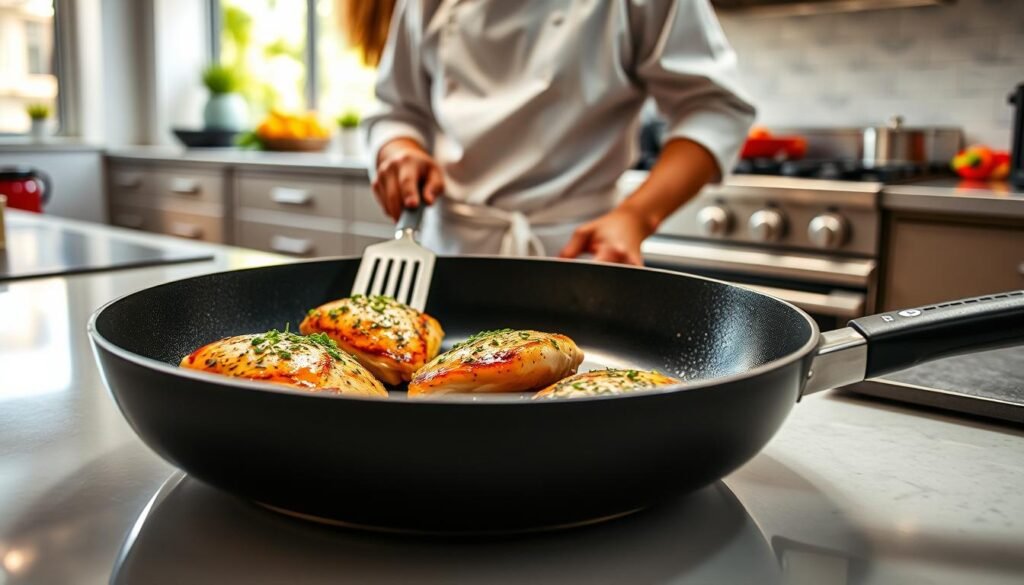
Notoriously sticky foods like tofu and halloumi cheese also browned beautifully. They lifted easily after a few minutes.
Temperature Tolerance & Oven/Dishwasher Safety
Heat responsiveness is a major advantage. The pan reaches cooking temperature in about a minute. This is far faster than traditional cast iron.
There’s a learning curve. One tester saw sticking during high-heat stir-frying. The brand recommends low to medium heat for best results.
It’s oven-safe up to 900°F (lids to 400°F). You can start a sear on the stove and finish in the oven. While dishwasher-safe, hand-washing is advised to preserve the nonstick coating’s look.
| Cooking Task | Test Result | Key Insight |
|---|---|---|
| Fried Eggs (No Oil) | Clean release, golden crust | Exceptional non-stick performance |
| Searing Chicken Thighs | Crispy skin, even browning | Powerful sear without sticking |
| Cooking Sticky Items (Tofu) | Easy release, proper browning | Handles challenging foods well |
| Heat-Up Time | ~1 minute to temp | Very responsive for quick cooking |
| Oven Finishing | Safe up to 900°F | Enables versatile techniques |
For more on high-performance options, explore our guide to the best nonstick pans. This review confirms the hybrid system works impressively in daily use.
Ease of Use: Seasoning, Cleaning, and Maintenance Tips
Proper care can make or break the longevity of any premium kitchen investment. Understanding a few simple routines ensures your pan performs well for years.
Proper Seasoning to Activate the Non-Stick Surface
Before first use, you must season it. This crucial step activates the non-stick properties.
Coat the entire cooking surface with a neutral oil like grapeseed. Heat it until the oil smokes lightly, then let it cool. This process wasn’t always clear in the packaging.
Hand-Washing Versus Dishwasher Considerations
The brand markets its pans as dishwasher-safe. However, their FAQ strongly recommends hand-cleaning.
Using a dishwasher may cause dulling or discoloration over time. Phosphate-free detergents can even damage the metal.
For daily cleaning, use warm soapy water and a soft sponge. The textured hexagonal pattern makes this easy. Food residue lifts away with minimal effort.
If you overhear the pan and cause sticking, a short soak in soapy water removes brown patches. You can use metal utensils, but a soft sponge preserves the coating best.
If non-stick performance fades, a deep clean and re-seasoning restores it. For more detailed cleaning insights, see this professional review. Also, explore induction-compatible options for similar easy maintenance.
Comparison with Competing Cookware Brands
The true value of any kitchen tool becomes clear when placed side-by-side with its rivals. How does this hybrid option measure against other premium cookware lines?
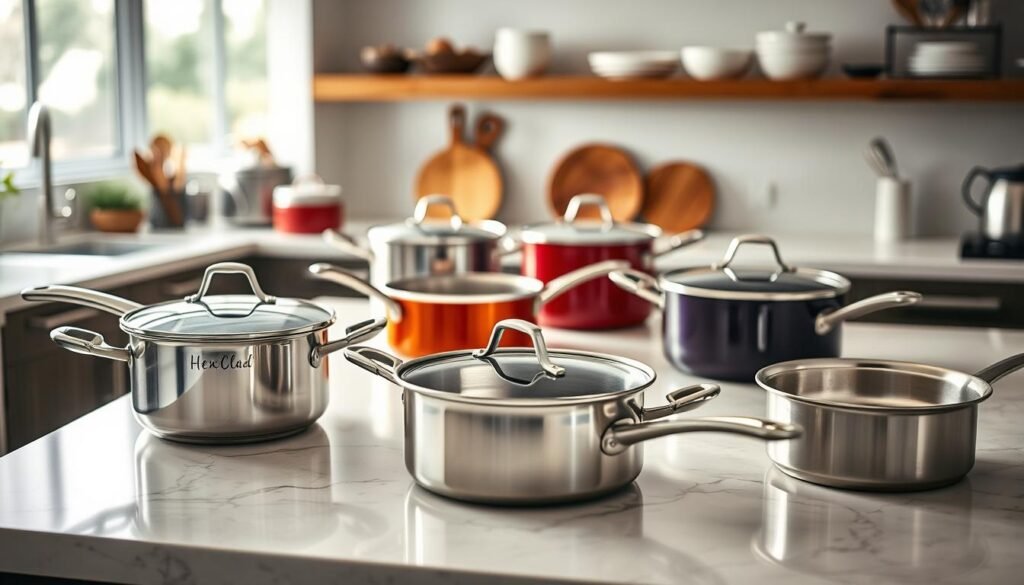
Le Creuset, All-Clad, and Cast Iron Alternatives
Classic brands like Le Creuset offer timeless enameled cast iron. It improves with age but is very heavy.
All-Clad’s stainless steel pans provide professional performance. Their price is often higher, and they require more skill to use.
Traditional cast iron pans from brands like Lancaster are a better value buy. They demand regular seasoning, however.
Innovative Features Versus Traditional Cookware
Modern ceramic brands like Caraway have a lower price. Yet they lack a lifetime warranty and high-heat tolerance.
The Our Place Always Pan includes clever accessories. Its nonstick coating, however, may degrade faster.
This hybrid pan uses a 3-ply stainless steel core. This makes it more durable than many ceramic-only cookware sets.
| Brand & Pan | Approx. Price (10″) | Oven Safe Temp | Warranty |
|---|---|---|---|
| HexClad Hybrid | $149 | 900°F | Lifetime |
| Caraway Ceramic | $115 | 550°F | 1 Year |
| Our Place Always | $135 | 450°F | 1 Year |
| All-Clad Stainless | $200 | 600°F | Lifetime |
The key trade-off is convenience versus ultimate longevity. A well-kept cast iron skillet can last decades, while the nonstick convenience here comes at a premium.
Health and Safety: Non-Toxic and PFAS-Free Credentials
A major shift in manufacturing has redefined what ‘nonstick’ means for a leading hybrid brand, moving away from controversial materials. Growing consumer awareness about “forever chemicals” has made the safety of a pan’s coating a top priority.
This brand now uses a proprietary ceramic nonstick formula called TerraBond™. The company states its products are free from PTFE and PFAS chemicals.
Transition from PTFE to Ceramic Nonstick Coating
In 2024, the brand completed a significant change. It moved from a traditional PTFE-based coating to its new TerraBond™ ceramic nonstick system.
This new ceramic layer aims to address health concerns without sacrificing performance. However, the brand does not publish third-party test results to verify its PFAS-free claims independently.
Consumer Concerns Over Forever Chemicals
Traditional PTFE coatings can degrade at high temperatures above 500°F. This process releases toxic fumes linked to polymer fume fever in people and can be fatal to pet birds.
A past class-action lawsuit alleged false advertising about the nonstick surface being “nontoxic.” The company settled the case without admitting wrongdoing.
All HexClad items remain on the market and are considered safe for use. For optimal safety and longevity with any ceramic nonstick, cook on low to medium temperatures.
Endorsements: Chef and User Experiences
When a Michelin-starred chef and a home cook both praise the same pan, it’s worth paying attention. The real-world feedback from professionals and long-term owners provides crucial insight beyond marketing.
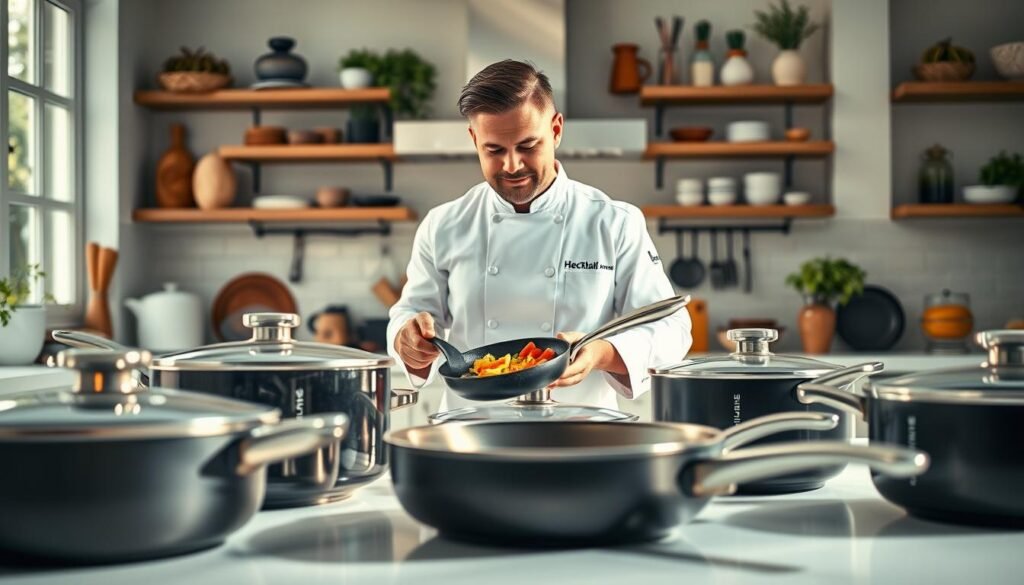
Gordon Ramsay and Michelin-Starred Chef Insights
Celebrity chef Gordon Ramsay offers a powerful endorsement. He calls these items “the Rolls Royce of pans” and uses them at home and in professional kitchens.
Chef Richard Sandoval, who operates over 60 restaurants globally, values their durability. His team uses metal spatulas and high-BTU burners daily.
“You get the ease of nonstick with the searing power of stainless steel. The hybrid surface is a real innovation.”
He reports that even after this rigorous use, the performance remains like new.
Long-Term User Reviews and Testing Updates
A former recipe editor first used a hexclad pan in a test kitchen. It seared steaks and seafood perfectly for photoshoots.
After three months of home cooking, the verdict was clear. The non-stick performance was called “hands-down the best I’ve used.”
Deputy Editor Katie Bandurski has owned her set for two years. She notes that after over a year of heavy use, the pans still look brand new.
Another tester, after nine months, observed some wear in the hexagonal pattern and slight discoloration. However, this time and wear “minimally affected the nonstick surface or cooking capabilities.”
| Endorser | Role / Context | Key Insight | Duration of Use |
|---|---|---|---|
| Gordon Ramsay | Celebrity Chef | “Rolls Royce of pans”; used professionally & at home | Long-term |
| Chef Richard Sandoval | Restaurant Group Owner | Withstands metal tools & high heat in commercial kitchens | Ongoing |
| Former Recipe Editor | Test Kitchen Professional | Excelled at searing for photography; best nonstick after 3 months | 3 Months |
| Deputy Editor | Home Cook (Daily Use) | Pans look new after over a year of heavy use | 2 Years |
| Product Tester | Home Kitchen Evaluation | Cosmetic wear after 9 months, no performance loss | 9 Months |
These experiences, detailed in a comprehensive professional review, show that both chefs and everyday users value the ability to handle high-heat searing and frequent cooking over extended years.
Practical Considerations: Price, Warranty, and Longevity
The decision to invest in a top-tier pan hinges on its everyday usability and the fine print of its warranty.
Investment Value and Limited Lifetime Warranty
Individual pans range from $109 to $180, with a popular 12-inch model around $180. A full 12-piece set costs $1,179.98.
HexClad offers a lifetime warranty. However, it specifically excludes surface imperfections from normal wear. This is a key limitation.
The brand markets its pans as safe for metal utensils and high heat. Yet damage from this use may not be covered.
“If you’re a beginner cook looking to level up or fed up with sticky, flaky Teflon pans, HexClad is worth the investment.”
Seasonal sales can significantly offset the premium price. This improves the value for your money.
Weight, Ergonomics, and Everyday Usability
Consider size carefully. A 10-inch pan is standard. A 12-inch model may be too large for some stovetops.
Weight ranges from 1.5 to 4.4 pounds. This affects daily handling and comfort.
Being metal utensil-safe is a practical benefit. It allows for safer, more durable cooking tools.
Testers report minimal performance loss after 1-2 years of heavy use. This suggests good durability and cost-per-use value.
As noted in a detailed evaluation, finding a reliable product you love for daily cooking can justify the initial cost.
“Yes, it’s pricey. But when you cook every meal at home on a daily basis, you need to find a reliable pan you love!”
Conclusion
Ultimately, the value of any kitchen tool is measured by its performance over time. HexClad cookware largely delivers on its hybrid promise, merging stainless steel durability with nonstick convenience.
The surface provides exceptional food release, even with minimal oil. For serious home cooks, the premium price can be justified by multi-year durability.
The shift to a PFAS-free ceramic coating addresses health concerns. Proper technique—using medium heat and hand-washing—is key to longevity.
This hybrid pan is ideal for beginners and busy families. It handles a wide variety of tasks with minimal fuss.
While not perfect for every scenario, it lives up to most hype. The nonstick performance and solid construction make it a worthwhile hybrid investment for those who understand its care.