GreenPan Cookware Review: The Truth About Its Nonstick Performance & Durability
What if the “healthy” nonstick cookware you bought isn’t as durable as promised? Many home chefs have turned to ceramic-coated pans, hoping for a safer, high-performing alternative to traditional options.
This brand entered the U.S. market in 2007, founded by Jan Helskens and Wim De Veirman. It was positioned as a PFAS-free alternative, directly addressing growing consumer health concerns. The core promise is a nonstick surface without the chemicals.
With over 150 patents for its technology and more than a dozen different product lines, the selection is vast. This ranges from budget-friendly sets to premium collections. But does the innovation live up to the hype in everyday use?
Independent testing, like that done by the Good Housekeeping Institute on over 200 pieces of kitchenware, provides crucial data. This comprehensive evaluation goes beyond marketing. We synthesize lab results, long-term user experiences, and expert analysis.
Our goal is to deliver actionable insights for your purchasing decision. You’ll see how this ceramic coating handles everything from delicate eggs to high-heat searing. Understanding the real-world performance and care requirements is key to maximizing your investment.
Table of Contents
Key Takeaways
- This analysis examines core claims about nonstick performance, durability, and safety.
- The brand pioneered ceramic nonstick as a healthier, PFAS-free alternative.
- It holds over 150 patents and offers an unprecedented variety of product lines.
- Objective data comes from independent testing institutes like Good Housekeeping.
- The review combines laboratory results, user experiences, and expert insights.
- Learn how ceramic technology compares to traditional coatings in real cooking scenarios.
- Gain a clear understanding of durability, maintenance, and realistic expectations.
Overview of GreenPan’s Innovation and Brand History
The journey to safer kitchen essentials began with a simple idea shared between two childhood friends. Jan Helskens and Wim De Veirman identified growing consumer worries about PFAS chemicals in traditional pans.
Founders and Market Introduction
They launched their ceramic nonstick line in the U.S. market in 2007. This move introduced a PFAS-free alternative that addressed health concerns head-on. CEO Jacob Maurer emphasized this pioneering step, stating,
We were the first to create cookware using a PFAS-Free coating.
The brand’s unique ownership of its manufacturing facility enabled complete control over production. This distinction allowed for stricter quality checks on every item and faster innovation cycles compared to outsourced competitors.
Technological Milestones and Patents
Over the years, the company has accumulated more than 150 patents. These protect its nonstick technologies and manufacturing processes.
Such a robust patent portfolio demonstrates a deep investment in research and development. It solidifies the brand’s position as the innovation leader in this space.
The time dedicated to refining formulations has resulted in multiple coating tiers. These range from standard offerings to advanced Infinite8 technology.
This historical context helps clarify the premium pricing of these PFAS-free products versus conventional cookware alternatives.
Understanding Ceramic Nonstick Coating Technology
The science behind ceramic nonstick coatings transforms everyday sand into a high-performance cooking surface. This PFAS-free alternative uses a sol-gel process to create a silicon dioxide-based ceramic nonstick coating. It’s fundamentally different from petroleum-based PTFE options.
Benefits of Ceramic Nonstick Over Traditional Coatings
This technology offers a clear tiered system for different needs. You can choose from three main nonstick coating levels:
- Thermolon: The standard, budget-friendly ceramic coating.
- Thermolon Advanced: Upgraded for metal utensil use.
- Infinite8 Ceramic Nonstick: The top-tier, most durable option found in premium lines.
The advanced ceramic nonstick coating conducts heat faster than old PTFE pans. This means your pan heats up quickly, saving energy.
A major safety benefit is stability at high heat. Traditional coatings can release fumes above 500°F. The silicon-based coating does not off-gas.
Selecting the right cookware line depends on your cooking style. The top-tier coating provides superior scratch resistance for daily use. Understanding these differences ensures you get the performance you expect from your kitchen investment.
Safety and Health Considerations in GreenPan Cookware
Third-party certifications provide crucial validation for PFAS-free safety assertions. The brand’s coatings are tested and certified safe by the USA FDA, German LFGB, Swiss government, and KTR standards.
This independent verification goes beyond manufacturer claims. It offers peace of mind for health-focused kitchens.
PFAS chemicals are known as “forever chemicals.” Epidemiological studies link them to serious health issues. The EPA notes exposure may cause harmful effects.
Traditional nonstick cookware poses a real risk. Good Housekeeping testing shows it can overheat and release these chemicals in under two minutes.
The ceramic alternative eliminates this danger. Its sand-derived coating cannot release PFAS it never contained.
| Safety Attribute | Ceramic Nonstick | Traditional PTFE Nonstick |
|---|---|---|
| PFAS Content | Manufactured without PFAS | Contains PFAS compounds |
| Fume Release at High Heat (>500°F) | No toxic fumes released | Can release harmful fumes |
| Lead & Cadmium | Absent in coating | Potential presence in older coatings |
| Independent Certifications | FDA, LFGB, Swiss, KTR | Varies; often fewer health-focused certs |
The absence of lead and cadmium is vital for food safety. This is especially important for families with children.
While this cookware is considered safe, proper care is key. Replace any item if the nonstick surface chips or wears down.
Understanding these chemicals and certifications helps justify the investment. You are paying for verified safety and peace of mind.
GreenPan Cookware Review: Product Overview
The portfolio spans over a dozen distinct lines, each designed for specific cooking needs and styles. This represents the most variety in ceramic nonstick pots pans from any single brand.
You can find everything from affordable starters to professional-grade collections. This overview helps you navigate the options.
Features Across Different Product Lines
Key cookware lines include Valencia Pro, Reserve, GP5, and Padova. Celebrity collaborations with Stanley Tucci and Bobby Flay add chef-endorsed products.
Construction varies between lines. You will find different base materials, handle designs, and coating formulations.
The number of pieces in each set differs greatly. Valencia Pro is an 11-piece collection, while Padova can include up to 17 pieces.
Price points are equally diverse. They range from under $200 for value cookware sets to over $600 for premium lines.
What Sets GreenPan Apart
This unmatched variety is the brand’s defining feature. No other company offers so many ceramic nonstick cookware sets.
Each line targets a specific user. Valencia Pro suits daily reliability seekers. Reserve appeals to aesthetic-focused buyers.
GP5 caters to design enthusiasts, and Padova is for value seekers. This segmentation creates decision complexity.
You must evaluate which cookware features and price align with your kitchen goals. Most products include essential pots pans for a complete kitchen.
The extensive selection ensures you find the perfect cookware for your home.
Performance Testing and Real-World Cooking Results
The true measure of any pan lies in its ability to handle everyday tasks like frying eggs and searing steak. Independent testing institutes like the Good Housekeeping Institute put products through rigorous simulations.
Their methodology evaluates even heating, egg preparation, steak searing, and sauce simmering. This provides objective data beyond marketing claims.
Lab Test Results and Observations
In scrambled eggs testing, the Valencia Pro line released almost all eggs without added oil. This is a critical nonstick performance indicator.
Fried eggs, however, often required spatula assistance across most lines. The ceramic coating performs differently than traditional PTFE for delicate tasks.
Steak searing tests revealed even heat distribution in the GP5 line. It produced consistently browned meat without hot spots.
The tomato sauce scorch test showed minimal sticking with Valencia Pro. This demonstrates coating durability under acidic, high-heat cooking.
The Padova line struggled with egg release. This suggests entry-level options make compromises to achieve lower price points.
| Product Line | Scrambled Eggs | Fried Eggs | Steak Searing | Tomato Sauce |
|---|---|---|---|---|
| Valencia Pro | Excellent release, no oil needed | Good, with spatula | Good browning | Minimal sticking |
| GP5 | Good release | Fair, needs assistance | Excellent, even heat | Good performance |
| Padova | Weak release | Struggled | Fair | Performed well |
| Stanley Tucci Line | Excellent | Flipped easily | N/A | N/A |
Home Use and Consumer Feedback
Real-world cooking results confirm ceramic nonstick performs best at low-to-medium temperatures. Adequate fat is recommended, contrary to oil-free marketing.
The Stanley Tucci collaboration excelled in pancake tests. Blueberry pancakes released effortlessly from the pan.
An independent review corroborates these findings, noting performance varies by line. This brand’s cookware offers a safer option, but managing expectations is key.
Durability and Maintenance of GreenPan Cookware
Durability claims face the ultimate test in home kitchens over months and years of daily use. Verified testimonials show premium lines can excel. One avid home chef reported on a Valencia Pro set after heavy use for two to three years:
“It is still in great condition.”
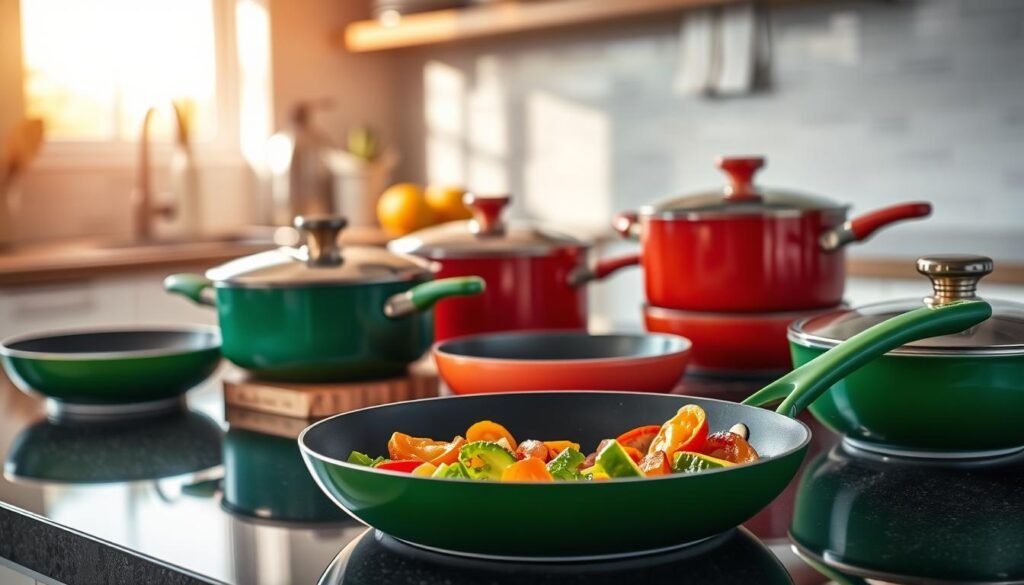
Another user celebrated a Reserve set after two years, calling it their best kitchen purchase. However, longevity varies by product line.
Some testers noted the nonstick coating on a celebrity line degraded within months of frequent use. The ceramic coating is harder but can be more susceptible to chipping over time.
Proper care is non-negotiable. The brand explicitly recommends hand washing to maximize the nonstick surface life, even for dishwasher-safe items. Harsh detergents accelerate wear.
Accidents can sometimes be remedied. One Reserve owner restored a charred pan to 90% functionality using a specialized melamine sponge. Still, expect to replace cookware when the coating is scratched or loses its slickness.
With meticulous care, this cookware typically lasts 3-5 years. Under heavy daily use, the nonstick coating may last 1-3 years. Plan for periodic replacement, as the surface is a consumable part of your cookware.
Insights from Expert Reviews and Consumer Feedback
Credible assessment of any kitchen essential hinges on the synergy between scientific lab results and authentic user experiences.
This dual approach separates verified performance from marketing hype.
Expert Lab Analysis
Good Housekeeping has evaluated over 200 pieces of kitchenware in the last decade. This includes more than ten sets from this brand.
Eva Bleyer, a professionally trained chef, leads their testing. Her analysis provides a credible benchmark.
The lab’s extensive history offers crucial market context. It shows how this ceramic cookware stacks up against all competitors.
A key finding is that nonstick performance is exceptional when new. However, it demands more careful maintenance than traditional pans to last.
The brand earned a Sustainable Innovation Award. This recognized its use of certified recycled aluminum.
| Aspect | Expert Lab Insight | Consumer Feedback Highlight |
|---|---|---|
| Initial Nonstick Performance | Excellent release in scrambled egg tests with no oil needed. | “Very nonstick upon first use” reported by nearly all testers. |
| Long-Term Durability | Coating requires more maintenance to sustain performance over time. | GP5 noted as “much sturdier”; Reserve praised for everyday durability. |
| Value & Sustainability | Awarded for using certified recycled aluminum in manufacturing. | Padova line praised for “outstanding value for the money.” |
Home Chef Testimonials
More than 60 consumer testers provided feedback through a major database. Their real-world use reveals consistent patterns.
One user said of the Padova product, “I love how it looks, and the value for the money is outstanding.”
Another highlighted the GP5 pans, noting they are “sturdier than all other nonstick pans I have used.”
For the Reserve line, a home chef shared, “I love cooking grilled cheese sandwiches in it… very durable and nonstick.”
This convergence of expert testing and consumer experience builds confidence. It confirms the cookware‘s strengths and realistic care needs.
Exploring the Versatile GreenPan Cookware Lines
From lab-tested performance champions to designer collaborations, the product range is built for specialization. Each collection targets specific priorities, whether it’s everyday durability, visual appeal, or professional-grade features.
Valencia Pro, Reserve, GP5, and More
The Valencia Pro line earned Good Housekeeping’s “best overall ceramic cookware set” designation. Its 11-piece sets balance lightweight maneuverability with hard anodized aluminum sturdiness.
GreenPan Valencia Pro excels in daily cooking. Its reliable nonstick performance justifies the investment for frequent home chefs.
The Reserve cookware line distinguishes itself through aesthetic variety. It comes in multiple colorways, like Sunrise, to complement modern kitchens.
For style and function, the GP5 collection received a Kitchen Gear Award. These sets serve as both cooking tools and kitchen décor.
Budget-focused buyers might consider the Padova line. It performed well in sauce tests but makes compromises to hit an affordable price point.
Celebrity collaborations create specialized pro line options. The Bobby Flay collection features squatter stockpots for faster boiling.
An upcoming Spectra line may surpass GreenPan Valencia performance. Its availability is currently limited.
When selecting among these cookware options, prioritize greenpan valencia pro or GP5 for maximum longevity. Choose Reserve for looks and Padova only for tight budgets. For a broader comparison of top-performing sets, see this guide on the best cookware set.
Heat Distribution and Cooking Efficiency
The efficiency of your cookware hinges on how uniformly it transfers heat across its surface. Consistent heat distribution prevents frustrating hot spots that burn food in one area while leaving another undercooked.
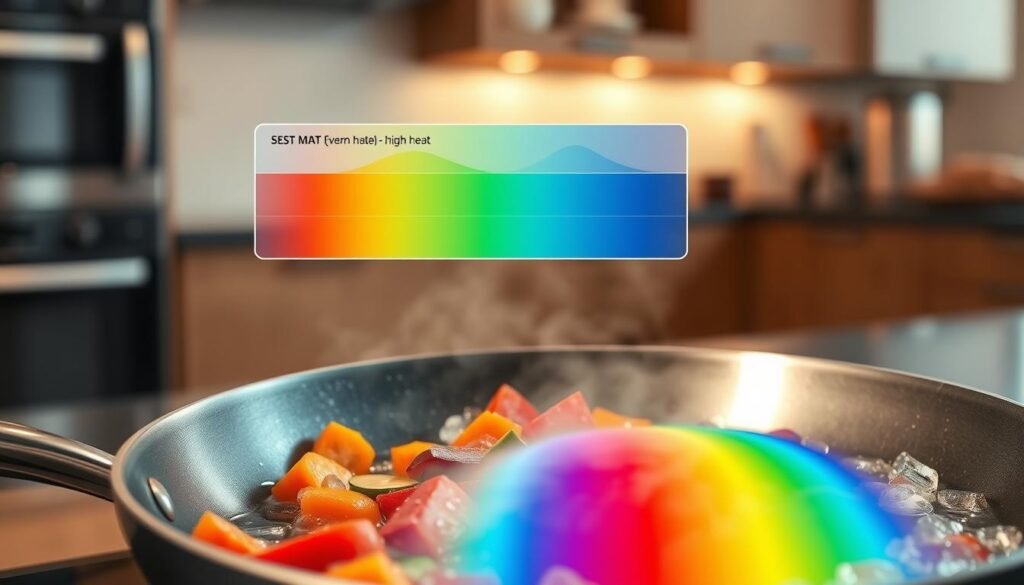
Good Housekeeping testing confirms this quality in premium lines. The GP5 skillet heated evenly, producing uniformly browned steak without a charred center.
Ceramic nonstick conducts heat more efficiently than traditional PTFE coatings. These pans can reach cooking temperature 20-30% faster, potentially saving energy.
Innovative designs, like the Bobby Flay collection’s squatter stockpots, accelerate boil times. Their larger bottom surface area maximizes contact with the burner.
This material gets hotter faster than old nonstick options. You must adjust your burner settings when switching to avoid overheating your food.
For best results, use low-to-medium heat. High heat can degrade the ceramic coating, permanently reducing its performance.
Understanding these characteristics helps you adapt your techniques. This ensures you get the most from your investment, much like choosing the best nonstick pans for your kitchen needs.
Compatibility with Various Utensils and Cooking Methods
Choosing the right utensil is as critical as selecting the pan itself for maintaining nonstick performance. The tools you use directly impact the longevity of your ceramic surface.
Using Metal, Silicone, and Wooden Utensils
Compatibility with metal utensils varies dramatically. Only the top-tier Infinite8 and Thermolon Advanced coatings are designed to withstand their use.
The standard coating prohibits metal utensils entirely. Scratches from steel tools create microscopic damage where food lodges.
This progressively degrades performance. Coating materials may even leach into your cooking.
For all cooking, the brand recommends silicone or wooden tools. Silicone utensils offer heat resistance and gentle contact.
Wooden cooking tools are a traditional choice. They require more care but are very safe for your pans.
Stainless steel utensils should be reserved for cookware lines made of that material. Using them on ceramic pans is a common mistake.
Protect your cookware investment by matching your tools to the coating. This simple step is the best way to ensure lasting nonstick function.
Environmental Impact and PFAS-Free Commitment
A silent revolution in cookware manufacturing began with the elimination of a persistent class of industrial chemicals. PFAS are known as “forever chemicals” because they do not break down.
Epidemiologists link these PFAS to serious health issues. These include cancer and thyroid disease. The brand’s pioneering PFAS-free technology changed the industry.
Making ceramic nonstick coating creates far fewer carbon emissions than old methods. Factory ownership allows complete control over environmental practices.
This control includes using certified recycled aluminum. That effort earned a Sustainable Innovation Award. The sand-derived Thermolon coating contains no PFAS, lead, or cadmium.
This ceramic approach tackles multiple health and ecological concerns at once. For eco-conscious buyers, these nonstick cookware practices justify a higher cost.
You invest in verified safety and a smaller footprint. Choosing this ceramic nonstick option supports a cleaner future.
Pros and Cons of GreenPan Cookware
The decision to buy hinges on how you value health safety versus durability and maintenance.
On the positive side, these products cater to various budgets. Entry-level pans start under $200, while premium collections exceed $600. Most lines offer single pieces or full sets. This lets you test a piece before investing in a complete cookware collection.
Initial nonstick performance impresses nearly all users. A common report is that pans are “very nonstick upon first use.” The nonstick surface works well for low and medium-high heat. The ceramic cookware is a PFAS-free alternative, a major health advantage.
Stylish designs in multiple colorways add to kitchen décor. Many options are lightweight for easy handling.
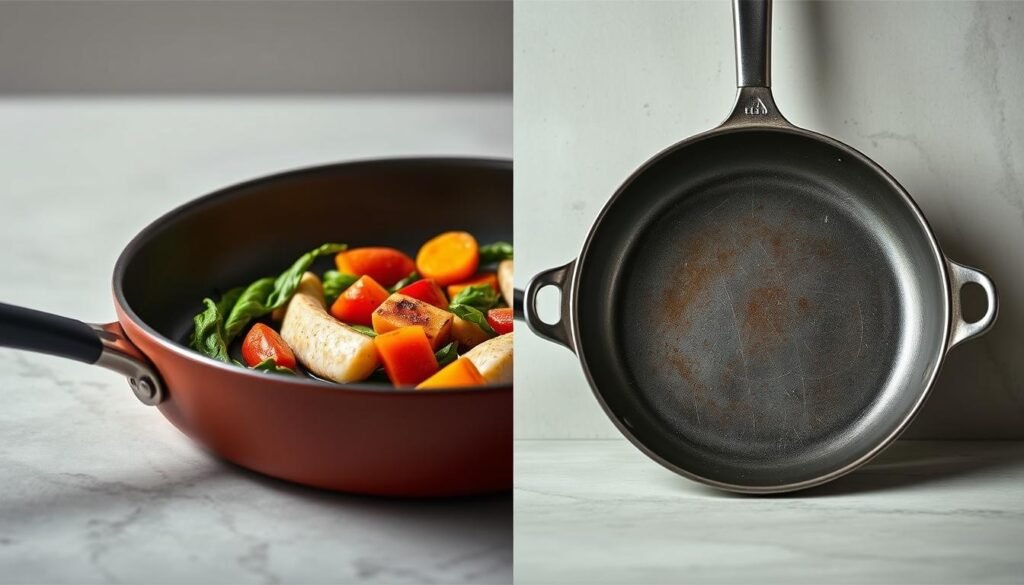
However, this cookware demands careful handling. The ceramic cookware coating can chip, nick, or scratch more easily than traditional coatings. Its lifespan is shorter, often 1-3 years versus 3-5 for PTFE pans. Exteriors may stain over time, and some pieces are surprisingly heavy.
The bottom line: These products excel for health-conscious cooks who prioritize a PFAS-free kitchen. They accept shorter lifespan and higher maintenance as trade-offs. The bottom line on value depends on your cooking priorities.
Tips for Maximizing Nonstick Performance
The secret to a long-lasting nonstick finish lies in how you heat, oil, and clean your pan. Proper technique can extend the life of your ceramic surface significantly.
Optimal Cooking Temperatures and Oils
Always use low to medium heat. High heat damages the ceramic coating, causing it to lose its slipperiness. Add oil or butter before preheating.
Let the fat warm to create a protective layer for your food. Avoid cooking sprays; they burn and leave sticky residue.
Cleaning and Preventative Care Techniques
Hand wash with mild soap and a soft sponge. This preserves the nonstick coating better than dishwashers. Remove food particles after each use to prevent carbonization.
Store your pan with protectors to avoid scratches. Replace the cookware when food starts sticking consistently.
| Tip Category | Recommended Action | Key Benefit |
|---|---|---|
| Heat Control | Use low-to-medium burner settings | Prevents coating degradation |
| Fat Usage | Add oil before heating the pan | Creates a release barrier |
| Cleaning | Hand wash with mild detergent | Extends nonstick lifespan |
| Storage | Use pan protectors between stacks | Avoids surface scratches |
Comparing GreenPan Cookware with Competitor Brands
The ceramic nonstick cookware market is crowded, but one brand’s history and patent portfolio set it apart. This company pioneered the category in 2007, providing over 15 years of refinement.
Its 150+ patents create a high barrier for competitors. Good Housekeeping notes,
“Ceramic nonstick has exploded in popularity… no brand is more associated with it than GreenPan.”
The same institute named its Valencia Pro line the “best overall ceramic cookware set.”
This brand offers the most variety in ceramic cookware from one source. It owns its factory, enabling strict quality control. Competing ceramic brands like Caraway and Our Place have limited lines.
Traditional nonstick pans from Calphalon or T-fal use PTFE coatings. They offer better durability at lower prices but contain PFAS.
Stainless steel cookware from All-Clad provides superior longevity. It handles high heat but needs more oil and scrubbing.
| Type | PFAS Content | Typical Durability | Best For | Maintenance |
|---|---|---|---|---|
| Ceramic Nonstick (GreenPan) | PFAS-Free | 1-5 years | Health-conscious, everyday cooking | Medium (hand wash, gentle tools) |
| Traditional PTFE Nonstick | Contains PFAS | 3-5+ years | Durability focus, budget buyers | Low (often dishwasher safe) |
| Stainless Steel Cookware | PFAS-Free | 10+ years | High-heat searing, professional use | High (often requires seasoning/scrubbing) |
The bottom line is clear. This brand offers the most comprehensive PFAS-free selection with a proven track record. For maximum durability, traditional nonstick pans win. For unmatched longevity, stainless steel is best.
In-Depth Look at the GreenPan Valencia Pro Line
Good Housekeeping’s “best overall ceramic cookware set” title is a powerful endorsement for the Valencia Pro collection. This 11-piece set retails for $600 and is built for frequent, everyday use in a busy kitchen.
The pieces include multiple fry pans, saucepans, a stockpot, and matching lids. This covers all essential pots pans needs. Construction uses hard anodized aluminum for great heat flow and a light feel.
Stainless steel handles stay cool and are oven-safe to 600°F. This allows for versatile cooking methods from stovetop to oven.
| Aspect | Valencia Pro 11-Piece Set | Why It Matters |
|---|---|---|
| Pieces | 11 essential items | Covers all basic cooking tasks without clutter |
| Core Material | Hard anodized aluminum | Excellent heat conduction, lightweight yet durable |
| Key Performance | Superior egg & sauce release | Minimal sticking, easy cleanup from lab tests |
| Price Point | $600 | Positioned as premium everyday cookware |
Lab tests proved its nonstick prowess. Scrambled eggs released almost completely without added oil. Fried eggs came out easily with a little spatula help. In the tomato sauce scorch test, the pot cleaned right up with minimal sticking.
One long-term tester, an avid home chef, stated:
“I have used the cookware heavily over the past two to three years on a daily basis, and it is still in great condition, even with often having to put it in the dishwasher.”
For serious home cooks, the Valencia Pro set justifies its cost. It delivers proven performance, durability, and a complete kitchen solution.
Conclusion
Independent testing and real-world use have delivered a clear verdict on this ceramic nonstick pioneer. Good Housekeeping states it is a good brand for pots and pans, awarding it a Sustainable Innovation Award.
The Valencia Pro line earns the title of best overall ceramic nonstick cookware set. For those who can wait, the upcoming Spectra line promises enhanced performance.
Many long-term users attest to the quality of these products. Their experience shows that proper use and maintenance is required for best performance over time.
The ceramic nonstick coating represents a genuine innovation. It provides a nonstick surface without PFAS chemicals.
This brand offers the most developed ceramic nonstick option available. It is recommended for health-conscious cooks who understand the coating‘s care needs.
Choose a complete set like Valencia Pro or individual pieces to fit your kitchen. With proper care, your cookware will deliver reliable nonstick performance.