Review Methodology: How TopCookwareBrand Tests, Scores, and Recommends Cookware
We score cookware using a consistent rubric, use scenario-based testing (not just specs), document tradeoffs, and update recommendations when products change or better options appear.
TopCookwareBrands.com exists for one job: help you buy cookware that fits your stove, your cooking style, and your budget—without getting played by marketing. Cookware is full of vague claims (“professional,” “premium,” “chef-grade,” “lifetime”) that sound impressive but don’t reliably predict performance in a real kitchen. Our methodology is designed to convert product noise into clear, repeatable evaluation criteria. We prioritize practical outcomes: even heating, reliable searing, predictable nonstick performance (where relevant), durability, and usability. We also optimize for “total cost of ownership,” because the cheapest cookware often becomes expensive once you replace it twice.
Affiliate disclosure: TopCookwareBrands.com is reader-supported. If you buy through links on this page, we may earn a commission at no extra cost to you. We follow disclosure guidance from the U.S. Federal Trade Commission (FTC). FTC Endorsement Guides: What People Are Asking.
Independence, Monetization, and Bias Controls
We monetize through Amazon affiliate links and display advertising (such as AdSense). Monetization does not equal editorial control. Brands do not pay for favorable rankings, and we do not accept “guaranteed placement” arrangements. If we receive products (or access) from a brand, that relationship is disclosed. If a product is widely available, we may evaluate it using a mix of direct testing, spec verification, user feedback patterns, and known performance characteristics of its construction and materials. When evidence is mixed, we say so—and we select recommendations based on defensible use-cases rather than hype.
Our Scoring Rubric (How We Grade Cookware)
We score cookware with the same framework across brands and price tiers so comparisons stay fair. Each product (or line) receives category-level scores plus a final “fit score” based on intended use.
Core Score Categories
- Heat Performance (25%): even heating, hot spot resistance, simmer stability, responsiveness
- Durability & Build (25%): warping resistance, handle security, coating resilience (if coated), overall construction
- Ease of Use (15%): weight balance, handle comfort, pouring control, lid fit (for pots), day-to-day usability
- Cleaning & Maintenance (15%): cleanup difficulty, staining resistance, care burden, real-world “annoyance factor”
- Compatibility (10%): induction readiness, oven safety, dishwasher rating (where applicable)
- Value (10%): price-to-performance, expected lifespan, replacement costs, warranty clarity
Weights can shift slightly for specialized categories (example: nonstick gets a heavier durability + coating performance weight; copper gets a heavier responsiveness weight).
What We Test (Real Kitchen Scenarios)
We test cookware using common tasks that reveal the truth quickly. Specs matter, but cooking exposes problems like uneven heating, weak handles, poor release, and frustrating cleanup. Our testing is designed to be repeatable and practical.
1) Unboxing and Build Inspection
We inspect materials and construction signals that correlate with long-term performance: thickness, base stability, rivet quality, handle ergonomics, lid fit (for pots), interior finish, and manufacturing consistency. For coated cookware, we look for coating uniformity and edge finishing—small defects often become big problems after months of use.
2) Heat Distribution and Hot Spot Check
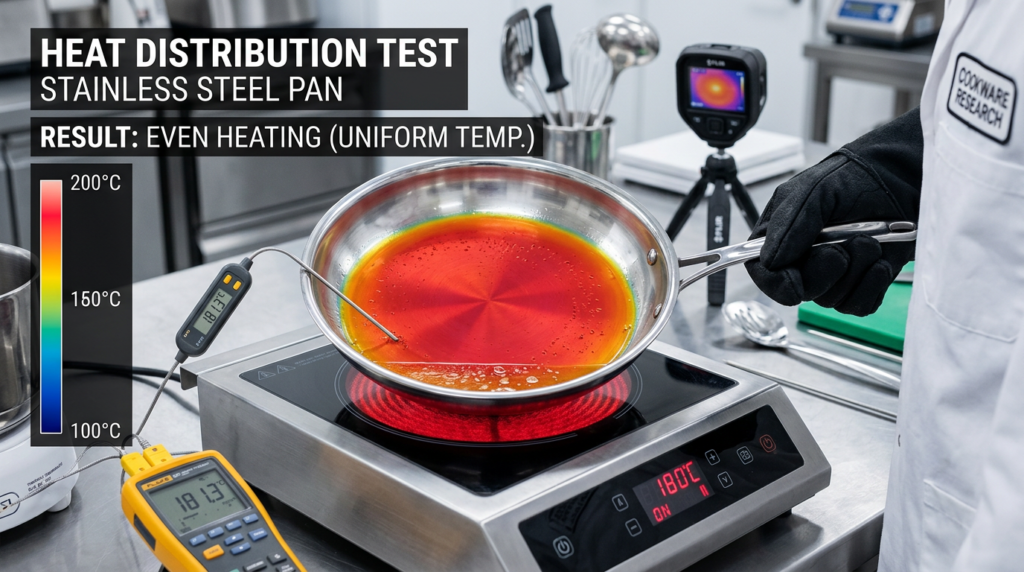
Even heating is the difference between “easy cooking” and “constant frustration.” We evaluate how evenly the cooking surface heats and how stable the pan remains at simmer and sauté temps. This is especially important on electric and induction cooktops, where thin pans can create inconsistent results. For induction, we also check base flatness and engagement consistency because poor base contact can cause uneven heating and buzzing.
3) Searing and Fond Development (Stainless / Carbon Steel / Cast Iron)
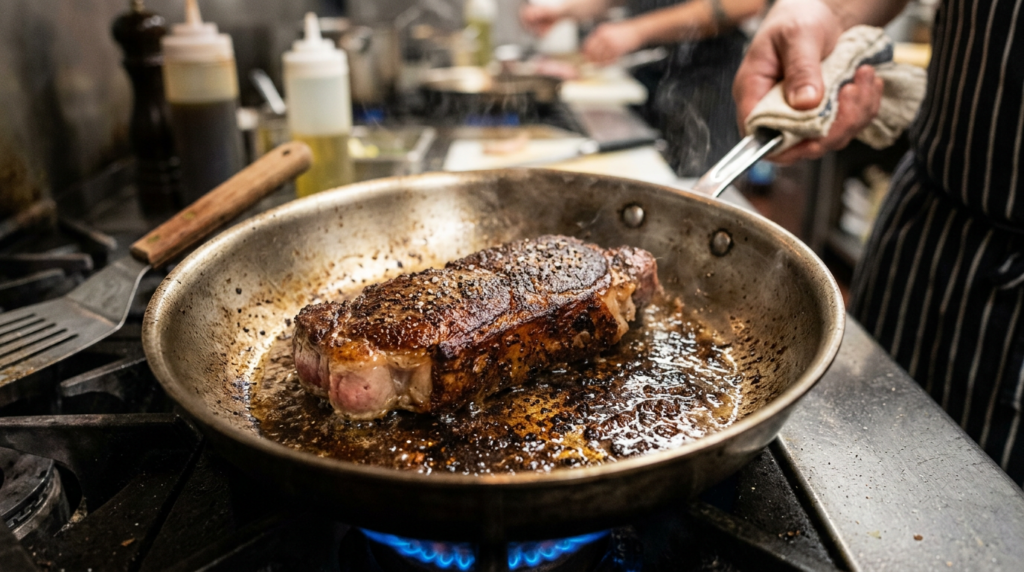
Searing exposes whether a pan can hold heat and create consistent browning. We evaluate: crust formation, recovery after adding cold protein, and how cleanly fond releases during deglazing. Stainless steel should reward technique; cast iron should reward stability; carbon steel should reward responsiveness. If a pan needs extreme heat to sear, that’s a red flag for control and versatility.
4) Nonstick Performance and Coating Reality (Nonstick / Ceramic / Hybrid)

Nonstick is graded on “easy release” plus how well it stays that way under proper use. We do not treat nonstick as “buy once forever.” We evaluate it as a convenience tool that should perform reliably on medium heat with soft utensils. We also address coating claims responsibly. For readers who want primary-source context about PFAS and food contact applications, the U.S. FDA provides background information and Q&A resources here: FDA: Questions and Answers on PFAS in Food.
5) Cleanup and “Annoyance Factor”
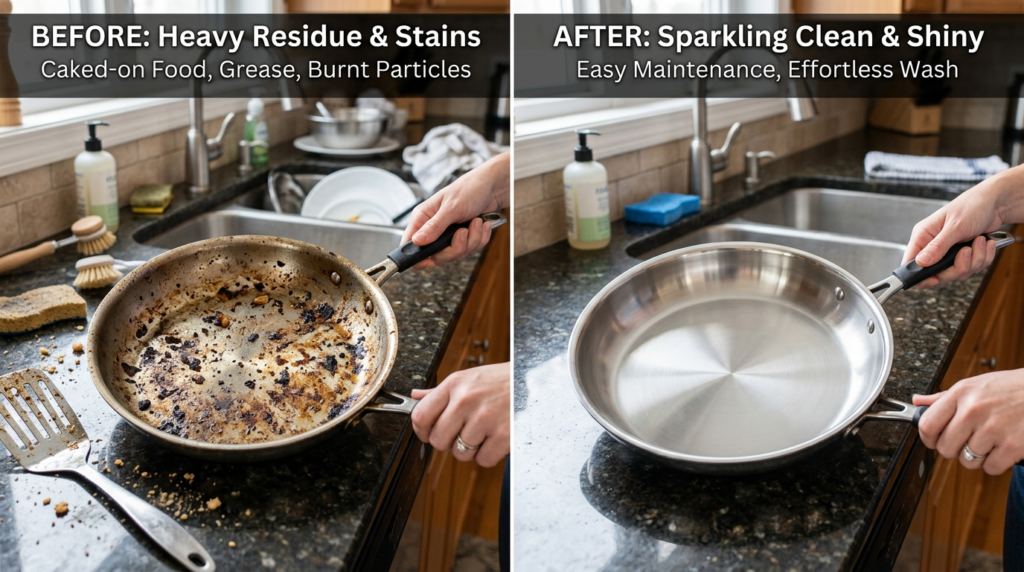
Cookware can cook well and still be a pain to live with. We score cleanup based on how easily residue releases, whether the interior stains, whether handles trap grime, and whether “dishwasher-safe” is truly realistic or just marketing. We do not assume that dishwasher-safe equals best practice; we treat it as a convenience factor and score it accordingly.
6) Durability Signals Over Time
Some issues show up only after repeated use: warping, loosening handles, coating wear, and performance drift. When we can’t run very long testing cycles, we use durability proxies (construction + known material behavior + warranty terms + consistent user feedback patterns). We also update pages as new data comes in. When a line changes materials, factories, or coating formulation, we treat it as a new evaluation rather than assuming continuity.
How We Recommend Products (Winners by Scenario, Not Hype)
We don’t pick “one best pan for everyone.” We pick winners by scenario because cookware is context-dependent. A heavy cast iron skillet can be a dream for searing and a nightmare for someone with wrist pain. A cheap nonstick pan can be a smart purchase if you treat it as replaceable. A premium stainless set can be a long-term value if you actually cook often.
Our Recommendation Labels
- Best Overall: the highest-confidence pick for most kitchens
- Best Budget: best performance-per-dollar with acceptable tradeoffs
- Best Premium: best performance and build when price is less important
- Best for Induction: reliable induction engagement + stable base
- Best for Eggs / Delicates: the nonstick convenience winner (with realistic lifespan expectations)
Images and Testing Visuals (4 Image Slots)
We use visuals to show what matters: heat behavior, sear results, coating performance, and cleanup reality. Below are four recommended image placements for this methodology page. Upload your images to WordPress and replace the src paths with your actual media URLs.
How We Keep Content Fresh (Updates, Corrections, and Versioning)
Cookware changes—new coating formulas, revised materials, new factories, and new model versions. We maintain credibility by updating key money pages on a schedule and when meaningful changes occur. Pages include a “last updated” date. If we change a recommendation, we explain why in plain language (e.g., durability concerns, performance drift, better alternatives, or changes in product specs).
What We Don’t Do (Explicit Boundaries)
- No fake lab claims: we don’t pretend to run industrial laboratory analysis unless we actually do.
- No guaranteed “safest cookware” promises: cookware safety depends on use, care, and individual sensitivities.
- No review-score manipulation: affiliate commission rates do not influence rankings.
Internal Links (Continue Your Research)
- Top Picks (Best Cookware) →
- Buying Guides (Materials & How to Choose) →
- Contact (Corrections & Feedback) →
Bottom Line
Our methodology is designed to be consistent, practical, and honest about tradeoffs. We don’t aim for perfection; we aim for decisions you won’t regret. Cookware that performs well, lasts longer, and matches your cooking style wins. Everything else is just marketing.