Nonstick vs Stainless Steel Cookware: Durability, Safety & Performance Compared (2026)
What if the most popular pan in your kitchen is secretly holding back your cooking skills? This fundamental choice between two primary types of cookware defines every meal you prepare.
Selecting the right material is crucial for any home chef. This guide cuts through the confusion to help you make an informed purchasing decision. Both options serve very distinct purposes in a modern kitchen.
Understanding their core differences is the first step to building an efficient setup. It saves money and meets your specific culinary needs.
We will provide a comprehensive comparison. It covers long-term durability, current safety profiles, real-world performance, and maintenance requirements. You will learn which type offers the best value for your investment.
Many experienced cooks wisely maintain both kinds of pans. Budget-conscious buyers, however, need clarity on what to prioritize first.
This analysis delivers actionable insights. It is based on real-world testing, material composition, and long-term cost. We focus on the 2026 landscape, including updated manufacturing standards and technological improvements available today.
Table of Contents
Key Takeaways
- The core choice between coated and clad pans impacts every cooking task.
- Each material excels in different areas, from delicate eggs to perfect sears.
- Durability and lifespan are major factors in long-term cost and value.
- Modern safety standards for both types have evolved significantly.
- Your cooking style and frequency should guide your primary investment.
- A hybrid arsenal is ideal, but a first purchase should match your most common needs.
- 2026 brings advanced non-stick coatings and premium stainless steel constructions to the market.
Introduction to Cookware Options
Before you chop an onion or heat the stove, a critical decision shapes your cooking outcome: your equipment’s core material. Every pot and pan has a specific role defined by its construction.
Selecting the right one is a pivotal investment for any home chef. It directly prevents wasted money on gear that fails to meet your needs.
Setting the Stage for Your Kitchen Investment
Your kitchen arsenal represents a significant financial commitment. Choosing materials suited to your habits from the start avoids the frustration and cost of premature replacement.
Why Cookware Material Matters
Different materials excel at distinct tasks. They respond uniquely to heat, interact with food, and withstand daily use.
Understanding these properties helps all cooks, from home enthusiasts to professionals, achieve better results. This knowledge translates directly to longer-lasting pots and pans and superior meals.
| Property | Coated Non-Stick | Clad Metal |
|---|---|---|
| Primary Construction | Aluminum or steel core with synthetic coating | Layered stainless steel with aluminum or copper core |
| Best For | Delicate foods, low-fat cooking, easy cleanup | Searing, browning, deglazing, and versatile techniques |
| Heat Response | Heats quickly, can have hotspots | Heats evenly, retains temperature well |
| Durability Profile | Coating can degrade; requires careful tool use | Extremely robust; resistant to scratches and corrosion |
| Maintenance Level | Gentle cleaning, avoid metal utensils | Can withstand abrasive cleaning and metal tools |
The following guide breaks down each material’s composition and real-world performance. This will help you identify the ideal best cookware sets for your specific culinary style.
Understanding Nonstick Cookware
Engineered for frictionless cooking, this category of pots and pans prioritizes easy food release above all else. A synthetic layer is applied to a metal base, creating a slick barrier.
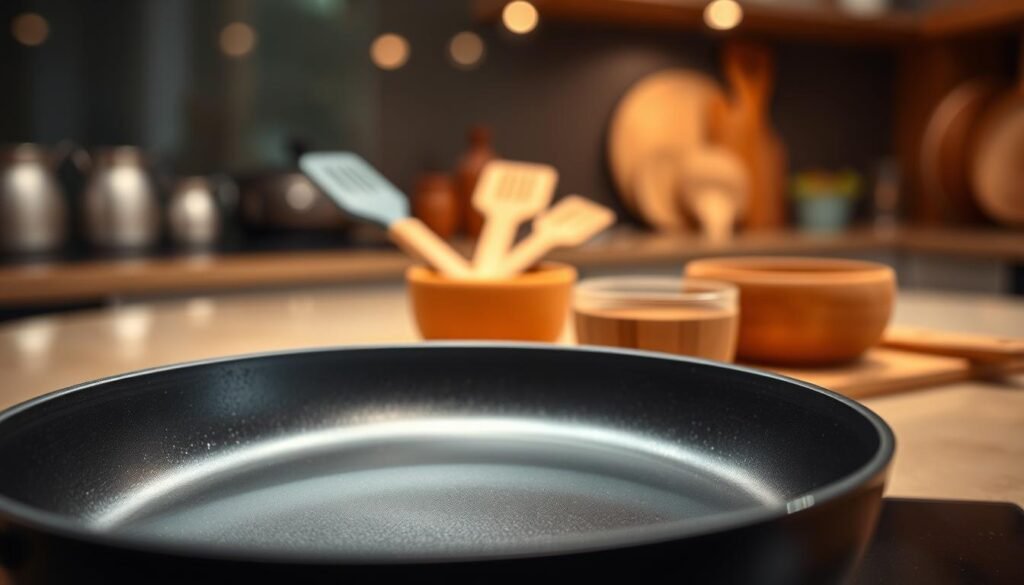
This technology repels water and oil. It is a game-changer for specific kitchen tasks.
Advantages of a Nonstick Surface
The primary benefit is effortless cleanup. Food slides right off, often with just a wipe. You also need very little fat for cooking.
This supports healthier, low-oil meal preparation. Delicate items like eggs and fish won’t tear or stick. They cook perfectly every time.
Considerations and Limitations
This convenience comes with rules. You must avoid metal utensils to prevent scratches. High heat can also damage the slick layer.
Most are not dishwasher-safe. The nonstick coating will wear down over years of use. It is not designed for creating dark sears or fond.
| Coating Type | Max Safe Temp | Best For | Key Consideration |
|---|---|---|---|
| Traditional PTFE | 500°F | Everyday eggs, pancakes | Use nylon or wood tools |
| Ceramic | 550°F | Low-medium heat sautéing | May wear faster than PTFE |
| Professional Multi-Layer | 550°F+ | Oven use, more durable | Higher cost, longer lifespan |
Best Cooking Applications
Use this type of pan for delicate foods. Scrambled eggs, omelets, and crepes are ideal. Thin fish fillets and fluffy pancakes also excel.
It is the champion for low-fat cooking and quick, sticky situations. For high-heat searing or making pan sauces, other materials perform better.
Understanding Stainless Steel Cookware
Achieving a perfect sear or crafting a rich pan sauce requires a material built for high-temperature mastery. This is where premium clad metal pots and pans excel.
They offer a lifetime of reliable service for serious cooking.
Key Benefits and Heat Performance
Quality stainless steel cookware uses multi-ply construction. Layers of steel sandwich an aluminum or copper core.
This design provides superb heat spread and steady temperature control. It is ideal for searing meats and browning vegetables.
The bonded layers also make these pieces incredibly tough. They resist warping and scratching through years of use.
You can safely move them from the stovetop to a hot oven. The non-reactive surface handles acidic foods like tomatoes without any metallic taste.
| Construction Type | Core Material | Heat Distribution | Best For |
|---|---|---|---|
| Tri-Ply | Aluminum | Very Good | General sautéing, sauces |
| Five-Ply | Aluminum & Copper | Excellent | Professional searing, even baking |
| Clad Bottom | Aluminum disk | Good | Budget-friendly daily tasks |
Proper Handling and Maintenance
There is a small learning curve. Always preheat your pan and use adequate oil or fat. This creates a natural non-stick surface.
Cleaning is straightforward and robust. These pots can handle dishwasher cycles and abrasive scrubbing without damage.
For stubborn residue, a brief soak does the trick. This durability makes them a smart, long-term kitchen investment.
Nonstick vs Stainless Steel Cookware: A Performance Comparison
Directly comparing how materials handle heat reveals their core strengths. This side-by-side look at performance highlights which tasks each type truly masters.
Heat Distribution and Retention
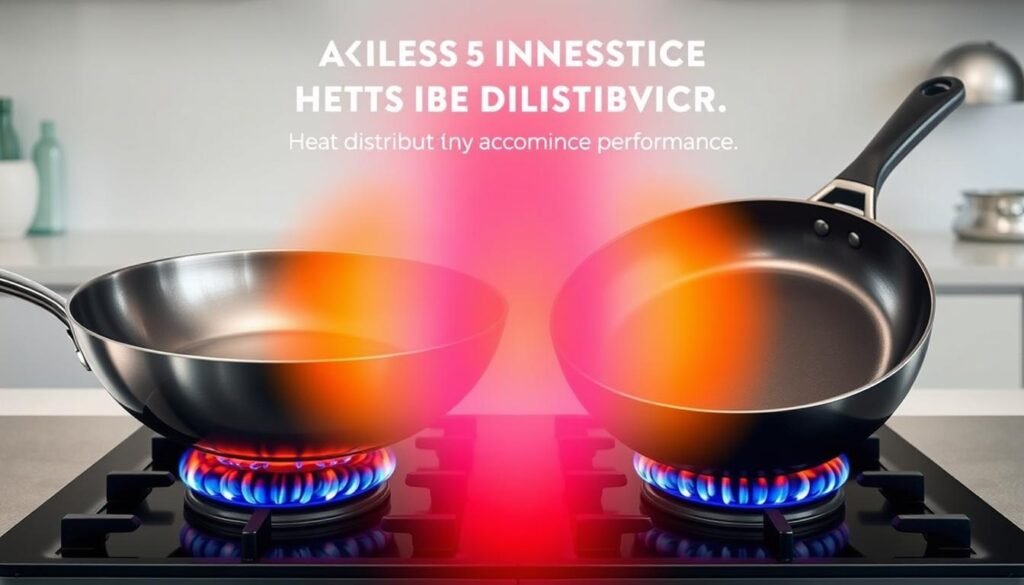
Clad metal with multi-ply construction provides edge-to-edge, even heat. This design prevents hot spots and maintains a steady temperature perfectly for searing.
Coated pans often have less sophisticated heat distribution. They work well for low-temperature tasks but struggle to retain the intense high heat needed for a perfect crust.
Cooking Versatility and User Safety
One material handles the full cooking spectrum. It can move from a delicate sauce to a blistering sear and into the oven.
The other excels at gentle tasks where food sticking is a concern. Safety is a key difference. Coated pans can release chemicals if overheated or scratched.
Clad metal presents no such risk, as its non-reactive surface ensures food safety under any condition. For a deeper dive, see this detailed comparison guide.
Durability and Longevity Insights
This is where the long-term value becomes clear. Even premium nonstick coatings degrade within a few years.
Quality clad metal maintains its performance for decades. The initial maintenance for a stainless surface is slightly higher. Its extreme durability offsets this over time.
Your total cost of ownership is significantly lower with the longer-lasting option.
Optimizing Your Kitchen: When to Use Each Type
Think of your pans as specialized tools, each designed for a unique set of kitchen jobs. Using the right one for each task guarantees better results and a more enjoyable cooking experience.
Choosing Nonstick for Delicate Foods
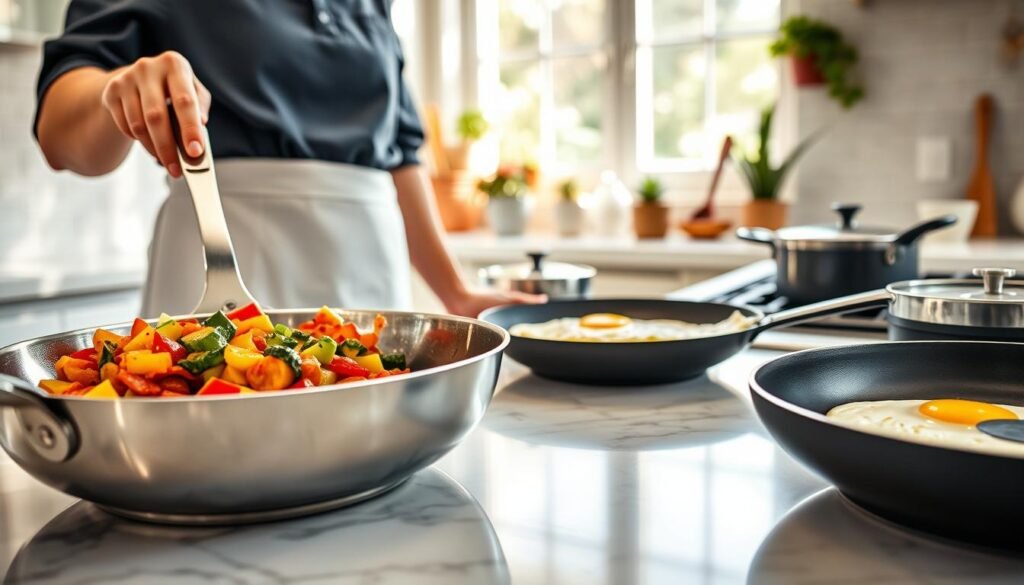
Reach for a nonstick pan when working with fragile items. Eggs, pancakes, and crepes release perfectly without tearing. Delicate fish fillets also benefit from this gentle surface.
It’s ideal for sticky foods like fried rice, where easy release is a priority. You can also use much less oil, supporting healthier meal preparation.
Selecting Stainless Steel for High Heat Applications
For searing and browning, clad metal is essential. It safely maintains the sustained high heat needed to develop a flavorful, crispy crust on meats and vegetables.
This material is also necessary for making pan sauces. Techniques like deglazing require food interaction with the hot surface. It excels at rapidly boiling large volumes for soups or stocks.
Most kitchens operate best with a hybrid setup:
- A 10-inch coated skillet for breakfast and delicate tasks.
- A 12-inch clad metal skillet for versatile searing and sauce work.
If buying just one piece, base your choice on your most common use. Prioritize a coated pan for daily eggs. Choose clad metal for all-purpose cooking and creating perfect crusts. For more details, see this comprehensive guide on material selection.
Tips for Durability, Cleaning, and Maintenance
The longevity of your favorite pans hinges on a few simple but crucial maintenance habits. Proper care protects your investment and ensures peak performance meal after meal.
Maintenance Routines for Nonstick Coatings
Always hand wash coated pans with gentle soap and a soft sponge. The dishwasher‘s harsh heat and detergents degrade the coating much faster than manual cleaning.
Keep cooking temperatures low to medium. Reserve high heat only for boiling liquids. This prevents the surface from breaking down.
Use only wooden or silicone utensils. Metal utensils will scratch the slick layer, creating spots where food sticks. Store these pans with protective cloths between them to prevent abrasion.
Care Techniques for Stainless Steel Finish
Clad metal is far more forgiving. You can safely run it through the dishwasher. For stuck-on food, a soak in soapy water softens residue quickly.
To prevent sticking, preheat the pan gradually. Add oil only when water droplets dance across the surface. This technique is similar to cast iron care.
For a temporary non-stick boost, you can season the finish. Heat a high-smoke-point oil until it smokes, then cool and wipe. This metal is built for lasting durability with minimal fuss. Its robust construction also makes it a top choice for induction-compatible sets.
Conclusion
The debate between coated and clad pots isn’t about finding a single winner, but about building a balanced culinary toolkit. Both materials offer unique advantages that deserve a place in a well-equipped home kitchen.
For long-term value, stainless steel with an aluminum core is a one-time investment. Quality clad pans last decades. Coated nonstick options, while easier for specific use, typically need replacement every few years.
Clad metal excels in oven-safe versatility and presents no chemical safety concerns. A nonstick pan remains the champion for delicate foods like eggs, where effortless release saves time.
Most cooking enthusiasts benefit from a hybrid setup. For a deeper analysis, consult our detailed guide on choosing between nonstick and stainless. Understanding these differences empowers you to make confident choices that enhance every meal.