
Carbon Steel vs Cast Iron Cookware: Which One Should You Choose in 2026?
What if the secret to perfect searing isn’t about the recipe, but the pan itself? Many passionate home cooks and professional chefs face this exact puzzle.
They must pick between two legendary, heavy-duty materials. Each has a dedicated following for good reason.
Both are celebrated for incredible durability and superior heat retention. This makes them versatile tools for a wide range of cooking tasks, from frying to baking.
Our comprehensive 2026 comparison will help you make a smart, informed decision. We’ll focus on your specific needs and preferences in the kitchen.
We will break down the composition, performance traits, and care routines for each type. You’ll also see their best practical applications.
Choosing the right foundational piece is a serious investment in your culinary success. Understanding these key differences is essential for maximizing your kitchen’s efficiency and your cooking joy.
Table of Contents
Key Takeaways
- Both materials offer exceptional durability and heat retention.
- Your cooking style and maintenance preference will guide the best choice.
- This comparison provides a detailed look at composition and performance.
- Understanding care requirements ensures long-lasting performance.
- Selecting the right piece is an investment in your culinary future.
- Each type excels in specific kitchen applications.
- Making an informed decision enhances cooking efficiency and results.
Introduction to Cookware Choices and Their Impact
Your kitchen arsenal deserves pieces that evolve with your skills, becoming more valuable over time. The right foundation transforms everyday meals and supports culinary exploration.
Overview of Carbon Steel and Cast Iron Benefits
Two legendary materials dominate this space. The first is a lighter alloy, prized for its quick reaction to temperature shifts. The second is a heavier classic, famous for holding steady heat for hours.
Both develop a superb, natural non-stick finish through a simple process called seasoning. This creates a healthier surface than synthetic coatings.
Understanding Cooking Needs in 2026
A major trend is investing in durable, chemical-free cookware. Many home chefs are replacing flimsy pans with these lifetime pieces. Your choice often depends on technique.
Do you need speed and control for a fast sauté? Or unwavering warmth for a long braise? Weight preference and heat management are key. For a detailed breakdown, see this comprehensive comparison.
Knowing this fundamental difference lets you match your gear to your goals. Explore quality options from trusted top brands to begin.
Composition, Manufacturing, and Physical Properties
Two distinct manufacturing paths lead to vastly different physical properties.
The core recipe is the first major difference. One alloy is about 99% iron with just 1% carbon. The other contains 2-3.5% carbon. This higher carbon content makes it more brittle.
That brittleness demands a thicker, heavier build for durability.
Material Composition and Fabrication Process
The creation process defines the final product. The lighter material is stamped from thin sheets. This gives it a sleek, smooth surface.
The classic, heavier piece is made by pouring molten alloy into sand molds. This casting method creates its characteristically textured surface.
Heat Retention, Conductivity, and Weight Considerations
These properties directly impact your cooking. A 12-inch stamped pan weighs roughly 4.8 pounds. Its cast counterpart can be 6.6 pounds.
The significant weight difference affects maneuverability. The thinner stamped pans heat and cool quickly for precise control.
The thick cast vessels excel at holding steady heat for long periods. This makes them perfect for searing and slow cooking.
Performance in the Kitchen: Cooking Techniques and Versatility
True culinary mastery emerges when your tools perfectly match your technique. Each material brings distinct advantages to different cooking scenarios. Understanding this performance split helps you select the right piece for every task.
Temperature Control and Responsiveness
Carbon steel heats and cools rapidly. This gives you precise command for delicate foods like eggs or fish. You can make quick adjustments to prevent burning.
Cast iron takes longer to warm up but holds steady heat exceptionally well. This creates perfect crusts on steaks while keeping interiors juicy. Its thermal mass is ideal for consistent results.
Optimal Cooking Methods for Each Material
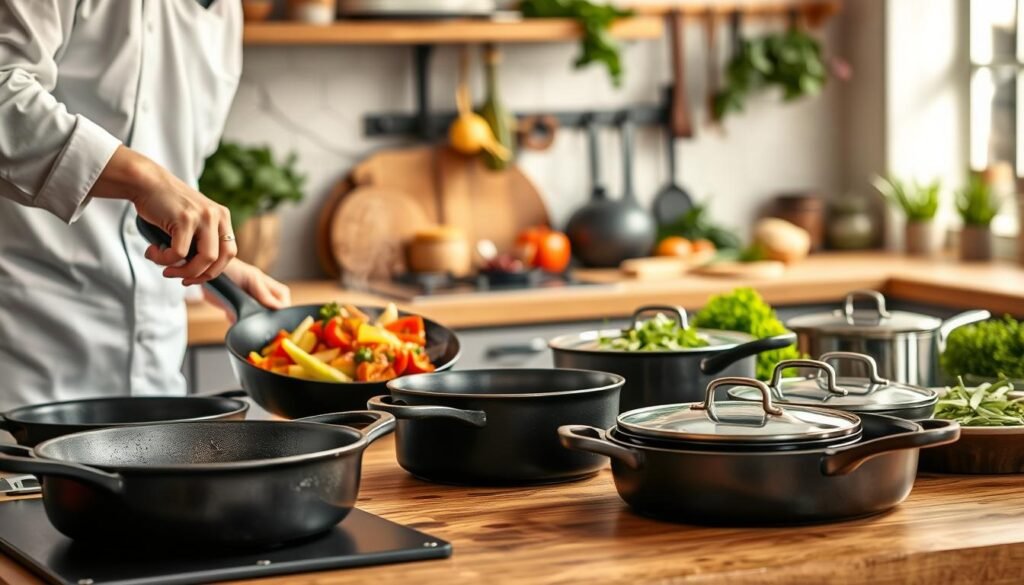
The lighter carbon steel pan excels at sautéing and stir-frying. Its sloped sides let you toss ingredients easily. This material transitions smoothly from stovetop to oven.
The heavier classic shines in baking and slow braising. It maintains even warmth for roasting vegetables or simmering stews. For a deeper look at performance, read this comprehensive comparison.
Both work with induction cooktops when properly designed. Check best induction-ready options for compatibility.
| Cooking Method | Best Material | Key Reason |
|---|---|---|
| Searing Steaks | Cast Iron | Superior heat retention creates perfect crust |
| Sautéing Vegetables | Carbon Steel | Quick temperature response prevents overcooking |
| Baking Cornbread | Cast Iron | Even oven heat distribution |
| Stir-Frying | Carbon Steel | Light weight allows easy tossing |
Seasoning, Non-Stick Properties, and Maintenance Guidelines
Transforming raw metal into a kitchen workhorse requires a simple, yet crucial ritual: seasoning. This process creates a natural, polymerized non-stick shield that protects against rust and improves with every use.
Building and Preserving the Seasoned Surface
Start by applying a microscopic layer of high-smoke-point oil like canola or flaxseed. Heat the pan until it smokes, allowing the oil to bond to the metal. Repeat this 3-5 times for a strong foundation.
The smoother surface of a carbon steel pan often allows seasoning to build more evenly. This can lead to superior non-stick performance compared to the textured finish of cast iron.
For daily maintenance, a simple wipe with a paper towel often suffices. This preserves the protective layer you’ve built.
Cleaning and Rust Prevention Best Practices
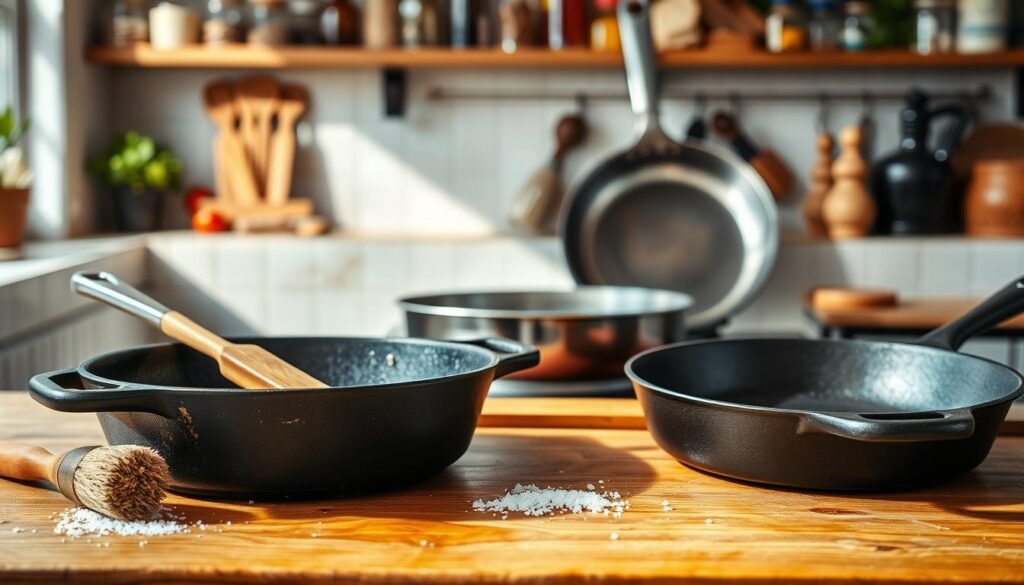
For stuck-on food, use coarse salt and a drop of oil as a gentle abrasive. Avoid harsh soaps that strip the seasoning.
Thorough drying is non-negotiable after any contact with water. Both materials are prone to rust if moisture remains. After cleaning, apply a thin oil film to create a barrier against humidity.
If rust appears, gently sand the spot and re-season the area. With consistent care, these pans develop heirloom-quality surfaces that last generations.
“A well-seasoned pan is a living part of the kitchen, its performance a direct reflection of the cook’s dedication.”
Essential Comparison: Carbon Steel vs Cast Iron Cookware
A side-by-side look at these materials reveals clear advantages for specific culinary tasks. This breakdown helps you match each piece to your cooking style.
Side-by-Side Feature Analysis
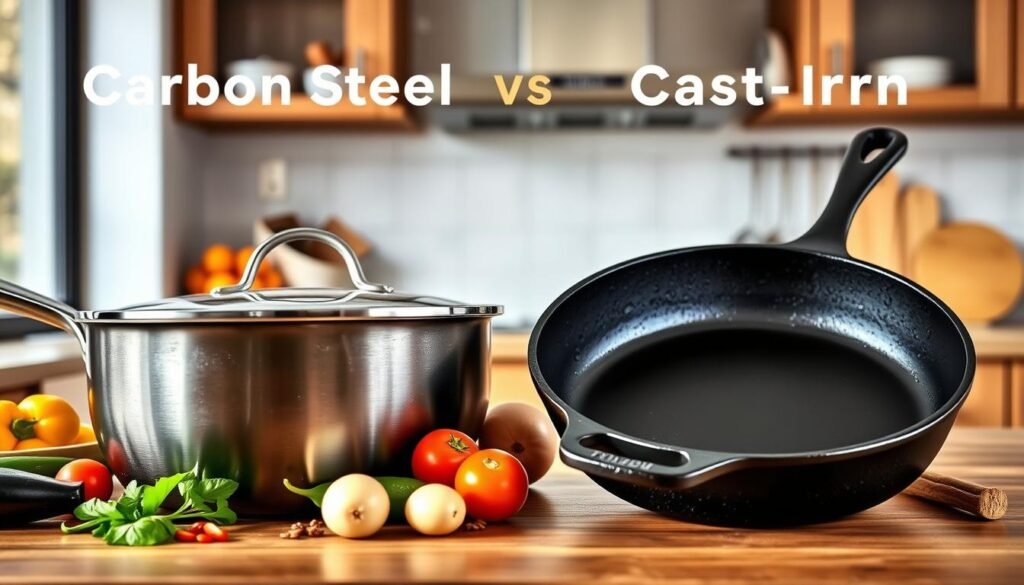
The physical differences between these two types are significant. Lighter pans offer quick temperature adjustment. Heavier vessels provide steady retention for even cooking.
| Feature | Carbon Steel | Cast Iron |
|---|---|---|
| Weight (12-inch) | ~4.8 lbs | ~6.6 lbs |
| Heat Response | Fast heating/cooling | Slow, steady retention |
| Surface Texture | Smooth | Textured |
| Handle Design | Long, ergonomic | Short, straight |
| Common Forms | Fry pans, woks | Skillets, Dutch ovens, griddles |
Pros and Cons for Different Culinary Applications
Your preferred techniques should guide your choice. The lighter option excels at quick stir-fries and sautéing. It offers superior control for delicate foods.
The heavier classic is unbeatable for slow braises and oven baking. Its porous surface can enhance flavors in stews over time. Both materials become family heirlooms with proper care.
The cookware maintenance is similar for both. Your decision ultimately depends on whether you value speed or consistent heat.
Compatibility with Various Heat Sources and Cooking Environments
Modern kitchens demand cookware that performs flawlessly across every heat source, from induction to open flame. Both seasoned materials work on gas, electric, and induction cooktops. Their magnetic properties ensure solid contact.
Induction, Gas, and Oven Performance
This lighter material offers superior performance on induction. Its thinner construction distributes warmth evenly with fewer hotspots. This is especially beneficial for larger vessels like woks.
Both types transition seamlessly from stovetop to oven. This makes them ideal for recipes requiring searing then roasting. You get versatility in cooking methods.
Adaptability to Different Cooking Styles
When comparing to stainless steel, note key differences. Stainless steel is nonreactive and ideal for acidic foods. The other two are reactive metals.
Cooking acidic ingredients like tomatoes can strip the seasoning layer. This may lead to metallic flavors and potential corrosion. Always opt for stainless steel for such tasks.
The lighter option has an advantage for outdoor environments. Its reduced heft makes it more portable for grills and campfires. Cast iron’s weight can be challenging.
Adaptability to different styles is clear. Carbon steel pans suit fast-paced, high-heat cooking requiring frequent adjustments. Cast iron excels in slow, steady methods.
Professional chefs often choose this material for its quick heating. Home cooks may prefer the classic for oven-based recipes. Each has distinct advantages.
In a well-equipped kitchen, these materials are complementary. They are not interchangeable but serve specific roles. Understanding this maximizes your culinary toolkit.
Conclusion
Ultimately, the best pan for your kitchen isn’t a universal answer, but a personal decision based on how you cook.
Carbon steel brings lighter weight and rapid temperature response. It excels at quick stir-fries and precise sautéing. Cast iron provides exceptional heat retention and durability. It shines for slow braises and perfect sears.
Your choice depends on your primary techniques. Prioritize maneuverability and control? The lighter option suits you. Value consistent, even heat for long periods? The classic is ideal.
Many serious cooks invest in both. They use each for its strengths. For a deeper dive, read this comprehensive comparison.
Select quality pieces that align with your goals. With proper care, they serve for generations.