All-Clad vs Made In Cookware Review: Which Stainless Steel Set Wins?
Is the legendary name in professional kitchens still the undisputed champion, or has a smart, modern contender changed the game for good?
Choosing high-performance stainless steel cookware is a major investment. Two premier brands dominate this space, but they come from very different worlds.
One is the established pioneer, inventing bonded steel in 1971. The other is a direct-to-consumer innovator launched in 2016. Both create exceptional pans loved by chefs.
This hands-on comprehensive comparison cuts through the hype. We tested cooking performance, design, and durability side-by-side.
We’ll help you decide based on your budget and kitchen needs. The core differences? Construction layers, price points, and overall value.
Table of Contents
Key Takeaways
- This review pits an industry pioneer against a direct-to-consumer innovator in stainless steel cookware.
- Both brands offer professional-grade performance but differ significantly in price and construction philosophy.
- One brand offers multiple collections with varying ply counts; the other focuses on a single, high-performance 5-ply build.
- Real-world testing evaluates heat distribution, retention, and cooking results.
- The comparison is designed to help you make a confident purchasing decision for your kitchen.
- Key factors analyzed include material quality, design aesthetics, and overall durability.
- Understanding these differences ensures you invest in the steel set that best matches your cooking style.
Introduction: The Rise of Stainless Steel Cookware
The dominance of stainless steel in professional kitchens isn’t an accident. It’s the result of meeting every critical demand a cook can make of their tools.
This material provides a unique blend of durability, safety, and versatility that others simply cannot match.
Why Stainless Steel Remains a Kitchen Staple
Stainless steel cookware requires no special seasoning like cast iron. It has no coating that can wear off over years, unlike non-stick pans.
It is completely non-reactive. You can safely cook acidic foods like tomatoes without worry.
These pans withstand extreme heat. They are perfect for searing meats or going under a broiler. Their toughness allows for metal utensil use and aggressive cleaning.
The Role of Cookware in Modern Cooking
Versatility is key. Quality steel pieces move seamlessly from stovetop to oven. This unlocks superior searing and sauce-making techniques.
Investing in good stainless steel pots and pans is a long-term decision. With proper care, they can last a lifetime in your home kitchen.
While there’s a learning curve, mastering this cookware delivers restaurant-quality control. It’s the logical upgrade for serious cooking.
Brand Heritage: All-Clad’s Legacy and Innovation
The story of high-performance stainless steel cookware begins with a single, groundbreaking invention in 1971.
This moment created the entire category of fully-clad pans we know today.
Historical Background and Industry Impact
Metallurgist John Ulum founded the company. He solved a major problem with steel.
Stainless steel alone is a poor heat conductor. His revolutionary process bonded a core of aluminum between layers of steel.
This construction provided even, fast heating. It was a game-changer for professional chefs.
All materials are sourced from U.S. suppliers. Every piece is made in Canonsburg, Pennsylvania.
This commitment to American manufacturing appeals to many buyers. It ensures consistent quality control.
For nearly 50 years, this brand has set the standard. It remains a favorite in serious kitchens.
The original innovation led to multiple collections. They offer different ply counts and materials for various needs.
Choosing this cookware means investing in a time-tested, premium tool. Its reputation is built on decades of reliable performance.
Brand Spotlight: Made In’s Disruptive Approach
In 2016, a new player entered the premium cookware market with a bold promise. It offered high-end performance without the traditional retail markup.
Direct-to-Consumer Model and Modern Appeal
This brand sells exclusively online directly to customers. Cutting out store markups allows for a lower price on professional-grade items.
Their product line is brilliantly simple. They offer just five types of cookware: stainless steel, non-stick, carbon steel, copper, and enameled cast iron.
Each category has only one version. The construction is always 5-ply with a triple-layer aluminum core.
This focused design means they perfected one build. It avoids the confusion of multiple collections from other brands.
They partner with expert manufacturers in the U.S., France, and Italy. This blends traditional craftsmanship with modern, efficient distribution.
A strong social media presence appeals to younger, savvy home cooks. They seek quality pans without paying for a legacy name.
All-Clad vs Made In: In-Depth Comparison
To truly understand which premium stainless steel cookware set is right for your kitchen, we must move beyond marketing claims. Our analysis evaluates construction, heat performance, design, and overall value.
Both brands produce exceptional pans. Your final decision will hinge on specific priorities like budget, aesthetic taste, and handle comfort.
We conducted controlled tests to measure heat distribution and retention. The comparison also examines the composition and value of complete best cookware sets from each brand.
This prepares you for a detailed review across technical and subjective factors. The goal is a clear, confident choice for your cooking needs.
Construction & Materials: Ply Differences and Core Technologies
The secret behind even heating in high-end pans lies in their multi-metal ply construction. “Ply” refers to the number of bonded metal layers.
Think of it like a sandwich. The outer stainless steel layers provide durability. The inner core material, like aluminum, manages heat.
3-Ply vs. 5-Ply: Aluminum and Stainless Steel Layers
A common 3-ply build uses one aluminum core between two steel layers. This setup is lighter and heats quickly.
It offers excellent temperature control for most tasks. A 5-ply design often uses three aluminum layers.
This provides more aggressive heat transfer and better retention. The extra mass helps prevent hot spots.
The Role of Copper and Alternative Materials
Copper is a premium core material. It conducts heat even better than aluminum.
A copper core allows for extremely precise temperature adjustments. Some 5-ply sets use a thin steel core.
This can diffuse heat for supreme evenness but may slow response. The table below breaks down the key options.
| Ply Type | Core Material | Layers | Key Characteristic | Best For |
|---|---|---|---|---|
| 3-Ply | Aluminum | Stainless / Aluminum / Stainless | Light, responsive heating | Quick sautés, general use |
| 5-Ply (Standard) | Triple Aluminum | Stainless / Aluminum / Aluminum / Aluminum / Stainless | Aggressive heat, strong retention | Searing, boiling, even cooking |
| 5-Ply (Steel Core) | Steel & Aluminum | Stainless / Aluminum / Steel / Aluminum / Stainless | Diffused, even heat; slower response | Delicate sauces, low simmering |
| 5-Ply (Copper Core) | Copper | Stainless / Aluminum / Copper / Aluminum / Stainless | Superior conductivity, precise control | Expert temperature-sensitive tasks |
More layers don’t always mean better cookware. The thickness and arrangement of each core define real performance.
Your choice affects pan weight, heat-up speed, and your overall cooking experience.
Design and Aesthetic Appeal: Brushed vs. Polished Finishes
Handle design and exterior finish are key factors in long-term cookware satisfaction. These elements affect daily use, maintenance, and how the piece feels in your hand.
Handle Ergonomics and Exterior Finishes
The exterior of your steel pans sets the visual tone. One brand offers a brushed finish across its line. This matte look hides fingerprints and water spots well.
The other’s standard collections feature a high-polish, mirror-like shine. This classic look is iconic but shows every smudge. A brushed option exists but often costs more.
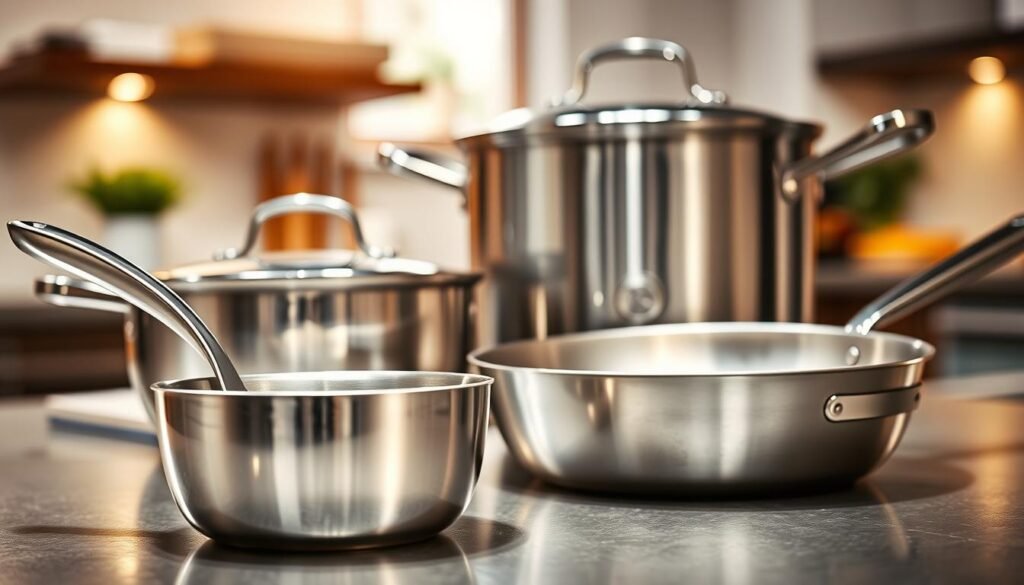
Handle design diverges significantly. One uses flat, hollow handles. They stay cooler by dispersing heat over a larger area.
The other features solid, U-shaped handles. They provide a secure thumb grip but can get hot during long sautés. Keeping a kitchen towel handy is wise.
| Feature | Brushed Finish | Polished Finish | Hollow Handle | Solid U-Shape Handle |
|---|---|---|---|---|
| Primary Benefit | Hides fingerprints & scratches | Classic, professional shine | Stays cooler longer | Secure, ergonomic grip |
| Maintenance Level | Low | High (shows marks) | N/A | N/A |
| Heat Transfer | N/A | N/A | Slow (handle stays cool) | Fast (handle heats up) |
| Ergonomics | N/A | N/A | Can feel bulky for small hands | Comfortable, natural feel |
For those with smaller hands, the bulkier handles on some saucepans might feel less natural. Lid handles also differ. Larger ones are easier to grip with an oven mitt.
These practical differences in design and feel are crucial, as noted in a detailed hands-on review. Your preference will dictate which cookware feels better in daily use.
Performance Metrics: Heat Distribution and Retention Analysis
Beyond marketing claims, the true measure of a pan lies in its ability to distribute and hold heat. We conducted controlled tests to compare these critical cooking metrics directly.
Results from Heat Tests and Even Cooking
We poured three cups of cold water into identical 12-inch skillets. Turning the burner to high, we timed the boil.
The cookware with a 5-ply build brought the water to a boil 45 seconds faster. It reached a rolling boil in just over three minutes.
Bubbles formed evenly across the entire surface in both pans. This uniform pattern confirms excellent heat distribution with no hot spots.
After pouring out the boiling water, we measured heat retention. The 5-ply pan remained significantly warmer five minutes later.
The extra thermal mass from its triple-layer aluminum core holds energy longer. This is a key advantage of the thicker 5-ply construction.
Faster heating saves energy and time. Superior retention keeps sauces hot and stabilizes temperature when adding cold ingredients.
These test results compare specific 3-ply and 5-ply models. Other collections with different core materials will perform uniquely.
Both brands delivered even heat across the cooking surface. This is the most important factor for consistent results in your steel cookware.
Cooking Versatility: Searing, Boiling, and Oven Use
The ultimate test for premium cookware isn’t just even heating, but its seamless transition from stovetop to oven. This capability unlocks professional techniques like braising and finishing proteins.
Both brands excel here. Their steel construction handles thermal shock without warping.
Stove-to-Oven Transition Capabilities
I tested this with pork chops and chicken breast. Each pan delivered a perfect, even sear. The high heat created a flavorful fond for sauces.
Moving directly to the oven presented no issues. The real difference lies in maximum temperature tolerance.
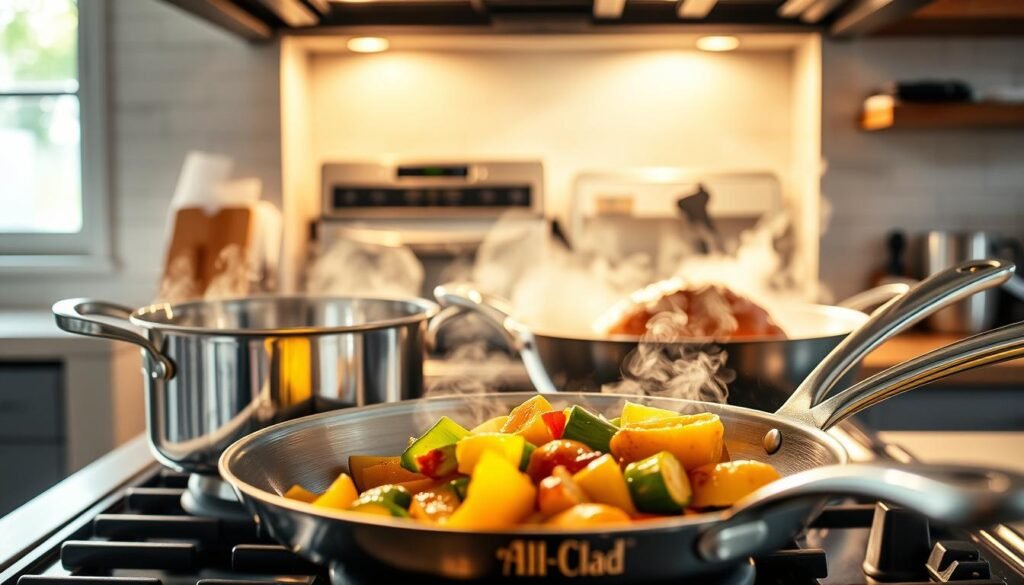
Made In cookware is rated for an impressive 800 degrees Fahrenheit. The other brand’s standard steel lines are safe to 600 degrees.
For most home cooking, both ratings are more than sufficient. The higher limit is a bonus for specific high-heat tasks.
“The ability to deglaze a hot pan with wine or vinegar is a game-changer. It’s a technique that would ruin lesser non-stick surfaces, but it’s where stainless steel truly shines.”
This non-reactive quality is key. You can build pan sauces directly in the pan after searing food. Even heat distribution prevents burning delicate ingredients.
| Feature | High-Temp Searing | Oven-Safe Rating | Best For Technique |
|---|---|---|---|
| Performance | Excellent browning on both | 600°F vs. 800°F | Searing steaks, pork chops |
| Versatility | Creates fond for sauces | Exceeds most recipe needs | Stovetop to oven braising |
| Material Advantage | Non-reactive surface | Handles thermal shock | Deglazing, broiling |
This makes either brand a superb choice for induction cookware users who need consistent, high heat. Your food will cook evenly from edge to center.
In practical cooking tests, both pans performed identically. Chicken breasts cooked through evenly with a golden crust. The difference in degrees is a spec sheet advantage, not a cooking one.
Usability in the Kitchen: Comfort, Handling, and Safety
How a pan feels in your hand can make or break your cooking experience. Daily comfort and safety are critical for enjoying your kitchen tools.
This section examines weight, balance, and handle design. These factors impact fatigue and burn risk during meal preparation.
Handle Design and Heat Safety Considerations
One brand’s 5-ply construction adds noticeable heft. Its pans feel heavier during long cooking sessions.
This can cause arm fatigue when moving cookware from burner to sink. The other brand’s 3-ply build is lighter.
Lighter steel pans are easier to maneuver. They reduce strain when transferring food to the oven.
Handle design directly affects heat safety. One uses hollow, offset handles that stay cooler longer.
The other features solid handles that conduct heat faster. Forgetting a hot handle can lead to serious burns.
Always use a kitchen towel or mitt. This habit is essential for safe steel cookware use.
Ergonomics matter for different hand sizes. Wider handles suit larger hands comfortably.
Slimmer profiles may feel better for smaller grips. Choose based on what feels secure in your hand.
| Feature | Heavier 5-Ply Pans | Lighter 3-Ply Pans | Hollow Handles | Solid Handles |
|---|---|---|---|---|
| Weight Impact | More arm fatigue over time | Easier to flip and clean | N/A | N/A |
| Heat Safety | N/A | N/A | Stays cooler longer | Heats up faster |
| Ergonomics | N/A | N/A | Better for large hands | Often slimmer profile |
| Best For | Stationary cooking tasks | Active, frequent moving | Distracted or multitasking cooks | Those who prefer a classic feel |
Develop awareness of handle temperature every time you cook. Keep towels accessible to prevent accidents.
Both brands produce excellent cookware. Your choice depends on physical comfort and safety habits.
Price and Value: Investment in Premium Cookware
Evaluating the cost of premium stainless steel cookware requires looking beyond the initial price tag. Both brands represent a serious investment compared to budget options.
The long-term value justifies the upfront cost for serious home cooks. Durability and performance are key factors.
Comparing Price Points and Long-Term Value
One brand’s direct-to-consumer model cuts out retail markups. This allows them to offer 5-ply construction at competitive prices.
The other sells through traditional stores. Customers pay a premium for the established brand name and retail margins.
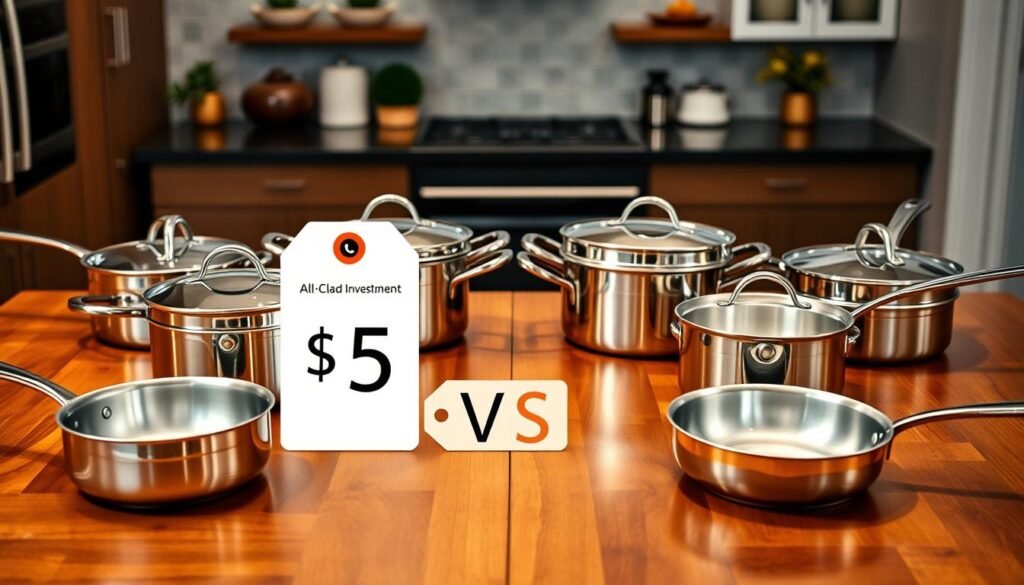
Specific set prices fluctuate with sales. A 6-piece steel set from one brand often lists around $559.
A 7-piece cookware set from the other can drop to $350 during promotions. Timing your purchase matters.
| Price Factor | Direct-to-Consumer Model | Traditional Retail Model | Long-Term Value |
|---|---|---|---|
| Initial Cost | Generally lower for comparable ply | Higher due to store markup | High upfront, low cost-per-use |
| Construction Offered | Single, high-performance 5-ply build | Multiple collections at different price points | Both offer professional-grade steel |
| Discount Availability | Periodic website promotions | Frequent 30-40% off sales events | Significant savings possible |
| Cost-Per-Use Over Years | Pennies per meal over decades | Similar long-term value calculation | Justifies the investment over time |
Spending $500-$800 on cookware that lasts 20+ years is cost-effective. It beats replacing cheap pans every few years.
Your choice depends on budget and desired construction. Both brands deliver exceptional steel cookware for the price.
Set Inclusions: Comparing Pot and Pan Combinations
Comparing set configurations reveals strategic differences in how brands equip home chefs for everything from eggs to stock.
Buying a complete cookware set is a smart move to outfit your kitchen. It provides better value than individual piece purchases.
You must ensure the included pots and pans match your real cooking habits.
Differences in 6-Piece and 7-Piece Sets
A key bonus in some Made In sets is an included non-stick pan. This is perfect for quick eggs without mastering steel techniques.
The large stock pot is a major differentiator. Made In’s version is an 8-quart tall pot, ideal for pasta and broth.
All-Clad’s corresponding pot is a shallower 6-quart design. It functions more like a braiser than a classic stockpot.
All-Clad sets often include a versatile 3-quart sauté pan. This mid-size is great for curries and stir-fries.
That specific piece is missing from the other brand’s standard set lineup.
Consider your storage space. Taller pots require more vertical cabinet room.
Both brands offer expanded 10-piece sets for full kitchen coverage. The best strategy is to buy a core set first.
Then, supplement with individual pans as your cookware needs become clear.
Cleaning and Care: Maintaining Stainless Steel Cookware
Keeping your stainless steel pans in top condition requires understanding a few simple care principles. This steel cookware is famously low-maintenance compared to other materials.
You never need to season it like cast iron. There is no non-stick coating that can chip into your food. The surface is completely non-reactive.
Acidic tomato sauce or leaving a dirty pan in water overnight causes no harm. For daily cleaning, use mild dish soap and a soft sponge.
Stuck-on food? Deglaze the hot pan with a little water after cooking. Let it cool, then scrub gently. Discoloration from high heat can happen.
A paste of Bar Keeper’s Friend works wonders on stubborn stains. It restores the shine without damaging the steel.
Hand washing is best for your cookware. The dishwasher can dull the exterior finish over time. Avoid thermal shock.
Never plunge a scorching pan into cold water. The sudden temperature change can warp the cooking surface. Minor scratches and a patina are normal.
These things do not affect performance. Your stainless steel set will last for decades with this basic care.
Real-World Testing: User and Chef Feedback
Learning to cook with steel pans is less about precision and more about developing heat awareness. Feedback from professionals and home cooks provides the best test.
Insights from Professional Kitchens and Home Cooks
In restaurants, steel pans face brutal cooking conditions. Chefs sear proteins, bake fish, and toss pasta in them daily.
They endure being tossed into sinks and placed under broilers. This brand has become the standard steel in many professional kitchens due to this durability.
Home users report similar toughness. Once they master the learning curve, they achieve restaurant-quality results.
Practical Tips for Everyday Cooking
Preheat your dry pan over medium heat for a few minutes. Then add a high-smoke point oil like avocado or canola.
When the oil shimmers without smoking, your pan is ready. This visual cue is more practical than complex water bead tests.
Food will sometimes stick initially. For searing meat, this sticking creates a flavorful fond for sauces.
If things stick or garlic burns, add a small splash of water. This cools the pan and loosens food immediately.
The key is to abandon fear. With time and practice, these things become second nature in your kitchen.
Conclusion
The final verdict in this cookware comparison rests on your individual needs as a home chef. Both brands deliver exceptional stainless steel cookware that will serve your kitchen for many years.
Choose Made In if you prioritize modern 5-ply steel cookware, cooler handles, and competitive price. Their sets often include useful non-stick pans.
Select All-Clad for lighter weight, a proven reputation, and classic polished finishes. Their variety suits specific cooking styles.
Your decision hinges on personal comfort and style. With proper care, either investment enhances your daily cookware experience tremendously.