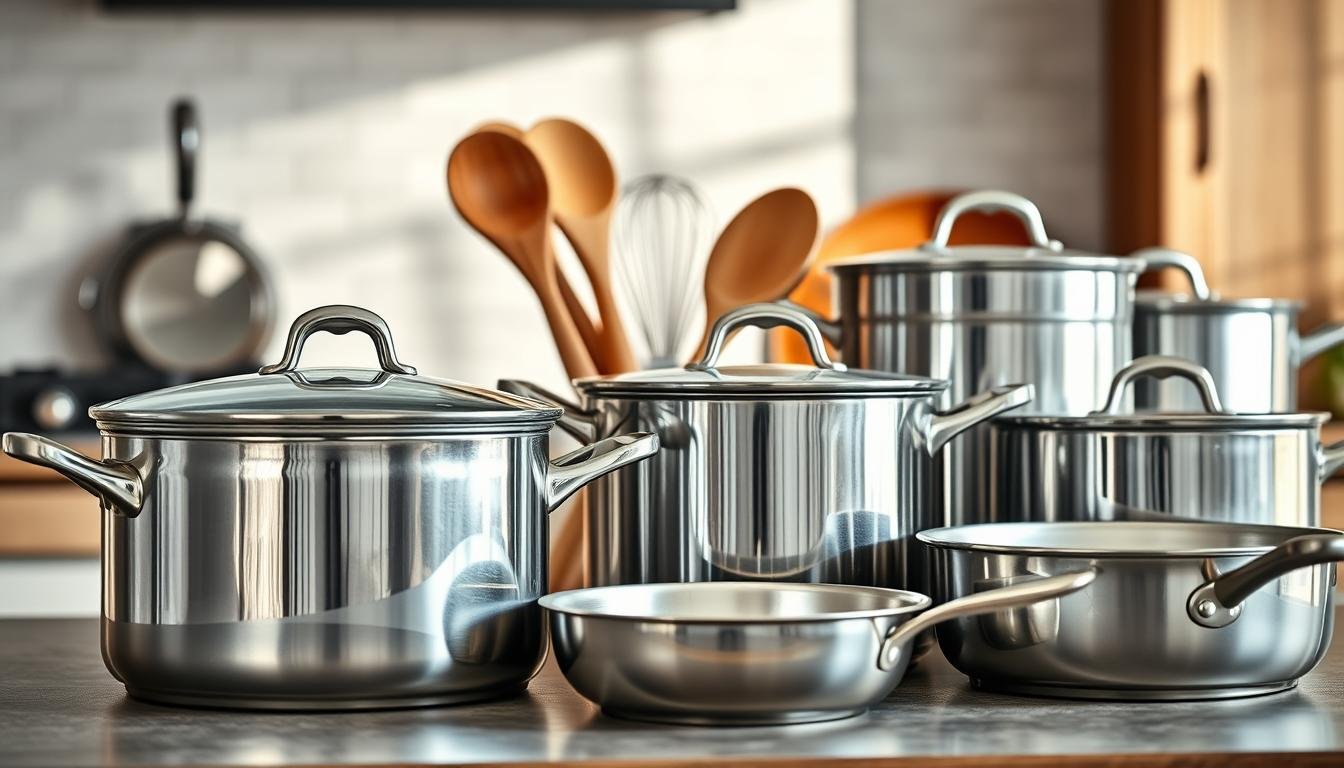
Stainless Steel Cookware Guide (2026): Pros, Cons, Best Uses & What to Buy
What if the shiny pots and pans you see in every store are secretly limiting your cooking potential? This comprehensive resource cuts through the hype to give you the facts.
Our 2026 guide is your complete roadmap. It helps you navigate the crowded market of kitchen essentials. You will learn what makes a premium product stand out from a cheap imitation, like the stainless steel cookware.
We break down the real advantages and the common frustrations. You’ll discover which meals this material excels at cooking. We also provide clear, expert-backed recommendations for your specific needs.
This page is designed to help you make a smart investment. Whether you’re building your first kitchen or upgrading old tools, the right choice transforms your daily routine. Get ready to cook with confidence.
Table of Contents
Key Takeaways
- Learn the true benefits and drawbacks of stainless steel.
- Identify the construction features that signal long-term durability.
- Understand which cooking techniques work best with this type of cookware.
- Receive clear guidance on selecting the right set for your budget and kitchen.
- Compare top-rated products to find the best overall value.
- Gain practical tips for maintenance and maximizing performance.
- Transform your home cooking with tools trusted by professional chefs.
Introduction to Stainless Steel Cookware
Your daily cooking experience hinges on the performance and reliability of your core equipment. The right foundation transforms routine tasks into enjoyable results.
This material has earned its place as a kitchen essential. Its popularity stems from a powerful blend of durability and function.
Overview of Today’s Cookware Trends
Modern kitchens demand versatile tools. The trend is toward pieces that perform multiple roles seamlessly.
Consumers want items that work on every stove type. From classic gas to modern induction, compatibility is key. This drive for flexibility makes certain materials a smart choice.
| Trend | Key Feature | Primary Benefit |
|---|---|---|
| Multi-Functional Design | One pot for searing, simmering, and serving | Saves space and simplifies meal prep |
| Full Cooktop Compatibility | Works on induction, gas, electric, and ceramic | Future-proofs your kitchen investment |
| Sleek, Professional Aesthetic | Shiny, timeless finish | Enhances the look of any home kitchen |
| Restaurant-Grade Performance | Superior heat response and control | Delivers consistent, high-quality cooking results |
Why Quality Cookware Matters in the Kitchen
Superior tools directly affect your food. They ensure even heat, which prevents burning and promotes perfect texture.
This means you spend less time fixing mistakes. You get more predictable and delicious outcomes every time.
Great meals start with great pans. You cannot layer flavor properly with equipment that can’t hold or distribute heat evenly.
Investing in premium stainless steel means fewer replacements. The long-term value is clear. You get consistent performance that cheaper options cannot match.
The content ahead will explore these features in detail. Understanding these principles helps you make a choice that delivers lasting value.
Design and Durability: Key Features of Premium Cookware
Behind every perfectly seared steak or evenly simmered sauce lies a foundation of advanced material science. Iconic design, enduring quality, and premium performance are measurable traits in top-tier kitchenware.
Heat Distribution and Performance
Superior heat management eliminates hot spots. Multi-layer construction combines metal with aluminum or copper cores.
This ensures even temperature across the entire cooking surface. Results depend on the number of layers, typically from 3-ply to 7-ply.
More plies provide better control and consistent outcomes. You get rapid response and excellent retention.
Construction, Materials, and Longevity
Durability is a hallmark of quality. Properly constructed pieces last decades without warping.
Look for 18/10 stainless steel for corrosion resistance. This material maintains a polished finish over time.
Advanced designs incorporate titanium-reinforced alloy for enhanced strength. These specialized products withstand heavy use.
Construction quality separates premium brands. Made in USA products with globally sourced materials often show superior craftsmanship.
| Construction Type | Core Materials | Key Benefit |
|---|---|---|
| 3-Ply | Alloy with aluminum core | Good heat distribution for everyday cooking |
| 5-Ply | Multiple layers of metal and aluminum | Superior temperature control and even cooking |
| Titanium-Reinforced | Alloy with titanium layer | Maximum durability for commercial-grade use |
For a detailed review of top-performing sets, explore our guide to the best stainless steel cookware.
Advantages & Disadvantages of Stainless Steel Cookware
Durability and versatility are celebrated, but a complete picture requires acknowledging the learning curve. This balanced view helps you make a smart choice.
Weighing the pros and cons ensures your investment matches your kitchen habits. Let’s break down the key points.
Notable Benefits for Everyday Use
This material excels in longevity. It resists scratches and corrosion far better than many alternatives.
You get excellent versatility. These pans work on all stove types, including induction. They also move from stovetop to oven safely.
Cooking acidic foods is no problem. Tomato sauces won’t pick up a metallic taste. Cleanup is often dishwasher simple.
| Aspect | Benefit | Consideration |
|---|---|---|
| Durability | Lasts for decades with minimal wear | Higher initial cost than some options |
| Versatility | Works on all heat sources and is oven-safe | Requires proper preheating technique |
| Food Reaction | Non-reactive, preserves pure flavors | Can stick if temperature is not managed |
| Maintenance | Dishwasher safe and stain-resistant | May show water spots if not dried |
Potential Drawbacks and Considerations
The main hurdle is technique. Food can stick without proper preheating and enough fat.
Price varies widely. Entry-level sets are affordable. Premium multi-ply products command a higher price.
Mastering temperature control turns a potential drawback into a superpower for achieving perfect sears.
Pure steel isn’t a great heat conductor. Quality pieces use aluminum or copper cores. This construction directly impacts performance and value.
For a deeper dive into these trade-offs, read this analysis of stainless steel cookware pros and cons.
Cooking Performance and Best Uses in the Kitchen
The true test of any kitchen tool is how it performs under the heat of real cooking tasks. Premium kitchenware delivers consistent results across a wide range of techniques.
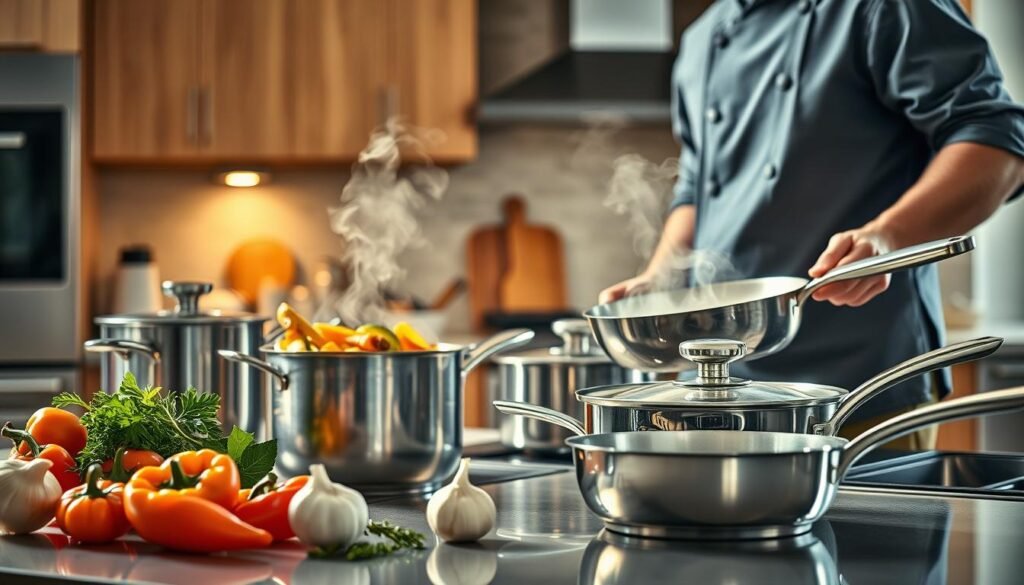
Perfect for Sautéing, Frying, and Boiling
Sautéing vegetables and proteins requires even, high heat. This material provides the searing power needed for perfect caramelization.
Frying performance is exceptional. With 14 specialized fry pan options available, you get crispy, golden results for eggs, chicken, and more.
Boiling and simmering work beautifully. Saucepans won’t react with acidic ingredients like tomatoes. They maintain steady temperatures for long cooking times.
Oven, Induction, and Multi-Tasking Capabilities
Oven capabilities set this cookware apart. Most pieces safely withstand temperatures from 500°F to 600°F.
This allows for versatile pan-to-oven techniques. You can sear meat on the stovetop and finish it in the oven effortlessly.
The ability to move a pan directly from the burner to the broiler is a game-changer for building complex flavors.
Induction compatibility is nearly universal. Data shows 47 products work efficiently on modern magnetic cooktops.
Multi-tasking makes these pans ideal for one-pan meals. You can sear, deglaze, and create a sauce without switching tools.
Comparing Cookware Sets: Stainless Steel Versus Alternatives
Material choice directly impacts flavor development, ease of use, and the lifespan of your kitchenware. Understanding these differences helps you get the best results for your money.
Stainless Steel vs. Nonstick: What to Expect
Stainless steel lasts for decades. Typical nonstick pans often need replacement every few years.
Nonstick surfaces excel at cooking eggs without sticking. However, they cannot create the flavorful sear you get with a steel surface.
Hybrid products try to combine both worlds. Yet, they usually compromise on peak performance in one area.
Comparative Insights: Aluminum and Cast Iron Options
Aluminum heats very fast and is budget-friendly. But it can react with tomato sauce and may warp over time.
Cast iron holds heat beautifully and develops a natural nonstick coating. Yet, a single pan can be very heavy and requires regular seasoning.
| Material | Best For | Key Consideration |
|---|---|---|
| Stainless Steel | Versatile, high-heat cooking | Superior durability and oven-safe |
| Nonstick | Low-fat cooking, delicate foods | Coating wears out; avoid high heat |
| Aluminum | Quick, even heating on a budget | Can discolor and react with acids |
| Cast Iron | Slow cooking, baking, searing | Heavy and needs consistent care |
For all-around performance, a quality stainless set is the workhorse. It handles techniques other materials can’t.
For a deeper dive into how it stacks up against another durable option, see our analysis of stainless steel vs. hard anodized cookware.
How to Choose the Perfect Cookware Set
Your investment in a kitchen collection should align with both your cooking habits and long-term value. This choice impacts daily meal prep and overall satisfaction.
Focus on features that deliver performance, not just piece count.
Features to Look For in a Cookware Set
Superior construction is paramount. Seek fully-clad or multi-ply designs with aluminum cores.
This ensures even heating. Avoid pans with only bonded bases.
The lid design adds versatility. Tempered glass lets you monitor food. Solid metal lids are better for high-heat oven use.
Essential pieces include fry pans, saucepans, and stock pots. A typical cookware set has 10-12 items.
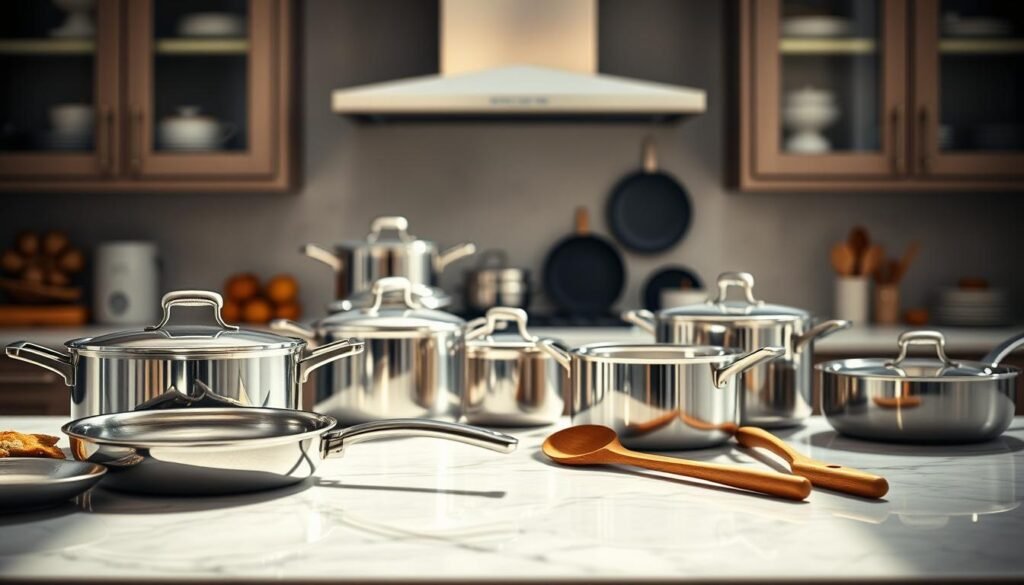
Check for a strong warranty. Lifetime coverage signals a confident manufacturer.
Budget, Price, and Value Considerations
Price ranges are wide. Budget sets start under $200. Premium collections can exceed $1,000.
Look for sale opportunities. Brands like Heritage Steel offer 13-22% discounts. This makes professional products more accessible.
Match the set size to your household. Smaller collections suit couples. Larger sets benefit families.
Calculate long-term value. Quality steel cookware lasts decades. Cheaper options need frequent replacement.
| Set Type | Typical Pieces | Price Range | Best For |
|---|---|---|---|
| Starter Set | 7-10 pieces | $150 – $300 | Small kitchens, light cooks |
| Standard Set | 10-12 pieces | $400 – $700 | Most families, regular cooking |
| Premium Collection | 12+ pieces | $800+ | Avid home chefs, maximum versatility |
Buying a complete cookware set often saves 20-30%. Ensure the included pieces fit your real needs.
Your final choice should balance upfront price with lasting performance.
Where to Shop: Top Stainless Steel Cookware Products and Deals
Top brands like Heritage Steel and T-fal offer distinct paths to upgrading your culinary arsenal.
Knowing where to shop transforms your search. You can access premium quality or outstanding value.
Insights from Heritage Steel Cookware and T-fal
Heritage Steel represents the premium segment. Their Titanium Series features reinforced construction for commercial-grade durability.
Current sale prices offer 13% to 22% off across 67 products. This includes their EATER SERIES and complete cookware set options.
T-fal provides a reliable, budget-friendly alternative. Their steel cookware delivers essential performance at an accessible price point.
| Brand | Price Segment | Key Feature | Best For |
|---|---|---|---|
| Heritage Steel | Premium | Made in USA, Titanium-strengthened | Serious home chefs, lifetime investment |
| T-fal | Value | Essential quality, cost-effective | First-time buyers, everyday reliability |
Highlighting Popular Cookware Sets and Pans
Popular individual pieces include fry pans in 8 to 12-inch sizes. Essential sauce pans and stock pots are also in high demand.
Buying a complete set is often smarter. You get coordinating lids and qualify for free shipping on larger orders.
Timing your purchase during a promotional sale can yield 20% or more in savings, making premium products much more accessible.
Check the Factory Seconds page for deals. Join waitlists for sold-out items to get notified.
Strategic shopping results in the best value for your time and money.
Conclusion
Your path to better cooking results is paved with knowledge and the right set of durable, versatile pans. This page has equipped you with the insights needed to make a smart choice for your home kitchen.
Quality stainless steel offers unmatched longevity and performance. It resists corrosion and distributes heat evenly for perfect sears and sauces. For a full breakdown of advantages, see this detailed analysis of stainless steel cookware pros and cons.
Take time to compare products. Your final selection should match your cooking style and budget. Explore our curated list of the best cookware sets for guidance on pots, lids, and essential pieces.
Invest in tools that transform your daily routine. You’ll enjoy decades of reliable service and delicious results every time you cook.