Nonstick Cookware Guide (2026): What to Buy, What to Avoid & How to Make It Last
What if the “non-toxic” label on your favorite nonstick cookware is more about clever marketing than your family’s well-being?
The world of kitchen essentials is flooded with options. New materials and bold claims appear every year. It’s easy to feel overwhelmed and make a costly, or even unhealthy, mistake.
This isn’t just about finding a surface that eggs won’t stick to. It’s about long-term health and safety during every meal you prepare. The right information protects your investment and your loved ones.
Our 2026 nonstick cookware resource cuts through the confusion. You will get clear, actionable advice. We help you select items that perform brilliantly and last for years.
Table of Contents
Key Takeaways
- Decode the truth behind “non-toxic” labels and marketing claims.
- Identify specific materials and chemicals that are best avoided for your health.
- Learn the critical differences between traditional and next-generation safer alternatives.
- Apply strategies to choose durable products that balance performance, safety, and budget.
- Discover proper care techniques to significantly extend the life of your pans.
- Gain the confidence to build a kitchen collection that perfectly matches your cooking style.
Overview of Non-Toxic Cookware
The rising demand for safer kitchen essentials stems from a simple, powerful realization: we are what we cook with. Every time we heat a meal, the materials of our pots and pans interact directly with our food. Making informed choices is now a priority for health-conscious families. For a deeper dive into specific product recommendations, explore this resource on the best nontoxic pots and pans.
Understanding the Demand for Safer Cookware
People are more aware than ever. They understand that daily cooking at high temperatures can cause materials to break down. This awareness drives the search for better options.
Traditional nonstick surfaces often rely on chemicals like PTFE and PFOA. When overheated, these can release fumes. This concern for family health is the core of the market shift.
The Impact on Health and the Environment
The health impact is serious. Studies link long-term exposure to certain cookware chemicals with thyroid issues and kidney disease. It’s not just about one meal, but a lifetime of exposure.
Environmental toll is another key factor. Producing and disposing of conventional items creates pollution. Harmful “forever chemicals” can persist in ecosystems for years.
| Concern Area | Traditional Non-Stick | Safer Alternatives |
|---|---|---|
| Primary Health Risk | Potential fume release from PTFE/PFOA at high heat; possible chemical leaching into food. | Made from inert materials like ceramic, stainless steel, or cast iron; no toxic fumes under normal cooking conditions. |
| Environmental Impact | Production involves PFAS (“forever chemicals”); difficult to recycle, leading to landfill persistence. | Often uses more natural, recyclable materials; longer lifespan reduces waste. |
| Long-Term Safety Focus | Convenience prioritized; coating degrades over time, requiring frequent replacement. | Durability and material integrity are central; aligns with sustainable living principles. |
Choosing non-toxic cookware is a dual investment. It protects your family’s well-being and supports a healthier planet. Understanding these terms and impacts is the first step toward a safer kitchen.
Nonstick Cookware Guide: Features & Considerations
The true test of a pan’s safety lies not in its glossy marketing, but in the specific materials that compose its surface. Smart selection requires knowing both what to seek and what to avoid.
Identifying Safe Materials and Coatings
True safety means avoiding the entire PFAS family. This includes PTFE (Teflon) and PFOA. These “forever chemicals” do not break down.
Look for labels that state all three: PFAS-free, PTFE-free, and PFOA-free. A single claim like “PFOA-free” is not enough. The cookware might still have other harmful substances.
Safe non-stick performance comes from other sources. These include quality ceramic coatings and properly seasoned cast iron. High-grade stainless steel also works well with correct preheating.
| Common Label Claim | What It Often Means | What To Look For Instead |
|---|---|---|
| “PFOA-Free” | Only PFOA is removed; PTFE or other PFAS may still be present. | “PFAS-Free” and “PTFE-Free” stated clearly. |
| “Non-Toxic Coating” | Vague term; may still contain heavy metals like lead or cadmium. | Specific certifications from reputable brands. |
| “Ceramic Non-Stick” | Could be a thin layer over an aluminum core; quality varies. | Brands that disclose a full material list. |
| “Eco-Friendly” | Focus on packaging; the product may contain forever chemicals. | Holistic claims backed by third-party safety testing. |
Be very careful with colorful glazes. They can hide heavy metals. Always choose pans from manufacturers with strong safety records. This simple guide helps you see past the hype.
Understanding Non-Toxic Materials
At its core, a truly non-toxic material for your kitchen is one that remains inert, never transferring unwanted substances into your meals. This stability under heat is the key. Let’s break down what defines safety and what common threats to eliminate.
What Makes a Cookware Material Non-Toxic?
A safe material does not leach harmful chemicals or metals into your food, even at high temperatures. It stays stable.
Stainless steel is a prime example. Its non-reactive properties make it a durable and safe choice. Properly seasoned cast iron creates a natural, non-stick surface from oil, not synthetic coatings.
Ceramic options, if free from PFAS and heavy metals, offer another excellent path to non-toxic performance.
Common Chemicals to Avoid
Specific substances are red flags. PTFE, commonly sold as Teflon, can release toxic fumes if overheated above 500°F.
PFOA, used in Teflon production for decades, is linked to serious health issues. Even “PFOA-free” labels may hide other PFAS “forever chemicals” like GenX. For a detailed breakdown of safe options, see this buyer’s guide for non-toxic non-stick pans.
| Safe Material Traits | Chemical Risks to Avoid |
|---|---|
| Inert, non-reactive surface | PTFE (Teflon) releasing toxic fumes >500°F |
| Naturally non-stick via seasoning (cast iron) | PFOA linked to thyroid & kidney issues |
| Free from PFAS, lead, cadmium | PFAS “forever chemicals” persisting in environment |
Exploring Ceramic-Coated and Enamel Options
Two popular categories, ceramic-coated and enameled cast iron, offer distinct paths to safer cooking. Each provides a robust alternative to traditional synthetic non-stick surfaces.
Ceramic-Coated Cookware Benefits
Ceramic cookware uses a mineral-based coating over an aluminum core. This creates a slick surface free from PTFE and PFAS. Users report eggs sliding right off with minimal oil.
These pans are highly versatile. Many are induction-compatible and oven-safe up to 550°F. Brands like GreenPan and Caraway lead in this eco-friendly category.
The main trade-off is longevity. The non-stick performance can degrade faster. Use wood or silicone utensils to protect it.
Enamel-Coated Cast Iron Advantages
Enameled cast iron features a glass-like porcelain coating. It seals the iron, making it rust-proof and non-reactive. You can simmer tomato sauce without a metallic taste.
While not inherently non-stick, it excels at heat retention. It’s perfect for braising and baking. The textured enamel aids in browning food. A huge plus is that it never needs seasoning.
| Feature | Ceramic-Coated Pans | Enameled Cast Iron |
|---|---|---|
| Primary Appeal | Immediate, easy non-stick release | Superior heat retention & durability |
| Best For | Everyday frying, quick sautés | Slow-cooking, braising, stovetop-to-oven recipes |
| Maintenance Note | Use gentle utensils; avoid high heat | Avoid thermal shock; no seasoning required |
Stainless Steel Cookware: Durability & Performance
For those seeking a lifetime investment in their kitchen, stainless steel emerges as a champion of resilience and precise cooking. Its legendary performance comes from a brilliant fusion of metals.
Tri-Ply and Multi-Ply Construction Insights
Superior stainless steel cookware uses tri-ply or multi-ply design. An aluminum or copper core is sandwiched between layers of steel. This combines even heat spread with a tough, non-reactive surface.
Look for grades like 18/10 or 304. These numbers signal high nickel and chromium content. This ensures excellent corrosion resistance and a lasting shine.
Quality stainless steel pans work on all stovetops, including induction. Most are oven-safe to at least 600°F. This makes them incredibly versatile.
Proper preheating is key to prevent sticking. Once mastered, these steel pans excel at high-heat searing. They create the flavorful fond essential for rich sauces.
The longevity of this cookware is unmatched. A well-made set can serve for generations. This makes it a profoundly cost-effective choice over time.
Cast Iron and Carbon Steel Alternatives
The secret to a lifetime of non-stick performance isn’t found in a chemical lab, but in the simple art of seasoning iron. Cast iron and carbon steel are time-tested materials that develop a natural, slick surface through use.
Seasoning Techniques for Natural Non-Stick
Seasoning involves heating a thin layer of oil on the pan’s surface until it polymerizes. This creates a protective layer that prevents rust. Over time, this layer builds into a superb natural non-stick coating.
This process transforms these iron-based pans into versatile kitchen workhorses. They excel at high-heat cooking like searing and stir-frying. With proper care, they can last for generations.
| Feature | Cast Iron Skillet | Carbon Steel Pan |
|---|---|---|
| Primary Composition | Iron alloy | 99% iron, 1% carbon |
| Weight & Maneuverability | Heavier; superior heat retention | Lighter; excellent heat responsiveness |
| Best For | Searing, baking, steady heat cooking | Sautéing, stir-frying, frequent pan movement |
| Maintenance Note | Requires regular seasoning; avoid acidic foods | Often comes pre-seasoned; build patina over time |
Key Features to Consider for Non-Toxic Cookware
Beyond material safety, two practical factors determine your daily cooking success: heat management and cleanup.
Heat Conductivity and Even Heating
Even heating prevents burnt spots and ensures consistent results. Multi-ply stainless steel sandwiches an aluminum core for excellent heat spread.
Cast iron provides superior heat retention, perfect for searing. Carbon steel offers quick temperature changes. Each material serves a different cooking style.
Ease of Cleaning and Maintenance
Proper care extends the life of your pans. Always handwash with mild soap and a soft cloth. Dishwashers can degrade even durable surfaces over time.
For stubborn food, soak in warm water. A baking soda paste helps without abrasives. Use low to medium heat settings and avoid preheating empty pans.
Season iron skillets with high-smoke-point oil. Choose wooden or silicone utensils. For more detailed care tips, see this guide for non-toxic non-stick pans.
These practices protect your investment and ensure top performance from your non-toxic cookware.
Budget-Friendly Non-Toxic Cookware Options
Building a safer kitchen doesn’t require emptying your wallet. Smart choices can deliver both health protection and value. Several excellent options prove you don’t need a fortune for effective cookware.
This approach focuses on essential pieces. It maximizes safety and performance without overspending. It’s a practical choice for creating one of the best non-toxic setups.
Affordable Ceramic and Stainless Steel Picks
Budget ceramic-coated pans are a great starting point. They offer reliable non-stick performance for eggs and pancakes. Their lightweight design and soft-grip handles are very user-friendly.
This type of ceramic cookware provides a safe entry point. It may not last as long as premium brands. The lower cost makes replacement manageable.
Quality 5-ply stainless steel is now very accessible. These pieces bring professional heat distribution into home kitchens. They are incredibly durable for high-heat tasks like searing.
| Feature | Budget Ceramic-Coated Pan | Budget 5-Ply Stainless Steel Pan |
|---|---|---|
| Best For | Everyday frying, delicate foods | Searing, boiling, sauce-making |
| Heat Performance | Heats quickly; avoid high heat | Superior, even heat distribution |
| Handle Design | Often ergonomic, soft-grip | Sturdy, often oven-safe |
| Longevity Expectation | Good for 1-3 years with care | Can last a decade or more |
| Ideal User | Beginners, those transitioning | Value-focused home cooks |
Mix these materials for a functional kitchen. Use a ceramic skillet for eggs and a stainless saucepan for pasta. This strategy builds a versatile, best non-toxic collection over time.
Cooking Safely at High Temperatures
Searing a perfect steak requires more than skill—it requires knowing which materials can handle the heat. Not every pan is built for intense stovetop searing or a hot oven. Understanding these limits protects your health and your meal’s quality.
Best Practices for High-Heat Cooking
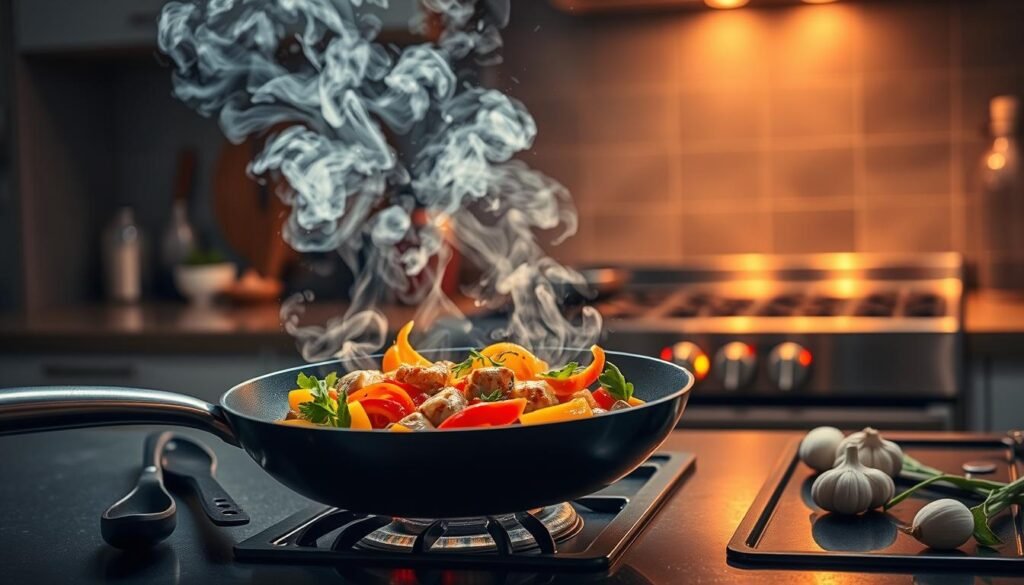
PTFE coatings begin to break down at 500°F. Modern options are safe below that, but true high heat techniques demand more. Cast iron and stainless steel safely transition from stovetop to oven.
The key to cooking without sticking is a simple technique. First, heat your empty pan on high for two minutes. This allows the metal to expand.
Next, add a high-smoke-point oil like avocado oil. Let it heat for 30 seconds until it shimmers. Reduce the heat to medium and swirl to coat the surface. Then add your food.
This heat pan then oil method works for chicken, eggs, and pancakes. It creates a temporary non-stick effect on uncoated pans. These materials actually improve with use, developing a better surface over time.
Mastering this approach lets you achieve restaurant sears safely. You avoid the fumes and damage that can come from overheating the wrong cookware.
Safe Kitchen Practices for Healthy Cooking
Maintaining a healthy kitchen extends beyond ingredients to include how you handle your pots and pans. The right daily habits protect your investment and keep meals safe.
Proper Use of Utensils and Tools
Choose wooden or silicone tools over metal utensils. Metal can scratch and damage even durable surfaces. This exposes underlying materials and ruins performance.
Scratches harbor bacteria and create spots where food sticks. Always avoid abrasive scrubbers like steel wool. They deteriorate non-stick layers quickly.
| Utensil Type | Best For | Risk to Surface |
|---|---|---|
| Wooden/Silicone | Everyday stirring, flipping | Low; gentle on coatings |
| Metal Utensils | Heavy-duty searing (cast iron) | High; can cause deep scratches |
| Nylon/Plastic | Light sautéing | Medium; may melt at high heat |
Cleaning and Storage Guidelines
Handwash pans with mild soap and a soft cloth. Dishwashers use harsh detergents and high heat. This gradually breaks down even quality surfaces.
For burnt-on food, make a paste of baking soda and water. Apply with a non-abrasive sponge. It cleans effectively without harsh chemicals.
Store cookware with protectors or cloths between stacked pans. This prevents scratches when metal contacts metal. Use low to medium cooking heat to avoid warping.
Never preheat an empty pan. Season new items with a light coat of high-smoke-point oil. This builds natural non-stick properties over time.
Eco-Friendly and Sustainable Cookware Investments
Your kitchen choices today shape the planet your family inherits tomorrow. Selecting non-toxic pots and pans is a powerful step toward sustainable living. These options align your daily meals with environmental care.
Eco-friendly cookware uses materials like stainless steel and cast iron. They are often fully recyclable. Their production avoids harmful “forever chemicals” that pollute water and soil.
The longevity of these materials is remarkable. A well-made piece can last for generations. This reduces waste and the need for frequent replacements.
Investing in durable, non-toxic kitchen tools is an investment in a cleaner future for your home and community.
Traditional coated pans have a short lifespan. They often end up in landfills within five years. This constant cycle consumes more resources over time.
| Aspect | Non-Toxic Cookware (e.g., Stainless Steel, Cast Iron) | Traditional Non-Stick Cookware |
|---|---|---|
| Lifespan | Decades to generations with proper care | Typically 1–5 years before coating fails |
| End-of-Life Impact | Fully recyclable; minimal landfill waste | Often non-recyclable; contains persistent pollutants |
| Resource Efficiency | High; one purchase serves for many years | Low; requires frequent manufacturing and shipping |
This durability saves money and protects health. You avoid hidden environmental costs. Your cookware becomes a legacy, not trash.
Making a sustainable choice benefits your kitchen and the world. It’s a wise use of resources and time. Explore these options to build a greener home.
Additional Tips for Maximizing Cookware Lifespan
A few extra minutes of care after each use can add years to your favorite pans. These habits protect your investment and ensure safe, reliable performance.
Regular Maintenance and Proper Seasoning
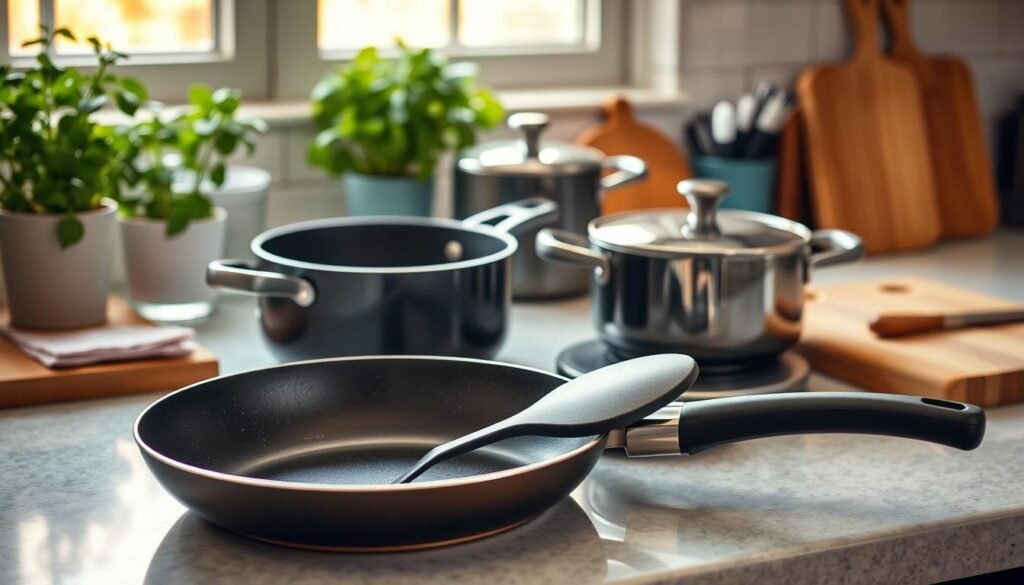
For cast iron and carbon steel, seasoning is essential. Apply a thin layer of high-smoke-point oil and heat it until it bonds. This builds a natural, stick-resistant surface.
Even ceramic items benefit from a light oil coating. It fills tiny pores and enhances release. Always add oil to the pan after it’s warm, not before.
Use low to medium heat for most tasks. Avoid preheating an empty pan for long periods. This prevents warping and extends the life of your kitchen tools.
Handwashing preserves all surfaces. Harsh dishwasher detergents can degrade coatings over time. Dry items thoroughly to prevent rust or water spots.
Store with soft cloths or protectors between stacked pieces. This prevents scratches from metal-on-metal contact.
| Material | Key Maintenance Action | Optimal Heating | Cleaning Guidance |
|---|---|---|---|
| Cast Iron | Season with oil monthly | Medium heat for even cooking | Handwash, dry immediately |
| Ceramic Nonstick | Light oil coating occasionally | Low to medium heat only | Soft sponge, no abrasive pads |
| Stainless Steel | Avoid overheating while empty | Medium heat for best results | Use baking soda paste for stuck-on food |
Following the manufacturer’s specific instructions is the final key. It ensures your items remain effective and safe for many meals to come.
Conclusion
Your journey to a safer kitchen culminates in the confidence to select tools that align with your values. This guide has provided the knowledge to balance top performance with long-term safety.
You can now distinguish between materials and choose the best options for your cooking style. Understanding harmful chemicals empowers you to make smarter purchases.
Applying the care techniques shared will protect your investment. This shift to better nonstick cookware is an investment in your home and health. Move forward with the assurance that every meal supports a healthier future.