Copper Cookware Guide (2026): Pros, Cons, Lining Types, Care & Best Uses
What if the most celebrated material in professional kitchens is also the most misunderstood for home use? For centuries, chefs have relied on its unparalleled performance, yet many home cooks hesitate, unsure of the real value.
This metal’s legendary heat conductivity is no myth. It reacts instantly to temperature changes, spreading warmth evenly across the entire cooking surface. This means no more hot spots and perfectly controlled sears.
Choosing the right copper cookware pots and pans is a major decision for your kitchen. Our comprehensive guide to copper cookware cuts through the confusion. We provide the clarity you need to decide if this investment is right for you.
You’ll learn to navigate lining types, from traditional tin to modern stainless steel. We also cover essential care routines to protect your purchase. Understanding these details ensures you get professional results for years to come.
Table of Contents
Key Takeaways
- Copper provides instant, even heat distribution, offering superior control for tasks like searing and sauce-making.
- It is a significant financial investment that requires specific knowledge for proper maintenance and longevity.
- The lining type—tin or stainless steel—is a critical choice affecting cooking performance, durability, and care.
- This material excels at specific applications where precise temperature control is essential.
- Authentic pieces are distinguished by their weight, construction quality, and often by renowned maker marks.
- Regular, proper cleaning prevents unwanted tarnish and preserves the pan’s cooking efficiency and beauty.
- Selecting the best piece depends heavily on your individual cooking habits and how often you will use it.
Introduction to Copper Cookware
At the heart of precise culinary art is a conductor that distributes warmth with unmatched speed and uniformity. This metal’s use dates back over 10,000 years, with artifacts found from 8700 B.C. Today, that same legendary performance defines the modern kitchen.
What Makes Copper Special in the Kitchen
The standout feature is exceptional heat conductivity. It reacts instantly to your stove’s adjustments. This means the entire pan surface reaches a consistent temperature rapidly.
You eliminate frustrating hot spots. Your food cooks evenly, whether you’re searing meat or simmering a delicate sauce. The control it offers is a game-changer for technical cooking.
| Material | Heat Conductivity | Heating Speed | Evenness of Heat |
|---|---|---|---|
| Copper | Excellent | Very Fast | Superior |
| Aluminum | Very Good | Fast | Good |
| Stainless Steel | Poor | Slow | Fair (needs clad base) |
| Cast Iron | Good (holds heat) | Slow | Variable |
This thermal responsiveness allows for perfect caramelization and prevents delicate ingredients from scorching. As one pastry chef notes:
“The immediate feedback from the pan lets me manipulate temperature with confidence. It’s the difference between a broken custard and a perfect one.”
Overview of the Guide’s Key Topics
We will explore why this material is a chef’s secret. You’ll learn the critical differences between tin and stainless steel linings.
Discover which kitchen tasks truly benefit from this investment. We also cover the essential care routines to protect your pieces for generations.
This information prepares you to make a smart, informed purchase. You’ll understand how to maximize performance for professional-level results at home.
The History and Heritage of Copper Cookware
Long before stainless steel or non-stick coatings, one material defined culinary excellence across civilizations. Its legacy is built on millennia of practical use and artisanal skill.
Ancient Roots and Traditional Craftsmanship
Archaeological evidence shows use over 10,000 years ago. Pieces from 8700 B.C. were found in Northern Iraq.
French artisans later set the standard. Companies like Mauviel, founded in 1830, created iconic copper pots.
Julia Child championed them for American home cooks. She wrote in Mastering the Art of French Cooking:
“Copper pots are the most satisfactory of all to cook in, as they hold and spread the heat well.”
America has its own tradition too. Patriot Paul Revere was a skilled coppersmith.
Modern Revival and Global Influence
Global traditions are rich. Indian kadhais and Mexican cazos utilize this metal’s unique properties.
Centers like Santa Clara del Cobre in Mexico keep centuries-old hand-hammering techniques alive.
A modern revival is underway. Artisans at brands like Brooklyn Copper Cookware blend ancient wisdom with new lining technologies.
This creates pieces that perform superbly. For a current selection of quality pieces, explore top cookware brands.
Today’s options offer the time-tested heat control chefs have always valued.
Benefits and Drawbacks of Using Copper Cookware
The decision to invest in copper involves weighing legendary performance against real-world considerations. Its reputation is built on tangible advantages that come with specific demands.
Pros: Superior Heat Conductivity and Even Heating
The primary benefit is unmatched thermal responsiveness. This metal heats and cools with incredible speed, giving you instant control. This is vital for delicate sauces and perfect sears.
Heat spreads evenly across the entire surface, eliminating frustrating hot spots. Food cooks uniformly from the center to the edges. This even heating is a game-changer for consistent results.
Copper ions offer unique cooking benefits. Food scientist Harold McGee notes they help stabilize egg whites for flawless meringues. They also help vegetables retain a vibrant green color.
The material has natural antimicrobial properties. This adds a hygienic layer, inhibiting bacterial growth on the surface.
Cons: Maintenance, Cost, and Reactivity with Acidic Foods
A significant drawback is reactivity. The metal can leach ions into acidic ingredients like tomatoes, wine, or citrus. This causes metallic off-flavors and raises safety concerns.
Quality pieces command a premium price, representing a major kitchen investment. Ongoing care is also required to protect your purchase.
Maintenance includes regular polishing to combat tarnish and careful hand-washing. Tin-lined pieces may need professional re-tinning over time. With proper care, however, this cookware can become a family heirloom.
Understanding Copper Cookware Materials and Lining Types
Beyond the iconic exterior, the lining material inside a copper pot dictates its performance, durability, and maintenance. This inner layer protects your food and defines how the pan behaves on the stove.
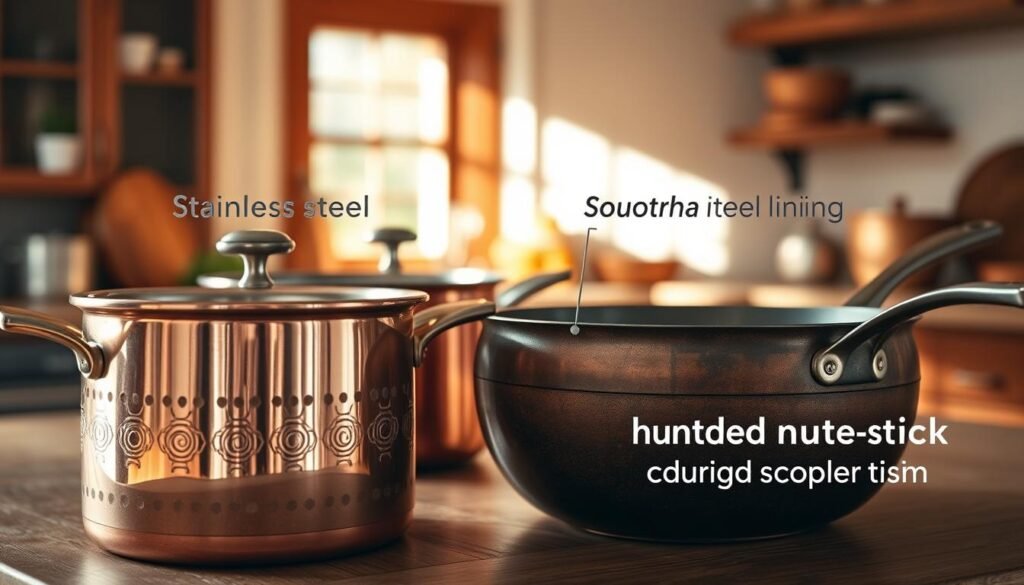
Tin-Lined vs. Stainless Steel-Lined: Key Differences
Tin is the classic choice. It forms a chemical bond with the metal, creating a smooth, relatively non-stick surface. It doesn’t react with acidic foods, preserving flavor.
This lining offers superior cooking performance. It doesn’t block the exceptional heat conductivity of the exterior metal. However, tin has a low melting point of 450°F.
It can wear through with heavy use. Professional kitchens in France routinely send pieces out for re-tinning, a service less common in the U.S.
Stainless steel-lined pieces prioritize modern convenience. The steel is far more durable and withstands higher heat. Major brands like Mauviel and All-Clad use this method.
The downside is a mechanical bond. These two metals lack natural affinity. If severely overheated, the layers can separate dangerously.
Steel also doesn’t conduct heat as well as tin. It creates a slight barrier, subtly dulling the thermal responsiveness.
When to Choose Unlined Copper for Specific Uses
Some tasks benefit from direct contact with the metal. Unlined mixing bowls are perfect for whipping egg whites. Copper ions help stabilize the foam for incredible volume.
Jam pans are another classic application. The high sugar content in preserves neutralizes fruit acids. This prevents unwanted metallic tastes.
Specialized confectionery work with caramel or sugar syrups also utilizes unlined pieces. The instant, even heat control is essential for these precise tasks.
Detailed Copper Cookware Guide
Distinguishing genuine artisan pieces from imitations is the first step toward a worthwhile investment. Knowing what to examine protects you from overpaying for inferior products.
How to Identify Authentic Copper Cookware
Check the color first. Real pieces have a bright reddish-orange hue. A pinkish tint often reveals a cheaper metal coated with a thin layer.
Weight provides an immediate test. Authentic items feel substantially heavier in your hand. This density signals solid construction.
Thickness matters for performance. Look for at least 3mm in a sauté pan. Experts often say, “the heavier the better” for even heat.
Key Features to Look For When Buying
Examine the construction details. Handmade rivets and dovetailing indicate artisanal quality. Machine-perfect seams can signal mass production.
Always look for a maker’s mark stamped on the base or handle. Reputable manufacturers certify their composition this way.
Avoid any dents, creases, or visible repairs. These flaws compromise heat distribution and longevity. For a full breakdown of selection criteria, see this perfect copper cookware set guide.
Special Uses: Cooking Techniques and Ideal Dishes
From glossy sauces to shimmering jams, copper pans transform challenging recipes into achievable art. This section highlights the specific dishes where its legendary performance is indispensable.
Perfect for Sauces, Sautéing, and Jam Making
The metal’s precise temperature control is vital for delicate sauces. It prevents emulsions like hollandaise from breaking. You maintain a narrow heat window for perfect consistency.
Mac Kohler of Brooklyn Copper Cookware notes, “the Maillard reaction and French mother sauces all exist because of these finely calibrated pans.” This responsiveness also creates perfect sears.
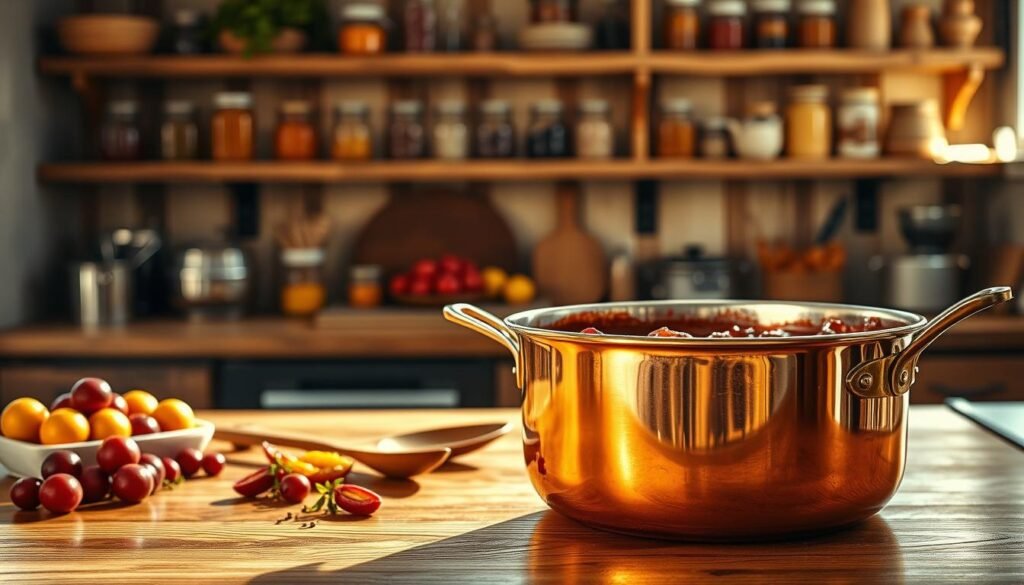
Jam making is another signature use. Rapid evaporation helps achieve set texture quickly. The high sugar content neutralizes fruit acids, making unlined copper jam pans safe.
Pastry chefs praise them for producing the “shiniest, sexiest jam you can imagine.” Caramel and candy work also benefit from exact temperature stages.
Specialized Cookware: Paella Pans, Tagines, and More
Specific cooking vessels leverage these thermal properties. A copper pan designed for paella heats quickly and evenly. This ensures rice cooks uniformly without burning.
Tagines use a funnel lid to condense steam and return moisture to food. This technique requires controlled, even heat.
Other specialized items include chocolate melters and fish poachers. Each uses the metal’s instant response for professional results.
Expert Tips for Cooking with Copper
To unlock professional results at home, you must learn to harness the immediate thermal feedback of your pans. This responsive metal behaves differently than others on your stove.
Small adjustments yield big changes. Mastering this control transforms your cooking.
Maximizing Heat Control and Energy Efficiency
Your piece heats quickly and evenly. This means you use less energy. Your burner spends less time on high power.
This rapid response is a major advantage. It allows for precise temperature management without moving the pan.
| Material | Heat-Up Time | Energy Efficiency | Control Precision |
|---|---|---|---|
| Copper | Very Fast | Excellent | Superior |
| Stainless Steel | Moderate | Good | Good |
| Cast Iron | Slow | Fair | Moderate |
Temperature Adjustments for Professional Results
Start with a lower burner setting than usual. This metal reaches cooking temperature fast. You can always adjust upward.
Chefs transition from simmer to boil instantly. You can do the same. This streamlines your workflow.
Stay attentive. Your cookware can become too hot if left unattended. This precise control enables advanced techniques like tempering chocolate.
Mastering these tips lets any home cook achieve restaurant-quality dishes.
How to Clean and Maintain Your Copper Cookware
A proper maintenance regimen ensures your prized pieces deliver flawless results for generations. Consistent care protects both the interior lining and the iconic exterior.
Effective Cleaning Methods and Home Remedies
Always hand-wash with warm, soapy water. Use a soft cloth or non-abrasive sponge. Rinse and dry thoroughly to prevent spots.
Avoid the dishwasher at all costs. It will damage the metal and its lining over time.
For a bright shine, try a simple home remedy. Mix lemon juice with salt to form a paste. Rub it onto the surface, let it sit, then rinse with water.
Experts like Beth Sweeney recommend Wright’s Copper Cream. Mac Kohler prefers Brasso for polishing.
Polishing Techniques to Restore Shine and Patina
A dark patina develops naturally and is desirable. It shows a well-used pan. Avoid gray-green verdigris, which signals harmful corrosion.
Polish to restore brilliance when you prefer the look. Never use harsh scouring pads. They can scratch the lining.
Use wooden or silicone utensils to protect the interior surface. Metal tools can cause damage.
Never leave a copper pot empty on a hot burner. This can ruin the lining. Also, avoid sudden temperature changes to prevent warping.
For interior care, white vinegar removes oxidation and grease. This keeps your copper cookware performing perfectly.
| Method | Ingredients/Products | Best For | Time Required |
|---|---|---|---|
| Home Remedy | Lemon juice, salt | Restoring shine naturally | 5-10 minutes |
| Commercial Polish | Wright’s Copper Cream, Brasso | High-gloss, factory-new finish | 5-15 minutes |
| Hand-Wash Only | Mild soap, warm water | Daily cleaning and maintenance | 2-5 minutes |
Shopping Guide: What to Look for When Buying Copper Cookware
With so many brands and models available, knowing what sets a superior pan apart is crucial. This guide helps you evaluate key features for a smart purchase.
Focus on craftsmanship, lining type, and intended use. Your choices will impact performance for years.
Comparing Renowned Brands and Models
Iconic makers offer distinct advantages. French Mauviel provides nearly two centuries of family-run expertise.
Their stainless steel-lined pots blend tradition with modern durability. For a detailed buyer’s guide to copper pans, explore expert insights.
American artisans like Brooklyn Copper Cookware revive hand-hammered, tin-lined techniques. Brands like De Buyer innovate with induction-compatible bases.
Vintage pieces sourced by specialists like Beth Sweeney offer historical charm and proven longevity.
| Brand | Lining | Key Feature | Best For |
|---|---|---|---|
| Mauviel | Stainless Steel | Centuries-old French craftsmanship | Modern kitchens seeking heritage |
| Brooklyn Copper | Tin | Handcrafted in the USA | Traditional sauce and jam making |
| De Buyer Prima Matera | Stainless Steel | Integrated plate for induction | Contemporary cooktops |
| Vintage (e.g., Souter) | Tin | Pre-industrial heirloom quality | Collectors and enthusiasts |
Long-Term Investment: Durability and Heirloom Quality
High-quality copper pans are built to last. With proper care, they serve for 20-30 years or more.
They often become family heirlooms. Compare this to cast iron, which holds heat well but responds slower.
Stainless steel offers low maintenance but lacks the same even heating. For a broad view of options, consider best cookware sets.
Start with versatile pieces like a saucepan and sauté pan. Add a jam bowl or mixing pot based on your needs.
This thoughtful approach builds a kitchen arsenal that delivers for generations. It justifies the initial cost for dedicated home cooks.
Conclusion
Ultimately, the choice to incorporate premium copper cookware into your kitchen hinges on a clear understanding of its unique capabilities. It represents a significant commitment, but the payoff is unparalleled control and professional-grade results.
Understanding differences between linings and recognizing quality markers empowers smart purchases. The enduring appeal lies in fundamental physics: superior thermal conductivity provides responsive temperature management that transforms cooking technique.
Whether you select heritage brands or modern artisans, quality pieces become lifelong partners. With proper care, they develop a beautiful patina and perform for generations. For serious cooks who value precision, this investment is a worthwhile addition to your arsenal.