Ceramic Cookware Guide (2026): Pros, Cons, What to Expect & Best Uses
Is your “non-toxic” ceramic cookware actually safe, or is it just clever marketing? This question plagues many home cooks seeking healthier options.
Our 2026 ceramic cookware guide is designed to help you make an informed decision when investing in new pans. The market is flooded with choices, and it’s easy to feel overwhelmed.
These items have surged in popularity. People want a kitchen that supports wellness without sacrificing performance. But not all products are created equal.
Many brands loudly claim to be “green” and “toxin-free.” However, some may still contain concerning chemicals like PTFE or PFAS. You must double-check these claims.
This resource cuts through the hype. We provide fact-based recommendations for selecting the right options for different needs and budgets.
You will learn about materials, compare coating types, and identify true non-toxic brands. We’ll also cover maintenance and top product picks. For example, thorough testing of the best ceramic involved 17 pans and 675 data points.
Use this guide alongside other comprehensive cookware guides to build your perfect kitchen arsenal. Let’s find your ideal choice.
Table of Contents
Key Takeaways
- This guide helps you navigate the 2026 market for informed purchasing decisions.
- Popularity stems from a desire for healthier, non-toxic cooking that performs well.
- Marketing claims of “green” and “toxin-free” can be misleading; verification is crucial.
- You’ll learn to distinguish between truly non-toxic options and “healthier” alternatives.
- The guide covers material composition, safety, brand evaluation, and best uses.
- Recommendations are based on facts and testing, not marketing hype.
- Information will help you select products that match your specific cooking needs and budget.
Understanding Ceramic Cookware
The term “ceramic” on a label can describe two very different product constructions. You might get a solid piece or a metal pan with a special finish.
Knowing this difference is key to a good purchase.
Definition and Composition
True ceramic pots are made from 100% clay-based material. The more common type uses a metal base, like aluminum, with a slick layer on top.
That smooth ceramic nonstick surface comes from natural silica, which is essentially sand. It’s applied as a liquid and baked on at extreme heat.
This creates a hard, glass-like cooking area.
Key Materials and Coatings
Most sets have an aluminum core. This metal spreads heat quickly and evenly across the pan’s bottom.
The outside often has a brand-name finish like Thermolon. This is a silica-based component.
| Type | Construction | Core Material | Best For |
|---|---|---|---|
| 100% Ceramic | Single material body | Ceramic clay | Slow, even heating; oven-safe |
| Ceramic-Coated | Metal base with applied finish | Aluminum or stainless steel | Fast, responsive stovetop cooking |
| Hybrid Designs | Multi-layer metal with ceramic topcoat | Aluminum sandwiched between steel | Durability and superior heat control |
“The composition dictates everything—from how fast the pan heats up to how long the non-stick property lasts. A metal core conducts, while the ceramic top layer provides the release.”
Your choice affects performance. A solid piece heats steadily. A coated one with aluminum reacts faster to temperature changes.
For a deeper dive into these materials, consult this detailed buying guide.
Benefits and Drawbacks of Ceramic Cookware
Understanding the full picture of ceramic pots requires weighing their celebrated benefits against real-world limitations.
Notable Advantages for Healthy Cooking
The primary appeal is the ability to use much less oil or fat. Food releases easily from the slick surface.
This supports heart-healthy meal preparation. The surfaces are free from PTFE and PFOA chemicals.
You won’t worry about toxic fumes at high temperature. Cleanup is a breeze because food particles slide off.
You spend less time scrubbing. Quality pieces often have aluminum cores for even heat distribution.
This ensures consistent cooking performance. Many brands also use sustainable, eco-friendly manufacturing processes.
| Aspect | Benefit / Advantage | Drawback / Concern |
|---|---|---|
| Nonstick Performance | Excellent food release with minimal oil | Coating wears down, leading to sticking over time |
| Health & Safety | Non-toxic, no harmful chemical fumes | Rigid surface can chip if dropped |
| Ease of Use | Very easy cleaning, often dishwasher safe | Requires careful handling to avoid thermal shock |
| Durability | Good initial performance | Shorter lifespan than traditional nonstick; may last ~1 year |
| Environmental Impact | Often made with greener materials | Frequent replacement offsets some eco-benefits |
Common Limitations and Concerns
The most cited issue is shorter lifespan. Ceramic coatings typically wear faster than traditional options.
Nonstick properties can diminish after about a year of regular use. Food may begin sticking.
Durability is another concern. The hard surface is prone to chipping or cracking if dropped.
Sudden temperature changes can also cause damage. You must handle these pans with more care.
For a deeper look at these trade-offs, read this detailed pros and cons analysis.
Comparing Ceramic and Traditional Nonstick Cookware
Two popular choices for easy-release cooking are ceramic-coated and traditional nonstick pans, each with distinct characteristics. Your decision impacts daily meal prep and long-term value.
Performance and Heat Distribution
Fundamental construction differs. Traditional items use a PTFE coating on aluminum or steel bases. Ceramic options use a silica-based mineral layer.
Both types often have aluminum cores for good heat spread. The performance of a new ceramic surface is excellent. Yet, this quality can fade faster over time.
| Factor | Ceramic Coating | Traditional Nonstick |
|---|---|---|
| Food Release (New) | Excellent | Excellent |
| Food Release (Over Time) | Diminishes sooner | More consistent |
| Max Heat Tolerance | Higher | Lower |
| Coating Flexibility | Rigid, can chip | More forgiving |
| Typical Lifespan | ~1 year (effective) | Several years |
Safety and Durability Perspectives
Modern traditional nonstick pans are PFOA-free and safe for regular use. Ceramic offers peace of mind with no synthetic coating concerns.
Durability is a key contrast. Reinforced traditional nonstick coatings can last many years. A ceramic pan is more prone to chipping.
Consider value. A pricier traditional nonstick set that lasts three years may be a smarter buy than replacing a ceramic one annually.
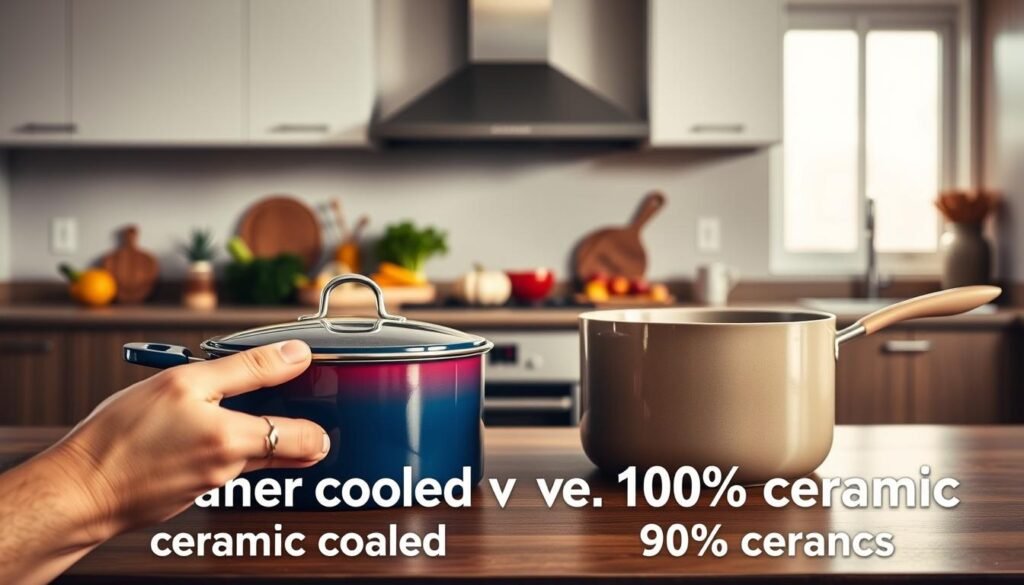
Choosing Between Ceramic Coated and 100% Ceramic Options
Not all items labeled ‘ceramic’ offer the same level of purity or long-term performance. You face a fundamental choice between two distinct constructions.
Understanding Coating Techniques
A ceramic coated pan typically has an aluminum core for heat conduction. A silica-based layer, like Thermolon, is applied on top.
The adhesive bonding this ceramic coating to the metal can be problematic. It may contain VOCs, formaldehyde, or phthalates.
In contrast, a 100% ceramic option is solid material. It contains no glues, coatings, or base metals, making it truly toxin-free.
Assessing Long-Term Use and Maintenance
Durability differs greatly. The coated version scratches much easier. Any scratch exposes the aluminum beneath, requiring disposal.
Your care routine depends on your choice. For coated items, vigilantly check for surface damage. For solid ceramic, handle with care to prevent chipping.
| Aspect | Ceramic Coated | 100% Ceramic |
|---|---|---|
| Construction | Metal base with applied coating | Solid ceramic body |
| Safety Profile | “Healthier” alternative | Premium, toxin-free |
| Durability Concern | Scratches easily | Can chip if dropped |
| Best For | Budget-conscious, shorter-term use | Long-term investment in health |
Consider your priorities. The solid choice demands a higher initial investment but promises superior safety and longevity.
Key Toxins to Watch for in Ceramic Cookware
To ensure your family’s well-being, you must be aware of the key toxic substances that can contaminate your food from cookware.
Two heavy metals, lead and cadmium, are primary concerns. They can leach into your meals during high-heat cooking.
Potential Chemical Concerns
Exposure to lead may cause kidney and brain damage or anemia. Cadmium targets your cardiovascular and respiratory systems.
Many non-stick pans use a silica-based coating like Thermolon. While free from PFOA and PTFE, its long-term safety isn’t fully proven.
The bigger issue is often the adhesive. Glues bonding the ceramic layer to an aluminum base may contain harmful chemicals like VOCs, formaldehyde, or phthalates.
Scratches expose the underlying metal, raising the risk of toxin leaching into your food.
Tips for Avoiding Harmful Ingredients
Always verify that products are tested and certified free from lead and cadmium. Choose brands that publish independent, third-party lab results.
Prioritize 100% ceramic construction. This eliminates adhesive concerns entirely. Check the manufacturer’s transparency about all materials used.
Look for certifications from reputable testing organizations. This is your best defense against hidden chemicals.
Ceramic Cookware Guide: A Comprehensive Buyer’s Resource
A practical rating scale is your most powerful tool for identifying truly safe and durable kitchen essentials. Use a simple three-tier system: avoid, healthier middle-ground, and premium toxin-free.
What to Look for in a Healthy Cookware
Most items fall into the “healthier” category. These have a ceramic coating over metal. The “toxin-free” tier consists of solid 100% ceramic pieces with no adhesives.
Your checklist must include verification of lead and cadmium-free composition. Demand published third-party test results. Also confirm the absence of PFOA and PTFE.
Evaluating Product Claims and Testing
Look beyond vague “green” marketing. Prioritize brands that specialize in high-quality materials and publish comprehensive safety reports. This transparency is non-negotiable.
Understand durability claims. A coated nonstick surface may last about a year. A solid ceramic pan offers several years with proper care.
Consider practical features for your home. Check handle comfort and heat resistance. Ensure compatibility with your stovetop types.
Review the latest ceramic-coated safety standards to inform your final choice. This ensures you select the best option for long-term value.
Top Brands and Product Recommendations
Your priorities—be it absolute purity, budget-friendliness, or enhanced durability—determine the ideal brand for you.
Featured Review: Xtrema Pots and Pans
For maximum safety, Xtrema is the benchmark. Their items are 100% pure ceramic with no glues, coatings, or heavy metals.
They publish all safety test reports online, setting a standard for transparency. Expect a cooking experience similar to stainless steel, but with slightly better natural food release.
Other Trusted Names in Ceramic Cookware
Caraway offers a popular coated skillet with an ultra-smooth surface and comfy handles. Le Creuset provides excellent heat distribution in a dishwasher-safe frying pan.
For value, T-fal sets combine affordability with decent quality. GreenPan is a reliable, eco-friendly choice.
Blue Diamond uses a diamond-infused coating for superior durability and heat conduction.
Proper Care and Maintenance for Ceramic Cookware
Careful handling and cleaning can significantly extend the life of your ceramic cookware. Following a few simple practices preserves its performance and safety.
Cleaning Techniques and Tools
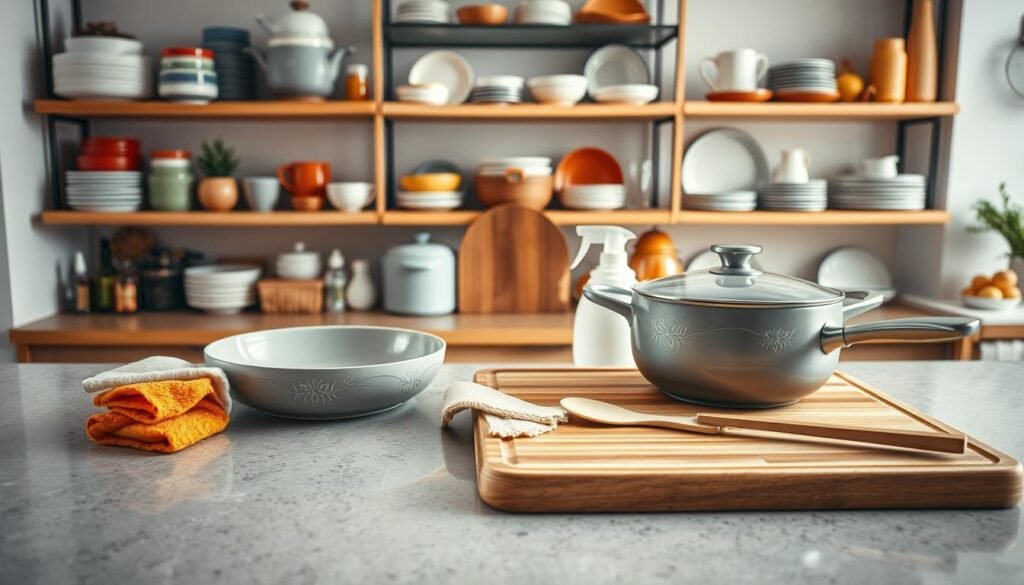
Always hand wash your pans, even if labeled dishwasher safe. Use a soft sponge and mild detergent. Avoid abrasive scrubbers that can damage the ceramic surface.
For stubborn food residue, soak the pan briefly in warm water. This loosens particles without harsh scrubbing. Never use steel wool or scouring pads.
Usage Guidelines to Extend Lifespan
Heat your pans slowly. Start at a low temperature and gradually increase. This prevents thermal shock and protects the coating.
Avoid sudden temperature changes. Never run a hot pan under cold water. Also, don’t place it on a cold granite countertop.
Use wood or silicone utensils for cooking. Metal tools can leave marks. For 100% ceramic pans, apply a light coat of oil before use.
Store with protective cloths between items. This prevents scratches. Replace any cookware showing chips or significant wear.
Safety, Durability, and Long-Term Value Considerations
Evaluating kitchen tools involves more than just the upfront price. It’s about understanding how safety, durability, and cost intersect over years of use. You need a clear framework to compare different materials.
Balancing Cost with Performance
For absolute safety, 100% ceramic and stainless steel are completely toxin-free. Modern traditional nonstick pans are PFOA-free and safe for daily frying when used correctly. Ceramic-coated options offer a middle ground.
Durability varies greatly. Stainless steel is virtually indestructible. Quality traditional nonstick can last several years. Ceramic-coated surfaces often degrade within a year. Pure ceramic pieces last longer but can chip if dropped.
Calculate long-term value. A $100 traditional nonstick pan lasting three years costs about $33 annually. A $50 ceramic-coated pan replaced yearly costs $50 per year. A $150 pure ceramic pan lasting five years costs $30 annually.
Consider performance over time. Traditional nonstick maintains its properties longest. Ceramic-coated loses nonstick ability quickly. Pure ceramic remains stable but may need more oil. Stainless steel requires the most oil but never changes.
There’s a learning curve. Cooks transitioning to ceramic or stainless steel need time to adjust heat and oil usage. Handle ceramic with care to avoid thermal shock.
Your best option? Choose based on priorities. For maximum safety with good performance, pick 100% ceramic. For convenience and durability, select traditional nonstick. For a healthier middle ground, try ceramic-coated. For indestructible toxin-free cooking, use stainless steel.
Many home cooks own multiple types. This allows you to use each for specific tasks, balancing benefits across your kitchen arsenal.
Conclusion
Ultimately, the best choice for your stovetop balances safety, performance, and durability to suit your lifestyle.
These items offer significant benefits for health-conscious cooks. You can use less oil and avoid harmful chemicals. Food releases easily and cleanup is simple.
Remember the key difference. Pure ceramic pieces like Xtrema are truly toxin-free. Coated pans are a healthier step up but have adhesive concerns.
Each type has trade-offs. Coated nonstick surfaces may wear within a year. Pure ceramic can chip. Neither lasts as long as quality traditional nonstick or stainless steel.
Make an informed decision. Verify lead-free testing and check published reports. Assess long-term value, not just initial price.
Choose based on your priorities. For maximum safety, pick 100% ceramic. For durability, select traditional nonstick. For a middle ground, try coated options.
Explore trusted brands for pots and pans from Xtrema to Caraway and GreenPan. Use this resource to reduce toxins in your home and meet your cooking needs.