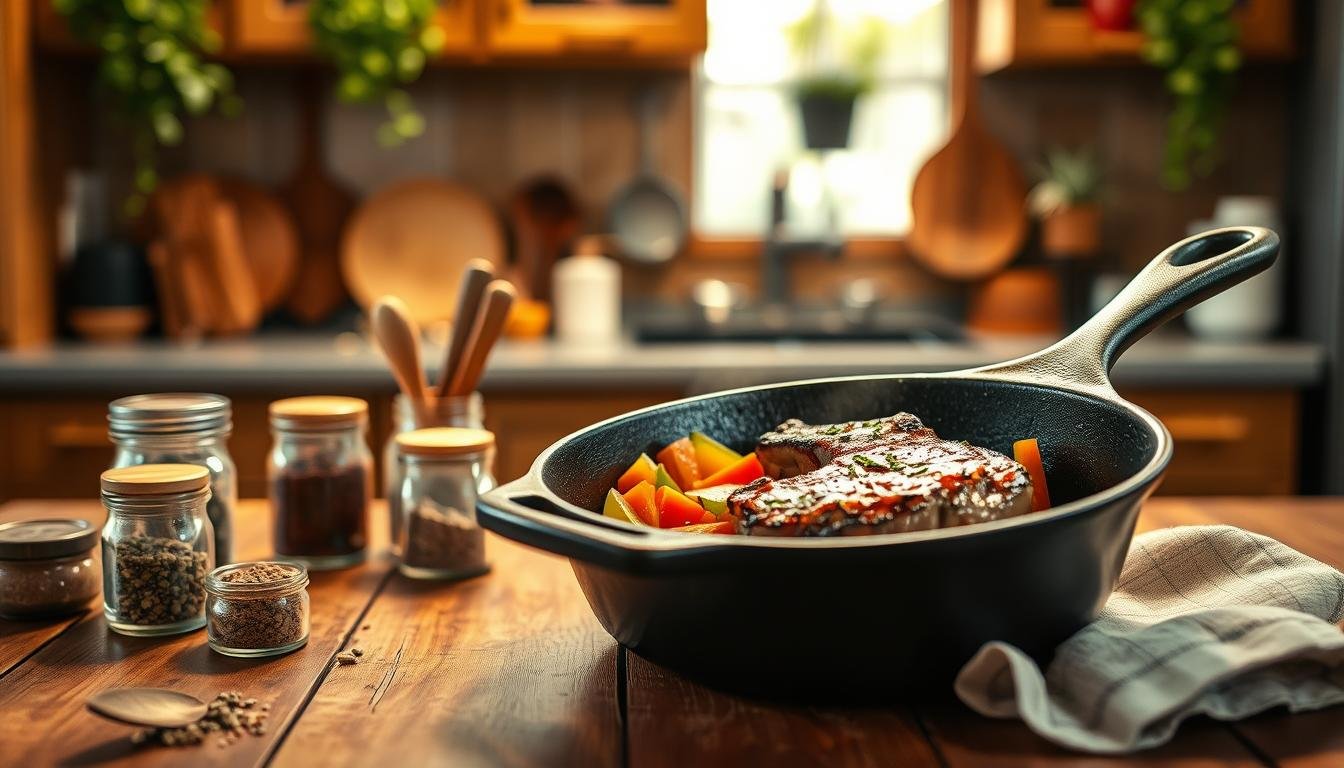
Cast Iron Cookware Guide (2026): Seasoning, Care, Pros/Cons & Best Uses.
Is your kitchen missing the one piece that can sear, bake, and last a lifetime? Many home cooks feel intimidated by the myths surrounding cast iron cookware. This definitive resource for 2026 cuts through the confusion.
We break down complex topics into clear, actionable advice. Whether you’re a first-time buyer or a seasoned collector, you’ll find the insights needed to make a smart purchase.
Our coverage includes proper seasoning techniques, simple maintenance, and honest pros and cons. We compare brands across budget and premium categories. All recommendations are based on expert testing and real-world cooking experiences, like those detailed in professional reviews.
You’ll learn to choose between traditional pieces that require care and enameled options. This is a lifetime investment for your family. Our goal is to help you match the perfect piece to your cooking style, budget, and kitchen needs.
We cover everything from $20 finds to $200+ heirloom-quality items. There’s a perfect option for every price point.
Table of Contents
Key Takeaways
- This is the complete resource for making an informed purchase in 2026.
- Learn how to overcome common fears about maintenance and care.
- Get clear comparisons between traditional and enameled options.
- Recommendations are based on hands-on testing and expert analysis.
- Find the right piece for your budget, from value picks to premium heirlooms.
- Understand the true lifetime value and versatility of this kitchen workhorse.
- Actionable advice helps you match a pan to your specific cooking style.
Introduction to Cast Iron Cookware
The secret to a nonstick pan isn’t a chemical layer, but a process built through use. For generations, people trusted this material long before modern coatings entered the market.
It represents one of the oldest and most reliable cooking methods. A cast iron surface develops its slick finish through polymerization.
Thin layers of oil bond to the metal, creating a glassy coating. This natural surface actually improves with age rather than degrading.
It’s the original nonstick solution. Many believe these pieces are high-maintenance, but this guide will demystify their simple care.
The unique advantage is that a good pan gets better with use. It becomes a buy-it-for-life investment for your kitchen.
Its modern resurgence reflects a desire for durable, chemical-free cookware. This material performs on stovetops, in ovens, and even over campfires.
That unmatched versatility justifies its place in every home. You are not just buying a tool, but a legacy.
What is Cast Iron Cookware and Its Benefits?
Forged from molten iron poured into sand molds, these heavy-duty vessels have exceptionally thick walls. This design gives them superior heat retention.
Food cooks evenly, even when you add cold ingredients. Unlike thin aluminum, temperature stays consistent.
These pieces are built to last for decades, even centuries. They transition seamlessly from your stovetop to the oven, grill, or campfire.
A natural, slick surface develops over time through seasoning. This process eliminates the need for chemical coatings.
“It’s the only material that gets better the more you use it, becoming a true family heirloom.”
Cooking with this material can add trace amounts of dietary iron to your food. It’s perfect for getting a crispy, restaurant-quality crust on steaks and chicken.
While the upfront cost may be higher, its longevity makes it a smart economic choice over replacing pans every few years. For a full breakdown, see this beginners guide.
| Feature | Cast Iron | Stainless Steel | Nonstick |
|---|---|---|---|
| Heat Retention | Excellent | Good | Poor |
| Durability | Lifetime | Very Long | 2-3 Years |
| Versatility | Stovetop, Oven, Grill | Stovetop, Oven | Stovetop Only |
| Natural Nonstick | Yes (Develops) | No | Yes (Coated) |
The “cast iron cookware guide” to Choosing Your Cookware
Your first purchase in this durable category should align with your most frequent cooking tasks. The goal is to match the perfect vessel to your daily routine.
Understanding Different Cast Iron Types
Start with the classic skillet. It’s the ultimate kitchen workhorse. A 10-inch or 12-inch size handles everything from breakfast eggs to searing steak.
For slow-cooking soups or baking bread, a Dutch oven is essential. A flat pan excels with delicate crepes. Griddles are perfect for feeding a crowd at breakfast.
Pre-Seasoned vs. DIY Seasoning Options
Most modern pans come pre-seasoned. This offers immediate convenience. Brands like Lodge provide a robust, ready-to-cook surface.
Bare iron requires an initial seasoning ritual. Enthusiasts prefer this control. They build a custom non-stick layer from the start.
| Feature | Original / Classic | Polished / Artisan |
|---|---|---|
| Surface Texture | Rugged, will smooth with use | Machined smooth from the start |
| Handles & Design | Standard, timeless shape | Extended handles, stylish accents |
| Aesthetic | Utilitarian and classic | Modern, oiled appearance |
| Price Point | Budget-friendly | Premium |
Consider your primary cooking needs and storage space. These heavy pieces require a dedicated spot. For modern stovetops, explore our picks for the best induction-compatible pieces.
Seasoning Your Cast Iron: Expert Techniques
The legendary nonstick property of these pans isn’t magic—it’s chemistry in action. This process, called polymerization, bonds oil to the metal at high heat. It creates a durable, glassy layer that improves with each use.
Step-by-Step Seasoning Process
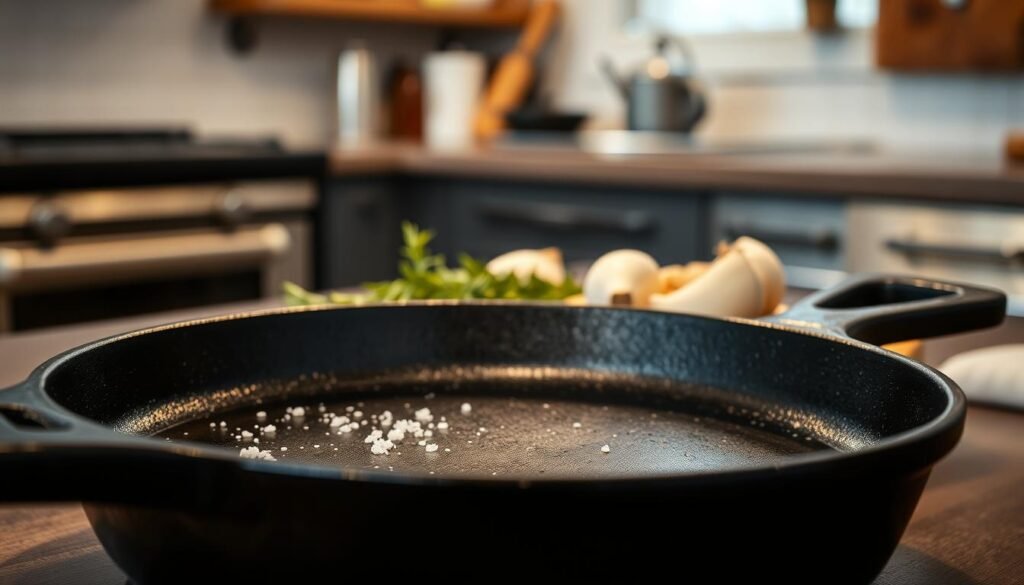
Start with a completely clean and dry skillet. Apply an extremely thin layer of high-smoke-point oil like avocado or grapeseed. Wipe away any excess until the surface looks almost dry.
Place the pan upside down in a preheated 450-500°F oven for one hour. This position prevents sticky oil pools. Let it cool completely inside the turned-off oven. Apply one more light oil coat before storage.
Tips for Maintaining a Nonstick Surface
The best seasoning develops naturally through regular cooking. Fatty foods like bacon add protective layers over time. If your pan looks dull or food sticks, simply repeat the oven process.
Even pre-seasoned pieces benefit from extra sessions. This builds a more robust nonstick surface. Your commitment is minimal, but the payoff is a slick, reliable cooking companion for life.
Caring for Your Cast Iron Cookware
Forget the myths; caring for this durable material is straightforward and quick. Proper maintenance ensures your skillet remains a nonstick workhorse for years.
Cleaning Do’s and Don’ts
Start cleaning while your pan is still warm. Wipe it with a damp cloth or rinse under warm water. For stuck-on bits, use a nylon brush or a soft Tawashi scrubber.
A major myth needs debunking. Modern dish soap will not harm your seasoning. Old soaps contained lye, but today’s formulas are safe for light use.
For tough residue, try the salt-scrub method. Pour coarse kosher salt into the pan. Scrub with a paper towel, then rinse and dry thoroughly.
Drying is critical. Never let your skillet air-dry. Towel-dry it completely, then place it on low heat for 2-3 minutes. This evaporates all moisture and prevents rust.
Essential tools for care include a nylon cleaning brush, a plastic scraper, and Barkeeper’s Friend for tough stains. Avoid metal scouring pads at all costs.
Never put cast iron in the dishwasher. Do not let it soak in water, even for a short time. Always store it in a dry place.
After drying, apply a thin layer of oil to the cooking surface. This maintains the seasoning between uses. For enameled pieces, use gentler tools and avoid thermal shock.
This entire process takes under two minutes. With simple care, your pan will deliver a lifetime of reliable service.
Pros and Cons of Cast Iron Pans
The decision to invest in durable skillets requires a clear view of their advantages and limitations.
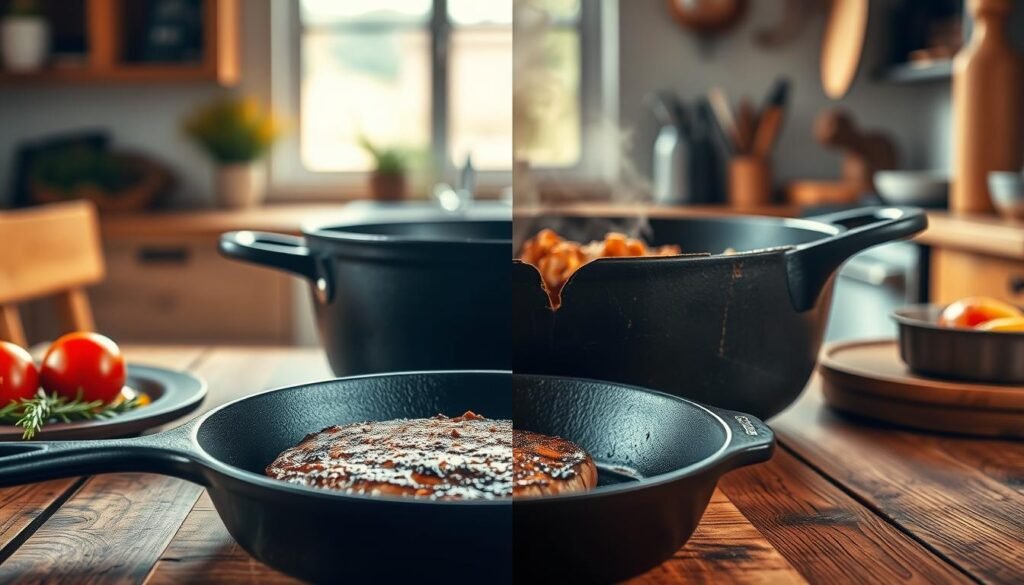
This classic material offers unmatched heat retention for perfect sears. It also develops a natural nonstick surface over time.
These pieces work on any heat source and can last for generations. However, they demand specific care to perform their best.
| Pros | Cons |
|---|---|
| Exceptional heat retention & even cooking | Heavy weight (4-7.5 lbs for a 12″ pan) |
| Gets more nonstick with use | Slow to heat up |
| Accepts metal utensils without damage | Can have uneven hot spots |
| Works on all stovetops, ovens, and grills | Requires seasoning and immediate drying |
| Very affordable at entry-level ($20-35) | Not ideal for acidic foods like tomato sauce |
Compared to carbon steel, this material holds heat longer but heats slower. Its rugged build justifies the initial care routine.
“You trade a little convenience for a lifetime of performance.”
Premium polished versions cost more, similar to high-end steel options. For most home cooks, the benefits far outweigh the minor upkeep.
Best Uses of Cast Iron in the Kitchen and Beyond
From crispy breakfast hash to slow-simmered stews, this material transforms everyday meals. Each piece has a specialty that maximizes flavor and texture.
Understanding which vessel to use is the secret to great results. A complete setup covers most culinary tasks.
Skillets, Dutch Ovens, and More: A Comparison
A classic cast iron skillet is the ultimate breakfast tool. It makes perfect fried eggs and sears steaks with a crispy crust.
This skillet also bakes golden cornbread. For slow-cooked meals, a deep dutch oven is essential.
This heavy pot excels at braises and baking bread. It traps moisture for tender results.
| Feature | Skillet | Dutch Oven |
|---|---|---|
| Best For | High-heat searing, baking | Slow braising, baking bread |
| Heat Style | Direct, intense heat | Even, gentle heat |
| Liquid Handling | Limited liquids | Soup, stew, boiling water |
| Typical Dishes | Steak, pancakes, cornbread | Pot roast, sourdough, chili |
These pieces work on the stovetop, in your oven, or over a campfire. You can sear chicken on the burner and finish it in the oven.
Avoid cooking highly acidic foods like tomato sauce. It can damage the seasoned surface.
Top Cast Iron Brands and Budget-Friendly Options
Navigating the world of brands reveals a surprising truth: a higher price tag doesn’t always mean better cooking performance.
Premium Choices vs. Affordable Alternatives
For outstanding value, Lodge is the undisputed champion. Their American-made skillets cost around $20 and come ready to use. They have a loyal following built over many years.
Victoria is a fantastic budget alternative. Priced slightly higher, its flaxseed oil seasoning creates a notably slicker surface right away. Both brands are praised in professional reviews for their reliability.
At the premium level, Lancaster stands out. Its polished surface and light weight make it a joy to handle daily. Mid-tier options like Stargazer and Field Company offer smoother finishes at a lower cost.
These high-end pieces appeal to people who cook frequently. The reduced weight and refined texture justify the investment. For occasional use, a budget pan performs nearly identically.
For enameled pieces, Lodge offers great value. Brands like Le Creuset and Staub command premium prices for their iconic colors and warranties. Explore all types at Top Cookware Brands.
The best strategy is to start with one quality, affordable pan. Learn the basics, then invest in a premium piece for your most-used size.
Expert Reviews and User Insights on Cast Iron
Real-world cooking experiences from both experts and home cooks reveal the true strengths of different pans. Our analysis combines professional testing with long-term user reports.
Real-World Cooking Experiences
Testers evaluated popular skillets through systematic trials. They fried eggs and seared chicken to assess nonstick performance and heat distribution.
Timing how long each pan took to reach 375°F provided efficiency data. The Lancaster cast iron skillet impressed multiple reviewers.
It was noted as the most comfortable to hold. It also heated over a minute faster than thicker competitors.
Victoria’s factory seasoning proved slicker than Lodge’s during initial cooking. Eggs and potatoes released more easily right away.
Long-term users report their Lodge pans perform excellently for decades. This validates the buy-it-for-life reputation.
Gordon Ramsay once called a dedicated blogger the “Cast Iron Queen,” highlighting how deeply people can master this tool.
New users often face a learning curve. Initial sticking is common, but persistence for a month yields much better results.
Weight concerns fade with proper technique. Regular breakfast cooking builds the best nonstick surface within months.
The consensus is clear. Once you use cast iron routinely, it becomes a dependable, low-fuss essential.
Expanding Your Cast Iron Collection: Tips and Tricks
Building a versatile set of these durable kitchen tools is a journey that rewards patience and strategic planning. Start with one quality skillet or dutch oven and master the basics over several months.
Only add a second piece after confirming this material suits your style. This prevents unused items from cluttering your storage.
Investing in High-Use, Premium Pieces
For intermediate users who use cast iron multiple times weekly, a premium investment makes sense. Brands like Lancaster or Smithey offer refined surfaces and lighter weight.
Look for major sales at retailers like Sur la Table. Being flexible on color can lead to discounts of 30-50% on high-end enameled pans.
The Allure of Vintage & Restored Pieces
Collectors prize pre-1960s cast iron from Griswold or Wagner. These vintage finds often have smoother surfaces than modern budget options.
After restoration, they become non-stick champions and cherished family heirlooms. A logical collection progression looks like this:
- Budget starter pan for learning.
- Premium everyday skillet for regular use.
- Dutch oven for braising and baking.
- Specialty items like a griddle.
- Vintage or artisan pieces as legacy items.
Let your actual cooking habits guide each purchase. Over time, you’ll build a powerful, curated set that lasts for years.
Conclusion
With the insights from this comprehensive resource, you’re now equipped to make a confident choice for your kitchen.
We’ve covered options from $20 budget finds to $200+ heirloom pieces. This ensures you can invest wisely, no matter your price point.
While materials like stainless steel and carbon steel have their roles, a well-chosen skillet offers unmatched longevity. Its versatility from stovetop to oven is a game-changer.
Key decisions include choosing between traditional or enameled surfaces. Selecting the right size, like a 10-inch skillet or a 4-quart dutch oven, matches your cooking style.
Proper care seems complex at first but becomes routine quickly. Within weeks, seasoning and drying feel like second nature.
Unlike coated nonstick pans that wear out, this material actually improves. Each use builds a better nonstick surface and adds character.
The “best” pan varies by person. Budget cooks love Lodge, while those wanting lighter weight prefer Lancaster.
Start with one quality piece. Learn its nuances before expanding your collection.
Remember, it’s not perfect for every task. Acidic sauces or delicate fish are better suited to other materials.
Your next purchase is now an informed investment. Choose a piece that will serve your family for decades.