
Carbon Steel Cookware Guide (2026): Pros/Cons, Seasoning, Care & Best Uses
What if you could own a single pan that outperforms everything else in your kitchen? For generations, professional chefs have known the secret. Now, that same powerhouse material is revolutionizing home cooking.
This isn’t your average piece of kitchen equipment. It’s forged from a nearly pure iron alloy, making it incredibly tough. It laughs at high heat, resists warping, and can handle anything from your stovetop to an open flame.
The beauty lies in its perfect balance. It offers the superb heat retention of heavier classics but at about half the weight. This means effortless flipping, tossing, and moving from burner to oven.
Once found mostly in restaurant kitchens, this versatile cookware is now a must-have for serious home cooks. Our 2026 guide will show you why. We’ll cover the real pros and cons, demystify seasoning, and outline simple care steps.
You’ll learn the best uses to get restaurant-quality results every time. Get ready to transform how you cook.
Table of Contents
Key Takeaways
- Professional chefs have relied on this material for decades due to its exceptional durability and performance.
- It combines high heat tolerance and even heating with a lighter, more maneuverable form factor.
- The material is versatile and works on all cooktops, including induction, and can go from stove to oven or grill.
- With proper care and seasoning, it develops a natural non-stick surface that improves over time.
- It represents a long-term investment for your kitchen, often becoming a cherished heirloom piece.
- Understanding its strengths and learning basic maintenance is key to unlocking its full potential.
Understanding Carbon Steel Cookware
At its heart, this material is simplicity perfected: an alloy of iron and carbon forged for one purpose—uncompromising cooking.
For generations, French chefs and restaurant professionals have relied on it. Its move into home kitchens is a recent shift. Enthusiasts now seek that same legendary performance.
History and Rising Popularity in Home Kitchens
The clatter of these pans defined busy restaurant lines for decades. Chefs valued their rugged dependability and quick heat response.
Today, that professional secret is out. Home cooks demand tools that deliver. They want searing heat, even cooking, and lifetime durability. This migration from pro to home is a natural evolution.
Material Benefits and Unique Characteristics
This alloy is about 99% iron and 1% carbon. This precise mix creates incredible strength. It resists warping and handles temperatures beyond 1200°F.
Heat retention rivals heavier cast iron. Yet, the piece remains lighter and more responsive. You get even heating for everything from delicate eggs to a fierce steak sear.
Compatibility is a major strength. Use it on gas, electric, or induction stovetops. It’s also safe for the oven, grill, or even an open campfire. For a deeper dive into its capabilities, see our comprehensive guide.
| Material | Primary Composition | Max Safe Temp | Heat Retention | Best For |
|---|---|---|---|---|
| Carbon Steel | Iron-Carbon Alloy | 1200°F+ | Excellent | Searing, Sautéing, Frying |
| Cast Iron | Iron | ~900°F | Superior | Slow Braising, Baking |
| Stainless Steel | Iron-Chromium Alloy | ~800°F | Good | Simmering, Deglazing |
The table highlights why this iron-carbon blend stands out. It offers a unique balance of toughness and thermal control that other materials can’t match.
Advantages and Disadvantages of Carbon Steel Cookware
Professional chefs swear by it, but home cooks need to know both sides of the story. This material offers legendary performance with a few important considerations.
Professional Benefits and Home Kitchen Versatility
Its superb heat retention ensures even cooking temperatures. This is perfect for a fierce steak sear or stir-frying vegetables.
The piece is about half the weight of cast iron. This makes flipping crepes and moving from stove to oven effortless.
You get excellent performance for high-heat techniques. It creates complex flavors through the Maillard reaction.
Common Drawbacks to Consider
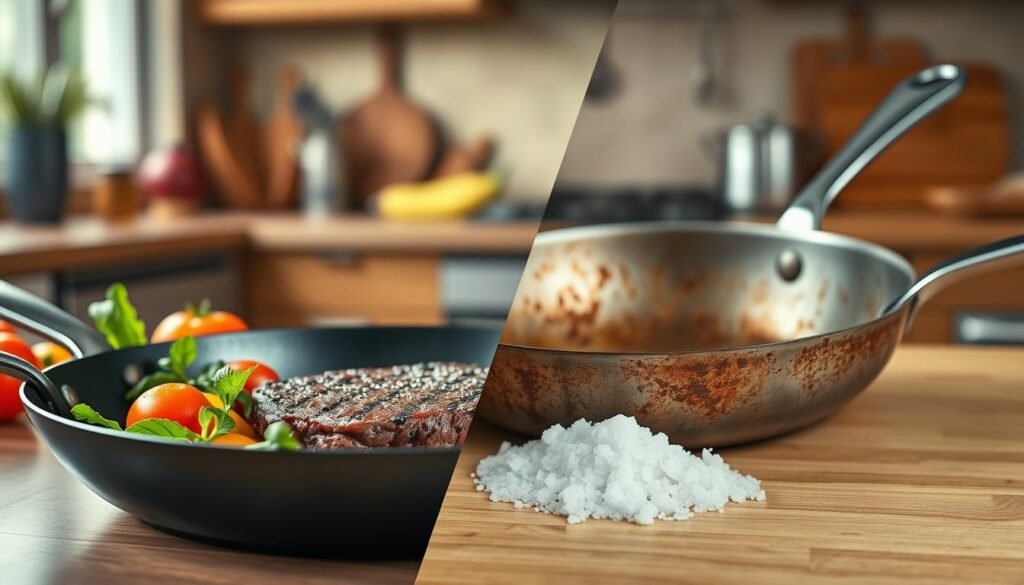
Proper seasoning is required before first use. This builds a protective, naturally nonstick surface.
The pan can rust if not dried thoroughly. Immediate drying after cleaning is a must, especially in humid areas.
It develops a varied patina over time. The colors and patterns are unique but don’t affect performance.
You should avoid delicate food like eggs initially. Cook fattier items first to build a solid patina.
Comparing Carbon Steel with Other Cookware Materials
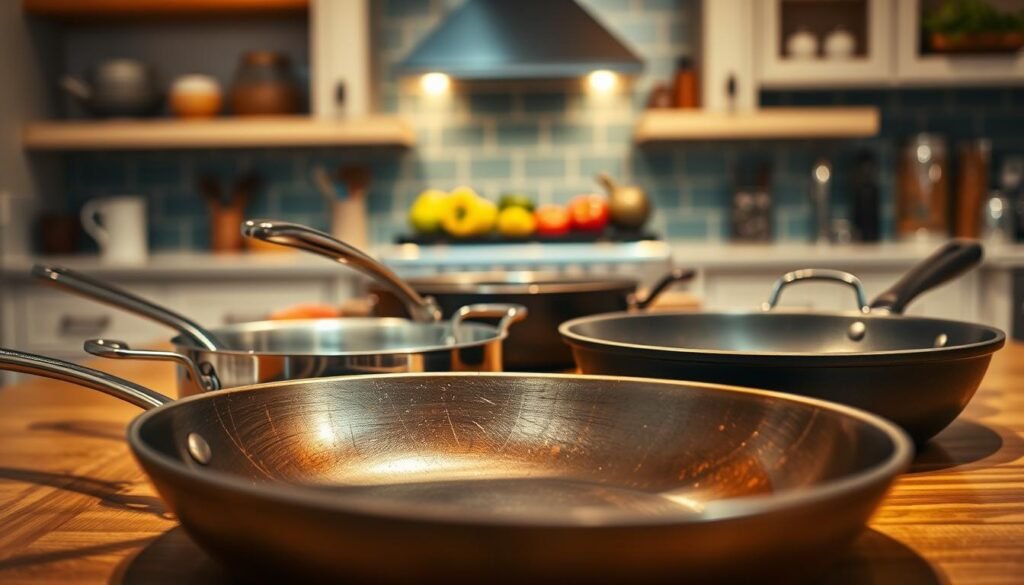
To make an informed choice, you need to see how this alloy stacks up against its kitchen counterparts. Each material has distinct strengths.
Understanding these differences helps you select the right tool for your cooking style and needs.
Carbon Steel vs Cast Iron
These two share a family resemblance. Both require an initial seasoning to build a protective, naturally nonstick layer.
The major difference is weight. A carbon steel pan is about half as heavy as a similar cast iron piece. This makes flipping and maneuvering much easier.
Heat performance also varies. While both hold temperature well, the lighter alloy responds faster when you adjust the burner.
Carbon Steel vs Stainless Steel and Nonstick Options
Against stainless steel, the key advantage is surface release. A well-seasoned piece provides a slick cooking area. Stainless surfaces often stick without ample fat.
For a detailed breakdown, read our analysis on carbon steel vs stainless steel cookware.
Compared to synthetic nonstick coatings, this material wins on durability and heat tolerance. It safely handles searing temperatures that would damage a Teflon pan. Its performance also improves with age.
How to Season Your Carbon Steel Cookware
The secret to unlocking a slick, rust-resistant cooking surface lies in the initial seasoning process. This treatment bonds a protective layer to the metal. You can choose between two effective methods.
Stovetop Seasoning Techniques
First, wash the piece in hot water to remove the factory coating. Dry it completely.
Place it on a burner at medium-low heat. Pour in a thin layer of high-smoke point oil, coating the entire interior.
Let it sit for about 10 minutes. Watch as the surface color gradually changes. Turn off the heat and let the oil cool.
Drain and wipe the oil out. Return the empty pan to medium-low heat for three more minutes. This final step sets the new layer.
Oven Seasoning Process for a Durable Patina
For more even coverage, use your oven. Preheat it to your oil’s smoke point. Grapeseed oil works well at 420°F.
Scrub the piece clean and dry it thoroughly. Place a sheet of aluminum foil on the bottom rack to catch drips.
Warm the pan on the stovetop. Add a few drops of oil and rub a thin layer over all interior surfaces with a towel.
Transfer it upside-down to the middle rack, over the foil. Let it season for one hour. Turn the oven off and let it cool completely inside.
This process creates polymerization. The heated oil transforms into a solid, filling the metal’s pores. It provides nonstick performance and shields against rust. For a detailed seasoning guide, explore our resources.
Using and Caring for Your Carbon Steel Pans
Proper technique transforms a simple piece of equipment into your most reliable cooking partner. To get the best results and ensure your investment lasts, follow these essential practices for daily use and maintenance.
Optimal Cooking Practices and Heat Management
Always let your ingredients come close to room temperature before they hit the pan. This prevents thermal shock and promotes even cooking.
Preheat your piece over medium-low for two to three minutes. Add a small amount of oil or butter and let it warm for another minute or two. Then add your food.
Avoid overcrowding the cooking surface. Leaving space allows for a proper sear instead of steaming. Remember, medium-low heat is often all you need for a perfect crust on a steak.
Start with high-fat items like bacon when your pan is new. This builds a strong patina. Once established, you can confidently cook delicate items like fish or eggs.
Effective Cleaning and Maintenance Methods
Skip the dish soap, as it can strip the seasoned layer. For light messes, simply wipe the interior with a paper towel.
For stuck-on bits, use two tablespoons of coarse salt with a little oil. Scrub with a towel; the salt provides gentle friction. Wipe clean.
More stubborn residue? Add warm water to cover the bottom. Bring it to a boil, then scrape with a wooden spoon. Dump the water out immediately.
For serious messes, a gentle scrub with steel wool may be needed. This will require a quick re-seasoning afterward.
No matter the method, always dry the pan completely on the stovetop over low heat. This prevents rust. Apply a thin coat of oil and heat for a minute to protect the surface.
Store it hanging if possible, or use protectors between stacked pans. Consistent care keeps your performance at its peak for years.
Your Comprehensive “carbon steel cookware guide”
Your daily cooking routine deserves a tool that adapts to every task. This final part helps you choose wisely and care for your investment for decades.
Key Buyer Considerations and Best Uses
Think about your household size and stovetop type first. A 10 or 12-inch carbon steel pan suits most kitchens. Check the handle design for comfort and oven safety.
Specialized pieces serve unique purposes. An omelette pan has sloped sides. A crepe pan offers a large, flat surface. A country fry pan has high walls for simmering.
Use it for everything from breakfast eggs to a perfect seared steak. The material excels at high-heat techniques that create flavorful, caramelized crusts on your food.
Tips for Long-Term Performance and Care
The beautiful patina improves with each use. This natural nonstick surface gets better over time, unlike synthetic coatings that wear out.
Simple maintenance becomes second nature. Dry it thoroughly after washing and apply a thin oil coat. These quick steps prevent rust and preserve your piece.
This durable material is a lifetime investment. It can become an heirloom passed down through generations. For a curated selection of quality pieces, explore top cookware brands.
Conclusion
When you choose a piece built to last generations, you invest in more than just a kitchen tool.
This material is famously resilient. With basic care, it’s virtually indestructible. Even a neglected pan can often be restored to like-new function.
The unique patina improves with each use. Your cooking surface becomes more nonstick over time, not less. This means easier meals and better results as the years pass.
That learning curve is short. The benefits are permanent. You now have the knowledge to use and maintain your investment for a lifetime.
Embrace this path to professional-quality results in your home kitchen. Your reliable partner is ready for everything ahead.