
Best Carbon Steel Pans for Induction, Gas & Outdoor Use
What if one versatile skillet could master your induction cooktop, gas stove, and outdoor grill with equal prowess?
What if one versatile skillet could master your induction cooktop, gas stove, and outdoor grill with equal prowess?
This guide is your ultimate resource for finding that perfect piece of professional-grade cookware. We cut through the noise to show you what truly matters.
A high-quality carbon steel model combines the rugged durability of stainless with heat retention rivaling cast iron. The major advantage is a significantly lighter weight for easy handling.
Superior performance across all heat sources depends on specific factors. Key considerations include metal gauge thickness, overall construction quality, seasoning capability, and direct compatibility.
You will learn which products excel based on expert testing and real-world data. Our analysis, informed by insights from Bon Appétit’s comprehensive roundup, provides clear comparisons and actionable recommendations.
This is a lifetime investment. Properly maintained, this type of cookware endures for decades, unlike common nonstick options that wear out quickly.
Table of Contents
Key Takeaways
- One versatile skillet can perform excellently on induction, gas, and outdoor grills.
- This material offers a unique blend of durability, heat retention, and lighter weight.
- Performance hinges on factors like thickness, build quality, and seasoning.
- Expert testing and comparisons will guide you to the top models for your needs.
- It is a long-term investment that outlasts disposable nonstick cookware.
- Proper maintenance ensures the piece lasts a lifetime.
- Compatibility with your primary heat source is the first critical check.
Introduction to Carbon Steel Cookware
A quiet revolution is happening in home kitchens, inspired by the tools of restaurant chefs. For decades, professionals have depended on this material for its rugged performance. Now, home cooks are embracing it for the same reasons.
This family of alloys contains about 1% carbon and 99% iron. That mix creates a functional material. It is less brittle than cast iron and can be made thin yet strong.
Manufacturers shape these items by bending cut sheets of metal. They press and spin them on a mold. Then, each piece is machined and finished by hand before handles are welded on.
You can use this versatile skillet for almost any task. Searing steaks, sautéing vegetables, and cooking delicate eggs are all easy. It even works for baking desserts, moving from stovetop to oven without limits.
Key advantages attract home users. The design is easy to use. It cooks any cuisine or diet. Over time, it develops natural nonstick properties. You get professional-grade results at an accessible price.
| Property | Carbon Steel | Cast Iron | Traditional Nonstick |
|---|---|---|---|
| Primary Composition | Iron + ~1% Carbon | Iron + 2-4% Carbon | Aluminum/Steel + Coating |
| Relative Weight | Medium | Heavy | Light |
| Heat Retention | Excellent | Superior | Poor |
| Nonstick Capability | Develops with Seasoning | Develops with Seasoning | Factory-Coated |
This makes it the most versatile option in your kitchen. It combines benefits from multiple types. It also avoids the limitations of synthetic coatings.
Understanding Carbon Steel vs. Cast Iron
For cooks who value heat retention but dread heavy lifting, one material offers a compelling advantage.
The weight difference is the first thing you’ll notice. A comparable skillet feels much lighter and easier to maneuver.
This stems from a fundamental material distinction. Carbon steel contains slightly less carbon than its counterpart, around one percent. This lower carbon content makes the iron alloy less brittle.
Manufacturers can shape it into thinner, lighter sheets without losing durability. Cast iron is made by pouring molten metal into a sand mold. The process creates one thick piece, including the handle.
In contrast, carbon steel cookware is formed by bending sheets of steel. Handles are welded on separately.
The surface texture also varies. Cast iron often has a rough, pebbly finish. This can require multiple seasoning rounds to become nonstick.
Carbon steel pans typically start with a smooth surface. They develop a slick patina of polymerized oil more quickly and easily.
Both materials hold heat well. However, the thinner profile of a carbon steel skillet means it heats up faster. You get more responsive temperature control.
Durability is excellent for both. Yet, the lower carbon content in this metal makes it less prone to cracking from sudden temperature changes.
Why Carbon Steel is Ideal for Induction, Gas & Outdoor Cooking
Your cookware shouldn’t limit where you cook, and with the right properties, it won’t. This material’s universal compatibility stems from its core science.
Carbon steel is ferromagnetic. A magnet sticks to it firmly. This allows modern induction cooktops to transfer energy directly into the cooking surface efficiently.
You can use this skillet on virtually any heat source. It performs on gas flames, electric coils, smooth-top ranges, and outdoor grills. The versatility is exceptional.
Handles made entirely of metal remove temperature limits. Move it from a stovetop sear directly under a broiler or into a hot oven. There are no synthetic coatings to degrade.
For outdoor cooking, its durability shines. It withstands campfire flames and grill grates without concern. You get even heat distribution on induction and rapid response on gas.
This single piece of equipment supports a complete recipe. Start a dish on the burner and finish it in the oven. That flexibility expands your culinary methods.
Design and Construction Features
Beyond the material itself, the specific engineering of a piece determines its daily performance. Details like metal thickness, interior finish, and handle design directly impact cooking results and longevity.
Thick, Durable Build and Even Heat Retention
Premium models use 11- or 12-gauge metal. A lower gauge number means a thicker, more substantial piece. This robust construction resists warping from sudden temperature changes.
Thicker material also provides superior heat retention. It maintains a steady temperature across the entire surface, eliminating hot spots. This consistency is crucial for achieving a perfect sear.
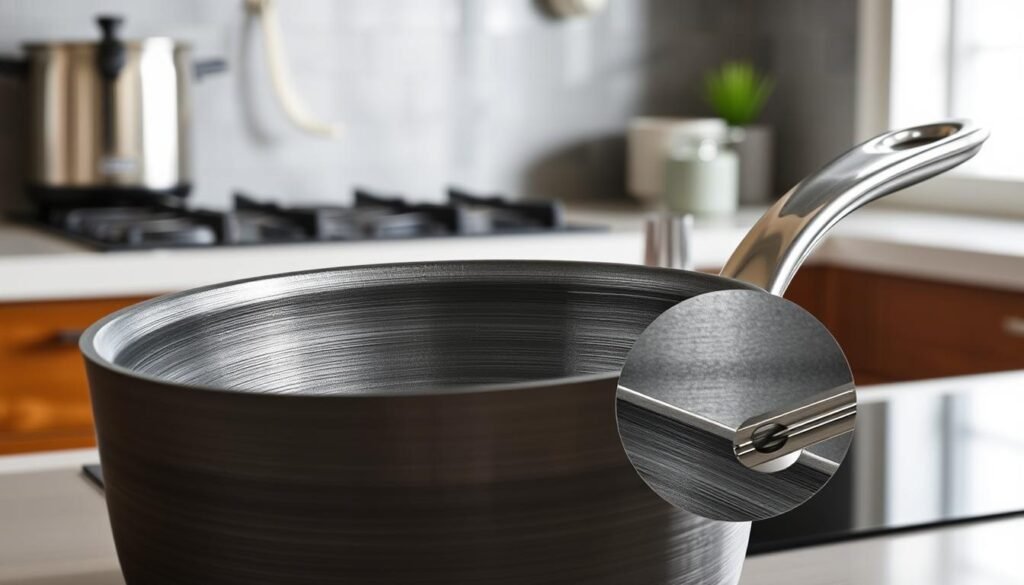
Smooth Cooking Surface and Minimal Handle Rivets
A smooth finish on the interior allows a natural nonstick layer to form quickly. Even delicate foods release easily. The ideal sides are low and flared, about two inches high.
This shape contains splatters while letting steam escape for better browning. Inside, flat rivets securing the handle create a seamless cooking surface. They are simple to clean and won’t snag your spatula.
The handle itself is always made of metal, allowing safe use in any oven. Textured grips provide security, even when wearing mitts. Every design choice supports durability and effortless use.
Preseasoned versus Unseasoned Pans
Understanding the initial treatment options for your cookware sets the stage for longevity. Bare carbon steel will rust if exposed to air. A protective seasoning layer is essential.
This layer is created by heating a thin coat of oil until it bonds to the surface. You have three main choices when buying.
Initiating the Seasoning Process
Traditional unseasoned pans, like the de Buyer Mineral B, arrive with a beeswax coating. You must scrub this off before applying your first oil layers.
This gives you complete control over the process. Contrary to conflicting advice online, putting the first layer on new cookware is neither time-consuming nor difficult.
It can be very satisfying. You learn about your skillet and control the seasoning from the start.
Advantages of Preseasoned Models and DIY Seasoning Tips
Factory-preseasoned options, like one from The Northwest Skillet Company, are ready immediately. They often have a deep blue patina and a pre-applied oil finish.
A third option is “blued” carbon steel. De Buyer’s Blue Carbon model gets intense heat treatment. This oxidizes the surface, turning it blue and preventing rust.
It still benefits from added seasoning for optimal nonstick performance. For any unseasoned pan, start with 2-3 rounds of stovetop heating with thin oil layers.
This establishes good protection. The nonstick properties will keep improving with regular use over time. For more detailed guidance, see Bon Appétit’s comprehensive roundup.
Expert Review: Best Carbon Steel Pan for Every Cook
After extensive real-world testing, a clear winner emerged for the home cook seeking a versatile, long-lasting skillet. The Mauviel M’STEEL Black Carbon Steel Round Frying Pan earned top honors.
This 12.6-inch model performed beautifully across all cooking trials. Its sturdy construction is designed to last a lifetime. Once seasoned, it provides reliable food release.
For a premium upgrade, consider the gorgeous Northwest Skillet Company 12-Inch Fry Pan. This handcrafted piece is made one-by-one in Oregon.
It arrives preseasoned, ready for immediate use. Its forged build offers exceptional browning and superior food release.
Another standout is de Buyer’s Mineral B. CNN Underscored rated it “Best Carbon Steel Pan Overall.” It has over 15,000 five-star reviews and is called a “kitchen workhorse.”
Our testing evaluated performance, durability, and ease of use. While artisan pans are beautiful, they don’t outperform factory favorites in pure function.
Performance and Cooking Results
The true test of any skillet lies in the results it delivers on your plate. This material excels at creating rich, caramelized crusts on meats and vegetables. Its superior heat retention ensures even, professional browning.
Natural Nonstick Properties and Browning Capabilities
A properly seasoned surface develops excellent nonstick qualities. Delicate eggs cooked in butter will slide around effortlessly. This allows for perfect presentation and easy cleanup.
The seasoning layer improves with each use. Fats and oil polymerize, bonding to the metal. Over time, this creates a slick patina that rivals synthetic coatings.
Initial performance can vary. Some models may show slight sticking at first. Regular cooking quickly builds a reliable nonstick surface.
Efficient Heat Distribution and Responsiveness
These skillets transfer heat evenly across the entire cooking area. This eliminates hot spots and ensures consistent browning. Your food cooks uniformly every time.
Lighter models heat very quickly. They can be ready for searing in just two minutes. This rapid response gives you precise control over doneness.
Thicker pieces provide outstanding heat retention. They maintain a steady temperature for perfect sears. Both styles offer exceptional performance for different tasks.
| Performance Factor | Initial Use | After Seasoning | Long-Term Result |
|---|---|---|---|
| Food Release | May require more oil | Eggs slide easily | Consistently nonstick |
| Browning Quality | Good | Excellent, even crust | Professional-grade sear |
| Heat Response | Fast in lighter models | Consistent across surface | Predictable and reliable |
The carbon steel construction gets better with age. Each meal adds to its protective seasoning. This self-improving nature makes it a lasting investment.
You can cook a wide variety of food with confidence. Fish fillets, sticky rice, and seared proteins all release cleanly. This versatility simplifies meal preparation and cleanup.
Versatility in Cooking Styles
From crispy stir-fry to oven-baked fruit tarts, one piece of equipment can do it all. This material’s flexibility makes it the undisputed champion of the kitchen.
You can achieve a perfect sear on a steak or gently frying eggs for breakfast. Sautéing onions for caramelization is effortless. The same pan moves from the stovetop directly into a hot oven for finishing desserts.
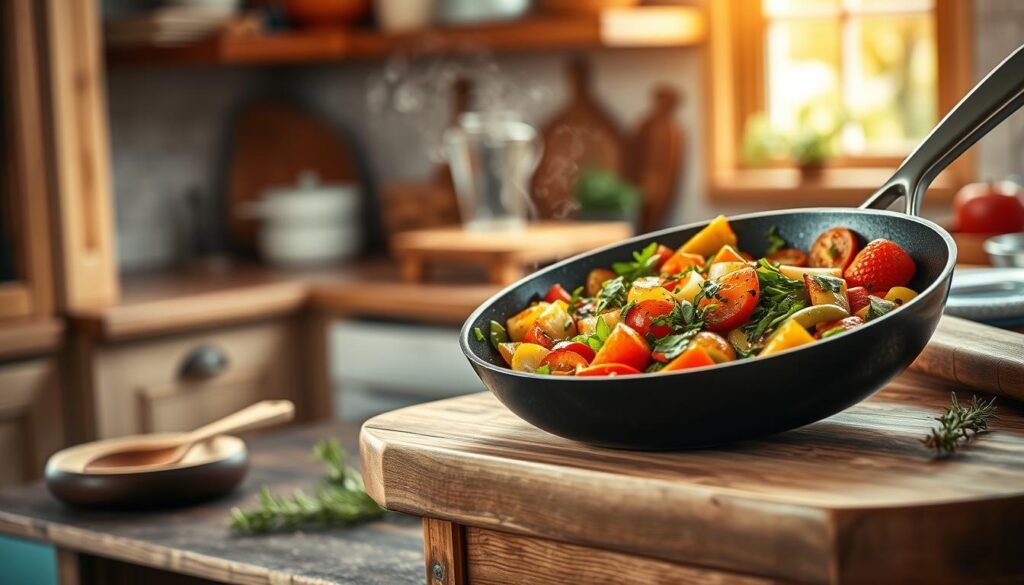
Many cooks find themselves reaching for these pans for nearly every task. Heavier models excel at searing due to superior heat retention. Lighter versions heat quickly for everyday use.
This cookware complements other pieces in your collection. It works alongside enameled cast iron for braises and stainless for acidic sauces. The stovetop-to-oven ability expands your techniques without switching tools.
Mastering one versatile skillet simplifies meal preparation. It reduces the need for multiple specialized pans. For more comprehensive guidance, expert resources detail this exceptional adaptability.
Size Options and Capacity Considerations
The size of your frying pan directly impacts cooking performance, portion control, and storage convenience. For most kitchens, an 11- to 12-inch model is the ideal starting point. This roomy capacity lets you prepare food for up to six people.
You can cook multiple fish fillets, two medium steaks, or up to six burgers in one batch. A 10-inch skillet is perfect for two to four people. It excels at searing a single steak or making an omelet.
An 8-inch piece is a compact champion for one or two. Use it for scrambling a couple of eggs or toasting nuts. It heats quickly and saves energy.
Skillets are measured across the top rim, not the cooking surface. Building a collection with multiple pans is highly recommended. Match the size to your recipe for better heat control.
Manufacturers like de Buyer offer specialty carbon steel pieces up to 14 inches. Consider your stovetop burner size and cabinet space. A 12-inch pan may overhang a small burner, reducing efficiency.
For apartment dwellers, smaller pans are often more practical. Explore a versatile cookware collection to find the right fit for your cooking style and food preparation needs.
Ergonomic and Safety Features
Safety and comfort in the kitchen begin with how your cookware handles. Proper balance between the body and grip makes maneuvering effortless. Unbalanced skillets feel like someone is pulling down on one side.
Even weight distribution prevents arm strain during prolonged cooking. Every tested model featured a metal handle. This construction removes temperature limits for oven or grill use.
Textured surfaces with ridges provide a secure hold, even with greasy fingers. A helper handle is invaluable on heavier pieces. It allows two-handed lifting when full of food.
The Northwest Skillet exemplifies this with a sturdy forged-iron main handle and a large loop. Advanced designs reduce heat transfer along the grip.
| Model | Handle Material | Heat Tolerance | Special Feature |
|---|---|---|---|
| Northwest Skillet | Forged Iron | Fully oven safe | Large helper handle |
| de Buyer Mineral B | Epoxy-coated Steel | 450°F for 10 min | French-curved design |
| de Buyer Signature | Stainless Steel | Fully oven safe | Heat-stop technology |
This minimizes the need for pot holders during stovetop use. The flaring sides, about two inches high, contain splatters. These low sides also improve visibility and control.
Brand Comparison and Market Leaders
The market for carbon steel skillets is dominated by a few key players. Each has distinct philosophies and proven track records.
Understanding these brands helps you make an informed choice. Your decision balances heritage, performance, and craftsmanship.
Insights from de Buyer and Other Top Picks
De Buyer represents the heritage leader with nearly 200 years of experience. Their carbon steel is found in professional kitchens worldwide.
The Mineral B line is the original model and a #1 best seller. It has over 15,000 five-star reviews and is rated “Best Carbon Steel Pan Overall.”
All their products are made in France with traditional techniques. They come with a lifetime warranty, assuring long-term durability.
In our testing, the Mauviel M’STEEL won as the best option for most home cooks. It offers similar French manufacturing heritage at a competitive price.
For artisan American craftsmanship, consider Northwest Skillet Company or Smithey. These brands produce handcrafted pans one-by-one in Oregon and South Carolina.
Their products often arrive preseasoned and ready for immediate use. They offer unique aesthetic appeal and support small-scale manufacturing.
A cautionary note involves Matfer Bourgeat. Certain batches of a former winning model were recalled in France.
Testing revealed concerning levels of arsenic, chromium, and iron. This highlights the importance of buying from reputable manufacturers with strict quality control.
From a pure performance standpoint, artisan pans didn’t outperform factory favorites. However, they deliver craftsmanship value some buyers prioritize.
De Buyer offers proven heritage and professional-grade quality. Mauviel provides excellent performance at accessible prices. Artisan brands deliver handcrafted uniqueness for those willing to invest more.
Customer Experiences and Testing Feedback
Customer reviews and hands-on testing provide the most honest assessment of any kitchen tool. Owners of a popular carbon steel model praise its “Heavy Duty Beauty.”
One user noted, “This pan seasoned so easily. I love that the non-stick surface is natural and silky smooth. This is now my every day pan.”
The BEST frying pan in the world. My French omelettes slide right out of the pan.
Many found it became a kitchen workhorse within weeks. Eggs slid around the surface after just a short use period.
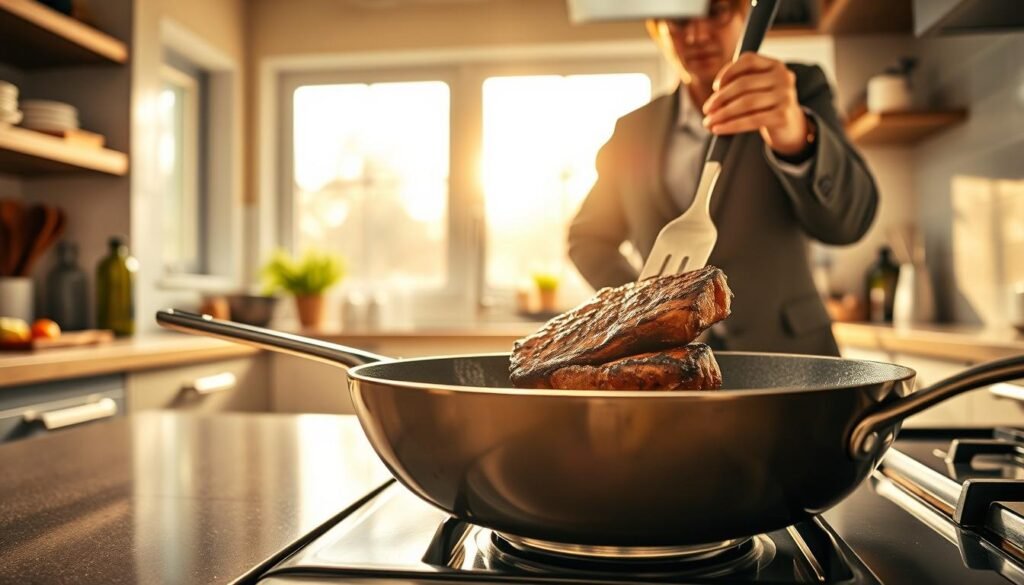
Satisfaction drives repeat purchases. Enthusiasts love these pans so much they buy them as gifts for family.
Our testing mirrored rigorous home cooking. We evaluated performance by searing steak and making Tarte Tatin.
This dessert starts on the stove, moves to the oven, and requires flipping the pan to release the tart. We also prepared Skillet Lasagna with acidic tomato sauce.
| Test | Purpose | Result |
|---|---|---|
| Steak Searing | Evaluate browning & heat retention | Excellent crust, even cooking |
| Tarte Tatin | Test stovetop-to-oven versatility | Perfect release after flipping |
| Skillet Lasagna | Challenge seasoning with acidic food | Seasoning restored easily post-cooking |
Acidic food can strip the nonstick patina. A quick 10-minute stovetop re-seasoning session fixes this without permanent damage.
The consensus is clear. These tools improve with time and regular use. They develop better nonstick properties and require less maintenance over the long term.
Optimizing Your Carbon Steel Pan’s Lifespan
Maximizing the longevity of your cookware hinges on a few simple, consistent habits. Proper care ensures your skillet remains a reliable partner for decades. The routine is quick and becomes second nature.
Effective Cleaning Techniques
Never leave your skillet to soak. Water leads to rust. Instead, wash it while still warm.
Wipe out excess food and oil. Run hot tap water over the surface to minimize thermal shock. Scrub gently with a brush if needed.
Soap is rarely necessary. Rinse well and dry thoroughly with a towel. Place it on a warm burner to evaporate all moisture.
For stuck food, try a gentle spa treatment. Add a few tablespoons of cooking oil and a handful of kosher salt. Heat gently and scrub with a paper towel.
Rust Prevention and Maintenance Strategies
If the seasoning looks dry, apply a very thin coat of oil. Use about a quarter teaspoon for a 12-inch model.
This is key: rub the oil almost entirely off with a cloth. The surface should not look shiny or feel sticky.
Heat the skillet on medium-low for a few minutes. This bonds the oil to the metal. Turn off the heat and let it cool.
If rust appears, don’t panic. Scrub off the visible rust, dry immediately, and apply a light oil coat. Heat it briefly to restore the protective layer.
| Maintenance Step | Purpose | Key Tip |
|---|---|---|
| Immediate Washing | Prevent rust formation | Use hot water, avoid soaking |
| Thorough Drying | Eliminate all moisture | Place on warm burner after toweling |
| Light Oiling | Protect and enhance seasoning | Rub oil off until surface is matte |
| Heat Bonding | Set the protective layer | Medium-low heat for a few minutes |
Step-by-Step Guide to Seasoning Your Pan
The journey to a perfectly seasoned skillet is simpler than many online sources suggest. Contrary to conflicting advice, applying that first protective layer is neither time-consuming nor difficult.
It can be very satisfying. You learn about your pan and control the process using your preferred oil.
After receiving your carbon steel cookware, wash it to remove any protective coating. Then, begin the seasoning process before any cooking.
Just 2-3 rounds of stovetop seasoning provide adequate protection. Apply thin oil layers and heat until they polymerize. Your skillet’s nonstick properties will improve continuously with regular use.
A new unseasoned piece starts silver. As seasoning develops, it turns brown and blotchy. Eventually, it becomes fully black.
This uneven appearance during transition is completely normal. Developing a solid black patina takes anywhere from one to two years of regular use.
Some enthusiasts spend days perfecting their surface. One user applied a beeswax formula over four heating cycles, then tested with potato skins.
Note that de Buyer doesn’t recommend oven seasoning for its Mineral B model. Its handle is only oven-safe to 400°F for 10 minutes.
The beauty of carbon steel is its self-correcting nature. Continued use automatically builds and improves the surface.
You can always strip and restart if needed. You cannot permanently ruin these pans. For more tips on compatible induction cookware, explore our detailed resources.
Induction Compatibility and Usage Instructions
The science behind induction cooking reveals why certain materials, like carbon steel, are perfectly suited for this technology. This alloy is ferromagnetic. A magnet sticks firmly to it.
This property allows the skillet to interact directly with the electromagnetic fields an induction cooktop generates. Energy transfers efficiently into the cooking surface for rapid heating.
Every model we tested works flawlessly on induction. This universal compatibility eliminates worry for anyone with this modern cooktop. You gain precise temperature control and excellent energy efficiency.
The cooking surface stays cool, only heating the pan itself. Brands like de Buyer ensure their entire line is induction-ready. This includes the lightweight Blue Carbon and the thick Mineral B.
| Model | Gauge Thickness | Heat-Up Time | Best For |
|---|---|---|---|
| Blue Carbon | Thinner-gauge | Very Fast | Quick sautés, everyday use |
| Mineral B | 2.5-3mm thick | Slightly Longer | Searing, superior heat retention |
| Signature Collection | Varies | Fast | Specialty cooking, all-purpose |
For optimal performance, match your pan’s diameter to your induction zone size. Thicker pans retain temperature better once hot. Moving from gas to induction is seamless with this cookware.
You get familiar responsiveness and even heating. No hot spots form. This material excels with electromagnetic technology.
Conclusion
When your cookware evolves with each use, improving its nonstick properties naturally, you gain a partner for life. Many cooks find these versatile skillets change their kitchen routine.
Transitioning from peeling nonstick pans is a smart move. You get natural performance without toxic concerns. Practical benefits include turning leftovers into crispy stir-fries.
No more worrying about long scrubbing sessions. This material fits perfectly alongside enameled cast iron and stainless pieces. It completes a durable collection.
Unlike coated options that wear out, a quality carbon steel skillet lasts a lifetime. It’s a wise investment for decades of service. Safety is another key advantage.
It handles high heat without releasing harmful fumes. Start with one piece in the right size. Learn the simple care routine and experience the difference.
With expert insights from this guide, you can confidently choose the ideal model for your induction, gas, or outdoor cooking needs.