Best Cookware Sets (Top Picks for 2026) Top Picks by Material, Budget & Stove Type
If you want the fastest “buy once” move for your kitchen, start with a cookware set—but only if it matches how you cook. This guide ranks sets by performance, durability, ease of use, and value, with clear picks by budget and stove type.
Affiliate disclosure: TopCookwareBrands.com is reader-supported. If you buy through links on this page, we may earn a commission at no extra cost to you.
Quick Picks (1-minute shortlist)
- Best Overall (Most Kitchens): Stainless Steel Tri-Ply Set
- Best Budget: Stainless Steel Value Set (induction-compatible if needed)
- Best Premium: High-end Tri-Ply / Multi-ply Stainless Set
- Best Nonstick Add-On: Buy a set + add 1 quality nonstick skillet (don’t overpay for a full nonstick set)
How We Chose (The Rubric)
- Heat performance: even heating, fewer hot spots, stable simmering
- Durability: resistance to warping, handle/stud strength, long-term reliability
- Ease of use: weight balance, handle comfort, cleaning practicality
- Compatibility: induction readiness, oven safety (varies by model)
- Value: price vs expected lifespan and cooking performance
Comparison Table (Use This to Decide Fast)
| Pick | Best For | Material | Induction? | Key Tradeoff | Link |
|---|---|---|---|---|---|
| Best Overall Tri-ply stainless set | Most home cooks | Stainless/Aluminum core | Usually yes | Food can stick without technique | Check price |
| Best Budget Stainless value set | Starter kitchens | Stainless (varies) | Model-dependent | Less even heating vs tri-ply | Check price |
| Best Premium Higher-end multi-ply | Frequent cooking | Stainless multi-ply | Usually yes | Higher cost | Check price |
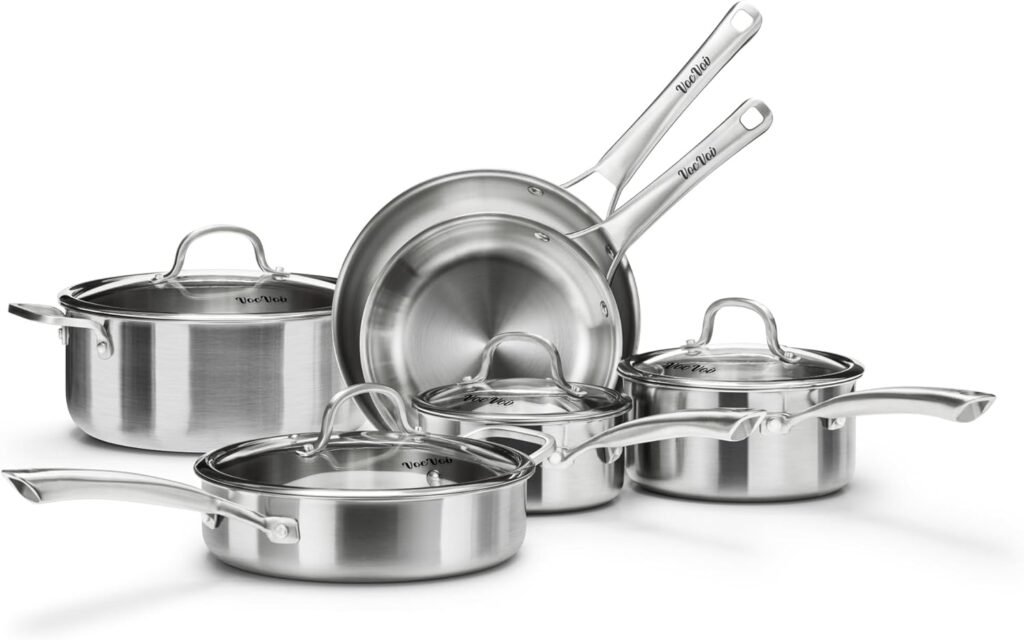
Best Overall: Tri-Ply Stainless Set (Most Kitchens)
Why it wins: the best mix of durability, heat control, and long-term value. It’s also the easiest “set-and-forget” choice if you want cookware that still performs years from now.
- Best for: searing, sauces, weeknight cooking, meal prep
- Works well on: gas, electric, and usually induction
- Watch-outs: you need basic preheating and oil control to prevent sticking
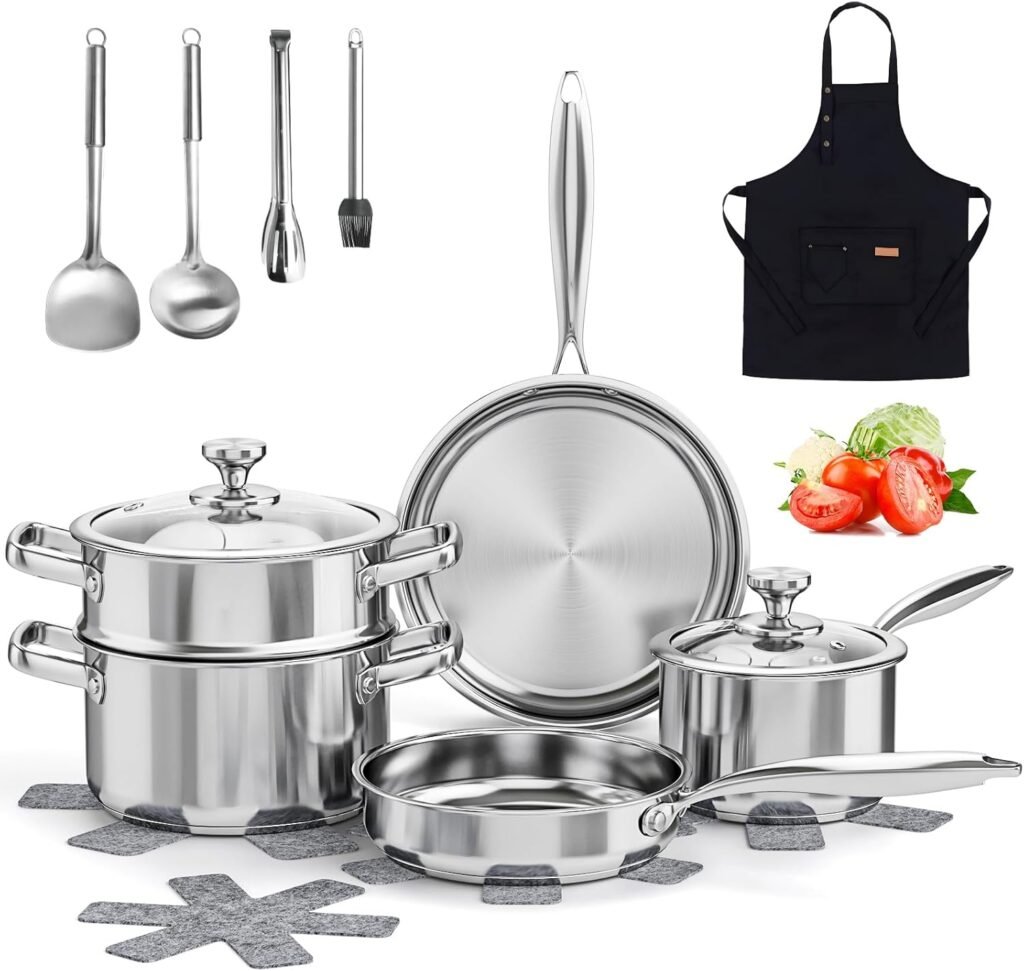
Best Budget: Stainless Value Set (When Price Matters)
Why it works: a solid starter move if you want more than one pot/pan without paying premium pricing. The goal here is “good enough now” without buying junk you’ll replace immediately.
- Best for: light-to-moderate cooking
- Watch-outs: verify induction compatibility if you have an induction cooktop
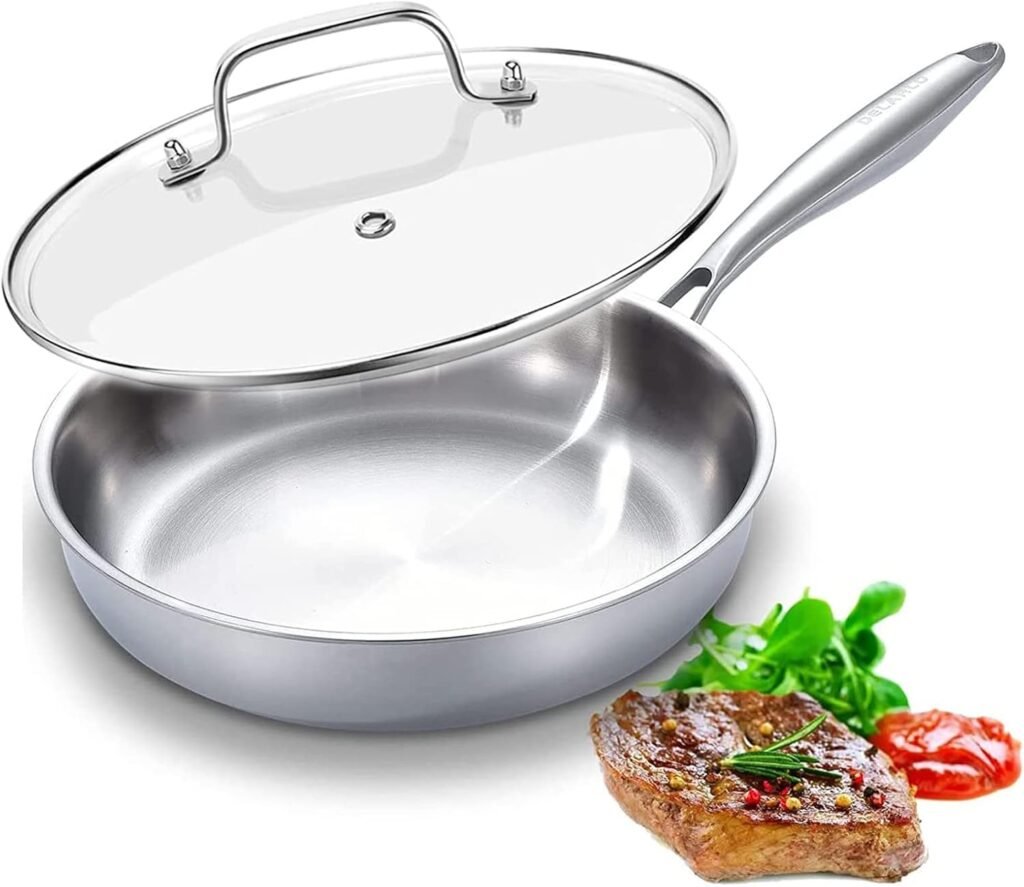
Best Premium: High-End Multi-Ply Stainless Set
Why it’s worth it: better heat stability, stronger build quality, and higher confidence for frequent cooking. If you cook a lot, premium stainless can be cheaper over time because you stop replacing cookware.
- Best for: frequent searing, heavier use, longer lifespan
- Tradeoff: upfront price
Smart Add-On: One Quality Nonstick Skillet
Most people don’t need a full nonstick set. The smarter play is: buy a stainless set for longevity, then add one quality nonstick skillet for eggs and delicate foods.
What to Avoid (Common Set Mistakes)
- Oversized sets: lots of pieces you’ll never use
- “Forever nonstick” claims: coatings wear over time
- Induction surprise: not all stainless is induction-compatible—confirm first
FAQs
Is a cookware set better than buying pieces?
A set is better if you want consistent materials and a faster setup. Buying pieces is better if you hate unused extras and want only the pans you actually cook with.
What’s the best material for a cookware set?
For most people, stainless steel (especially tri-ply) is the best long-term base. Nonstick is best as a single add-on pan.
Do I need an induction-specific set?
You need cookware that’s magnetic on the bottom. Many stainless sets qualify; always confirm “induction compatible.”