Le Creuset Reviews: Why This Cookware Costs So Much (& Is It Worth It?)
Is a $400 Dutch oven really worth ten times more than a $40 one? This question haunts anyone considering a premium kitchen investment. The iconic brand commands prices that make many home cooks pause.
Table of Contents
Our comprehensive review digs into what justifies that cost. We examine the specific features and construction quality that set this enameled cast iron apart. You’ll see how it performs against budget-friendly alternatives.
This analysis uses real-world testing and expert opinions. We compare durability and performance across popular product lines. The core question is whether the superior longevity warrants the significant spend.
We calculate the total cost of ownership, from purchase to maintenance. By the end, you’ll have concrete data to decide. Is it a smart investment or an overpriced luxury?
Key Takeaways
- This review breaks down the specific features that justify the premium price of this cookware.
- We provide direct performance comparisons against more affordable alternatives on the market.
- You’ll get real-world testing data and expert insights to inform your purchasing decision.
- Our analysis includes detailed pricing assessments and durability evaluations.
- We address whether the high initial cost translates to better value over the long term.
- You’ll learn about the total cost of ownership, including maintenance and expected lifespan.
- The goal is to give you the concrete information needed to decide if this is a worthwhile kitchen investment.
Introduction to Le Creuset Cookware
Choosing the right pots and pans for your kitchen involves more than just picking a color; it’s a long-term investment in your cooking experience. The brand began in Fresnoy-le-Grand, France, in 1925. Founders Armand De Saegher and Octave Aubecq combined casting and enameling expertise.
For over nine decades, this dedication has built a trusted name. It serves both professional chefs and home cooking enthusiasts globally.
Why This Review Matters
Le Creuset items represent a major financial commitment. Their cost is significantly higher than standard cookware from mainstream stores.
This review provides the objective analysis you need. We compare real performance and durability against more affordable alternatives. Our goal is to eliminate the guesswork from your buying decision.
| Consideration | Premium Brand Cookware | Standard Cookware |
|---|---|---|
| Initial Cost | High upfront investment | Lower purchase price |
| Expected Lifespan | Often decades, multi-generational | Several years, may need replacement |
| Performance Consistency | Excellent heat retention & distribution | Can be uneven, may degrade over time |
| Long-Term Value | High resale & heirloom potential | Typically little to no resale value |
We give you concrete data on construction and value. This helps you decide if the premium aligns with your budget and kitchen goals. Our insights support confident decisions for upgrades or special gifts.
Rich Heritage and Iconic Design
What makes a simple pot a cultural icon? For this brand, it’s a blend of history, color, and relentless innovation.
The legacy started in 1925. Belgian founders crafted the first cocotte in France. They merged casting and enameling skills.
Founding Story & Evolution
Design evolution came through famous collaborators. Raymond Loewy created the “Coquelle” in 1958. It aimed for a younger audience.
Enzo Mari added T-shaped handles in the 1970s. The 1970 logo symbolizes metal casting. It remains the company mark today.
A major shift happened in 1995. The line grew to include steel, stoneware, and silicone. This moved beyond classic cast iron.
| Year | Design Milestone | Significance |
|---|---|---|
| 1925 | First Cocotte | Founded the brand’s core product |
| 1958 | Coquelle Pot | Modern, streamlined design for new markets |
| 1970 | Current Logo | Iconic symbol of craftsmanship |
| 1995 | Product Expansion | Diversified into new materials and categories |
The Signature Flame Color
The original signature “Flame” orange debuted in 1925. It became an instant classic. This bold hue defines the visual identity.
The palette now offers many colors. You find vibrant cherry and soft dune. Limited editions with retailers create collectibles.
Cookery writer Elizabeth David promoted the brand in the UK. Her influence even inspired a special blue shade.
Celebrity use, like Julia Child’s, boosted prestige. This cookware sits in the Smithsonian Museum. The colors and design tell a story of enduring appeal.
Le Creuset: A Legacy of Premium Cookware Quality
At the heart of this legacy brand is a century-old dedication to perfecting enameled cast iron. This commitment defines its premium status and justifies the investment for serious cooks.
Enameled Cast Iron Excellence
Every piece begins with traditional sand casting. Skilled artisans then hand-finish the raw cast iron.
It receives multiple layers of a proprietary enameled coating. Standard lines get at least two coats. The premium Signature range receives a minimum of three.
This process happens exclusively in the original French foundry. The result is a vitreous surface highly resistant to chipping and staining.
Versatile Culinary Innovations
The enameled cast construction delivers exceptional heat distribution and retention. It heats evenly and holds temperature steadily, perfect for braising and baking.
The non-reactive enamel interior safely handles acidic foods like tomatoes. Unlike raw cast iron, it requires no seasoning.
This enameled cookware transitions seamlessly from stovetop to oven. It even works on grills. Its performance and beauty make it suitable for a best induction cookware collection and direct table presentation.
Product Roundup: Exploring Key Pieces
From braising large roasts to searing steaks, each piece in the collection serves a distinct culinary purpose. The lineup is vast, designed to outfit a complete kitchen.
It ranges from iconic heavy-duty pots to lighter daily drivers. This section breaks down the essential categories.
Dutch Ovens, Cocottes, and Signature Pieces
The classic dutch oven remains the flagship. It is the heart of this creuset cookware system.
You can choose round or oval dutch styles. The cast iron oval casserole is perfect for a whole chicken.
Creuset signature pieces feature a superior three-coat enamel finish. Their handles are more ergonomic for safe lifting.
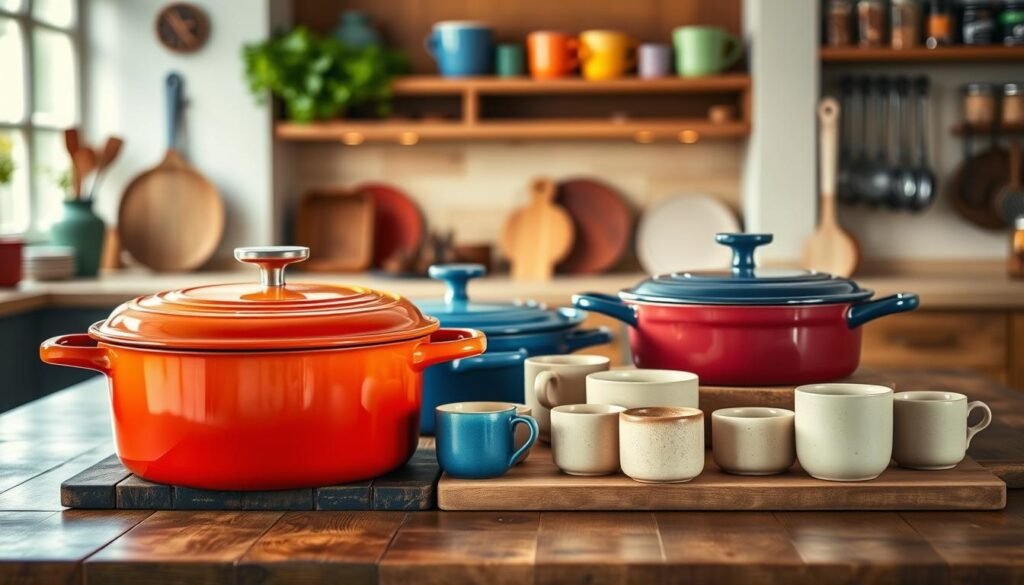
These dutch ovens excel in any oven. They are true workhorses for slow cooking.
Complete Cookware Sets and Accessories
For a full upgrade, consider a comprehensive cookware set. Options include stainless steel and ceramic nonstick lines.
The Classic 14-Piece stainless steel set covers all basics. The Essential Non-Stick 13-Piece set offers easy cleanup.
Specialized lines like the Alpine Collection add a fry pan, grill pan, and pizza stone. Creuset stoneware bakeware brings color to your table.
Don’t forget useful accessories. A good cookware cleaner preserves your investment for years.
| Product Type | Key Feature | Ideal Use | Price Range |
|---|---|---|---|
| Signature Dutch Oven | Three-coat enamel, ergonomic handles | Braising, baking, stews | $300-$400 |
| Stainless Steel Set | Lightweight, responsive heating | Everyday sautéing, boiling | $590-$1,150 |
| Stoneware Bakeware | Oven-to-table aesthetic | Casseroles, baking, serving | $50-$200 |
| Specialty Accessories | Designed for ecosystem | Cleaning, basting, grilling | $26-$160 |
Benefits, Drawbacks, and Investment Value
A lifetime guarantee and heirloom quality transform a simple pot into a multi-generational asset. This section weighs the tangible advantages against the notable costs to determine real value.
Durability and Performance Insights
The primary benefit is exceptional longevity. Enameled cast iron pieces can last for decades with proper care. They often become family heirlooms.
The lifetime guarantee demonstrates manufacturer confidence. It offers real price protection over the long term. This is a key reason why buy Le Creuset.
Superior heat retention allows for energy-efficient cooking. You use lower heat settings for consistent results. The enameled surface also eliminates rust and seasoning chores.
The main drawback is the significant price premium. Signature pieces cost much more than basic alternatives. The substantial weight of cast iron can make handling large dishes difficult.
While resistant, the enamel coating can chip from impacts. Thermal shock is also a risk. This may affect both looks and function.
Investment value favors regular users. The high initial cost spreads over many years of service. The brand’s designer status, boosted by social media, adds to the price beyond pure function.
Comparing Le Creuset with Other Premium Cookware
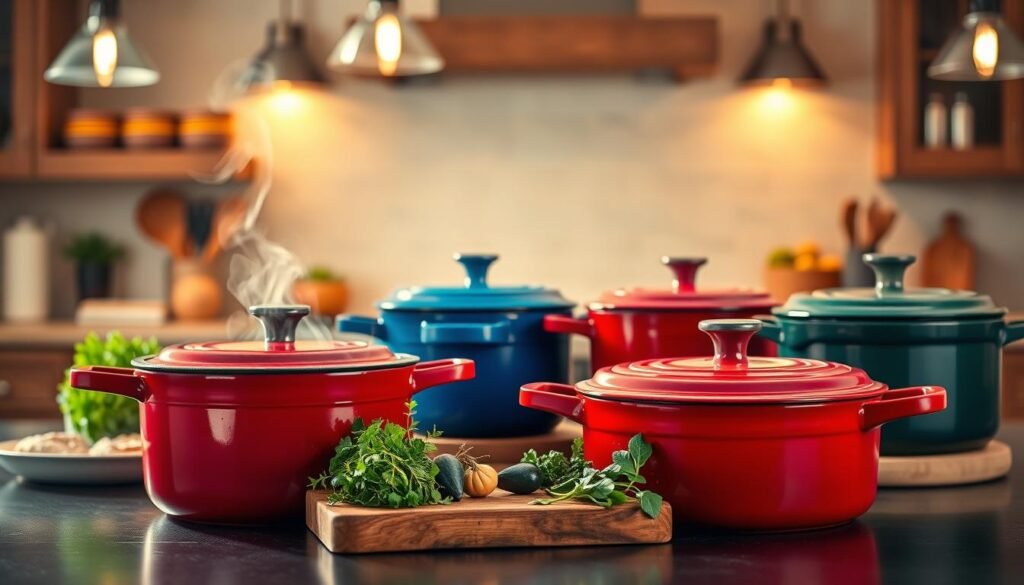
Comparing top-tier enameled cast iron reveals subtle differences in design, performance, and cost. Several brands compete in this high-end cookware space.
Market Alternatives and Feature Comparisons
Staub is the closest competitor. It offers similar enameled cast iron at a comparable price. Its black interior and self-basting lid spikes are key features.
Lodge provides a budget-friendly cast iron option. It sacrifices some refinement for a much lower price. This makes functional enameled cookware more accessible.
Historical brands like Descoware have notable heritage. Julia Child reportedly preferred it, showing professional choice isn’t always about mainstream prestige.
| Brand | Key Feature | Interior Color | Price Tier |
|---|---|---|---|
| Staub | Self-basting lid spikes | Dark matte black | Premium |
| Lodge | Affordable enameled cast | Light or dark options | Budget |
| Chasseur | French heritage | Light sand enamel | Mid-range |
Creuset leads in color variety. It offers many more standard and exclusive hues than rivals. This aesthetic choice often drives purchases.
When evaluating price-to-performance, differences in cooking results are often marginal. The decision frequently comes down to specific features or brand loyalty.
Price Analysis and Finding the Best Deals
Smart shopping for high-end kitchen tools isn’t just about the sticker price; it’s about strategic acquisition. Understanding the brand’s pricing patterns and sale cycles is crucial for maximizing value.
Sales, Discounts, and Long-Term Investment
Sale events provide significant savings. For example, the Classic Stainless Steel 14-Piece Cookware Set often drops from $1,667 to $1,149.99.
That’s over $500 saved. The Essential Non-Stick Ceramic 13-Piece Set sees similar discounts.
Focus on semi-annual sales and outlet locations for the best deals. Purchasing a complete cookware set usually offers better per-piece value than buying individual pans.
This strategy lowers the effective cost for outfitting your kitchen. The long-term investment math is compelling.
Factor in the lifetime guarantee and multi-decade durability. The price premium often breaks even when these pieces outlast several cheaper alternatives.
Conclusion
Ultimately, the decision to invest in premium cookware hinges on a clear-eyed assessment of value over decades, not just dollars at checkout. The brand commands its price through genuine advantages like French manufacturing and multi-coat enameled finishes.
For serious home cooks, this cookware proves a worthwhile investment. Its exceptional durability can span generations. Budget-conscious buyers can still access this quality through strategic purchases.
Consider smaller pieces or steel alternatives during sales. A guide to the best cookware sets confirms premium sets offer better heat stability and longevity.
The heirloom quality and lifetime guarantee make these pieces defensible investments. As a review of the French oven notes, the cast iron construction and design prestige are hard to replicate.
For those seeking kitchen showpieces that perform, a signature round Dutch oven delivers value proportional to its cost. Select wisely, maintain properly, and enjoy for decades.